 Chuckanut Exterior
 Blanchard sits in the stretch of Whatcom County where Chuckanut's wooded bluffs meet the water, and houses here take a steady beating from three things at once: salt-laden air rolling in off the bay, wind-driven rain that doesn't fall so much as get pushed sideways into a wall, and a moss season that, on shaded north- and east-facing siding, can run most of the year. We install James Hardie fiber cement siding exclusively, and this page is about what that specifically means for a Blanchard home — not a generic rundown of siding options, but what this material needs to do here, what a correctly done installation actually involves, and why a crew that already works this stretch of Chuckanut sees things a crew driving in from somewhere drier and calmer might miss.
What Blanchard's Climate Actually Does to Siding
Salt air is corrosive in a way that's easy to underestimate if you haven't dealt with it directly. It doesn't just dull a finish over time — it accelerates the breakdown of fasteners, flashing, and any exposed metal on a house, and it works on every material differently. Untreated or poorly coated fasteners can start showing rust streaks down a wall years before the siding itself shows any sign of age, which is one of the most common cosmetic complaints we hear about on homes near the water.
Driving rain is the second piece. Storms that come off the water don't drop straight down; they get pushed into south- and west-facing walls at an angle, which means water finds its way into every seam, joint, and butt splice that isn't properly lapped, flashed, or caulked. A siding system that's fine in a calmer inland climate can start showing problems here within a few years if the water-management details weren't done right the first time.
The third piece is moss and mildew. Tree cover along Chuckanut keeps a lot of walls shaded and slow to dry after a storm, and that combination of shade and moisture is exactly what moss needs to establish itself on a wall surface or in a horizontal joint. On some materials that's mostly cosmetic; on others, sustained dampness held against the surface for weeks at a time becomes a real durability problem.
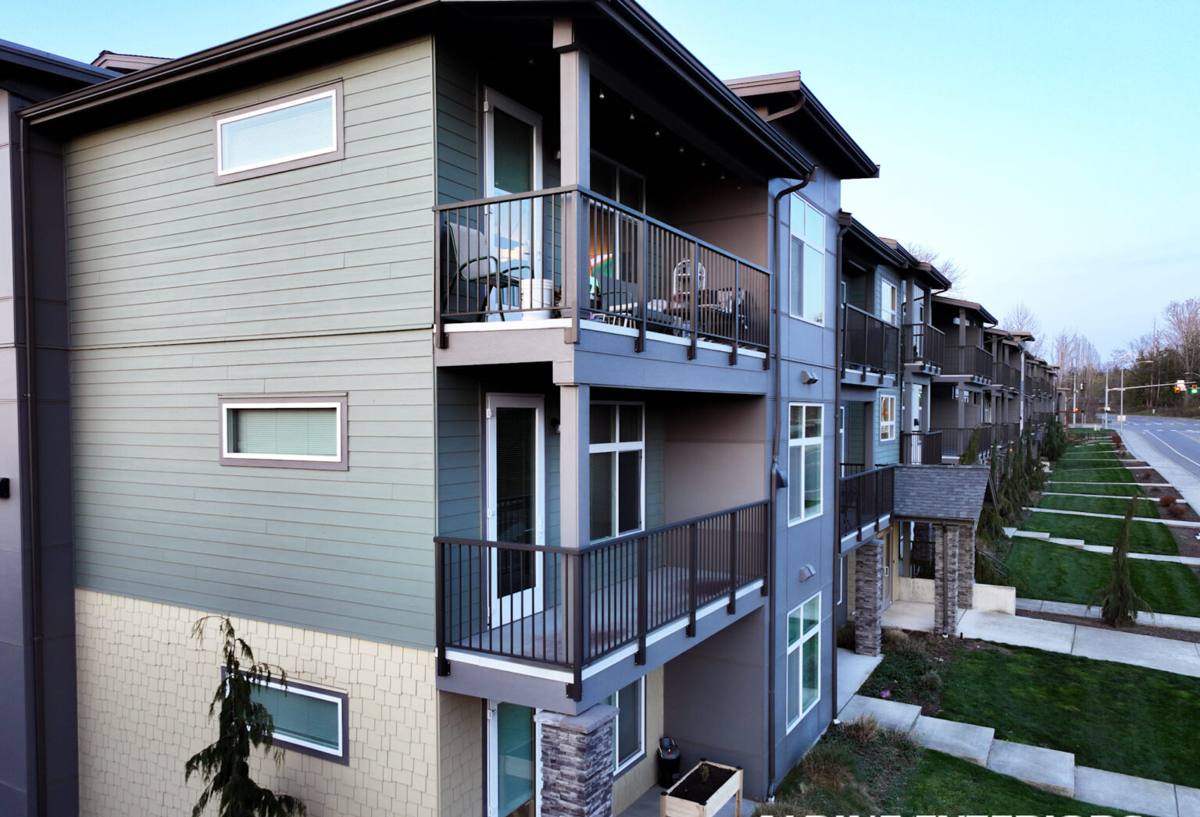
Why James Hardie Is Built for This Specific Combination
James Hardie fiber cement is engineered from cement, sand, and cellulose fiber — there's no wood substrate to swell, rot, or feed mold, and no organic material for moisture to slowly break down over the years. That matters directly in Blanchard's climate, where the failure mode we see most often on other materials is moisture that gets trapped against or inside the product rather than shedding off it.
Hardie's HZ5 product line is specifically engineered for climates like this one — cold, wet, and humid for long stretches of the year — with a formulation built to resist moisture damage and hold up to freeze-thaw cycling. It's also non-combustible, which matters for anyone thinking about wildfire exposure risk in the broader region, even though water is the dominant threat right on the water in Blanchard.
The factory-applied ColorPlus finish is the other half of the equation. Instead of paint rolled on-site and left to cure in whatever weather shows up that week, ColorPlus is baked on under controlled factory conditions in multiple coats, and it's backed by its own finish warranty separate from the product warranty on the board itself. In a climate where field-applied paint gets a hard test from salt air and long wet stretches, a factory-cured finish holds its color and integrity noticeably longer.
What Hardie Doesn't Solve By Itself
None of this means the material does all the work on its own. Fiber cement siding is only as good as the installation behind it — the flashing, the fastening, the gaps, and the joint treatment. A well-made board installed poorly will still let water in behind it, and a poorly detailed installation on a home exposed to Blanchard's wind-driven rain will find every weak point faster than it would somewhere calmer. That's the part of the job that separates a siding system that lasts thirty-plus years from one that starts causing problems in year six or seven.
What a Correct Installation Involves Here
A correct James Hardie installation follows the manufacturer's published specifications closely, but a handful of details matter more in a place like Blanchard than they would somewhere with a milder, drier climate.
Flashing and Water Management
Every window, door, and horizontal transition needs flashing that directs water out and away from the wall assembly, not just a bead of caulk hoping to hold it back. On a home taking direct wind-driven rain off the water, a flashing detail that's "close enough" inland can be a real leak point here. That includes proper head flashing above openings, correctly lapped weather-resistant barrier behind the siding, and drainage space where the assembly calls for it so any moisture that does get behind the cladding has somewhere to go besides staying trapped against the sheathing.
Fastening and Gaps
Hardie specifies exact fastener types, spacing, and clearance from board edges, and it specifies gaps at butt joints and around penetrations that get sealed with the right sealant, not just caulked over and hoped for. In a salt-air environment, fastener material matters more than usual — corrosion-resistant fasteners cost a little more up front but are the difference between a clean wall in year fifteen and streaking rust stains that no amount of pressure washing fixes.
Starter Strips, Clearances, and Grade
Proper starter strip installation and correct clearance from grade, roofing, and decking surfaces keep the bottom edge of the siding — usually the first place any water-related problem shows up — from sitting in standing moisture. On sloped or wooded lots, which describes a lot of property around Blanchard, getting drainage and clearance right at grade takes more attention than it does on a flat, open lot.
| Installation Detail | Why It Matters More in Blanchard |
|---|---|
| Flashing at windows, doors, and horizontal joints | Wind-driven rain pushes water sideways into any gap a calmer climate would never test |
| Corrosion-resistant fasteners | Salt air accelerates corrosion on standard fasteners, causing visible rust streaking over time |
| Sealant at joints and penetrations | Sustained wet seasons give any missed joint more chances to fail before a dry stretch arrives |
| Clearance and drainage at grade | Wooded, shaded lots common here stay damp longer, so standing moisture at the base is a bigger risk |
| Proper board and trim gaps | Prevents water from wicking into joints during repeated wet-dry cycling through the wet season |
Our Process on a Blanchard Project
The work starts with a walkthrough of the existing siding and, where it's already off or being removed, the sheathing behind it — because a new siding job is also the best opportunity to catch and fix moisture damage that's been building unseen for years. From there we plan the tear-off, confirm what the weather-resistant barrier and flashing situation looks like underneath, and address anything compromised before a single new board goes up. Covering damaged sheathing with new siding without fixing what's underneath just locks the problem in.
Installation follows manufacturer spec on fastening, flashing, gapping, and clearances, with particular attention on street-facing and water-facing walls that take the brunt of Blanchard's weather. We finish with trim, caulking at the details Hardie specifies (not everywhere, since over-caulking a fiber cement assembly can actually trap moisture rather than shed it), and a final walkthrough so you know exactly what was done and why.
- Confirm sheathing and weather-resistant barrier condition before new siding goes up
- Flash every window, door, and horizontal transition per manufacturer spec
- Use corrosion-resistant fasteners at the correct spacing and edge clearance
- Maintain proper clearance from grade, roofing, and decking surfaces
- Seal only the joints and penetrations the manufacturer specifies — not the whole wall
- Walk the finished job with you and point out anything worth knowing for future maintenance
Why Local Install Experience Matters
A siding crew that already works this part of Chuckanut has seen, firsthand, which walls on which orientations take the worst of the weather, where moss tends to establish first, and which older homes in the area are likely to have moisture issues hiding behind their original siding. That's not something you can fully substitute with a manufacturer's install manual, even though the manual is the baseline every installation should follow regardless. It shows up in small decisions — where to add extra attention to flashing, which walls warrant a closer look at the sheathing before covering it back up, how to sequence a job around this area's weather windows — that a crew unfamiliar with Blanchard's specific exposure might not think to make.
It also shows up in honesty about what a home actually needs. We're not going to recommend the same scope of work for a sheltered wall tucked behind trees that we'd recommend for a wall taking direct wind off the water. Knowing the difference, on sight, comes from having worked enough homes in this specific area to know what each kind of exposure actually does over time.
What Upkeep a Hardie Installation Still Needs
Fiber cement is genuinely low-maintenance compared to wood, but "low-maintenance" isn't "no maintenance," especially in a climate this wet. A periodic rinse to keep moss and mildew from establishing on shaded walls, an occasional look at caulked joints to catch any that have started to crack or pull away, and keeping gutters and downspouts clear so water isn't dumping directly onto a wall are all reasonable, infrequent tasks that keep a correctly installed system performing the way it's supposed to for decades. None of it compares to the recurring stain, seal, and caulk cycle that wood or primed wood-based products need in this same climate.
Table: Cost Factors on a Blanchard Siding Job
We don't post fixed prices because every home is different, but these are the factors that actually move a Blanchard siding estimate up or down, in rough order of impact.
| Factor | How It Affects the Job |
|---|---|
| Wall square footage and home shape | More surface area and more corners, gables, and dormers both add material and labor time |
| Condition of existing sheathing | Hidden moisture damage found during tear-off adds repair scope before new siding goes on |
| Trim and window/door count | Each opening needs its own flashing and trim detail, which adds up faster than wall area alone |
| Site access and exposure | Steep or wooded lots, common around Blanchard, can add staging and material-handling time |
| Fastener and flashing spec | Corrosion-resistant hardware costs more upfront but is worth it this close to the water |
Choosing a Contractor for a Job Like This
Because so much of a siding job's long-term performance comes down to installation details you won't be able to see once the wall is closed up, the contractor matters at least as much as the material. A few things worth confirming before you sign anything: that the crew is a manufacturer-recognized Hardie installer or can demonstrate real experience with the product's spec sheet, that they'll show you the sheathing before it's covered rather than just quoting a re-side over whatever is there, and that they can explain their flashing and fastening approach in plain terms rather than a vague "we do it the standard way." A contractor who's confident in their work will walk you through those details without hesitation.
If you're weighing a siding project for a Blanchard home, we're glad to walk the property, look at what your walls are actually dealing with, and put together a straightforward, no-pressure estimate — no upsell script, just an honest look at what your home needs and what it would take to do it right.