 Chuckanut Exterior
 A Neighborhood Shaped by Its Weather
Sehome sits close enough to the water and the hills around Chuckanut that its homes take on a specific kind of weather load — not the driest corner of Whatcom County, and not the most exposed either, but a steady combination of salt-tinged air, wind-driven rain, and a moss season that seems to run longer every year. None of that is dramatic on any single day. It's the accumulation that gets exterior surfaces: siding, roofing, window seals, and deck boards that look fine for a few years and then start failing all at once because moisture found a way in and stayed.
We work this area regularly, which matters more than it sounds like it should. A crew that's only seen Sehome once treats it like generic Pacific Northwest work. A crew that's back here every month starts to notice patterns — which elevations hold moss longest, which older homes were sided with materials that were never meant to handle this much sustained moisture, which roof lines collect debris in a way that shortens their life. That local pattern recognition is a big part of what separates a decent exterior job from one that actually holds up.
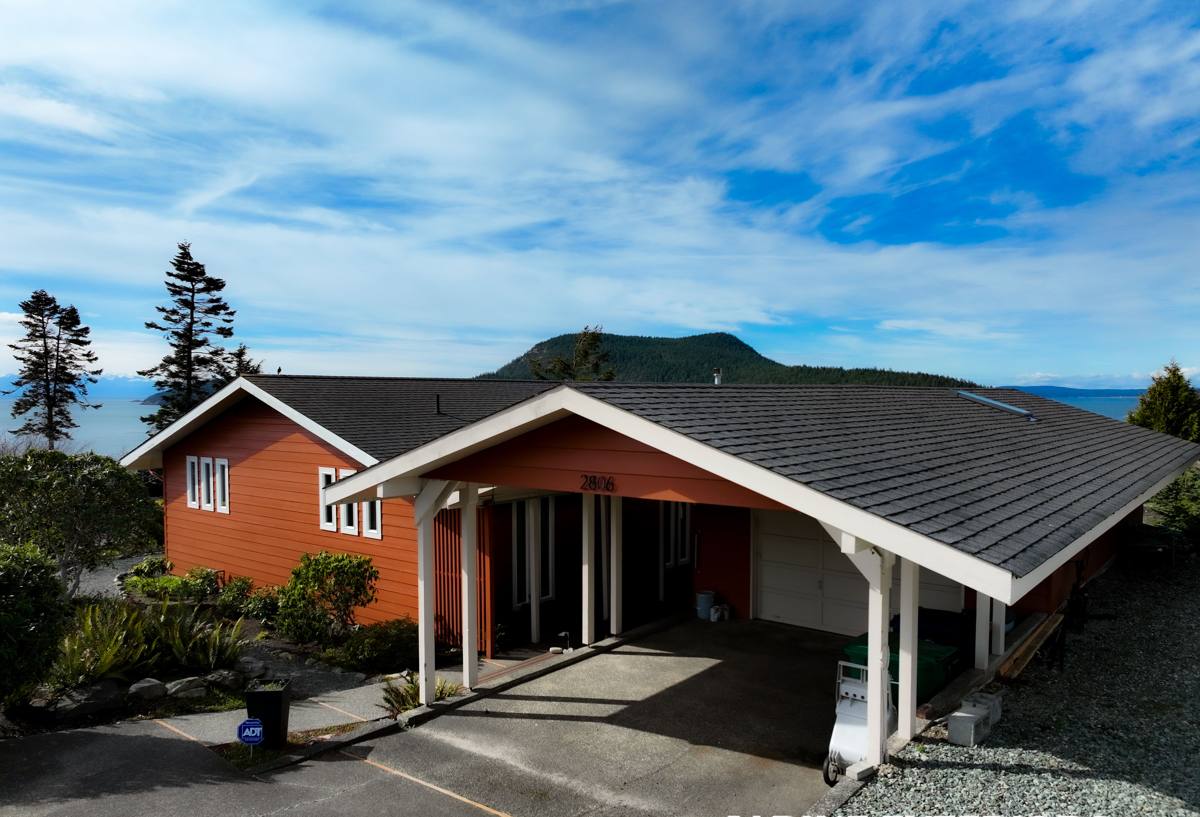
What Salt Air, Rain, and Moss Actually Do to a House
Salt air and metal fatigue
Proximity to salt water accelerates corrosion on anything metal — flashing, fasteners, gutter hardware, hinges. It's slow and easy to ignore until a fastener head rusts through or a flashing seam starts leaking from the inside out. Homes closer to the water need corrosion-resistant hardware from the start, not as an upgrade after the first failure.
Driving rain and wind-driven moisture
Rain that falls straight down is manageable. Rain that comes in sideways, which is common here during winter storms, finds every gap in flashing, every under-caulked window trim, every seam where siding wasn't lapped correctly. Water doesn't need a big opening — it needs time and a path, and driving rain gives it both.
Moss, algae, and the long wet season
Whatcom County's wet season runs long, and shaded, north-facing surfaces in particular stay damp for weeks at a stretch. That's exactly the environment moss and algae need. On roofing, moss holds moisture against shingles and lifts edges over time, shortening the life of an otherwise sound roof. On siding, sustained dampness is what causes paint failure, substrate softening, and — on materials that aren't engineered for it — swelling and rot.
Siding in Sehome: Why We Only Install James Hardie
We install James Hardie fiber cement siding exclusively. We don't install vinyl, LP SmartSide, Cemplank, Allura, or primed wood species like spruce or cedar. That's not a marketing position — it's a standard we hold because of what we've seen these materials do, or fail to do, in exactly the conditions Sehome deals with every year.
Vinyl siding is inexpensive and easy to install, and for a lot of climates that's a reasonable trade-off. In a wind-driven-rain environment, though, vinyl relies on lap joints and a rainscreen gap that are only as good as the installation, and it can warp or crack under real temperature swings and impact. It also doesn't offer much of a fire barrier, which matters more each year as wildfire smoke and ember exposure become a broader regional concern, even west of the Cascades.
Wood-based composite and engineered wood products, including LP SmartSide, use resin-treated wood strand substrates. They've improved over the years, but they're still wood-based, which means the failure mode when moisture does get past a seam or a cut edge is swelling, delamination, or rot — the exact failure mode our long wet season is built to cause. Primed cedar and spruce siding carry the same fundamental vulnerability, plus an ongoing repainting and caulking burden that most homeowners underestimate when they price the material up front.
James Hardie fiber cement is cement, sand, and cellulose fiber — it doesn't absorb water the way wood-based products do, and it isn't combustible. Hardie's ColorPlus finish is baked on at the factory under controlled conditions, which holds color and resists fading and chipping far better than field-applied paint, and it comes backed by a strong transferable warranty. None of that makes it maintenance-free, and it isn't the cheapest option on day one. But installed correctly — proper flashing, correct fastening, real rainscreen clearance — it's the product we're willing to put our name behind in this climate, and it's the only siding we install.
Roofing Built for a Long Wet Season
Roofing in Sehome has to handle two separate jobs: shedding driving rain without letting it work backward under shingles at the edges, and resisting moss and algae growth through months of sustained dampness. We pay particular attention to underlayment quality, ice-and-water shield at vulnerable transitions, and ventilation — a roof deck that can't breathe traps moisture underneath the shingles even when the surface looks dry, which shortens roof life from the inside out. Zinc or copper strips and proper gutter maintenance also go a long way toward slowing moss regrowth between cleanings.
Windows That Hold Up to Wind-Driven Rain
Most window leaks aren't a defective window — they're a flashing and installation problem. In a climate where rain regularly comes in at an angle, the flashing detail around each window opening (head flashing, side flashing, sill pan) has to be sequenced correctly so water is directed out and down, never trapped behind the trim. We treat window installation and replacement as a flashing job first and a product-selection job second, because even a well-built window fails early if it's flashed wrong.
Decks: Built for Standing Water, Not Just Rain
Deck failures around here rarely start with the rain itself — they start with water that doesn't drain and sits against ledger boards, joists, or fastener heads. Framing that isn't detailed for drainage traps moisture exactly where it does the most damage. Correct ledger flashing, joist tape, proper board spacing for drainage, and corrosion-resistant fasteners (especially this close to salt air) are the details that determine whether a deck lasts one decade or three.
Why a Local Crew Matters
Exterior work in this climate rewards familiarity. A crew that works Whatcom County regularly knows how the county's permitting and inspection process runs, has already seen how specific product lines perform locally over several winters, and isn't guessing at flashing details based on a manual written for a drier climate. It also means someone is reachable if a question comes up two years after the job — not a phone number tied to a crew that moved on to the next region.
Cost Factors to Understand Before You Budget
Exterior project costs in Sehome vary with home size, current condition, and access, but a few factors consistently move the number more than homeowners expect:
| Factor | Why it matters here |
|---|---|
| Extent of hidden moisture damage | Rot or corrosion behind old siding/trim, common on homes with wood-based or vinyl cladding, often isn't visible until tear-off |
| Flashing and rainscreen detailing | Correct detailing for wind-driven rain takes more labor time than a basic install, but it's what prevents repeat failures |
| Roof pitch and moss history | Steeper or heavily shaded roofs need more careful moss/algae treatment and access planning |
| Material choice | Fiber cement carries a higher material cost than vinyl or engineered wood, offset by lower long-term maintenance and repainting costs |
| Fastener and hardware grade | Corrosion-resistant hardware costs more up front and matters more near salt air |
What to Check Before Hiring an Exterior Contractor
- Ask specifically how they detail flashing around windows, doors, and roof-to-wall transitions — not just what siding brand they use
- Confirm they carry current Washington contractor licensing and insurance, and ask for the license number directly
- Ask how they handle hidden moisture or rot discovered after tear-off, before the job starts, not after
- Get a clear explanation of rainscreen gap and drainage plane approach for your specific home, not a generic answer
- Ask what warranty applies to both materials and labor, and get it in writing
- Be wary of a bid that's dramatically lower than others without an explanation for the difference in materials or scope
Get a Local, No-Pressure Estimate
If you're weighing siding, roofing, windows, or a deck project in Sehome, we're glad to walk the property, point out what your home's specific exposure is dealing with, and give you a straight estimate — no pressure, no inflated urgency. Use the form below to get started.