 Chuckanut Exterior
 Exterior Work Built for Blanchard's Climate
Blanchard sits in that stretch of Whatcom County where the terrain does a lot of the talking: hills that funnel wind and rain, proximity to saltwater, and enough tree cover to keep everything shaded and damp for months at a time. Homes here don't fail because people neglect them. They fail because the exterior products on them were never built for this specific combination of salt exposure, sideways rain, and a moss season that can run from October into May. We work this area regularly, and the patterns repeat house after house: siding that's swelling at the bottom courses, roofs holding moss in the valleys, window frames going soft at the corners, and deck boards cupping where water sits instead of running off.
Chuckanut Exterior Contractor handles siding, roofing, windows, and decks for homes in and around Blanchard. We're not a general contractor who also does exteriors — this is the whole business, which means we've seen what actually holds up out here and what doesn't.
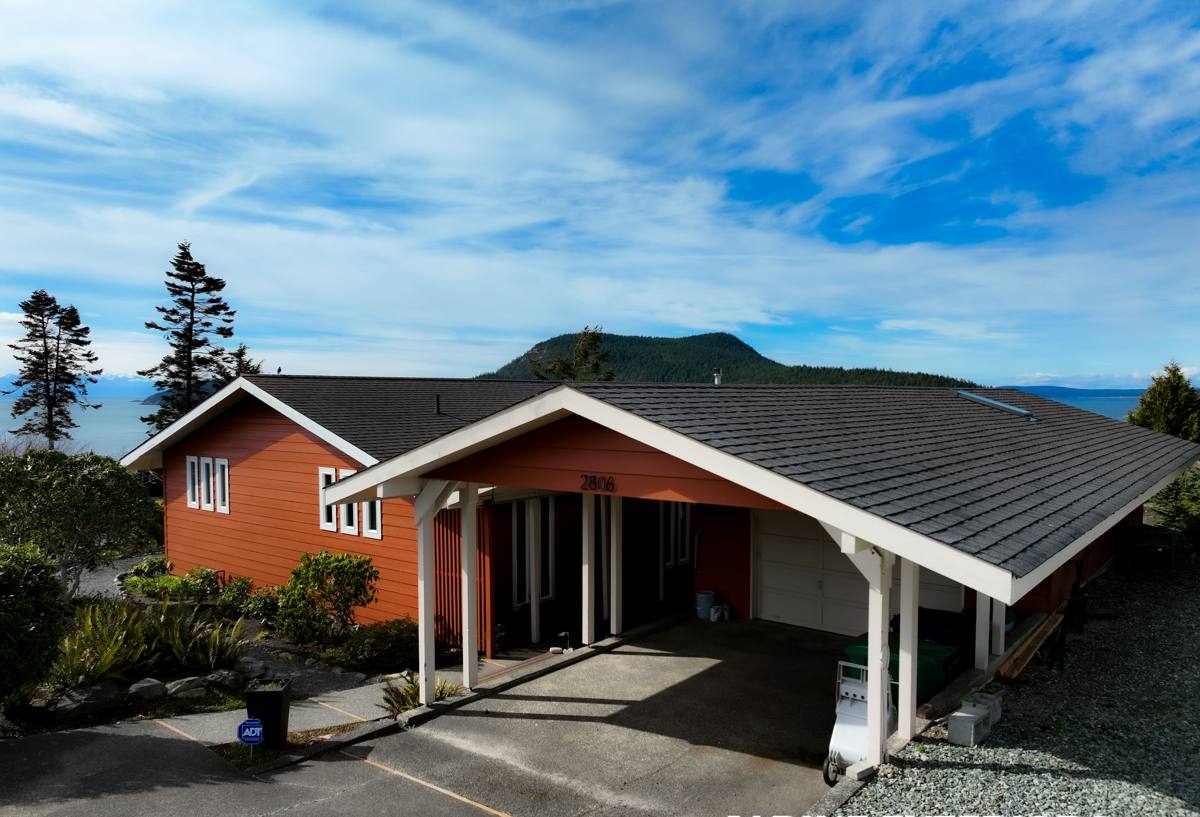
What the Local Climate Actually Does to a House
Salt Air
Proximity to Samish Bay and the broader saltwater environment around Whatcom County means airborne salt settles on exterior surfaces year-round, not just near the immediate shoreline. Salt accelerates corrosion on fasteners, flashing, and any metal trim that isn't rated for a marine-adjacent environment. It also works its way into porous or poorly sealed siding materials, which is part of why we're picky about what we'll put on a wall out here.
Driving Rain
This isn't gentle Pacific Northwest drizzle. Wind off the water pushes rain sideways into siding, under eaves, and into window and door openings that would stay dry in a calmer setting. That means water-resistive barriers, flashing details, and caulk joints matter more here than in a sheltered inland lot. A siding or window install that's "good enough" in a low-wind area can leak within a few seasons in Blanchard.
Long Moss Season
Shade, moisture, and mild temperatures are exactly what moss wants. On roofs, moss holds water against shingles and works into laps and nail heads, shortening roof life and increasing the odds of a leak showing up in an attic or ceiling. On siding and decking, moss and algae growth trap moisture against the surface, which is a slow but steady path to rot, especially on wood-based products.
Siding: Why We Only Install James Hardie
We install James Hardie fiber cement siding exclusively. We don't install vinyl, LP SmartSide, Cemplank, Allura, primed spruce, or cedar lap siding. That's a deliberate standard, not a sales pitch, and it's worth explaining honestly rather than just asserting it.
Vinyl is inexpensive and low-maintenance in mild conditions, but it's a plastic product that can warp, crack, or fade under UV exposure and temperature swings, and its seams and J-channels give wind-driven rain more places to find a way in. In a driving-rain environment like Blanchard, that's a real liability, not a hypothetical one.
Engineered wood products like LP SmartSide use a treated wood-strand core. When the factory seal and field-applied caulking are maintained perfectly, they perform reasonably well. But wood-strand cores are dimensionally sensitive to moisture, and any gap in maintenance — a missed caulk line, a scratch in the finish, water sitting against a bottom edge — gives moisture an entry point into a wood-based core. In a long moss-and-rain season, that maintenance margin gets thin fast.
Cedar and primed wood siding are honest, attractive materials with a long history, but they require an ongoing maintenance commitment: repainting or restaining on a cycle, checking for rot at butt joints and lower courses, and staying ahead of moss and mildew. In a shaded, damp, salt-air setting, that cycle shortens.
James Hardie fiber cement is cement, sand, and cellulose fiber — it doesn't rot, it's not a food source for moss or mildew the way wood is, and it's non-combustible. The ColorPlus factory finish is baked on under controlled conditions rather than field-applied, which matters in a climate where field-applied paint has less drying window between rain events. Hardie's HZ5 product line is engineered specifically for climates with more moisture and freeze-thaw cycling, which fits Whatcom County. It's also backed by a strong transferable warranty, which matters if you plan to sell the home down the road.
None of this means Hardie is maintenance-free — it still needs proper installation, correct flashing, and paint touch-up over the decades. But it removes the rot risk and the plastic-warp risk in one move, which is why it's the only siding product we put our name behind.
Siding Material Comparison
| Material | Moisture Behavior | Maintenance in This Climate | Our Position |
|---|---|---|---|
| James Hardie fiber cement | Does not rot; not a moss/mildew food source | Periodic cleaning, factory finish holds up well | What we install |
| Vinyl | Seams and channels allow wind-driven rain intrusion | Low, but prone to warping/cracking over time | Not installed |
| LP SmartSide / engineered wood | Wood-strand core vulnerable if seal is compromised | Requires consistent caulk/paint upkeep | Not installed |
| Cedar / primed wood | Rot-prone without diligent upkeep | Highest — repainting/restaining cycle | Not installed |
Roofing for Moss Season and Sideways Rain
Roofing in Blanchard has to account for two things at once: shade-driven moss growth and wind-driven rain that finds weak flashing. We look closely at valleys, roof-to-wall transitions, and any low-slope sections where moss and debris tend to collect and hold water. Proper underlayment, ridge and valley flashing, and ventilation all matter more here than in a drier, more open setting — a roof that's under-ventilated stays damp longer after every rain event, which feeds moss growth and shortens shingle life.
We also pay attention to gutter and downspout sizing and placement, since undersized or poorly placed drainage is a common contributor to water finding its way into fascia and soffits during heavy rain.
Windows: The Weak Point in Driving Rain
Windows are one of the more common leak points we find on homes in this area, and it's rarely the glass — it's the flashing and sealant around the frame. Wind-driven rain pushes water sideways into gaps that would never see water in a calmer climate. When we replace windows, we treat the flashing and water-management detailing around the opening as equally important as the window unit itself. A quality window installed without correct flashing will leak; a modest window installed correctly usually won't.
We also look at overall condition — frame rot, failed seals showing fogging between panes, and drafts — since in a salt-air, high-moisture environment, window hardware and seals tend to wear faster than manufacturer literature assumes for milder climates.
Decks: Standing Water Is the Enemy
Decks in Blanchard take a beating from the same combination of shade, moisture, and moss. The most common problems we see are cupped or rotting boards where water sits instead of draining, ledger board connections that have taken on moisture over years, and railings or posts where fasteners have corroded from salt-air exposure. Proper board spacing, joist flashing, and fastener selection matter here more than in a dry inland climate — small details in the substructure determine whether a deck lasts one decade or three.
Why a Local Crew Matters
A crew that works Whatcom County regularly knows which details are optional in other climates and which ones aren't negotiable here. Flashing sequence, fastener choice, ventilation, and drainage aren't textbook items to us — they're the difference between a callback in two years and a house that's dry for decades. We also know how to sequence work around this area's weather windows, since a rushed install during a wet stretch is how corners get cut on flashing and sealant cure times.
Signs Your Exterior Needs a Look
- Moss buildup in roof valleys or along the north-facing slopes of the roof
- Siding that feels soft, swollen, or discolored near the bottom courses
- Peeling paint or caulk separation around window and door trim
- Musty smell or visible staining in attic spaces or interior corners near exterior walls
- Deck boards that cup, feel spongy, or hold water after rain has stopped elsewhere
- Corroded or rust-streaked fasteners, hinges, or metal trim
What an Estimate Looks Like
We walk the exterior, look at the specific conditions on your property — sun exposure, shade, drainage, current material condition — and give you a straightforward assessment of what's holding up and what isn't. If siding replacement makes sense, we'll explain why we'd use James Hardie for your specific exposure and what that involves. There's no pressure to sign anything on the spot; we'd rather you have accurate information than a rushed decision.
If you're in Blanchard or nearby and want an honest look at your siding, roof, windows, or deck, request a free estimate using the form below. No obligation, no high-pressure pitch — just a clear picture of where things stand.