 Chuckanut Exterior
 Exterior Contracting for Sedro-Woolley Homes
Sedro-Woolley sits where the Skagit Valley flattens out toward the water, ringed by timberland and cut through with river fog for a good chunk of the year. Homes here take a different kind of beating than houses twenty minutes away in town. It's not one dramatic storm that does the damage — it's the accumulation. Months of low-pressure rain, damp air that never fully dries out between fronts, and a moss season that seems to start earlier every year. We work on homes throughout this stretch of the valley, and the exterior problems we see are consistent enough that we can usually tell what's going on before we're even out of the truck.
This page is about what that climate does to siding, roofing, windows, and decks specifically in this area, and how we approach exterior work here as a local crew rather than a call center dispatching whoever's closest.
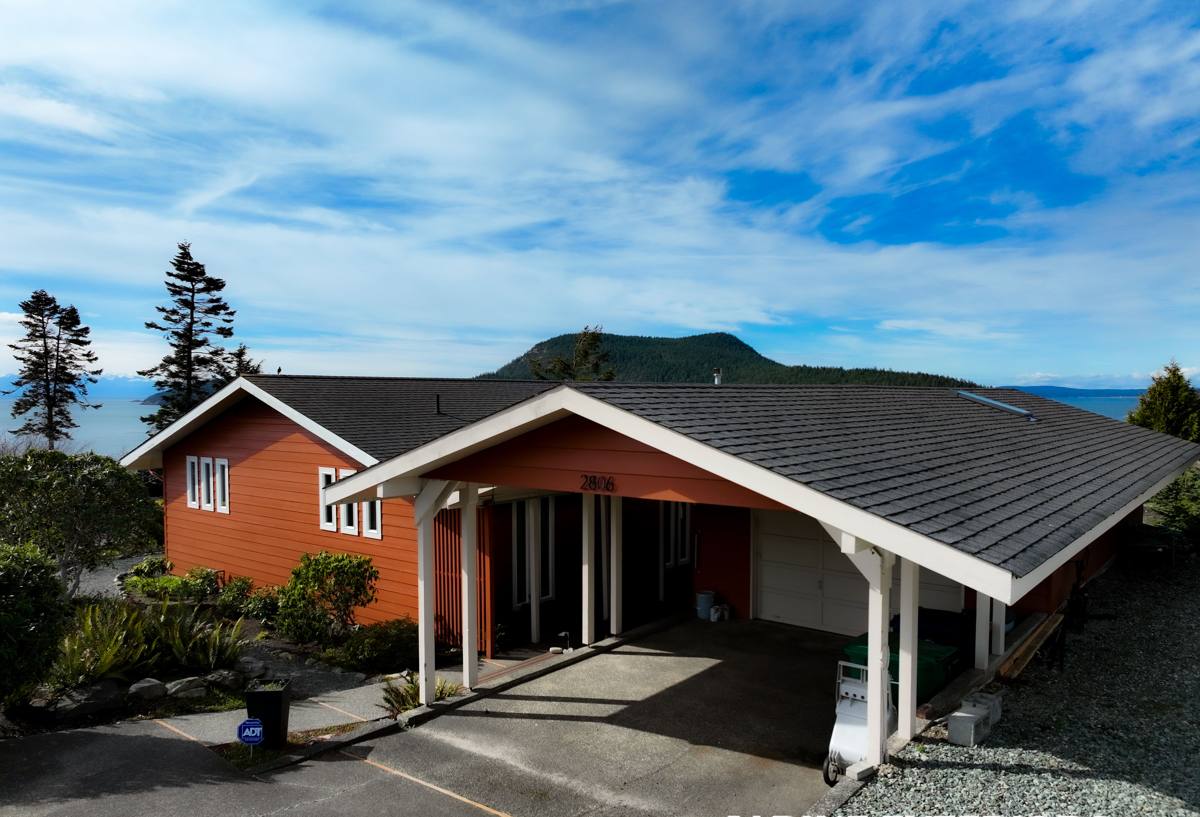
What the Local Climate Does to a House
Western Washington's marine climate gets talked about in general terms — "it rains a lot" — but the specifics matter more than the generality. In the Sedro-Woolley area, a few things compound:
- Extended damp periods, not just rainfall totals. It's less about how many inches fall and more about how many days pass without a real drying window. Wood and lower-grade siding materials absorb moisture slowly and release it even more slowly.
- Moss and organic growth on roofs and shaded siding. Tree cover and valley humidity create ideal conditions for moss, algae, and lichen — especially on north-facing walls and roof planes that don't get direct sun.
- Salt-influenced air moving up from Puget Sound and the Sound-adjacent lowlands on wind patterns, which accelerates corrosion on fasteners, flashing, and unprotected metal trim.
- Driving rain during wind events that pushes water sideways into seams, laps, and window transitions that would stay dry in a straight-down rain.
None of this is exotic. It's just steady, and steady wins over time if the materials and installation aren't built for it.
Siding: Why Material Choice Matters More Here Than in Drier Climates
We install James Hardie fiber cement siding exclusively. That's not a marketing preference — it's a standard we hold because of what we've seen fail and what we've seen hold up in exactly this kind of weather.
What Struggles in a Wet, Mossy Climate
Wood and wood-composite siding products need consistent maintenance in a climate like this — repainting, caulking, and moisture monitoring on a schedule that most homeowners don't have time to keep up with. Vinyl siding doesn't rot, but it flexes and gaps at the seams over time, and those gaps become entry points for wind-driven rain. Once water gets behind vinyl, there's often no good way to know it's happening until damage shows up on the sheathing underneath.
Why We Standardized on James Hardie
Fiber cement doesn't absorb water the way wood-based products do, and it isn't as vulnerable to the expansion, contraction, and seam movement that plagues vinyl in a climate with this much sustained moisture. Hardie's ColorPlus factory finish is baked on under controlled conditions, which matters here specifically because field-applied paint has a harder time curing properly in a damp, low-sun climate. And because it's non-combustible, it's a material choice that holds up regardless of what direction the fire risk conversation in Western Washington goes over the next decade.
We're not going to tell you every other siding product is worthless — that's not honest, and it's not our call to make about someone else's home. What we will say is that after years of doing exterior work in this specific climate, we stopped installing the products that require more upkeep than a busy homeowner realistically provides, and we standardized on the one that doesn't.
Roofing: The Moss Problem Isn't Cosmetic
Moss on a roof in the Skagit Valley isn't just an eyesore. Moss holds moisture directly against roofing material, and on shaded or north-facing slopes — common on lots with mature tree cover — that moisture sits there for days after the rest of the roof has dried. Over years, that shortens the life of shingles, degrades underlayment, and can work its way into fastener penetrations.
Roof work here needs to account for:
- Proper ventilation to reduce the moisture load that feeds moss and mold growth
- Flashing details at valleys, chimneys, and wall transitions sized for driving rain, not just vertical rain
- Material and fastener choices that resist corrosion in a salt-influenced air environment
- Roof-to-siding transition points, which are one of the most common places we find hidden water damage during inspections
Windows: Where Leaks Actually Start
Most window "leaks" aren't failures of the window itself — they're failures of the flashing and integration between the window and the siding around it. In a climate with this much wind-driven rain, a window that's caulked in without proper flashing can look fine for years and then start showing water staining on an interior wall with no obvious cause. When we replace windows, we treat the flashing and water management detail as equally important as the window unit itself, because in this climate, that detail is often the difference between a window lasting 20 years and one that causes damage within five.
Decks: Built for a Season That Runs Longer Than People Expect
Decks in this area deal with the same sustained-moisture problem as siding, plus direct foot traffic and standing water on horizontal surfaces. Ledger board attachment, proper flashing where the deck meets the house, and drainage that actually moves water off the surface instead of letting it pool are the details that separate a deck that lasts from one that starts showing rot at the ledger within a few years. We build and repair decks with those water-management details treated as structural, not cosmetic.
Comparing Siding Options for This Climate
| Material | Moisture Behavior in a Wet Climate | Maintenance Load | Finish Durability |
|---|---|---|---|
| James Hardie Fiber Cement | Doesn't absorb and swell like wood; dimensionally stable when wet | Low — occasional wash, no repainting cycle on ColorPlus finish | Factory-cured finish holds color and adhesion well over time |
| Vinyl | Doesn't rot, but seams can allow water intrusion behind the panel | Low surface maintenance, but hidden moisture issues can go unnoticed | Can fade and become brittle with UV and temperature cycling |
| Wood / Cedar | Absorbs moisture readily; slow to dry in extended damp periods | High — regular painting, sealing, and moisture monitoring | Finish degrades faster; prone to rot without diligent upkeep |
| Primed Spruce / Engineered Wood | Vulnerable at cut edges and fastener points if not sealed correctly | Moderate to high depending on installation quality | Performance depends heavily on installer attention to detail |
What to Ask Before Hiring an Exterior Contractor Here
Sedro-Woolley and the surrounding valley have a mix of contractors — some local, some based out of Bellingham, Mount Vernon, or further out who just add the area to a service radius. That's fine on paper, but exterior work here rewards crews who understand the specific moisture and moss patterns of this valley, not just general Pacific Northwest weather knowledge.
- Ask how they detail flashing at roof-to-wall and window-to-siding transitions specifically
- Ask what siding materials they install and why — and whether they'll actually explain trade-offs or just upsell whatever's in stock
- Confirm licensing, bonding, and insurance, and ask for it in writing
- Ask whether ventilation and moisture management are part of their standard roofing scope or an upsell
- Ask how they handle warranty claims if something does go wrong down the road
Working With a Local Crew
There's a practical reason local crews tend to do better work in a climate like this: they've already seen what happens five and ten years down the line, because they're the ones who get called back when something goes wrong. A contractor who mostly works elsewhere doesn't build that same feedback loop. We treat every exterior project in this area — siding, roofing, windows, or decks — with the specific moisture and moss conditions of the Skagit Valley in mind, not a generic install spec.
Ready for a Straightforward Look at Your Exterior?
If you're dealing with moss buildup, aging siding, a window that's starting to show water staining, or a deck that needs more than a pressure wash, we're happy to take a look and give you an honest read on what's going on and what your options are. Reach out for a free, no-pressure estimate — use the form below to get started.