 Chuckanut Exterior
 Exterior Work in Bow: What the Climate Actually Does to a House
Bow sits along the Chuckanut corridor where Skagit County meets the water — close enough to Samish Bay and the Salish Sea that salt air is a daily fact of life, not an occasional nuisance. Add in the long, wet Pacific Northwest winter and the shoulder seasons that never seem to fully dry out, and you have a climate that is genuinely hard on the outside of a house. This isn't a place where "low maintenance" siding claims get tested gently. It's a place where they get tested every year, for months at a time.
Three things drive most of the exterior wear we see on Bow homes: persistent moisture, salt-laden air moving in off the water, and moss and algae growth that thrives in the shade of the tree cover common to the area. None of these are dramatic, one-time events. They're slow, cumulative pressures, and they punish cheap materials and shortcuts far more than they punish any single storm.
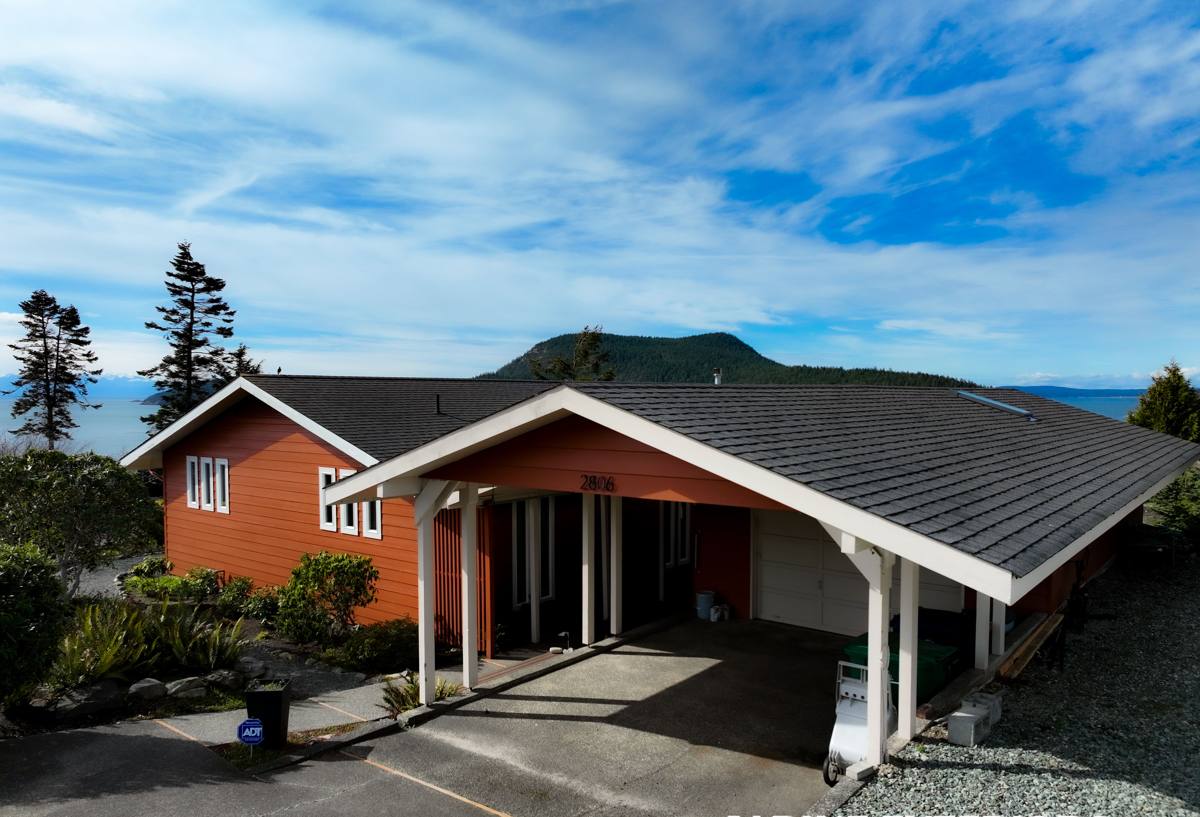
Siding: Why the Material Choice Matters More Here Than Most Places
Wood-based and wood-adjacent siding products — cedar, primed spruce, and engineered wood siding like LP SmartSide — all share a common vulnerability: they are wood at their core, and wood swells, checks, and eventually rots when it stays wet longer than it can dry. In a marine climate like Bow's, where humidity and rainfall keep exterior surfaces damp for extended stretches, that "dry-out window" is shorter than in drier parts of the state. Manufacturers of engineered wood products have improved resin treatments and coatings over the years, but the core material hasn't changed, and the failure mode when moisture does get past the coating — usually at cut edges, fastener penetrations, or seams — is the same swelling and deterioration wood has always been prone to.
Vinyl siding handles moisture differently — it doesn't rot — but it has its own weaknesses that show up in this climate. It expands and contracts significantly with temperature swings, which stresses seams and fasteners over time, and it can become brittle in cold snaps. Salt air also tends to dull and chalk vinyl's surface faster than it does more inert materials. It's an inexpensive option, but "inexpensive" and "built for this coastline" aren't the same thing.
This is why we install exclusively James Hardie fiber cement siding. It's non-combustible, doesn't support rot the way wood-based products can, and holds up to sustained damp conditions without the swelling and delamination risk that comes with engineered wood. Hardie's ColorPlus factory-applied finish is baked on under controlled conditions, which gives it far better resistance to fading and moisture intrusion at the surface than field-applied paint. For a location like Bow, where the siding is going to spend a good chunk of the year damp, that's not a marginal upgrade — it's the difference between siding that ages gracefully and siding that needs attention every few years.
Hardie Product Lines We Use
- HardiePlank lap siding — the standard for most Bow homes, available in several exposures and textures
- HardiePanel vertical siding — often paired with lap siding for board-and-batten style accents
- HardieTrim — matched trim boards that resist the same moisture and rot issues as wood trim
- HZ10 climate-engineered formulation — the version engineered for cold, wet Pacific Northwest conditions rather than warmer, drier climates
Roofing: Moss, Debris, and the Slow Damage Nobody Notices
Roofs in and around Bow deal with a slower kind of stress than roofs in storm-heavy regions — it's less about wind damage and more about moss, algae, and organic debris. Overhanging trees drop needles and leaves into valleys and against fascia boards, moisture collects and stays put in the shade, and moss takes root in shingle granules, lifting edges and holding water against the roof deck. Left unaddressed for a few years, that moss growth can shorten the life of an otherwise sound roof significantly.
A correctly installed roof system for this area accounts for that reality: proper flashing at valleys and penetrations, adequate attic ventilation to control condensation from the underside, and underlayment that can handle sustained dampness rather than just occasional rain events. We also pay close attention to ice-and-water shield placement at eaves and valleys, since freeze-thaw cycles — even mild ones — can drive water backward under shingles if that detail is skipped.
Regular moss treatment and gutter clearing extend a roof's life more than almost any other single maintenance step homeowners can take in this climate, and it costs a fraction of an early replacement.
Windows: Where Leaks Actually Start
Most window-related water damage we find isn't a failure of the window itself — it's a failure of the flashing and sealant detail around it. In a wet climate, a window that isn't properly flashed will eventually let water track behind the siding and into the wall assembly, and that kind of damage often goes unnoticed until it's significant, because it happens inside the wall rather than on the visible surface. When we replace windows, the flashing and integration with the surrounding siding gets the same attention as the window unit itself — it has to work as a system, not just as a product installed into an opening.
Decks: Built for Weather That Doesn't Let Up
A deck in Bow spends most of the year exposed to damp air, and depending on the lot, often some shade from surrounding trees that slows drying even further. That combination is hard on standard lumber decking, which needs regular sealing and refinishing to keep water from working into the wood grain, especially at fastener holes and board ends. Composite decking is a common upgrade for homeowners who are tired of that maintenance cycle — it resists moisture absorption and doesn't need staining or sealing, though it's a different look and feel than natural wood, and worth weighing against your own priorities for the space.
Whatever the decking material, the structural framing underneath matters just as much, if not more. Ledger board flashing, joist protection, and proper drainage away from the house are what actually determine whether a deck lasts — or develops hidden rot — in a climate like this one.
Comparing Siding Options for a Bow Home
| Material | Moisture Behavior in This Climate | Maintenance | Typical Longevity |
|---|---|---|---|
| James Hardie fiber cement | Non-combustible, resists rot; factory finish sheds moisture well | Occasional wash; repaint only after decades, if ever | Long-term, backed by a strong transferable warranty |
| Engineered wood (LP SmartSide) | Wood core swells/deteriorates if moisture reaches cut edges or fasteners | Regular inspection of seams, caulking, touch-up paint | Shorter than fiber cement in sustained-damp climates |
| Vinyl | Doesn't rot, but expands/contracts with temperature; can chalk in salt air | Periodic cleaning; seam and fastener checks | Moderate; more prone to visible wear near the coast |
| Cedar | Attractive but a wood product; needs consistent sealing to resist rot | High — refinishing on a recurring cycle | Shorter without diligent upkeep |
Why a Local Crew Matters for This Area
Exterior work in Bow isn't identical to exterior work forty miles inland. Flashing details, ventilation requirements, and even siding fastening schedules need to account for sustained moisture exposure and salt air, not just occasional weather events. A crew that works this stretch of Skagit County regularly — along the Chuckanut corridor and the water-adjacent communities around it — knows which details actually matter here versus which are boilerplate from a manufacturer's installation guide written for a drier region. That local knowledge shows up in things like where extra flashing gets added, how ventilation is balanced against a shaded, damp roofline, and which trim details need extra protection at grade.
A Practical Checklist Before You Hire
- Ask what siding material the contractor installs and why — and whether they install more than one brand or system
- Confirm they carry manufacturer certification for the specific product being installed, not just general contracting experience
- Ask how they handle flashing at windows, doors, and deck ledgers — this is where most hidden water damage originates
- Get a written scope that specifies underlayment, ventilation, and flashing details for roofing work, not just "shingle replacement"
- Ask about warranty coverage — both the manufacturer's product warranty and the contractor's workmanship warranty
- Check that the crew has verifiable experience with moisture-heavy, coastal-adjacent installations specifically
What to Expect From an Estimate
A useful estimate for exterior work in Bow should walk through the current condition of your siding, roof, windows, or deck honestly — including any moisture damage, moss buildup, or flashing issues found during inspection — before talking about materials and cost. Straight answers about trade-offs between materials matter more than a sales pitch, especially in a climate that will expose weak choices within a few years rather than a few decades.
If you're weighing a siding replacement, roof work, window upgrade, or deck project for a home in Bow, we're happy to take a look and give you a straightforward, no-pressure estimate — including an honest read on what your home's exposure and site conditions actually call for.