 Chuckanut Exterior
 Exterior Work Built for the Samish Climate
Homes around Samish sit close enough to the water that salt air is simply part of daily life. Add Whatcom County's long wet season, frequent driving rain off the water, and the shade from tall conifers that keeps north-facing walls damp for weeks at a time, and you have a climate that is genuinely hard on exterior building materials. It's not a place where "good enough" siding, a patched roof, or a builder-grade window holds up for the long haul. We've built our business around exterior systems that are actually engineered for conditions like these, and we bring that same standard to every Samish property we work on.
This page covers how our siding, roofing, window, and deck work applies specifically to homes in this area, and why we think a local crew that understands salt air and moss season is worth choosing over a contractor working from a generic playbook.
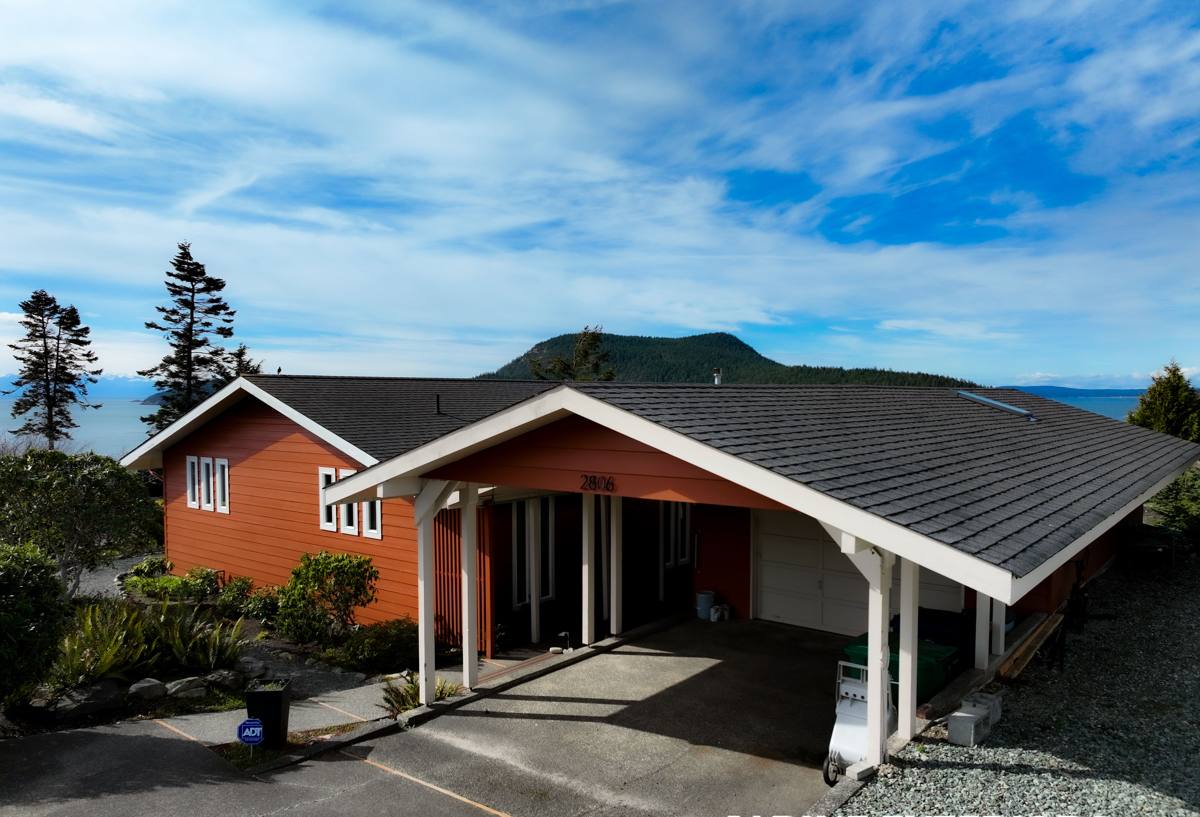
What Samish Homes Are Up Against
Salt Air and Moisture
Proximity to the water means airborne salt settles on siding, trim, fascia, and metal fasteners. Over years, that accelerates corrosion in lower-grade hardware and speeds up the breakdown of finishes that weren't designed to handle it. Combine that with near-constant humidity and you get conditions where paint fails early, wood swells and checks, and anything with a weak moisture barrier eventually lets water in.
Driving Rain
Storms coming off the water don't just fall straight down — wind-driven rain gets pushed sideways into wall assemblies, window frames, and deck ledger boards. Exterior systems here need real drainage planes and flashing details, not just a water-resistant surface. A siding or window install that would be fine in a drier inland climate can fail here simply because the water is coming in at an angle.
Moss and Shade
Mature tree cover throughout this part of Whatcom County keeps a lot of rooflines and north-facing siding in shade for much of the year. That means slower drying times after every rain, and it's exactly the environment moss and algae thrive in. Moss on a roof isn't just cosmetic — it holds moisture against shingles and can work its way under tabs and flashing over time. Siding in constant shade needs a finish that resists mildew growth, not just paint that looks good on day one.
Siding: Why We Only Install James Hardie
We install James Hardie fiber cement siding exclusively. We don't install vinyl, LP SmartSide, Cemplank, Allura, or primed wood products like spruce or cedar lap. That's a deliberate standard, not a sales pitch, and it's worth explaining honestly.
Vinyl siding is inexpensive and low-maintenance, but it's a thin plastic product that can warp in temperature swings, crack in impacts, and fade over time — and in a salt-air environment, the trim and J-channel details are often where water finds its way in. Wood-based and engineered wood siding products, including primed cedar and spruce, depend heavily on paint film integrity; once that finish fails at a cut edge or fastener hole, moisture gets into the substrate and the clock starts on rot. In a climate with this much sustained dampness and shade, that failure point shows up faster than it would somewhere drier.
James Hardie fiber cement is a cement-and-cellulose composite that doesn't absorb water the way wood-based products do, doesn't warp the way vinyl can, and is non-combustible — a genuine advantage during wildfire season, which has become a more regular concern across Washington summers. Hardie's ColorPlus factory-applied finish is baked on under controlled conditions rather than field-painted, which means better fade and moisture resistance than a job-site paint job, along with a stronger transferable warranty. For homes dealing with salt exposure, shaded moss-prone walls, and driving rain, it's the product we trust to actually perform for decades, not just look good at installation.
Hardie Product Lines We Install
- HardiePlank lap siding — the standard horizontal siding profile, available in several textures and exposures
- HardiePanel vertical siding — often used for accent sections, gables, or a board-and-batten look
- HardieShingle — for homes wanting a shingle-style appearance without the maintenance of real wood shakes
- HardieTrim — matching trim boards for a consistent, factory-finished look at corners, windows, and fascia
Roofing for the Samish Area
Roofing here has to handle two problems at once: driving rain finding any weak point in the flashing, and moss taking hold in the shaded sections. When we work on a roof in this area, we pay particular attention to valley flashing, step flashing around chimneys and dormers, and ventilation — a roof deck that can't breathe stays damp longer and ages faster. We also talk with homeowners honestly about moss: prevention (proper ventilation, keeping overhanging branches trimmed back, zinc or copper strips where appropriate) goes a lot further than trying to scrape it off after the fact, which can damage shingles.
Whether it's a full re-roof or targeted repair work, the goal is the same — a roof system that sheds wind-driven rain and doesn't give moss the conditions it needs to spread.
Windows: Keeping Rain and Drafts Out
Older windows in this area are often the weak point in an otherwise solid home — failed seals, fogged glass, and flashing that was never detailed for sideways-driving rain. When we replace windows, proper flashing integration with the surrounding wall assembly matters as much as the window unit itself. A high-end window installed without correct flashing will still leak; a well-flashed mid-range window will often outperform it. We size window replacement to the home and budget, but we don't cut corners on the water-management details, because that's what actually prevents rot around the rough opening down the road.
Decks Built for Wet Weather
Decks take a beating in this climate — standing water, shaded boards that never fully dry, and ledger connections that are a common source of hidden rot if not flashed correctly at the outset. We build and repair decks with an eye toward drainage (proper board spacing and slope), moisture-resistant framing connections, and ledger flashing that keeps water from tracking behind the board and into the house framing. A deck that looks fine on the surface can still be failing structurally if the ledger connection was never properly waterproofed — that's one of the most common issues we find on older decks in wetter parts of Whatcom County.
Why a Local Crew Matters
A contractor who only works in drier, inland climates will make different assumptions than one who works along the water regularly. Knowing which walls stay shaded and damp longest, how salt air affects fastener choice, and where wind-driven rain actually tends to get in isn't something you get from a general contracting background — it comes from doing this work in this specific climate, season after season. That's the value of hiring a crew based in the area rather than someone passing through.
Cost Factors to Understand
Every home is different, but these are the main factors that drive cost on exterior projects in this area:
| Factor | Why It Matters Here |
|---|---|
| Home size and wall complexity | More corners, gables, and trim details mean more labor and material |
| Existing damage or rot | Damp, shaded walls and unflashed decks often hide moisture damage that adds repair scope |
| Siding profile and accessories | Trim, corner details, and specialty Hardie profiles add cost over basic lap siding |
| Roof pitch and access | Steeper or heavily shaded roofs take longer to work safely and dry properly |
| Site access | Tree cover, slope, and driveway access can affect staging and material delivery |
We always recommend an on-site walkthrough before committing to a number — climate-driven damage isn't always visible from the street.
A Simple Maintenance Checklist
Between projects, a few habits go a long way toward protecting exterior surfaces in this climate:
- Keep tree branches trimmed back from the roofline to reduce shade and debris buildup
- Clean gutters at least twice a year — clogged gutters push water where it shouldn't go
- Rinse siding periodically to remove salt residue and organic growth before it takes hold
- Check deck ledger areas and fastener heads annually for early signs of rust or staining
- Address small caulking or flashing gaps around windows promptly, before they become water intrusion problems
What to Expect Working With Us
We start with an honest look at what's actually going on with your home's exterior — not just what's cosmetically worn, but what the climate may have already gotten into. From there we walk through options that fit your home, your budget, and the realities of this environment, and we're upfront when a product or approach isn't going to hold up here, even if it's cheaper up front.
If you're weighing siding, roofing, window, or deck work for a home in the Samish area, we're happy to take a look and give you a straightforward assessment. Fill out the form below for a free, no-pressure estimate.