 Chuckanut Exterior
 Why Siding Takes a Beating in Samish
Samish sits close enough to the water that salt-laden air is a constant, low-grade stress on every exterior surface — not just in a January storm, but on an ordinary Tuesday. Add Whatcom County's driving rain, which comes in sideways off the Sound often enough that vertical protection isn't enough, and you have a climate that tests siding in ways drier parts of the state never do. Then there's moss. Between the moisture, the mild year-round temperatures, and the shade thrown by mature Douglas fir and cedar that fill so many Chuckanut-area lots, moss and algae get a long growing season with almost no dormant period to slow them down.
None of this is unusual for the Pacific Northwest, but it adds up differently depending on what's actually on your walls. Siding that isn't engineered for sustained moisture exposure — or that was installed without the right drainage details behind it — tends to show problems here years before it would somewhere drier. That's the backdrop for every siding decision a Samish homeowner makes.
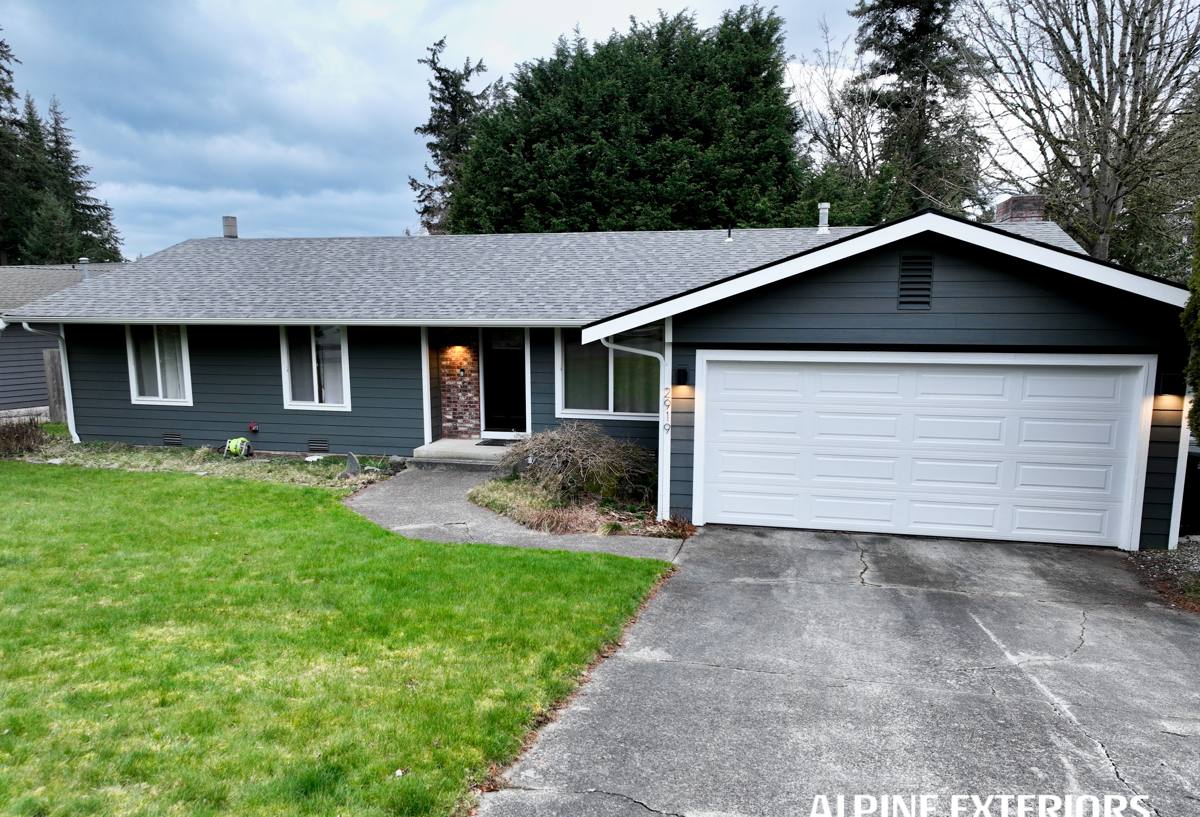
Signs Your Samish Home Needs Siding Replacement
Some damage is obvious. Some isn't, and that's the kind that costs more the longer it's ignored. Here's what we look for, and what you can check yourself before calling anyone:
- Soft or spongy spots when you press on siding, especially near the bottom courses and around window and door trim
- Persistent moss or algae growth that comes back within weeks of cleaning, not months
- Visible cupping, warping, or separation at the seams, particularly on walls that face prevailing weather
- Paint that's peeling or bubbling rather than just fading — a sign moisture is moving through the material, not just aging on top of it
- Rising interior heating costs or drafts near exterior walls, which often trace back to failed or missing weather barriers
- Visible rot at corners, bottom edges, or anywhere siding meets a roofline, deck, or porch
- Siding that's more than 20-25 years old, even if it looks intact — most material lifespans are catching up with it
Any one of these can be a localized repair. Several at once, especially on a home that hasn't had its siding touched in decades, usually means full replacement is the more honest recommendation — patching a system that's failing everywhere just delays the same conversation.
What a Correct Siding Replacement Actually Involves
Siding replacement is often sold as a cosmetic upgrade. In a climate like this, it's really a moisture-management project with a finish layer on top, and the parts nobody sees matter more than the parts everyone does.
Tear-Off and What's Underneath
Full removal of the old siding lets us actually see the sheathing, framing, and any existing water damage instead of guessing at what's hidden. In Samish, we routinely find that the visible siding looked fine while the underlying weather barrier had already failed — which is exactly the kind of problem a re-side over existing material would have buried for another decade.
Moisture Barrier and Drainage
A correctly installed weather-resistant barrier, properly lapped and taped, is the actual line of defense against wind-driven rain — the siding itself is the second layer, not the first. On many walls, especially those facing prevailing weather, we build in a rainscreen gap so any moisture that does get behind the siding can drain and dry instead of sitting against the sheathing.
Flashing and Fastening
Window and door flashing has to shed water outward at every layer, not just look sealed from the outside. Fasteners need to be the right type, spaced and driven to manufacturer spec — over-driven or under-driven nails are one of the most common causes of premature siding failure we see on re-inspections, and it's invisible until something goes wrong.
Why We Install Only James Hardie Fiber Cement
We made a deliberate call to install James Hardie fiber cement siding exclusively, and we don't treat that as a sales pitch — it's a standard we hold because of what this climate does to alternatives over time. Vinyl siding can work loose or warp under sustained wind-driven rain and temperature swings, and it's a petroleum-based product with real limits on paintability and fire resistance. Untreated or primed wood products need a maintenance schedule most homeowners underestimate, and in a moss-heavy environment like Samish, that maintenance burden shows up fast. We're not going to tell you those products are junk — plenty of homes wear them fine in easier climates — but we won't put our name on an install we don't think will hold up here.
James Hardie fiber cement is non-combustible, dimensionally stable in wet-dry cycling, and comes with a factory-applied ColorPlus finish that resists the fading and peeling that repainted siding struggles with. It also carries a strong transferable warranty, which matters more in a climate that stresses materials constantly than one that doesn't.
Choosing the Right Hardie Product Line for This Climate
Hardie builds its siding in climate-specific formulations, and for Whatcom County that means HZ5 engineering — a version of the fiber cement formulated for regions with real freeze-thaw cycling and sustained moisture exposure, as opposed to the HZ10 formulation built for hot, dry, high-UV climates. Getting this detail right isn't cosmetic; it affects how the material handles moisture absorption and expansion over the decades it's on your house.
Within that, most Samish homes land on one of a few configurations:
- HardiePlank lap siding — the most common choice, available in several exposure widths and textures, good for traditional and craftsman-style homes throughout the area
- HardiePanel vertical siding — often used as an accent or on modern-style homes, sometimes paired with board-and-batten trim
- HardieShingle — for homes wanting a shingle-style look without the maintenance burden of actual cedar shingles in a wet climate
ColorPlus factory finish is worth prioritizing here specifically because it resists the mildew and moss staining that field-applied paint struggles against — the finish is baked on and backed by its own warranty, rather than a site-applied coat that starts weathering the day it's sprayed.
Our Siding Replacement Process
- On-site inspection — we assess the existing siding, sheathing condition where accessible, and any trouble spots specific to your home's exposure and shading
- Written estimate — a clear scope covering removal, repair allowances, materials, and finish selections, no vague line items
- Tear-off — full removal of old siding and trim, with sheathing inspected and any rot or damage addressed before anything new goes on
- Weather barrier and drainage plane — properly lapped house wrap and, where called for, a rainscreen gap behind the new siding
- Flashing — windows, doors, and any roof-to-wall transitions detailed to shed water outward
- Hardie installation — installed to manufacturer spec for fastener type, spacing, and clearances, including the ground and roof clearances that keep moisture from wicking up from below
- Trim, caulking, and final finish — corners and trim completed, joints sealed with appropriate sealant
- Walkthrough — we go over the finished work with you before calling the job done
What Affects the Cost of Siding Replacement
Every home is different, and we'll never quote a number without seeing the house, but these are the factors that move the price most:
| Factor | Why It Matters |
|---|---|
| Home size and wall complexity | More square footage and more corners, gables, and dormers mean more labor and material |
| Condition of existing sheathing | Rot or moisture damage found during tear-off requires repair before new siding goes on |
| Number of stories | Multi-story homes need more scaffolding and staging, which adds time |
| Product line and profile | Lap, panel, and shingle styles carry different material and labor costs |
| Trim and detail work | Window casings, corner boards, and accent details add finish time |
| Access and site conditions | Tight lots, mature landscaping, or steep grading can slow staging and material handling |
Why Hiring a Crew That Already Works Samish Matters
A contractor who works this specific area regularly knows things a crew from outside the county has to learn on your house. That includes how far to build in drainage allowances given how much driving rain a particular wall orientation actually takes, how aggressively to plan for moss given a lot's tree cover and shade pattern, and what Whatcom County's permitting and inspection process actually expects — none of which you want someone figuring out for the first time on your project. It also means we're not guessing at material behavior in this climate; we've seen how Hardie performs on homes a few miles from yours, in the same salt air and the same rain.
Caring for Your New Siding
Correctly installed Hardie siding is low-maintenance, not no-maintenance. A periodic rinse to clear salt residue and organic buildup, keeping nearby vegetation trimmed back so air can actually move across shaded walls, and an occasional look at caulking around windows and trim will keep a well-installed system performing for decades. None of that is a heavy lift — it's the difference between siding that ages gracefully in this climate and siding that fights it the whole way.
If your Samish home is showing any of the signs above, or you'd just like an honest read on where your siding stands, we're happy to take a look. The estimate is free, there's no pressure, and you'll get a straight answer either way — use the form below to get started.