 Chuckanut Exterior
 A Standard, Not a Sales Pitch
Homeowners in Chuckanut ask us fairly often why we don't offer vinyl, LP SmartSide, or one of the other fiber cement brands on the market. It's a fair question, and it deserves a straight answer instead of a marketing line. We install James Hardie fiber cement siding exclusively because, after years of doing tear-offs and repairs on nearly every siding product sold in Whatcom County, it's the one material that consistently holds up to what this stretch of coastline throws at it. This page explains the reasoning, not just the recommendation.
We're not paid to say this. It costs us business every time a homeowner wants a cheaper vinyl job and we tell them we don't do that work. We hold the line because we'd rather turn down a job than warranty an install we don't believe in.
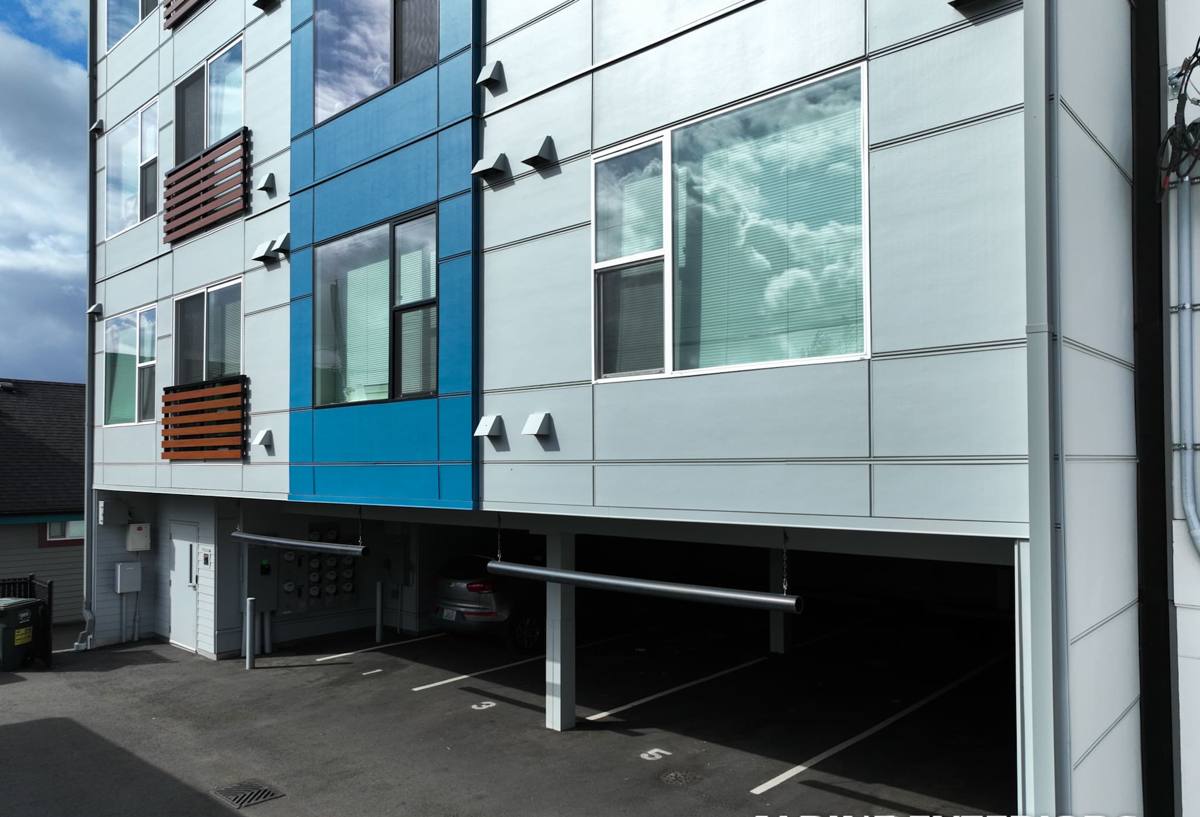
What Chuckanut's Climate Actually Does to Siding
Chuckanut sits right where Bellingham Bay meets the forested slopes of Chuckanut Mountain, and that combination is harder on a house exterior than most people realize. Three things matter most here:
Salt Air Off the Bay
Homes close to the water take on a fine mist of salt-laden air, especially during winter storms with onshore wind. Salt is corrosive to fasteners and hard on any siding product with metal components or seams that trap moisture. Over years, it accelerates finish breakdown on lower-grade products.
Driving Rain
Whatcom County doesn't just get rain — it gets wind-driven rain that hits siding at an angle instead of running straight down. That means water gets pushed up under laps, into seams, and behind trim in ways that a dry-climate siding installation never has to deal with. Every seam, joint, and butt edge is a potential entry point if the product or the install isn't built for it.
A Long Moss and Mildew Season
Between the tree cover on the mountain side and the marine humidity off the bay, Chuckanut gets long stretches of damp, shaded conditions that favor moss, algae, and mildew growth on north-facing walls. Siding that absorbs moisture or has an organic wood component gives that growth something to root into. Siding that doesn't, simply sheds it.
Why We Stopped Installing Other Products
We didn't start out as a Hardie-only contractor. Like most exterior companies, we used to install whatever the homeowner requested, including vinyl, engineered wood, and other cement board brands. Over enough call-backs and enough tear-offs of other companies' work, a pattern showed up: the failures we were fixing almost always traced back to the same handful of products, not to bad workmanship alone.
Vinyl's Real Trade-Offs
Vinyl is inexpensive and easy to install, and for a dry inland climate it can be a reasonable product. In a marine environment it has real limitations: it expands and contracts significantly with temperature swings, which opens gaps at laps and trim over time; it can warp or bow when installed too tight; and driving rain can get behind it more easily than behind a lapped fiber cement system installed with proper flashing. It's also thin enough that impact damage and UV fading are common complaints after a decade of coastal sun and wind.
Engineered Wood Siding (LP SmartSide and Similar)
Engineered wood products have improved a great deal and hold paint well when new. The trade-off is that they're still a wood-based substrate, which means the cut edges, seams, and any point where the factory treatment is compromised (a nail gun overdriven, a miscut edge, a scratch during install) becomes a place moisture can get in and start the product swelling or delaminating. In a climate with Chuckanut's rain load and humidity, that sensitivity to edge sealing and caulking maintenance is a real long-term liability.
Other Fiber Cement Brands (Cemplank, Allura)
These are legitimate fiber cement products and share Hardie's core non-combustible, moisture-resistant material advantages. Where we've found the difference is in factory finish consistency, product line depth (specific formulations engineered for high-moisture climates), and the strength and portability of the warranty. Hardie's ColorPlus finish and HZ5 climate-specific product line are purpose-built for exactly the conditions we deal with here, and the company has the manufacturing scale and track record to back a long warranty with real substance behind it.
Primed Spruce and Cedar
Real wood siding, whether primed spruce boards or cedar, looks excellent and has genuine appeal for homeowners who want a natural material. It also requires the most ongoing maintenance of anything on this list: repainting or restaining on a real cycle, caulking upkeep, and vigilance against rot, especially on north walls that stay damp longest in our moss season. We'll still repair or match existing wood siding for homeowners who want to keep it, but we don't install new wood siding as a primary system because we don't think it's a fair trade for most people's time and budget over a 20-30 year horizon.
What James Hardie Gets Right
To be fair to the products above, Hardie isn't perfect either — it's heavier to install, requires specific fastening and clearance details, and costs more upfront than vinyl. What it does well, consistently, is the reason we standardized on it:
- Non-combustible material — fiber cement doesn't feed a fire the way wood-based products can, which matters more each year as wildfire smoke seasons extend even into Western Washington.
- Factory-applied ColorPlus finish — baked-on, warranted finish that resists fading and chalking far longer than field-applied paint, which matters under our UV and salt exposure.
- Engineered for moisture — Hardie's product formulation resists swelling, cupping, and rot in ways that matter directly in a driving-rain climate like ours.
- Climate-specific HZ product lines — Hardie engineers its board formulation differently for different climate zones (HZ5 for our region), rather than selling one national product.
- Long, transferable warranty — a meaningful warranty on both the substrate and the factory finish, which follows the house if it's sold.
- Track record — decades of installations in wet, coastal Pacific Northwest conditions we can actually reference, not marketing claims from a newer product.
Siding Comparison for Whatcom County Conditions
| Factor | Vinyl | Engineered Wood | James Hardie Fiber Cement |
|---|---|---|---|
| Moisture resistance in driving rain | Moderate — seams can leak | Moderate — edges are vulnerable | High when correctly installed and flashed |
| Salt air / coastal durability | Fair — can become brittle over time | Fair — coating wear exposes substrate | Strong — non-organic substrate |
| Moss/mildew resistance | Good (non-porous) but growth sits on surface | Fair — organic component can host growth | Good — factory finish sheds growth, easy to clean |
| Fire resistance | Low — melts/deforms under heat | Moderate — wood-based | High — non-combustible |
| Typical finish lifespan | 10-20 years before fading/warping issues | Field-painted, repaint on a cycle | 15+ years on factory ColorPlus finish |
| Upfront cost | Lowest | Mid | Higher, offset by lifespan and warranty |
None of this means the other products are unusable everywhere — it means that for this specific stretch of Washington coastline, the trade-offs stack up differently than they would in a drier, milder climate.
What Correct Hardie Installation Actually Requires
Buying the right material only solves half the problem. Fiber cement siding fails prematurely almost every time we see it when the installation, not the product, cut corners. A correct Hardie install for this climate includes:
- Proper weather-resistive barrier and rainscreen or drainage gap behind the siding, especially important given our rain load
- Correct fastener type, spacing, and penetration depth per Hardie's published installation specs
- Factory-cut or properly sealed field cuts, since an unsealed cut edge is the most common failure point
- Correct clearance from grade, roofing, and decks to keep splashback and standing water away from the bottom course
- Proper flashing and caulking at every window, door, and penetration — not just at the field of the wall
- Manufacturer-approved touch-up paint and caulk products, so the warranty stays intact
We install to Hardie's published specifications on every job, which is part of why we're comfortable standing behind the product's warranty in a climate that's genuinely tough on siding.
What This Means If You're Planning a Siding Project
If you're getting quotes for siding replacement in Chuckanut or elsewhere in Whatcom County, it's worth asking every contractor you talk to why they recommend the product they're recommending, and what they've actually seen fail in this climate over time. A contractor who installs several different brands may have real reasons for each recommendation, but it's also worth knowing if the recommendation is about what fits your house or what's cheapest to install quickly.
Our answer is the one on this page: after enough tear-offs and warranty calls, James Hardie fiber cement is what we're willing to put our name behind here. We're happy to walk you through Hardie's product lines, colors, and what a correct install looks like on your specific home.
If you'd like to talk through your siding options or get a straightforward, no-pressure estimate, fill out the form below and we'll take a look at your home and give you an honest read on what it needs.