 Chuckanut Exterior
 Exterior Work Built for Silver Beach's Climate
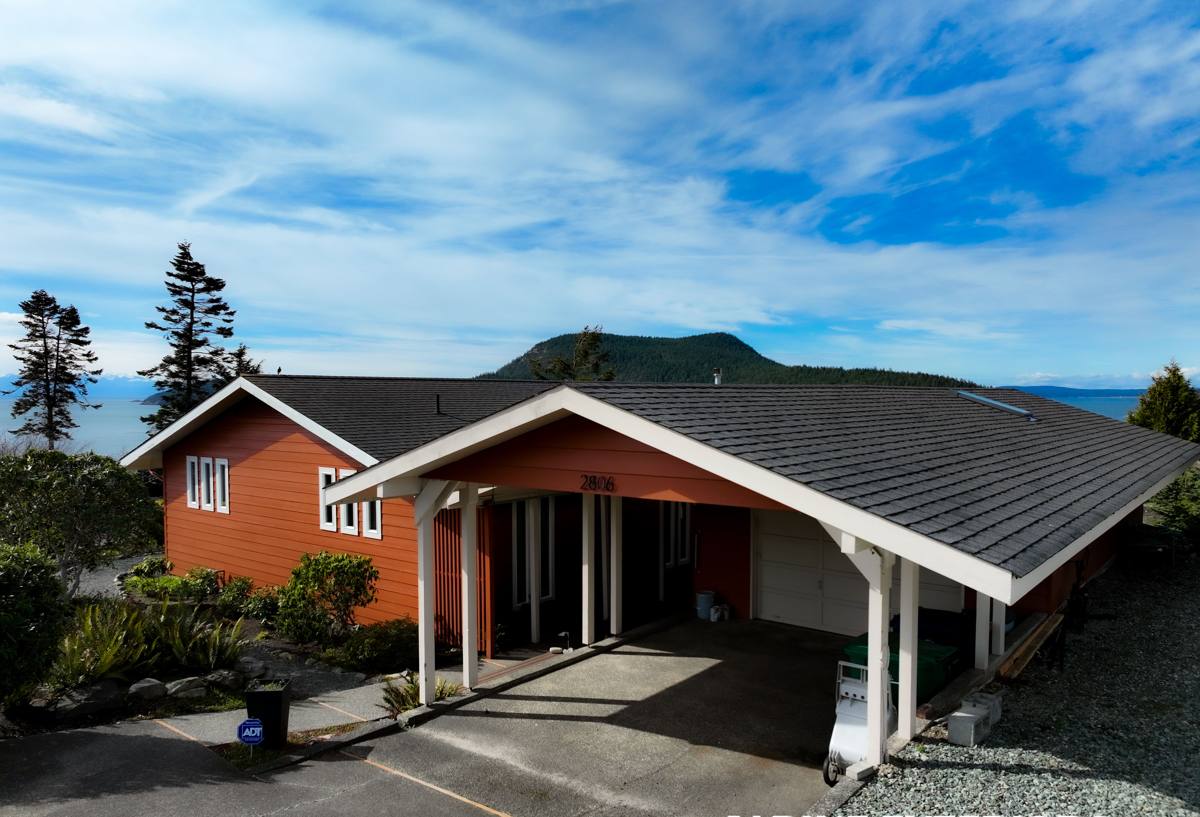
Homes around Silver Beach in the Chuckanut area of Whatcom County deal with a specific combination of weather stress that a lot of generic exterior products simply weren't designed to handle. Salt-laden air moving off the water, long stretches of driving rain through the fall and winter, and a moss season that can run most of the year on shaded, north-facing walls and roof planes all work together to break down the wrong materials faster than most homeowners expect. We've built our whole approach around what actually holds up here, not what's cheapest to install.
That climate reality is the reason we standardized on one siding system rather than offering a menu of options. It's also why our roofing, window, and deck work all get evaluated through the same lens: how will this hold up on a Whatcom County exterior facing salt air and sustained moisture, year after year, not just in the brochure photos.
What Salt Air, Rain, and Moss Actually Do to a Home
Salt Air and Metal Fatigue
Airborne salt accelerates corrosion on fasteners, flashing, gutters, and any exposed metal trim. Over time this shows up as rust streaks below nail heads, pitted hardware, and premature failure of cheaper flashing systems. It's a slow process, which is exactly why it gets ignored until it's expensive to fix.
Driving Rain and Wind-Driven Moisture
Chuckanut's exposure to weather moving in off the water means rain doesn't always fall straight down — it drives sideways into wall assemblies, chases up under poorly lapped siding, and finds its way behind trim that isn't properly flashed. Water intrusion at seams and penetrations is the single most common cause of rot we see on exterior siding and trim in this region.
Moss, Algae, and Constant Dampness
Shaded lots, tree cover, and a long damp season give moss and algae plenty of time to establish on roofing, north-facing siding, and decking. Beyond the cosmetic issue, moss holds moisture against the surface it's growing on, which speeds up decay in wood-based products and can shorten the life of asphalt roofing if it's never addressed.
Why We Install James Hardie Fiber Cement Siding Only
We don't offer vinyl, LP SmartSide, Cemplank, Allura, primed spruce, or cedar siding. That's a deliberate professional standard, not a lack of options. Each of those products has real strengths, but each also has a trade-off that matters more in a climate like this one than it might elsewhere.
- Vinyl is inexpensive and low-maintenance in mild climates, but it can warp or become brittle with temperature swings and doesn't hold paint if a homeowner ever wants to change the color.
- LP SmartSide is an engineered wood product — solid when installed and maintained exactly to spec, but wood-based products are more sensitive to sustained moisture exposure than fiber cement, and moss-prone, damp lots are where that sensitivity shows up first.
- Cedar has real curb appeal, but it requires ongoing refinishing and is vulnerable to rot and insect damage in a wet, shaded environment without diligent upkeep.
- Primed spruce and other primed wood siding rely entirely on the paint film staying intact; once that film is breached, moisture gets into the wood underneath and the clock starts on rot.
James Hardie fiber cement is non-combustible, dimensionally stable, and manufactured with a factory-applied ColorPlus finish that resists fading and holds up to UV and moisture exposure far better than field-applied paint on wood-based products. Hardie also engineers specific product lines (their HZ5 formulation) for climates like the Pacific Northwest, which is exactly the environment Silver Beach sits in. Combined with a strong transferable warranty, it's the product we're willing to put our name behind.
Siding Material Comparison
| Material | Moisture Resistance | Maintenance | Typical Lifespan |
|---|---|---|---|
| James Hardie Fiber Cement | Excellent | Low — factory finish, occasional wash | 30+ years |
| Vinyl | Good, but seams and gaps allow moisture behind panels | Low, but no repainting option | 20-30 years |
| LP SmartSide | Good if sealed and maintained exactly to spec | Moderate — caulking and touch-up needed | 20-25 years |
| Cedar | Fair — vulnerable without upkeep | High — refinishing every few years | 20-30 years with upkeep |
| Primed Spruce/Wood | Fair — depends entirely on paint film | High — repainting required | 15-25 years |
Roofing for a Salt Air, Moss-Prone Environment
Roofs in the Silver Beach area take on the same pressures as siding, just from a different angle. Metal flashing, valleys, and fasteners are exposed to the same salt air corrosion, and low-slope or shaded roof planes are where moss gets its best foothold. We look closely at ventilation, flashing details around penetrations, and gutter condition, since a roof that's shedding water properly and breathing correctly resists moss buildup far longer than one that's trapping moisture against the deck. Regular moss treatment and gutter maintenance matter more here than in drier parts of the state — skipping them shortens the life of an otherwise good roofing system.
Windows That Handle Wind-Driven Rain
Window performance in this area comes down to two things: the quality of the window unit itself and how well it's flashed and sealed into the wall assembly. A high-end window installed with poor flashing will still leak in driving rain, and a modest window installed correctly will often outperform it. We pay particular attention to head flashing, sill pans, and integration with the siding system so water is directed out and away from the framing, not into it. Energy efficiency matters too, but in a climate defined by wind-driven moisture, keeping water out of the wall cavity is the first priority.
Decks Built to Handle Standing Moisture and Moss
Decks in shaded, damp yards are especially prone to moss growth and slow-draining surfaces, both of which accelerate wear on fasteners, ledger connections, and decking material itself. Proper spacing between boards, correct ledger flashing where the deck meets the house, and material choices suited to sustained dampness all extend the life of a deck significantly. We also make sure the ledger connection — one of the most common failure points on older decks — is flashed correctly to keep water from tracking into the house's wall assembly.
Why a Local Crew Matters in Chuckanut
A crew that works throughout Whatcom County regularly sees how homes in specific microclimates — shaded lots, waterfront exposure, tree-covered properties — actually age over five, ten, and twenty years. That's different knowledge than a general contractor working from a single regional playbook. Local crews also know which flashing details and product specs hold up to this area's rain patterns, and they're accountable in the community they work in, not passing through for a single job.
What to Expect From a Silver Beach Exterior Project
Assessment
We start by walking the exterior with the homeowner, looking specifically for moisture entry points, moss buildup, flashing condition, and any signs of rot or corrosion already underway.
Scope and Product Selection
For siding, that means James Hardie's specific product line and profile suited to the home; for roofing, windows, and decks, it means matching materials and details to the exposure that particular home actually faces.
Installation to Spec
Manufacturer warranties on products like James Hardie siding depend on correct installation — proper fastening, clearances, and flashing. We install to that spec, not around it.
Walkthrough and Maintenance Guidance
Before we finish a project, we walk the homeowner through what routine upkeep looks like for their specific home — gutter clearing, moss treatment intervals, and what to watch for going forward.
Checklist: Vetting an Exterior Contractor in Whatcom County
- Ask what siding, roofing, and window materials they install and why — and whether they'll explain the trade-offs of alternatives, not just push their preferred product.
- Confirm they carry current Washington contractor licensing and adequate insurance.
- Ask how they handle flashing at penetrations, deck ledgers, and window openings — this is where most water damage actually starts.
- Ask about warranty terms, both the manufacturer's and the installer's workmanship warranty, and whether the warranty is transferable if you sell the home.
- Ask for a written, itemized estimate rather than a vague lump-sum number.
- Ask how they handle moss and moisture-prone areas specific to your lot, not a generic answer.
Cost Factors to Expect
Exterior project costs in this area vary based on home size, the condition of the existing structure underneath, accessibility, and the amount of repair work needed before new materials go on. Homes with hidden moisture damage from long-neglected siding or roofing often need remediation work factored in before the visible finish work begins — something we flag during assessment rather than after the project starts.
If you're weighing exterior work on a home in the Silver Beach area, we're glad to walk the property with you and give you a straightforward, no-pressure estimate — including an honest look at what your home's specific exposure calls for. Use the form below to get started.