 Chuckanut Exterior
 Building Decks for Silver Beach's Marine Climate
Silver Beach sits close enough to the water that salt-tinged air, wind-driven rain, and heavy tree cover shape almost every decision that goes into a deck built to last. A deck design that works fine on the dry side of the county can start showing problems here within a few seasons — soft spots at the ledger, black streaking on the boards, fasteners bleeding rust through the finish. None of that is inevitable. It just means the deck has to be built for the environment it's actually in, not a generic one.
We work in this part of Whatcom County regularly, and the decks we build for Silver Beach homeowners get a few specific things right from the start: material choices that tolerate moisture and salt exposure, framing details that keep water moving instead of pooling, and hardware that won't corrode before the wood itself wears out.
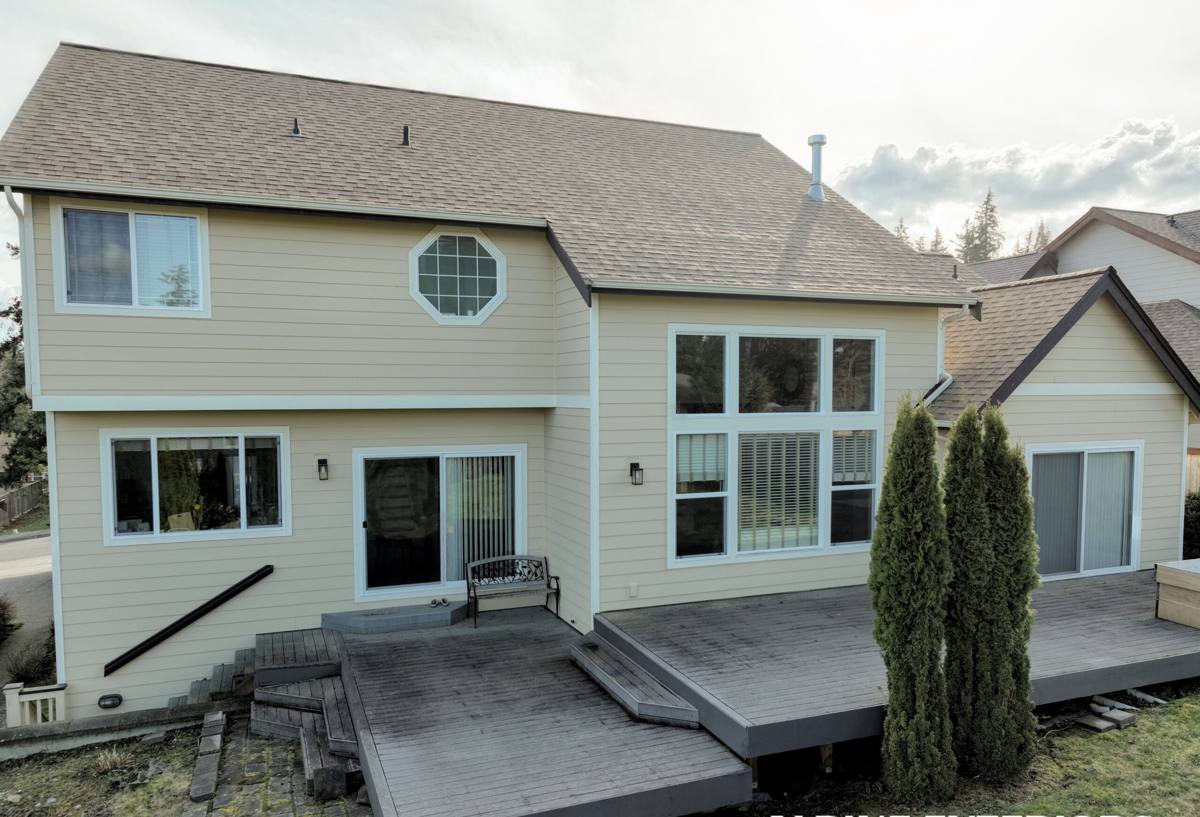
What Makes This Neighborhood Tougher on a Deck
A few conditions show up together here more than in most inland parts of the county:
- Salt air exposure — proximity to the water accelerates corrosion on fasteners, hinges, and any unprotected metal hardware.
- Driving rain — wind off the water pushes rain sideways under railings and against ledger boards, not just straight down onto the decking surface.
- Shade and tree cover — mature trees common to this area keep decks damp longer after a storm, which is exactly what moss and algae need to take hold.
- Long wet seasons — extended stretches of damp weather mean wood surfaces rarely get a full, uninterrupted dry-out period.
Individually, none of these are unusual for Pacific Northwest construction. Together, on a specific lot with specific sun exposure and water proximity, they determine what materials and details actually make sense for that deck — which is why a walkthrough of the actual site matters more than a one-size-fits-all spec.
Choosing the Right Decking Material
There's no single "best" decking material — there's a best material for a given budget, sun exposure, and maintenance tolerance. Here's how the common options compare for a shaded, moisture-heavy lot like the ones typical of this area:
| Material | Moisture Behavior | Maintenance | Typical Lifespan |
|---|---|---|---|
| Pressure-treated lumber | Resists rot when properly sealed; still absorbs and releases moisture with the seasons | Needs re-staining or sealing every 1–3 years, more often in shaded areas | 15–20 years with upkeep |
| Cedar | Naturally rot- and insect-resistant, but softer and more prone to surface checking in constant damp | Regular sealing to preserve color and prevent graying | 15–20 years with upkeep |
| Composite decking | Doesn't absorb water or rot, but shaded/damp boards can still grow surface algae or moss | Periodic washing; no staining or sealing required | 25–30+ years, backed by manufacturer warranty |
For heavily shaded, damp lots near the water, we usually steer clients toward composite or a well-sealed cedar rather than budget pressure-treated lumber — not because pressure-treated is a bad product, but because it demands more consistent upkeep to perform well in exactly the conditions this neighborhood has. If a homeowner is comfortable with a sealing schedule, real wood still has a place; it's about matching the material to how much maintenance you actually want to do.
Railings and Fasteners
Railings take the worst of the driving rain, so the connection points matter as much as the material. We use stainless steel or coated fasteners rated for coastal/marine exposure rather than standard galvanized hardware, which can start showing rust streaks in salt air within a couple of seasons. Every hidden fastener and bracket gets the same treatment — the parts you don't see are usually the first ones to fail if they're undersized for the environment.
Framing and Substructure Details That Actually Matter
Most deck failures don't start at the surface — they start underneath, where nobody's looking. A few details we treat as non-negotiable on every build in this area:
- Ledger boards flashed and sealed against the house to stop water from tracking behind siding — a common source of hidden rot on older decks.
- Joist tape or equivalent protection on top of framing lumber so fasteners don't create a wick point for standing water.
- Proper slope away from the house on the decking surface, even on lower platform decks, so water sheds instead of sitting.
- Adequate ventilation underneath the deck so the substructure can actually dry out between storms instead of staying damp all season.
None of this is visible once the deck is finished, which is exactly why it's worth asking a contractor to walk you through it before the boards go down.
Drainage, Shade, and Moss Prevention
Moss season in this part of Whatcom County is a genuine maintenance factor, not just an aesthetic annoyance. Moss and algae hold moisture against the decking surface, and on wood that means accelerated rot; on composite it mostly means slippery footing and staining. A few design choices reduce how much of a problem this becomes:
Surface Drainage
Board spacing and substructure slope should move water off the deck quickly rather than letting it sit between boards. Tight-fit composite systems in particular need drainage channels built into the substructure, or water gets trapped where you can't see it.
Sun and Airflow
We can't move the tree line, but deck placement, railing style, and even gaps between fascia boards can be adjusted to let more air and light reach the surface. On lots with heavy overhead cover, this is often the single biggest factor in how often a deck needs cleaning.
Cleaning Access
A deck that's easy to sweep, rinse, and treat gets maintained; one with awkward corners and tight rail baluster spacing often doesn't. We factor cleaning access into the design itself, not as an afterthought.
How Our Process Works
1. Site Walkthrough and Design
We look at sun exposure, drainage patterns, tree cover, and how the deck will actually be used before recommending materials. This is also when we talk through maintenance expectations honestly — what a given material will actually require year to year in this specific spot.
2. Permitting
Most new decks and significant deck rebuilds in Whatcom County require a permit, particularly when structural changes, height, or footing work are involved. We handle the permit process as part of the job so it isn't left for the homeowner to sort out separately.
3. Construction
Framing, flashing, and fastener choices follow the details outlined above — built for the site conditions, not a generic spec. We keep the site reasonably contained and communicate on schedule as the build progresses.
4. Final Walkthrough
Before we consider the job done, we walk the finished deck with the homeowner, point out any maintenance items specific to the materials chosen, and make sure everything meets the standard we set at the start.
Permits and Local Code Considerations
Deck permitting requirements in Whatcom County generally depend on the deck's height above grade, its size, and whether it's attached to the structure. Decks close to property lines may also need to account for setback requirements. Because these details vary by lot and by the specifics of the build, we confirm exact requirements for your property rather than assuming a blanket answer — this is one area where guessing wrong costs real time and money.
Deck Maintenance Checklist for This Climate
Whatever material you choose, a short seasonal routine goes a long way toward protecting the investment:
- Sweep debris and standing leaves off the surface regularly, especially in fall and winter.
- Rinse or gently wash the surface to discourage moss and algae buildup before it takes hold.
- Inspect fasteners and hardware annually for rust streaking or looseness.
- Check the ledger board area at the house for signs of water tracking or staining.
- Re-seal or re-stain wood decking on the schedule appropriate to the product — don't wait for visible graying.
- Clear gaps between boards so water and debris don't accumulate and hold moisture against the substructure.
Why a Crew That Already Works Silver Beach Matters
A deck built without accounting for salt air, driving rain, and a long moss season will still look fine on install day — the problems show up two or three years later, after the crew that built it is long gone. Working this specific area regularly means we've already seen how different materials and details hold up under these exact conditions, not a generalized version of Pacific Northwest weather. That translates into fewer surprises during the build and a deck that's easier to maintain once it's yours.
If you're planning a new deck or replacing one that's showing its age, we're happy to walk the site with you and talk through what makes sense for your home — no pressure, no obligation. Reach out using the form below for a free estimate.