 Chuckanut Exterior
 Exterior Work Built for Mount Vernon's Climate
Homes in the Mount Vernon area sit in a stretch of the Pacific Northwest where marine air, long wet winters, and short dry summers define how a house ages. It's not dramatic weather most of the year — it's persistent weather. Low clouds, drizzle that lasts for days, humid air off the water, and a moss season that can stretch from October into May. Every exterior surface on a house here is dealing with moisture management as its full-time job, whether the house was built five years ago or fifty.
We're a local exterior contractor working the Whatcom and Skagit County corridor, and we see the same patterns on home after home: siding that held paint fine in a drier climate but failed here within a decade, roofs that lost granules and grew moss faster than expected, and decks that looked fine until someone finally pulled up a board and found the framing underneath had been wet for years. None of that is unusual for this region. It's just what happens when exterior materials aren't matched to the climate they're installed in.
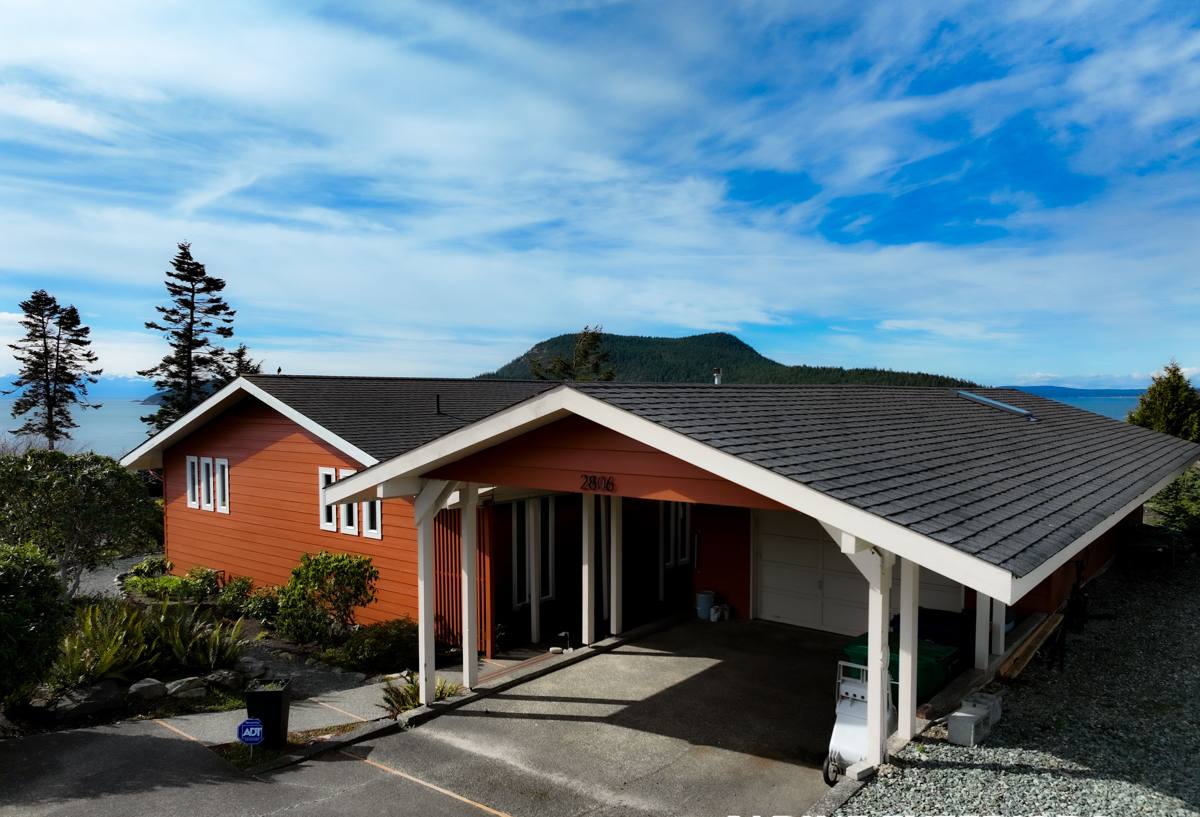
What Local Homes Actually Face
Salt Air and Moisture
Proximity to Puget Sound and the surrounding waterways means a steady low-level exposure to salt-laden, moist air. That air finds every seam, fastener, and unpainted edge on a house. Metal fasteners corrode faster, paint films break down sooner, and any wood-based product that isn't fully sealed on every cut edge starts absorbing moisture from the outside in.
Driving Rain
Rain here doesn't just fall — wind pushes it sideways into wall assemblies, especially on homes with western and southern exposures that catch weather coming off the water. Siding laps, window flashing, and deck ledger connections all need to be detailed correctly, because driving rain finds any gap in the water management plan and it finds it repeatedly, year after year.
The Long Moss Season
Shade, humidity, and cool temperatures are exactly what moss wants, and this area supplies all three for a good chunk of the year. Roofs with north-facing slopes or heavy tree cover collect moss fastest, and once it establishes, it holds moisture against the roofing material and lifts shingles at the edges. Siding in shaded, damp corners of a house can develop the same problem if it isn't cleaned and if the product itself doesn't resist moisture absorption.
Siding: Why We Install James Hardie and Nothing Else
We made a decision early on to install only James Hardie fiber cement siding — not vinyl, not LP SmartSide, not primed wood, not other fiber cement brands. That's a narrower lineup than most exterior contractors offer, and we think that's the right call for homes in this climate specifically.
Why Not the Alternatives
Vinyl siding is inexpensive and low-maintenance in mild climates, but it expands and contracts with temperature swings, can warp or crack over time, and doesn't hold up well against wind-driven debris. In a region with sustained wet weather, vinyl's seams and J-channels also give moisture a path behind the cladding if installation isn't precise.
Wood-based siding products, including engineered wood like LP SmartSide, rely on factory treatments and careful field sealing of every cut edge to resist moisture. In a climate with this much sustained dampness and moss pressure, any lapse in that sealing — a missed cut edge, a nail popped loose, caulk that fails after a few winters — becomes an entry point for rot. We've replaced enough wood-based siding on wet, shaded lots to be cautious about recommending it here.
Other fiber cement brands exist, and some are reasonable products. We standardized on James Hardie because of its factory-applied ColorPlus finish, its HZ5 product line engineered specifically for wet, humid climates like ours, and the strength of its transferable warranty. Consistency in one system also means our crews install it the same way, every time, to the same detail standard.
Siding Comparison at a Glance
| Material | Moisture Behavior Here | Maintenance | Typical Lifespan |
|---|---|---|---|
| Vinyl | Can trap moisture at seams; warps with heat/cold cycling | Low, but limited repair options | 15-25 years |
| Engineered wood (e.g. LP SmartSide) | Vulnerable at unsealed cut edges and fastener points | Requires ongoing caulk/paint upkeep | 15-30 years, install-dependent |
| Primed wood/cedar | Absorbs moisture readily without diligent upkeep | High — repainting, caulking, moss treatment | Varies widely |
| James Hardie fiber cement | Non-combustible, engineered moisture resistance (HZ5) | Low — factory finish holds color | Decades with correct install |
Roofing for a Wet, Moss-Prone Climate
A roof in Mount Vernon's climate has to manage two things at once: shedding driving rain and resisting moss establishment on shaded slopes. We look at slope, tree cover, and existing ventilation before recommending materials, because a roof that's fine on a sun-exposed south slope can moss over within a couple seasons on the north side of the same house. Proper attic and roof ventilation matters as much as the roofing material itself — trapped moisture underneath a roof deck causes problems no shingle can fix from above.
Where moss is already established, it needs to be removed carefully rather than pressure-washed aggressively, which can strip granules and shorten a roof's remaining life. We treat moss control as an ongoing maintenance item for homes in shaded, damp settings, not a one-time fix.
Windows: Sealing Out Wind-Driven Rain
Old, single-pane, or poorly flashed windows are one of the most common sources of water intrusion we find on homes in this region. It's rarely the glass itself — it's failed flashing, degraded caulk, or a frame that was never properly integrated with the siding's water management plane. When we replace windows, flashing and integration with the surrounding wall assembly gets as much attention as the window unit itself, because a good window installed poorly will leak just as fast as a bad one.
What to Watch For
- Soft or discolored drywall/trim below window sills — a sign of past or ongoing leaks
- Fogging between panes on double-pane windows, meaning the seal has failed
- Drafts or condensation buildup on interior glass during cold, wet stretches
- Visible gaps or cracked caulk around exterior window trim
- Difficulty opening/closing, which can indicate frame swelling from moisture
Decks: Built to Survive Wet Winters
Decks take the climate's abuse directly — standing water, freeze-thaw cycling in cold snaps, and constant exposure with no roof overhead. Ledger board connections and flashing where a deck meets the house are the most common failure points we find, because that's exactly where wind-driven rain gets pushed. Proper flashing, gapped decking for drainage, and hardware rated for wet exposure all matter more here than in drier parts of the state. We also pay attention to how a deck is graded and drained underneath, since standing water beneath a deck feeds rot and moss just as much as rain falling on top of it.
Why Hire a Local Crew
A crew that works this specific area regularly develops a feel for which details matter most — where salt air corrosion shows up first, which lots hold moisture longest, which roof slopes moss over fastest. That local pattern recognition shows up in small decisions: which fasteners we spec, how we detail flashing on a shaded wall, when we flag a roof for extra ventilation work instead of just a replacement. It also means we're around for warranty follow-through and questions after the work is done, not just for the initial install.
Our Process
- On-site assessment of current siding, roofing, windows, or deck condition, including moisture and ventilation checks
- Honest recommendation — sometimes that's a full replacement, sometimes it's targeted repair and maintenance
- Clear, itemized proposal before any work begins
- Installation to manufacturer specification, with attention to flashing and water management details specific to this climate
- Walkthrough at completion so you know what was done and what maintenance to expect going forward
Maintenance Habits Worth Adopting
Regardless of which exterior systems are on your home, a few habits go a long way in this climate: keep gutters clear so water isn't overflowing onto siding or fascia, address moss on roofs and shaded siding before it spreads, and walk your deck each fall to check for soft spots or failing fasteners before winter sets in. Catching a small issue in October is a lot cheaper than fixing water damage discovered in March.
If you're dealing with aging siding, a roof that's showing its age, drafty windows, or a deck that needs a closer look, we're happy to come take a look and give you a straight answer about what your home actually needs. The estimate is free, there's no pressure, and you'll get a clear picture of your options before you decide anything.