 Chuckanut Exterior
 Building Decks That Actually Hold Up in Mount Vernon
A deck in Mount Vernon lives a harder life than a deck built somewhere dry and inland. Between the salt-laden air moving off the water, long stretches of driving rain, and a moss season that can run most of the year in shaded yards, the materials and details that work fine elsewhere start to fail here within a few seasons if they weren't chosen and installed with this specific climate in mind. We've built and repaired enough decks around Whatcom County to know exactly where that failure shows up first — and how to avoid it from day one.
This page is about one thing: custom deck construction for homes in and around Mount Vernon. Not a general deck overview, but the specific decisions that matter for this area — fastener selection, drainage detailing, framing spans, and footing depth for the soil and rainfall we actually get here.
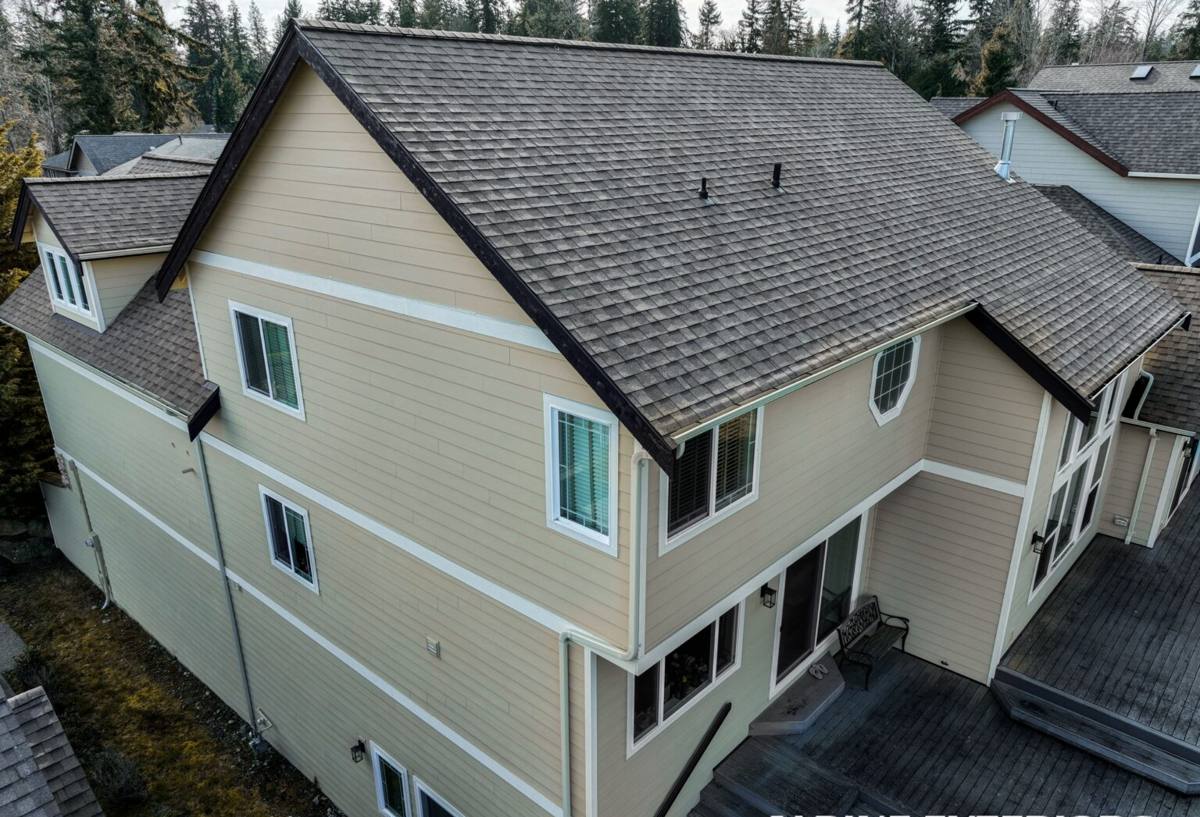
What Mount Vernon's Climate Does to a Deck
Salt Air and Corrosion
Properties closer to the water deal with airborne salt that accelerates corrosion on anything metal. Standard zinc-coated fasteners and connectors that are rated for general exterior use can start rusting and staining lumber within a couple of years in a salt-exposed yard. This isn't cosmetic only — a corroded structural connector is a structural problem.
Driving Rain and Moisture Intrusion
Wind-driven rain doesn't fall straight down — it gets pushed sideways into ledger connections, under railing posts, and into any gap in flashing. A deck built without wind-driven rain in mind will show water staining on the house siding above the ledger board and soft, rotting framing within a few years, often hidden under the decking where you can't see it until it's serious.
Moss, Algae, and a Long Wet Season
Shaded yards and a mild, wet climate mean moss and algae get a long growing window on horizontal wood surfaces. Beyond the slip hazard, moss holds moisture against the board surface, which speeds up rot in wood decking and can void warranties on some composite products if drainage and airflow underneath aren't handled correctly.
What a Correctly Built Deck Requires Here
Ledger Attachment and Flashing
The ledger board — where the deck attaches to the house — is the single most common failure point we see on older decks in this area. It needs proper flashing that directs water away from the house framing, not caulk alone, and lag bolts or through-bolts rated for the load with corrosion-resistant hardware. Done right, this connection should outlast the decking itself.
Fastener and Hardware Selection
Given the salt exposure common around Mount Vernon, we default to stainless steel or heavy hot-dip galvanized fasteners and joist hangers rather than standard exterior-rated coatings, especially on decks closer to the water or in more exposed locations. It costs more up front and it's the difference between hardware that's still solid in fifteen years and hardware that's staining the wood and losing grip in five.
Framing and Footings
Joist spacing and beam spans need to account for the decking material chosen — composite and wood don't always share the same span tables — and footings need to go below frost depth and be sized for the soil conditions on the lot. Wetter clay-heavy soils common in parts of this region can shift more than well-drained sandy soil, so footing depth and diameter matter more here than in a drier climate.
Drainage and Airflow Underneath
A deck that traps standing water or blocks airflow underneath is a deck that rots from below. Proper board spacing, grading away from the house, and in some cases an under-deck drainage system for the space below a raised deck all matter more in a climate that gets this much sustained rainfall.
Choosing Materials for This Climate
There's no single "best" decking material — the right choice depends on budget, maintenance tolerance, and how exposed the deck is to moss and moisture. Here's how the common options actually compare for a Mount Vernon property:
| Material | Moisture & Moss Behavior | Maintenance | Typical Lifespan Here |
|---|---|---|---|
| Pressure-treated wood | Absorbs moisture readily; moss and algae take hold faster without regular cleaning | Annual cleaning and periodic sealing/staining | 10–15 years with upkeep |
| Cedar | Naturally more rot-resistant than treated pine, but still needs sealing to shed water and resist moss | Sealing every 1–2 years | 15–20 years with upkeep |
| Composite decking | Won't rot, but surface-level moss and algae can still grow if the deck stays shaded and damp; requires periodic washing | Occasional washing, no staining/sealing | 25+ years, backed by manufacturer warranty |
| PVC/vinyl decking | Fully moisture-resistant surface; least prone to moss adhesion of the common options | Occasional washing | 25+ years, backed by manufacturer warranty |
We don't push one product over another as a rule — we walk through how much sun exposure the deck gets, how much maintenance the household actually wants to do, and the budget, then recommend accordingly. What we won't do is install any decking material with a fastening or drainage detail that we know performs poorly in sustained wet conditions, regardless of the up-front cost savings — that's a maintenance headache and a warranty risk we'd rather avoid putting on a homeowner.
Our Process for a Mount Vernon Deck Build
1. On-Site Assessment
We look at sun exposure, drainage on the lot, proximity to the water or open wind exposure, existing grade, and how the ledger connection point on the house is currently built. This is what drives our material and hardware recommendations — not a generic template.
2. Design and Permitting
Deck size, height, railing requirements, and stair layout all get worked out before anything is ordered. Most deck projects in this area require a permit and inspection, and we handle that process rather than leaving it to the homeowner to navigate.
3. Footings and Framing
Footings go in at the depth and spacing the design calls for, framed with corrosion-resistant hardware sized for the actual loads and spans involved, not the minimum that happens to pass.
4. Ledger, Flashing, and Waterproofing
This is the step we won't shortcut. Proper flashing at the ledger, correctly lapped and sealed, is what keeps water out of the house framing for the life of the deck.
5. Decking, Railing, and Finish Details
Board spacing, fastening method (hidden fasteners are common with composite and PVC), and railing installation are finished out, along with any lighting or stair details in the design.
6. Final Walkthrough and Inspection
We walk the finished deck with the homeowner, confirm everything matches the design, and make sure any required final inspection is scheduled and passed.
Permits, Code, and Railing Requirements
Decks above a certain height typically require guardrails at a minimum code height, with baluster spacing that meets code to prevent a small child from passing through. Stair railings, handrail graspability, and footing depth are all governed by the same building code that applies to the rest of the house structure. Skipping the permit process might save time up front, but it creates real problems at resale when a buyer's inspector or the county flags unpermitted structural work.
A Practical Checklist Before You Sign a Deck Contract
- Confirm the ledger flashing method is specified in writing, not just "sealed with caulk"
- Ask what grade of fastener and hardware is being used, and whether it's rated for salt-air exposure if your property is near the water
- Confirm footing depth and spacing match your soil conditions, not just a generic minimum
- Get the decking material warranty in writing, including what voids it
- Confirm who is pulling the permit and scheduling inspections
- Ask how drainage and airflow underneath the deck will be handled, especially on a raised deck
- Get a written scope covering railing height, baluster spacing, and stair details before work starts
Why Local Experience Matters for This Job
A deck built by a crew that hasn't dealt with this climate before will often look fine on completion day and start showing problems two or three winters in — soft ledger framing, corroded hardware staining the boards, or moss holding moisture against the decking surface. We've done enough repair work on decks originally built without these details in mind to know exactly what to do differently the first time. Working regularly in and around Mount Vernon and the broader Whatcom County area means we're not guessing at how salt air, driving rain, and a long moss season affect a build — we've seen it firsthand and build accordingly from the footings up.
Get a Free Estimate
If you're planning a new deck or replacing one that's showing its age, we're happy to come take a look, walk through material and design options suited to your property, and give you a straightforward, no-pressure estimate. There's a form below to get started.