 Chuckanut Exterior
 Siding Built for the Blanchard Coastline
Blanchard sits in a stretch of Whatcom County where the siding on a house works harder than it does almost anywhere else in the state. The homes here are close enough to salt water to catch airborne salt spray, exposed enough to catch driving rain off the water, and shaded enough by fir and cedar cover that moss and algae get a long growing season on anything that stays damp. Siding that would hold up fine in a drier inland community can fail early here — not dramatically, but through slow, steady moisture intrusion that shows up as soft trim, stained paint, or swollen panel edges a few years in.
This page is about one job done right: fiber cement siding installation for homes in and around Blanchard. Not a general siding overview — the specific product, the specific installation details, and the specific climate conditions that make this stretch of coastline different from siding jobs twenty miles inland.
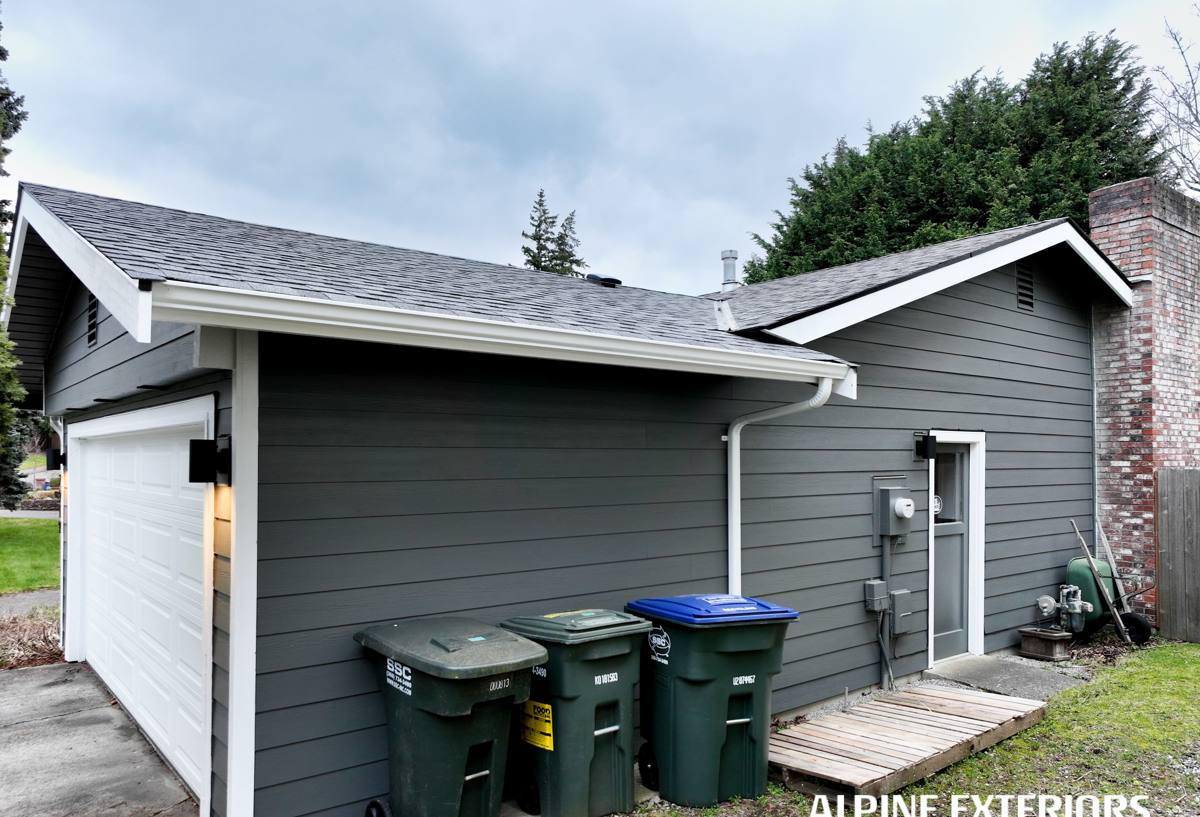
What This Climate Actually Does to Siding
Three conditions define exterior work in this part of Whatcom County, and each one attacks siding in a different way.
Salt Air
Proximity to salt water means airborne salt settles on exterior surfaces, especially on the water-facing sides of a house. Salt is corrosive to exposed metal fasteners and trim flashing, and it accelerates the breakdown of paint and coatings that aren't formulated to resist it. Over time, unprotected fasteners can bleed rust streaks down a wall, and a factory finish not built for coastal exposure can chalk and fade faster than the manufacturer's own lifespan estimates.
Driving Rain
Storms moving in off the water don't just fall straight down — they push rain sideways into wall assemblies, particularly on second stories and any wall with limited roof overhang. That means water management behind the siding matters as much as the siding material itself. A weather-resistive barrier, correctly lapped flashing, and proper drainage gaps aren't optional extras in Blanchard — they're the difference between a wall that sheds water and one that slowly absorbs it.
A Long Moss Season
Tree cover keeps a lot of Blanchard's homes in partial shade for much of the year, and shade plus regular rain is exactly what moss and algae need. On siding that traps moisture at the surface — or that has soft spots where water can sit — moss gets a foothold and holds dampness against the wall even longer, which speeds up rot underneath. The siding product and the installation detailing both need to account for this, not just the paint color.
Why We Install Only James Hardie Fiber Cement
We don't install vinyl siding, LP SmartSide, Cemplank, Allura, or primed wood siding like spruce or cedar. That's a deliberate standard, not a lack of options, and it's worth explaining honestly rather than just asserting it.
Vinyl siding is affordable and low-maintenance in mild climates, but it's a thin plastic product that expands and contracts with temperature swings, can crack in cold snaps, and relies entirely on the wall assembly behind it for water management since the panels themselves aren't a true moisture barrier. In a driving-rain environment, that puts a lot of pressure on installation details that are easy to get wrong and hard to inspect later.
Engineered wood products like LP SmartSide use treated wood strand substrates. They perform well when kept dry and properly maintained, but wood-based siding is still an organic material — end cuts, damaged corners, or gaps in caulking give moisture an entry point, and in a moss-prone, high-rainfall setting that's a maintenance burden we don't think is worth the upfront savings.
Other fiber cement brands, like Cemplank or Allura, are chemically similar to James Hardie's product — cement, sand, and cellulose fiber. The differences that matter to us are in the finish system, the climate-specific engineering of the panel lines, and the warranty backing. James Hardie's ColorPlus factory finish is baked on and warranted separately from the substrate, its HZ5 product line is engineered for cold and wet climates specifically, and the company has decades of installed track record in exactly this kind of environment. We standardized on one product so we can install it to spec every time, rather than juggling different manufacturer requirements across jobs.
None of this means other products are junk — plenty of them perform adequately when installed correctly and maintained on schedule. It means that for a coastal, high-moisture, moss-prone climate like Blanchard's, we've concluded fiber cement — specifically Hardie's system — gives homeowners the best long-term balance of durability, low maintenance, and warranty protection, and we'd rather install one product exceptionally well than several products adequately.
What a Correct Installation Actually Involves
Fiber cement siding is only as good as the assembly it's installed over. A rushed or generic install can leave a Hardie product performing worse than a cheaper material installed carefully. Here's what we treat as non-negotiable.
Wall Preparation and Water Management
Before any siding goes up, the sheathing gets inspected for existing damage, a code-compliant weather-resistive barrier goes on with correct lapping (upper layers over lower, always shedding water downward), and drainage planes are set up so any moisture that does get behind the cladding has somewhere to go besides sitting against the wall.
Flashing at Every Penetration
Windows, doors, hose bibs, vents, and any other wall penetration get flashed individually, not just caulked over. In a driving-rain climate, caulk alone is a maintenance item that will eventually fail — proper flashing is the layer that keeps working even after the caulk needs attention.
Fastening and Clearances
Hardie panels need the correct fastener type, spacing, and embedment depth specified by the manufacturer — using the wrong fastener or over-driving nails is one of the most common causes of early siding failure we see on inspections. We also hold proper clearance between the bottom of the siding and grade, decks, roofs, and walkways, since ground and roof splash-back is a major source of moisture damage that has nothing to do with rain hitting the wall directly.
Caulking and Finish Details
Factory-primed cut edges get sealed in the field, joints get caulked with a product compatible with the ColorPlus finish, and touch-up paint is matched correctly so the factory finish's warranty isn't compromised by field errors.
Skipping any one of these steps can look fine on install day and still cause problems three, five, or ten years down the road — which is exactly the timeline where it becomes expensive to fix.
Our Process for Blanchard Homeowners
- Walkthrough and assessment — we look at the current siding condition, water damage risk areas (roof lines, grade clearance, tree shade), and take real measurements rather than estimating from photos.
- Written estimate — a clear scope covering tear-off, any sheathing repair, water-resistive barrier, flashing, Hardie product line and profile, and finish color, so there's no ambiguity about what's included.
- Install day preparation — protecting landscaping, staging material, and confirming weather windows, since fiber cement installation quality depends on working in reasonably dry conditions.
- Installation — wall prep, flashing, and panel installation to manufacturer spec, with attention to the coastal-specific details above.
- Final walkthrough — a joint inspection with the homeowner before we consider the job finished, plus a rundown of any maintenance the specific product and site conditions call for.
Comparing Siding Options for This Climate
| Material | Salt Air Resistance | Moisture Tolerance | Typical Maintenance |
|---|---|---|---|
| Vinyl Siding | Fair — can chalk and fade near salt water | Depends entirely on wall assembly behind it | Low, but limited repair options if damaged |
| Engineered Wood (LP SmartSide) | Moderate — finish needs upkeep | Vulnerable at cuts, corners, and gaps | Regular caulk and paint inspection |
| Primed Cedar or Spruce | Weak without diligent refinishing | Organic material, absorbs moisture | High — repainting and sealing on a set schedule |
| James Hardie Fiber Cement | Strong — non-combustible, engineered finish | Dimensionally stable, doesn't rot | Low — periodic washing, minimal recoating |
Cost Factors on a Blanchard Siding Project
Every project is different, but the line items that typically move a Blanchard siding estimate up or down are consistent:
- Condition of the existing wall sheathing and whether repair or replacement is needed before new siding goes on
- Home size, wall complexity, and number of stories (multi-story walls facing the water often need extra flashing detail)
- Hardie product line and profile selected (lap siding, panel, or shingle-style products vary in material cost)
- Trim, fascia, and soffit work bundled into the same project
- Site access — tree cover, slope, and tight lot lines common in this area can affect staging and labor time
We give straight, itemized numbers rather than a single lump figure, so homeowners can see exactly what's driving the cost.
Maintenance in a Moss-Prone, Salt-Air Environment
One advantage of correctly installed fiber cement is how little ongoing maintenance it needs compared to wood or vinyl — but "little" isn't "none," especially in this specific climate. A simple seasonal routine keeps a Hardie exterior performing for the long haul:
- Rinse siding annually (a garden hose is usually enough) to clear salt residue and organic buildup before moss gets established
- Keep gutters clear so overflow doesn't run down the wall face and feed moss growth at the top of the siding
- Trim back branches and vegetation holding shade and moisture directly against the wall
- Check caulking at trim and penetrations every year or two and recaulk as needed — this is the one item that does need periodic attention regardless of siding material
- Address any impact damage (from branches, equipment, etc.) promptly, since a damaged area is where moisture problems start
Why a Crew That Already Works Blanchard Matters
Fiber cement installation isn't exotic, but installing it correctly for this specific coastline is a different job than installing it in a dry inland town. A crew that already works this stretch of Whatcom County knows to plan around driving-rain exposures on water-facing walls, to size up moss risk on shaded lots before the first panel goes up, and to detail flashing with salt air in mind rather than treating every job the same way. That local pattern-recognition is the difference between an installation that looks right on day one and one that's still performing correctly in year fifteen.
If you're planning a siding project in Blanchard or nearby and want a straight answer about what your home actually needs, we're glad to walk the property, explain what we see, and put together a clear, no-pressure estimate using the form below.