 Chuckanut Exterior
 What the Alger Area Asks of a Home's Siding
Homes in and around Alger sit in a stretch of Whatcom County where the weather doesn't let up for long. Salt-laden air drifts in off the water, driving rain comes in sideways during fall and winter storms, and the tree cover that makes this area attractive also keeps north and shaded walls damp for weeks at a time. That combination is hard on siding. Salt air accelerates corrosion on fasteners and trim. Wind-driven rain finds every gap in flashing and caulk. And the long moss season means anything that holds moisture against a wall — bark, dust, organic debris — becomes a growth surface if the siding underneath can't shed water and dry out.
This isn't a page about siding in general. It's about what a James Hardie fiber cement installation needs to look like specifically for a home in the Alger area, and why we don't treat that installation as a one-size-fits-all job.
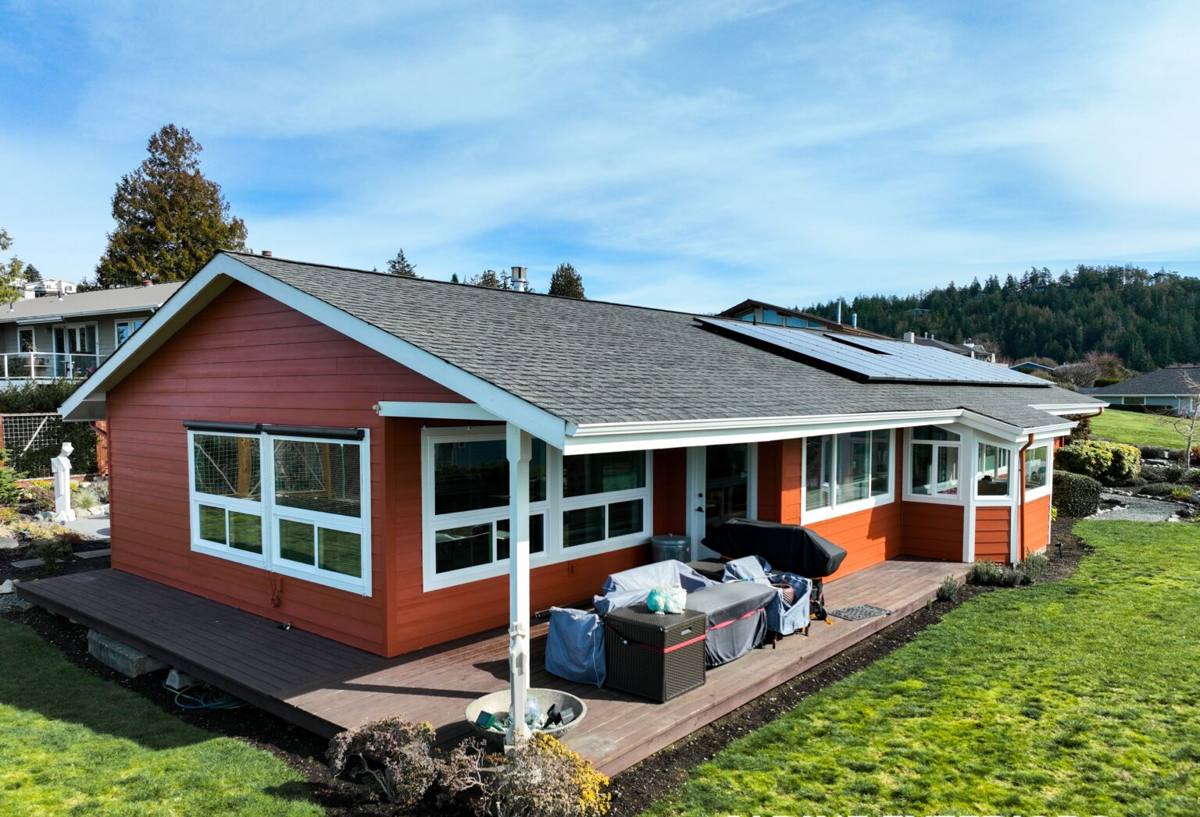
Why We Only Install James Hardie Here
We've made a standing decision not to install vinyl, LP SmartSide, or other fiber cement brands like Cemplank or Allura, even though all of them show up in this market. That's not a knock on every homeowner who has one of those products on their house today — it's a statement about what we're willing to put our name behind in this specific climate.
Vinyl expands and contracts more than fiber cement, and in wind-driven coastal rain it relies heavily on lap and seam integrity to keep water out — any gap becomes an entry point. Wood-based composite siding like LP SmartSide performs well when detailing is perfect and maintenance stays current, but the engineered-wood core is more moisture-sensitive at cut edges and butt joints than fiber cement, which matters in an area that stays damp as long as Alger does. Other fiber cement brands aren't necessarily bad products, but they don't carry Hardie's ColorPlus factory finish system or the same track record and warranty structure we've come to rely on. James Hardie is non-combustible, holds its shape and paint line in freeze-thaw and saturation cycles, and comes in climate-specific formulations built for exactly this kind of weather. That's what we install, and it's the only thing we'll warranty our workmanship against.
The HZ5 Formulation: Built for This Climate, Not a Generic One
James Hardie doesn't sell one product for the whole country. Its HardieZone system splits products into HZ5 (cooler, wetter climates — including most of the Pacific Northwest) and HZ10 (hot, humid regions). For an Alger project, we specify HZ5 product. It's engineered with moisture and freeze-thaw cycling in mind, which is exactly the stress this area puts on a wall assembly. Specifying the wrong zone product isn't usually catastrophic, but it's the kind of detail that separates a crew that treats siding as a generic swap from one that's actually thinking about your specific site.
Product Lines That Make Sense for This Area
- HardiePlank lap siding — the most common choice for Alger homes; wide reveal profiles shed driving rain well and read as a clean, traditional exterior.
- HardiePanel vertical siding — often used on gables, shop buildings, or as an accent, where fewer horizontal laps mean fewer joints for wind-driven rain to test.
- HardieShingle — useful for accent gables or a cottage-style look, but shingle profiles have more seams overall, so flashing detail matters even more.
- HardieTrim — matched trim boards so corners, window casings, and fascia age and finish the same way as the field siding.
What a Correct Installation Actually Involves
The Drainage Plane Comes First
Fiber cement siding is not the waterproofing layer — it's the outer shell. The water-resistive barrier and drainage plane behind it are what actually keep a wall dry over time. In an area with this much sustained rain, we install a code-compliant weather-resistive barrier with a drainage gap behind the siding, so any water that gets past the cladding has somewhere to go instead of sitting against the sheathing. Skipping or shortcutting this layer is the single most common cause of rot behind siding that otherwise looks fine from the street.
Flashing at Every Penetration
Windows, doors, hose bibs, light fixtures, deck ledgers — every penetration through the siding plane is a potential entry point for wind-driven rain. Correct flashing (not just caulk) at each of these is non-negotiable on a coastal-influenced job. Caulk fails; properly lapped flashing sheds water by shape, not by sealant that degrades over a few seasons.
Fastening and Clearances
James Hardie specifies exact nailing patterns, fastener types, and minimum clearances from grade, roof lines, and decks. In salt-air conditions we use corrosion-resistant fasteners as specified for coastal exposure — cutting corners here shows up years later as staining and streaking around every nail head. We also hold the manufacturer's minimum ground clearance so splashback and standing moisture near the foundation don't sit against the bottom course.
Caulking and Joint Treatment
Butt joints, trim intersections, and any field-cut ends get treated and sealed exactly to Hardie's published details. A cut edge that isn't sealed is the one place on an otherwise correctly installed wall where moisture can wick in.
Cost Factors on an Alger Siding Project
We don't publish blanket per-square-foot pricing because every home is different, but these are the factors that actually move the number on a project in this area:
| Factor | Why It Matters Here |
|---|---|
| Tear-off vs. new construction | Removing old siding, checking sheathing for hidden moisture damage, and disposal all add time — common on older homes in this area with decades of moss and moisture exposure |
| Home shape and story count | More corners, gables, and dormers mean more cuts, more flashing detail, and more labor per square foot of coverage |
| Trim and accent scope | HardieTrim corners, HardieShingle accent gables, and matched fascia add cost but keep the whole exterior aging uniformly |
| Sheathing and barrier condition | If the drainage plane or sheathing needs repair before new siding goes on, that's addressed before cladding — not covered up |
| Color and finish | Factory-applied ColorPlus finish is a fixed cost per product line, but it removes on-site painting time and future repaint labor |
Our Process, Start to Finish
Every Alger project follows the same sequence, because skipping steps is how moisture problems get built into a wall:
- On-site walkthrough to assess current siding, look for signs of trapped moisture or rot, and measure exposure on each elevation.
- Written estimate specifying the exact HardiePlank, HardiePanel, or HardieShingle profile, HZ5 formulation, and ColorPlus color — not a vague "siding replacement" line item.
- Tear-off (if applicable) with an inspection of the sheathing before anything new goes up.
- Weather-resistive barrier and drainage plane installation, flashed at every window, door, and penetration.
- Siding installation to Hardie's fastening, clearance, and joint specifications.
- Final walkthrough with the homeowner before we consider the job done.
What to Check Before You Hire Anyone for This Job
- Do they specify the actual Hardie product line and HZ formulation, or just say "Hardie siding" with no detail?
- Will they show you the drainage plane and flashing plan before siding goes up, not just talk about the finished look?
- Do they carry manufacturer certification for Hardie installation, and will they name the fastener type they're using?
- Can they explain how they'll handle the specific moisture and moss conditions on your lot, not just a generic install pitch?
- Is the warranty in writing, covering both the manufacturer's product warranty and their own labor?
Why Local Experience in This Area Actually Matters
A crew that's worked houses in and around Alger already knows which elevations take the worst of the driving rain, which lots hold moisture longest under tree cover, and how fast moss reestablishes on a north-facing wall here compared to a drier inland site. That's not something you can fully compensate for with a generic installation checklist — it changes where we pay extra attention to flashing, how we talk to a homeowner about maintenance expectations, and which product lines we actually recommend for a given exposure. It also means we're not learning the permitting and inspection expectations for Whatcom County on your project; we already know them.
Maintenance in a Wet, Salt-Air Environment
Correctly installed James Hardie siding is genuinely low-maintenance, but "low" doesn't mean "none" in this climate. We recommend an annual rinse-down to clear salt residue, moss spores, and organic debris before they get a foothold, especially on shaded or north-facing walls. Keep gutters clear so overflow doesn't run down the face of the siding repeatedly in one spot. Trim back vegetation that's touching or shading the wall, since that's exactly the condition that lets moss establish fastest. And take a walk around the exterior once a year checking caulk lines at trim and penetrations — catching a failed bead of caulk early is a five-minute fix; ignoring it for a few wet seasons is not.
If your Alger home's siding is showing its age, or you're planning ahead of a repaint or repair, we're happy to walk the property with you and give a straight answer about what it needs. Reach out for a free, no-pressure estimate — there's a short form below.