 Chuckanut Exterior
 Exterior Work in York, Chuckanut
York is one of the residential pockets that make up the broader Chuckanut area of Whatcom County, and like most homes tucked along this stretch of the Washington coastline, houses here take a steady beating from the weather. It's not one dramatic event that wears down a home's exterior — it's the accumulation of hundreds of gray, damp days a year, punctuated by wind-driven storms off the water and long stretches where nothing on the north side of a house ever really dries out. We work on homes throughout York and the surrounding Chuckanut neighborhoods, and the patterns repeat from house to house: siding that's failed at the bottom courses, roofs that shed granules years early, window frames that have gone soft, and decks that turn green and slick every fall.
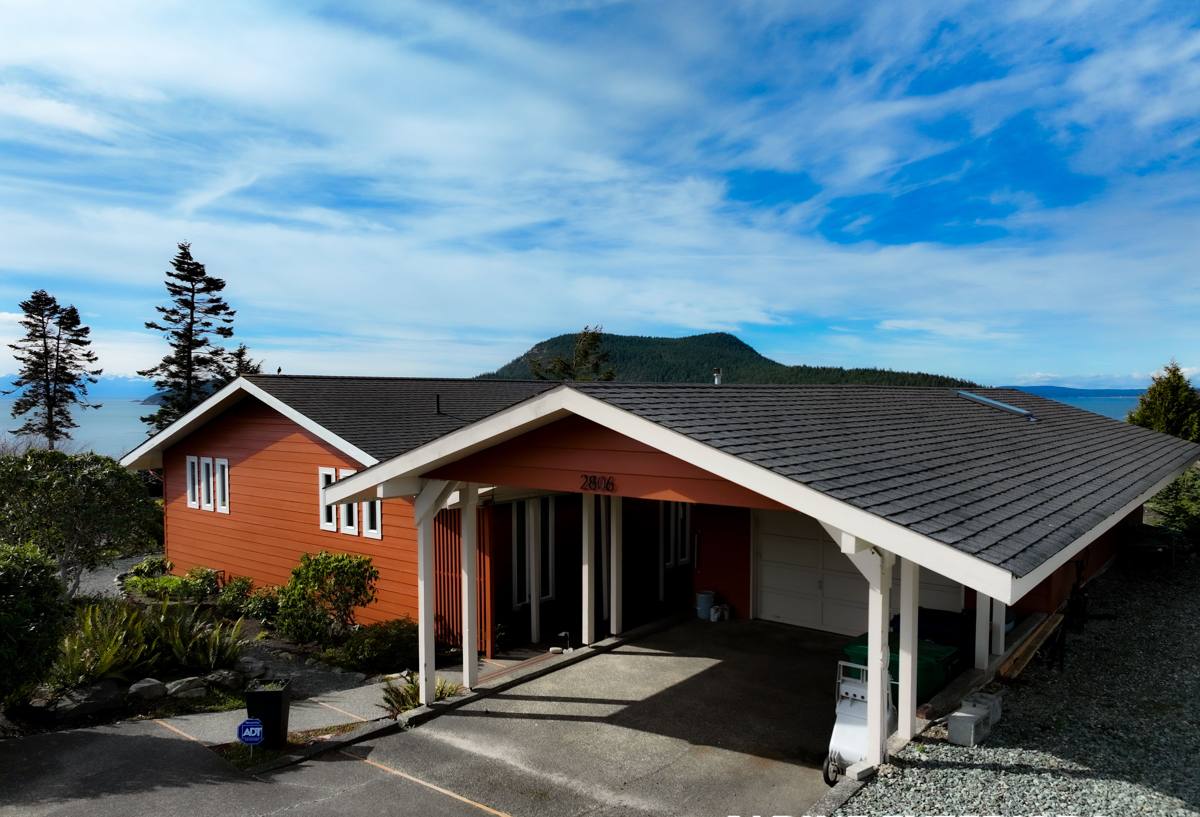
What the Climate Does to a Chuckanut Exterior
Three things define exterior wear in this part of Whatcom County, and York is no exception.
Salt Air
Proximity to Puget Sound means airborne salt is a real factor here, not a coastal-town cliché. Salt accelerates corrosion on fasteners, flashing, and hardware, and it can degrade cheaper paint films and coatings faster than inland exposure would. Anything metal on the exterior — nail heads, gutter hangers, hinges — needs to be rated for it, or it becomes a maintenance problem within a few years instead of a few decades.
Driving Rain
Rain here rarely falls straight down. Wind off the water pushes it sideways into wall assemblies, which is exactly the condition that exposes weak points in siding, trim, and window flashing. A material or installation detail that would perform fine in a calm, dry climate can fail here specifically because of wind-driven moisture finding its way behind the cladding.
Moss Season
Whatcom County's moss season isn't really a season — it's most of the year. Shaded roof planes, north-facing siding, and deck boards that don't get direct sun stay damp long enough for moss and algae to take hold and spread. Left alone, moss holds moisture against the surface underneath it, which shortens the life of shingles, wood, and even some fiber cement finishes if they're not properly coated.
Siding: Why We Only Install James Hardie
Siding is the first line of defense against all three of the conditions above, and it's also where we're most particular about materials. We install James Hardie fiber cement siding exclusively — we don't offer vinyl, LP SmartSide, Cemplank, Allura, or primed wood, and that's a deliberate standard, not a lack of options.
Vinyl siding is inexpensive and low-maintenance in a general sense, but it's a plastic product that expands and contracts with temperature swings, can crack in cold snaps, and relies on lap joints and J-channels that give wind-driven rain more opportunities to work behind the panel. LP SmartSide and other engineered wood products perform well when detailing and maintenance are kept up, but they're wood-based, and wood-based siding is more vulnerable to the kind of sustained damp exposure York sees for much of the year — edge swelling and delamination are real risks if caulking and paint aren't maintained on schedule. Primed wood and cedar are honest, attractive materials, but they demand a maintenance commitment — recoating, caulking, moisture inspection — that most homeowners underestimate until the siding is already failing.
James Hardie fiber cement is non-combustible, dimensionally stable, and doesn't absorb water the way wood-based products can. The ColorPlus factory finish is baked on under controlled conditions rather than field-applied, which matters in a climate where field-applied coatings don't always get the cure time they need between rain events. Hardie's HZ5 product line is engineered specifically for climates with more moisture and freeze-thaw exposure, which describes this part of Washington well. It carries a strong transferable warranty, and installed correctly — proper clearances, flashing, and fastening — it's the product we're comfortable standing behind on homes that are going to face decades of Chuckanut weather.
Siding Material Comparison
| Material | Moisture Behavior | Maintenance in This Climate | Our Position |
|---|---|---|---|
| James Hardie fiber cement | Doesn't absorb water like wood; dimensionally stable | Low — occasional wash, no recoating cycle | What we install |
| Vinyl | Water-resistant surface but vulnerable at seams/joints | Low but limited repair options if damaged | Not installed by us |
| LP SmartSide / engineered wood | Wood-based; edge swelling risk if seals fail | Moderate — caulking and paint upkeep required | Not installed by us |
| Cedar / primed spruce | Natural wood; absorbs moisture without upkeep | High — regular recoating and inspection | Not installed by us |
Roofing for Driving Rain and Moss
A roof in York has to do two jobs well: shed wind-driven rain without letting water track sideways under shingles or flashing, and resist the moss growth that shaded, damp roof planes are prone to here. We pay close attention to underlayment quality, valley and step flashing, and ventilation — a roof deck that can't breathe traps moisture and accelerates both rot and moss growth from underneath. We also talk to homeowners honestly about moss prevention: zinc or copper strips near the ridge, periodic gentle cleaning, and keeping overhanging branches trimmed back all reduce how much moss takes hold in the first place, and they're a lot cheaper than early roof replacement.
Windows: Sealing Against Sideways Rain
Wind-driven rain is a window problem as much as a siding problem. Older window installations, or ones that weren't flashed correctly to begin with, tend to show it first at the sills and corners — soft trim, staining, or drafts that track back to a compromised seal rather than the window unit itself. When we replace windows, correct flashing integration with the wall assembly matters as much as the window's own energy performance, especially on walls that take direct weather. We also look at frame materials with an eye toward long-term performance in salt-air exposure, since not every window frame or hardware finish holds up the same way here that it would further inland.
Decks: Built for Standing Water and Moss
Decks in York face the same shade-and-moisture problem as north-facing roof planes. Boards that don't drain well, or that sit in standing water after a storm, develop moss and algae faster and start to soften or rot at the fastener points first. Good deck work here comes down to a few fundamentals: proper board spacing and slope for drainage, ledger flashing that actually keeps water out of the house framing, and fastener and hardware choices that won't corrode under salt air exposure. We build and repair decks with those specifics in mind rather than treating deck framing as an afterthought to the visible boards.
What to Watch For on a Chuckanut-Area Home
- Soft or discolored siding near the bottom courses or around window sills
- Moss buildup on north-facing roof slopes or siding that stays shaded most of the day
- Rust streaks below fasteners, hinges, or flashing
- Peeling or bubbling paint, especially on wood trim or wood-based siding
- Deck boards that stay wet or slick well after rain has stopped
- Gaps or gaps reopening at window and door trim joints
Why a Local Crew Matters
Exterior work in Whatcom County isn't generic exterior work. A crew that mainly works inland or in a drier climate can install a technically correct product the wrong way for this environment — wrong flashing sequence for wind-driven rain, wrong fastener spec for salt exposure, wrong expectations about how fast moss will return. We work this area regularly enough to know which details actually matter on a York-area home and which ones are just extra cost. That local repetition is also why we're comfortable being selective about materials — we've seen how different products age here, not just how they're rated on paper.
How We Approach a Project
Every project starts with a straightforward look at the exterior — siding, roof, windows, and deck if applicable — to see what's actually driving the wear we're seeing, rather than just quoting a like-for-like replacement. For siding specifically, that means checking what's happening behind the current cladding, not just its surface condition. For roofing, it means checking ventilation and flashing, not just shingle wear. We give homeowners a clear picture of what's causing the problem before we talk about how to fix it.
Typical Project Considerations
| Factor | Why It Matters in York/Chuckanut |
|---|---|
| Sun/shade exposure of each wall or roof plane | Shaded sides hold moisture longer and grow moss faster |
| Wind exposure (open vs. sheltered lot) | Determines how much wind-driven rain the assembly needs to resist |
| Existing flashing condition | Often the real source of hidden water damage, not the cladding itself |
| Fastener and hardware material | Salt air shortens the life of non-rated metal significantly |
| Age and type of current siding/roofing | Determines whether repair or full replacement is the honest recommendation |
If you're seeing early signs of wear on a home in York or elsewhere in the Chuckanut area, we're happy to take a look and give you a straightforward, no-pressure estimate — no obligation, just an honest read on what your exterior actually needs.