 Chuckanut Exterior
 Metal Roofing in York: A Roof Built for This Specific Stretch of Coast
York sits close enough to the water that homes here deal with a combination of weather stresses that inland Whatcom County properties simply don't see. Salt-laden air moves in off the water and settles on every exterior surface, including the roof. Driving rain — the kind that comes in sideways during a fall or winter storm — tests every seam, flashing detail, and fastener on a roof, not just the field of the material. And the long, damp shoulder seasons that stretch from fall through spring give moss and algae months of ideal growing conditions on any roof that holds moisture or shade. A roofing material and installation approach that works fine in a drier, inland climate can fall short here. Metal roofing, installed correctly for this specific environment, holds up to all three of those pressures better than most alternatives — but "installed correctly for this environment" is doing a lot of work in that sentence, and it's the part that separates a roof that lasts three decades from one that starts showing problems in five years.
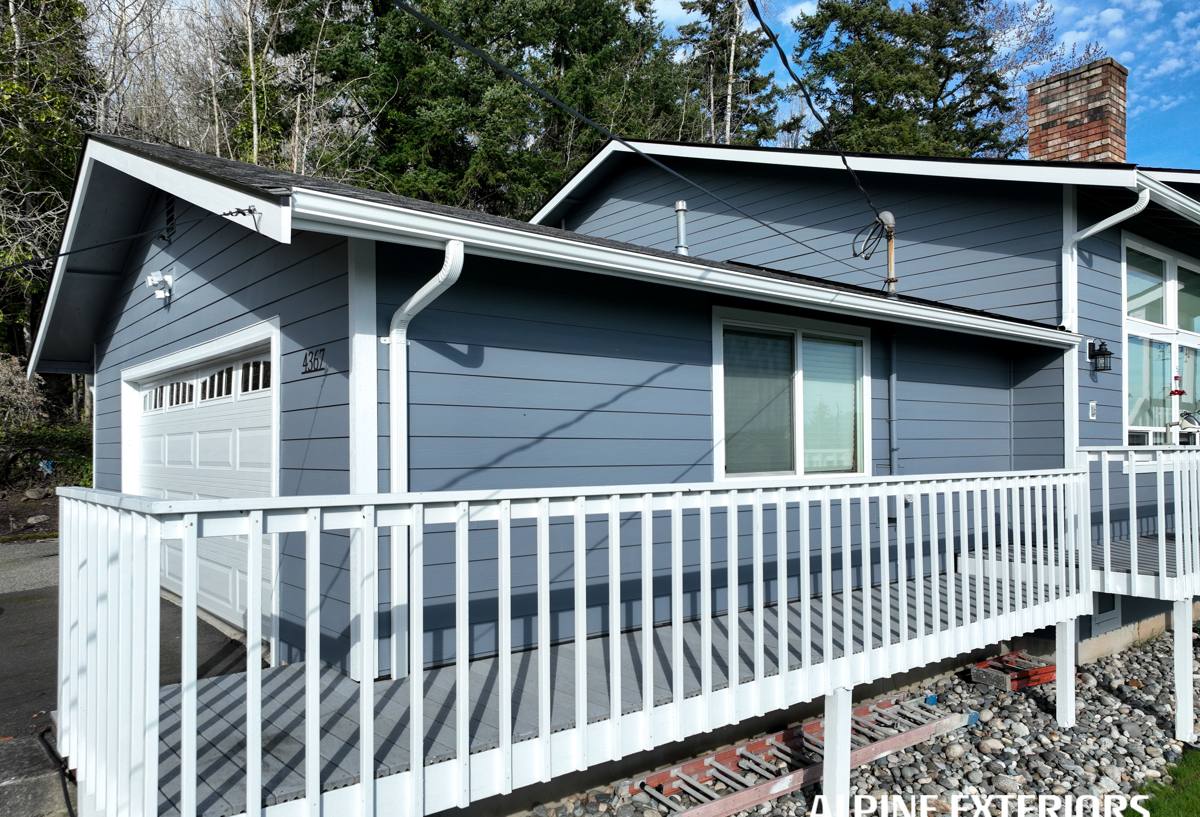
Why Metal Roofing Fits York Homes
Metal roofing isn't the right answer for every home or every budget, but for York properties dealing with salt exposure, heavy rain, and moss pressure, it solves several problems at once.
Shedding water instead of absorbing it
Unlike asphalt shingles, which have a granulated surface that can hold a thin film of moisture, metal panels shed water immediately. In a climate with frequent, sustained rain, that matters — less standing moisture on the roof surface means less opportunity for moss spores and algae to establish themselves, and less freeze-thaw stress during the occasional cold snap.
Standing up to wind-driven rain
Driving rain doesn't just fall on a roof — it gets pushed sideways and upward under wind pressure, probing for any gap in the flashing, any lifted seam, any under-driven fastener. A metal roof's long, continuous panel runs mean far fewer horizontal seams than a shingle roof, which reduces the number of places wind-driven rain can find a way in. The details that remain — ridges, valleys, penetrations, wall transitions — are exactly where a metal roof lives or dies, which is why we treat them as the priority, not an afterthought.
Resisting moss without chemical warfare
Moss needs a rough surface to grip and moisture that lingers. A properly installed metal roof gives it neither. That doesn't mean a metal roof never needs attention — debris in valleys and around penetrations can still create the damp micro-environment moss likes — but the roof itself isn't feeding the problem the way a textured, moisture-retentive surface does.
What Correct Metal Roofing Installation Actually Involves
A metal roof is only as good as its weakest detail, and the details that matter most are largely invisible once the job is done. Here's what we consider non-negotiable on every York metal roofing project:
- Full tear-off and deck inspection — we don't install over old roofing. The deck gets inspected for rot, soft spots, and proper ventilation before anything goes down.
- High-temperature, self-adhered underlayment — metal panels can get hot in direct sun, and a standard felt underlayment can degrade underneath them over time. We use underlayment rated for that exposure, with extra layers at eaves and valleys where water concentrates.
- Corrosion-appropriate fasteners and flashing — in a salt-air environment, mismatched metals and standard fasteners corrode faster than the panels themselves. Fastener type, flashing metal, and panel metal need to be compatible to avoid galvanic corrosion.
- Proper panel fastening pattern and expansion allowance — metal expands and contracts with temperature swings. Panels that are over-fastened or fastened rigidly at both ends will eventually buckle or tear at the fastener holes.
- Sealed, engineered penetrations — every pipe boot, vent, and chimney flashing is a potential leak point. These get purpose-built flashing, not generic caulk-and-hope solutions.
- Ridge and valley detailing built for volume — this region's rain events can dump a lot of water in a short time. Ridge caps and valley flashing need to be sized and lapped to handle that volume without backing up.
- Ventilation that matches the roof assembly — metal roofs need proper intake and exhaust ventilation to avoid trapping moisture against the underside of the deck, especially important in a climate this humid.
Panel Types: What We Install and Why
Not all metal roofing is the same product wearing different colors. The panel type and coating matter as much as the installation quality, especially with salt air in the mix.
| Panel Type | Typical Use | Coastal / Salt-Air Notes |
|---|---|---|
| Standing seam (concealed fastener) | Full roof replacement, higher-end residential | Best fit for York's exposure — no exposed fasteners for salt to attack, cleanest water shedding |
| Exposed-fastener panel (corrugated / ribbed) | Budget-conscious replacement, outbuildings, accessory structures | Lower upfront cost, but exposed fasteners need periodic inspection and eventual replacement as gaskets age |
| Stone-coated steel | Homeowners wanting a shingle or shake appearance | More surface texture than standing seam, so moss debris can accumulate in the profile if gutters and valleys aren't kept clear |
| Aluminum panel systems | Direct coastal exposure, higher salt-air sites | Naturally corrosion-resistant, often our recommendation for properties closest to the water |
For most York homes, we lean toward standing seam steel or aluminum systems with a quality baked-on coating, because they minimize the two things that cause the most long-term trouble in this climate: exposed metal-on-metal fastener points and surface texture that traps moisture and debris.
Coatings and Finishes: Where the Real Durability Comes From
The steel or aluminum underneath a metal roof panel is only part of the story — the factory-applied coating is what actually stands between the metal and salt air, UV, and moisture over the panel's lifespan. Cheaper, thinner coatings chalk, fade, and lose corrosion resistance faster, which matters more here than in a drier inland climate where the metal isn't getting hit with airborne salt on top of everything else. We spec coatings based on how close a property sits to the water and how much direct sun exposure the roof gets, not just on color preference. This is also where we're upfront about trade-offs: a heavier, better-rated coating costs more up front, but on a coastal property it's the difference between a roof that still looks and performs well at year twenty and one that needs early attention.
Our Process on a York Metal Roofing Project
1. On-site assessment
We walk the roof and the attic or crawlspace, check current ventilation, look at how water currently moves off the structure, and note any existing moss, rust, or moisture staining. This tells us what the roof actually needs, not just what a generic estimate would assume.
2. Straightforward, itemized proposal
You get a clear breakdown of panel type, underlayment, flashing details, and ventilation work — not a single lump-sum number with no explanation of what's included.
3. Tear-off and deck prep
Old roofing comes off, the deck gets inspected and repaired where needed, and any ventilation deficiencies get corrected before a single panel goes down.
4. Underlayment and flashing first
The waterproofing layer and all flashing details go in before panels, because these are what actually keep water out — the panels are the visible finish over a system that has to work underneath them.
5. Panel installation
Panels are installed to the manufacturer's fastening and expansion specifications, with extra attention at valleys, eaves, and wall transitions where wind-driven rain concentrates.
6. Final walkthrough
We walk the finished roof with you, confirm all penetrations and edges are sealed correctly, and go over what basic maintenance looks like going forward.
What a Metal Roof Actually Costs to Get Right
Metal roofing has a wide price range because "metal roof" covers everything from a basic exposed-fastener panel to a premium standing seam system. Rather than quote a single number that won't reflect your specific home, here's what actually drives the cost:
| Cost Factor | Why It Matters |
|---|---|
| Panel type | Exposed-fastener panels cost less than standing seam; standing seam typically lasts longer with fewer maintenance points |
| Roof complexity | Steep pitches, multiple valleys, dormers, and penetrations all add labor and flashing work |
| Deck condition | Rot or soft decking found during tear-off adds repair cost but is far cheaper to fix now than after a new roof is installed over it |
| Coating grade | Higher-grade coatings cost more up front and pay off in corrosion and fade resistance, especially this close to salt air |
| Ventilation upgrades | Correcting inadequate attic ventilation adds cost but protects the whole roof assembly from moisture damage |
| Access and site conditions | Steep lots, limited staging area, or multi-story sections affect labor time |
We give you real numbers for your actual roof after the on-site assessment, not a rough guess based on square footage alone.
Maintaining a Metal Roof in a Moss-Prone Climate
A well-installed metal roof needs less maintenance than shingles, but "less" isn't "none," especially with the moss season this region sees. A simple annual routine goes a long way:
- Clear debris from valleys, around penetrations, and behind chimneys where organic material can collect and hold moisture
- Keep gutters clean so water isn't backing up against panel edges
- Check for overhanging branches that drop needles and leaves directly onto the roof
- Look for any early rust or coating wear at cut edges, fastener heads, and flashing joints
- Confirm attic ventilation isn't blocked by insulation or debris
- Have a professional look at sealant and flashing at penetrations every few years, since sealant degrades faster than the metal itself
None of this is heavy work, but skipping it on any roof — metal or otherwise — is how small issues in valleys and penetrations turn into bigger ones.
Why Hiring a Crew That Already Works in York Matters
Metal roofing installation isn't forgiving of shortcuts, and a crew that's only worked on it occasionally, or only in drier parts of Washington, doesn't have the same instinct for how this specific stretch of coast behaves. A crew that regularly works York and the surrounding Chuckanut and Whatcom County area already knows how far salt air travels inland from the water, which roof orientations take the worst of the driving rain, and which valley and flashing details actually hold up through a full wet season here rather than just on paper. That local pattern recognition is the difference between a roof that's technically installed to code and one that's actually built for the conditions it's going to face for the next thirty-plus years.
Ready to Talk About Your Roof?
If you're weighing metal roofing for a York property, we're happy to take a look, answer honest questions about what fits your home and budget, and give you a clear, itemized estimate — no pressure, no hard sell. Fill out the form below to get started.