 Chuckanut Exterior
 Exterior Work Built for Columbia's Coastal Conditions
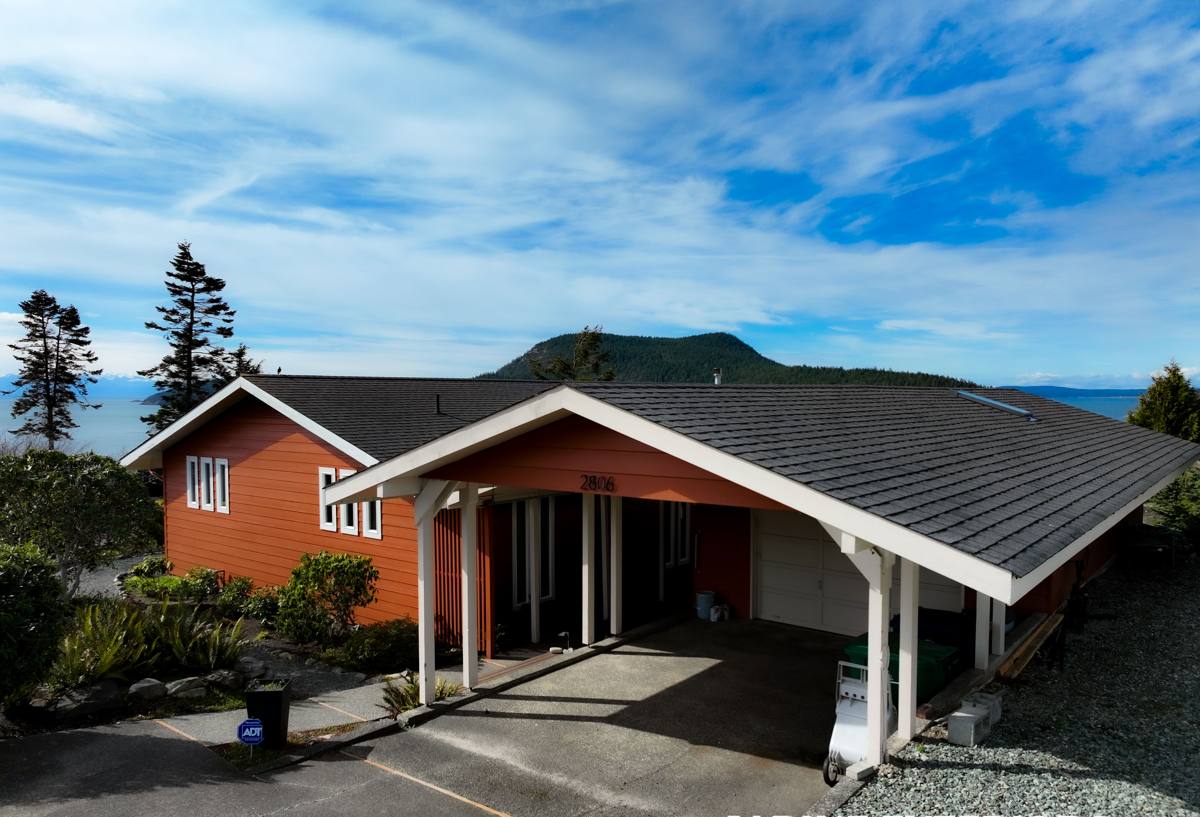
Columbia sits close enough to the water and the wooded hillsides of the Chuckanut area that its homes take a different kind of weathering than houses further inland in Whatcom County. Salt-tinged air off the bay, long stretches of driving rain through fall and winter, and a moss season that seems to start earlier every year all work on a house at the same time, in the same places, year after year. We work on homes in this area regularly, and the patterns repeat: north-facing siding that stays damp longest, roof valleys that hold moss and needle debris, window frames that take on water where caulking has given out, and deck boards that go soft where drainage was never quite right to begin with.
None of that is unusual for the Pacific Northwest. What matters is whether the materials and installation details on a given house were chosen with that reality in mind, or just installed the same way they'd be installed in a dry climate. That's the gap we try to close on every siding, roofing, window, and deck project we take on in Columbia.
What the Local Climate Actually Does to a House
Salt Air
Proximity to Chuckanut Bay means airborne salt is a real factor here, even a few blocks inland. Salt accelerates corrosion on exposed fasteners, flashing, and hardware, and it can contribute to premature breakdown of certain paint and coating systems, especially on materials that weren't engineered to resist it. This is one of the reasons material choice matters more in Columbia than it would in a drier, inland Whatcom County neighborhood.
Driving Rain
Rain here doesn't just fall straight down — wind off the water pushes it sideways into wall assemblies, window frames, and door thresholds. Wall systems and flashing details that rely on gravity alone to shed water tend to underperform in these conditions. Proper water-resistive barriers, correctly lapped flashing, and siding products with genuine moisture resistance aren't optional extras here; they're the baseline.
A Long Moss Season
Shade from surrounding trees, consistent moisture, and mild temperatures give moss and algae a long runway to establish on roofs, siding, and decking. Left unchecked, moss holds moisture against the surface it's growing on, which accelerates rot in wood substrates and can shorten the life of roofing materials. Homes in Columbia often need more frequent moss treatment and gutter clearing than homes even a short distance inland.
Siding: Why We Only Install James Hardie
Of everything we install, siding is the piece most directly exposed to salt air and driving rain for years on end, which is why we've standardized on James Hardie fiber cement and don't install vinyl, LP SmartSide, Cemplank, Allura, primed spruce, or cedar. That's not a marketing position — it's a decision based on what holds up in this specific climate.
Fiber cement is non-combustible and dimensionally stable, meaning it doesn't expand, contract, warp, or cup the way wood-based products can when they cycle through wet and dry seasons repeatedly. James Hardie's HZ5 product line is engineered specifically for climates like ours, with moisture and freeze-thaw performance built into the formulation rather than added on afterward. The factory-applied ColorPlus finish is baked on under controlled conditions, which gives it more consistent, longer-lasting color and adhesion than field-applied paint — a real advantage in an area where salt exposure can be hard on painted surfaces.
We're not going to tell homeowners that other siding products are worthless — vinyl and engineered wood products have legitimate uses and plenty of homes wear them fine in less demanding conditions. But in a place like Columbia, where wind-driven rain and salt air are constant, we've seen enough of the trade-offs — moisture-related swelling in engineered wood, seam and expansion issues in vinyl, the maintenance burden of cedar — that we don't feel right installing them and standing behind the result. Hardie's transferable warranty and track record in coastal Pacific Northwest conditions are why it's the only siding system we put on homes.
What Correct Hardie Installation Involves
- Proper water-resistive barrier and flashing at every window, door, and penetration before siding goes on
- Correct fastener spacing, type, and depth per Hardie's published installation specs
- Minimum clearance from grade, decks, and roof lines to keep siding out of standing water and splash-back
- Caulked and sealed joints only where Hardie's guidelines call for it — over-caulking can trap moisture
- Factory-cut and finished edges used wherever possible to preserve the ColorPlus warranty
Roofing for Moss, Rain, and Salt Exposure
A roof in Columbia has to manage two things simultaneously: shedding driving rain efficiently and resisting moss colonization in the shaded, damp spots that never fully dry out. We look closely at valleys, penetrations, and north-facing slopes, since those are consistently where problems start. Flashing quality and underlayment matter as much as the roofing material itself — a lot of roof leaks we find didn't start with the shingles or panels failing, they started with a flashing detail that was never quite right.
We also talk with homeowners about moss prevention as part of a roofing project, not as an afterthought: zinc or copper strips near the ridge, keeping overhanging branches trimmed back, and realistic gutter-cleaning schedules all extend the life of a roof in this environment far more than any single product choice.
Windows: Sealing Out Wind-Driven Rain
Window failures in Columbia are rarely about the glass — they're almost always about the seal around the frame. Wind-driven rain finds any gap in flashing or caulking and pushes water behind the trim, where it can sit against framing for months before anyone notices a stain or soft spot. When we replace windows, we pay close attention to flashing integration with the surrounding wall assembly, not just the window unit itself, because that's the detail that actually keeps water out over the long run.
Decks: Built for Wet Wood Conditions
Decks in this area deal with the same moss and moisture pressure as roofs, plus the added stress of standing water on horizontal surfaces. Drainage, board spacing, and ledger flashing all affect how long a deck lasts before rot sets in. We build and repair decks with attention to airflow underneath and proper flashing where the deck meets the house, since that connection point is where we most often find hidden damage on older decks in Columbia.
Signs Your Home's Exterior Needs Attention
- Moss or dark streaking on north-facing siding or roof slopes
- Soft or spongy decking, especially near the house or at board edges
- Peeling or bubbling paint around window and door trim
- Visible rust staining on fasteners, flashing, or gutters
- Gutters that overflow during moderate rain rather than just heavy storms
- Gaps or cracking in caulk lines around windows, doors, or siding seams
Comparing Common Exterior Material Choices
| Material | Moisture Behavior in Coastal Rain | Salt Air Resistance | Typical Maintenance |
|---|---|---|---|
| James Hardie fiber cement | Dimensionally stable, engineered moisture resistance (HZ5 line) | Strong; factory ColorPlus finish holds up well | Periodic washing; minimal repainting |
| Vinyl siding | Doesn't absorb water but seams and panels can be vulnerable to wind-driven rain intrusion behind the surface | Can become brittle over time with sun and salt exposure | Low, but repairs can be difficult to color-match |
| Engineered wood (e.g. LP SmartSide) | Vulnerable to swelling and edge deterioration if moisture reaches the substrate | Moderate; coating quality is critical | Regular inspection of edges and seams needed |
| Cedar | Natural material, absorbs and releases moisture; performance depends heavily on upkeep | Moderate; can gray or degrade faster near salt air without maintenance | High — regular staining/sealing required |
Why a Local Crew Matters in This Kind of Neighborhood
A lot of exterior problems in Columbia don't come from bad materials — they come from installation details that were fine for a different climate but weren't built for wind-driven rain and salt air. A crew that works across Whatcom County regularly, including areas like Chuckanut with this specific exposure, knows to check flashing laps twice, knows which sides of a house need extra attention, and knows that a moss treatment plan is part of protecting the work, not a separate conversation. That local knowledge doesn't show up on a spec sheet, but it shows up in how long the work lasts.
How We Approach a Columbia Project
Every project starts with a walk-around assessment — looking at drainage, existing moisture damage, moss patterns, and how the house is currently handling wind-driven rain before we recommend anything. For siding, that means identifying where old material has already failed and why, not just matching what's there. For roofing, windows, and decks, it means the same thing: understand the specific way this house interacts with this specific climate, then build or replace accordingly. We're straightforward about scope and timeline, and we don't oversell work a home doesn't need.
If you're noticing moss buildup, soft decking, drafty windows, or siding that's showing its age, we're happy to take a look. Reach out for a free, no-pressure estimate — there's a form right below to get started.