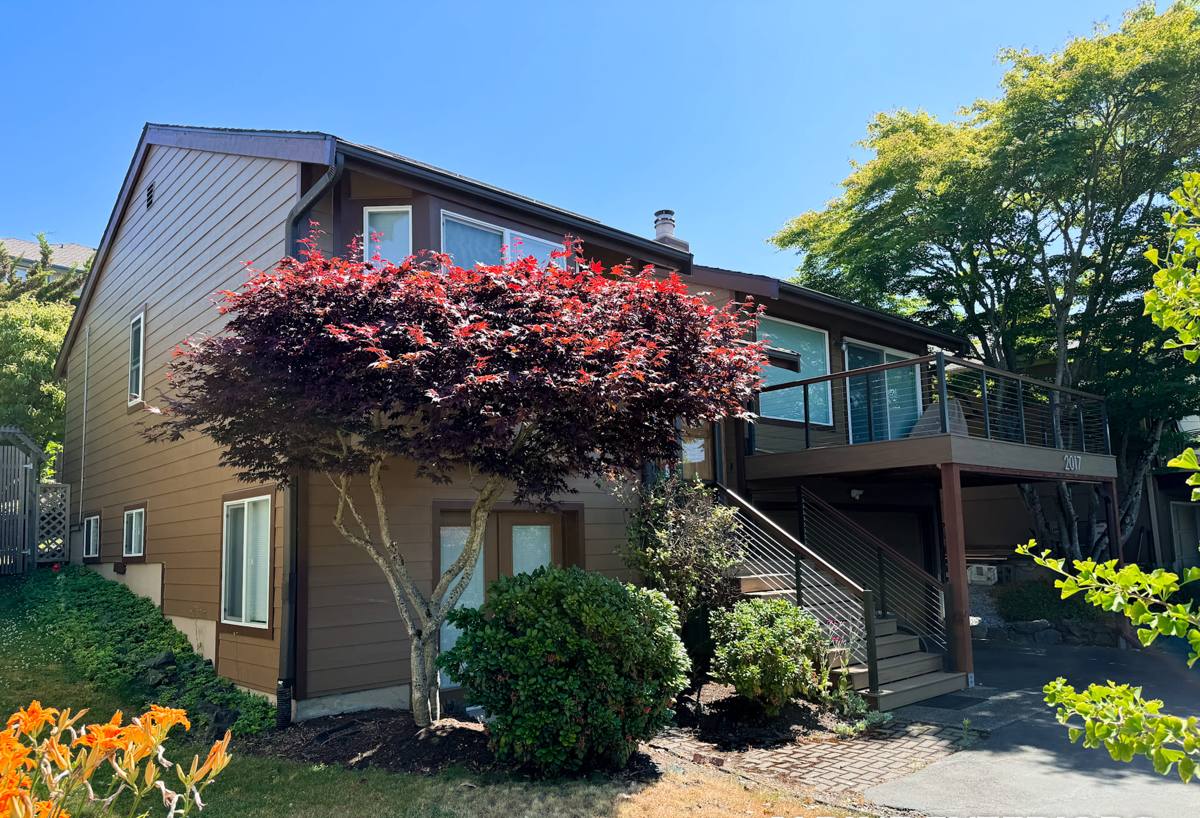
 Chuckanut Exterior
 Metal Roofing Built for Columbia's Salt Air and Long Rainy Season
Homes in the Columbia area near Chuckanut sit close enough to the water and the tree line that roofs take a different kind of beating than they do a few miles inland. Salt-laden air moves through the corridor off Bellingham Bay, driving rain comes in sideways for months at a stretch, and the shade from the surrounding evergreens keeps roof surfaces damp long after a storm has passed. That combination is hard on asphalt shingles and brutal on any roofing material that isn't installed with the right details. Metal roofing, done correctly, handles all three of those stresses better than almost anything else on the market — but "done correctly" is doing a lot of work in that sentence, and it's where most of the problems we get called out to fix actually start.
We work on roofs throughout Whatcom County, and Columbia is one of the areas where we spend a lot of our time. That matters more than it sounds like it should — a crew that regularly works this specific stretch of coastline knows which fastener finishes hold up, which underlayment choices actually keep pace with the rain volume here, and which shortcuts show up as leaks two winters later instead of two months later.
What Driving Rain and a Long Moss Season Do to a Roof
Three climate factors drive almost every roofing decision we make in this area:
- Salt air accelerates corrosion on fasteners, flashing, and any exposed metal edge that isn't rated for a marine-influenced environment.
- Driving, wind-blown rain pushes water sideways and uphill under lap joints and around penetrations that would stay dry in a calmer climate — this is why underlayment and flashing detail matter more here than the panel itself.
- A long moss season, thanks to shade, moisture, and mild temperatures for much of the year, means organic growth gets a real foothold on any roof surface that holds moisture or has rough texture for spores to grip.
Individually, none of these is unusual for Western Washington. Together, in a location this close to the shoreline, they compound. A roof that would perform fine in a drier or more sheltered part of the county can fail early here if it wasn't specified and installed with this exact combination in mind.
What a Correct Metal Roof Installation Involves
Metal roofing has a reputation for being nearly maintenance-free, and that's true — but only when the installation underneath the panels is right. Most of the metal roof problems we're asked to repair aren't panel failures at all; they're underlayment, fastener, or flashing mistakes that took a year or two of Columbia's weather to show up.
Underlayment and Moisture Barrier
Because rain here doesn't just fall, it drives sideways under laps and around trim, we install a synthetic or self-adhered underlayment rated for high wind-driven moisture exposure, not a basic felt product. This layer is the actual waterproofing system — the metal panel on top is largely a durable, decorative shield. Skimping here is the single most common cause of the leaks we get called to fix on other contractors' work.
Fasteners and Flashing
Standard fasteners corrode faster in salt-influenced air. We use fasteners and flashing rated for coastal exposure, and we pay particular attention to any dissimilar-metal contact points, which can accelerate corrosion through galvanic reaction if the wrong materials are paired. Flashing at valleys, chimneys, skylights, and wall transitions is where the vast majority of roof leaks originate industry-wide, and it's the detail that separates a roof that lasts thirty-plus years from one that needs rework in five.
Panel Seams and Water Path
Every seam and panel overlap has to be laid out so water is always moving downhill and away from the structure, even under wind pressure. On a site like Columbia, where wind-driven rain is common, we plan seam direction and overlap length with that in mind rather than defaulting to a standard layout that assumes calmer weather.
Choosing the Right Panel System for This Area
Not every metal roofing system is a good fit for a salt-air, high-moisture site. Here's how the main options compare for a home in the Columbia area:
| Panel Type | Best For | Coastal / Moss Considerations |
|---|---|---|
| Standing seam (concealed fastener) | Long-term, low-maintenance performance | No exposed fasteners to corrode; smooth surface sheds moss growth better than textured panels |
| Exposed-fastener panel | Budget-conscious projects, outbuildings | Fastener gaskets and heads need periodic inspection in salt air; more seams for water to test |
| Stone-coated steel shingle/tile profile | Homes wanting a traditional shingle or tile look | Textured surface can hold moisture and give moss more to grip; needs more attentive gutter and debris management |
| Aluminum panel systems | Sites with heavier salt exposure | Naturally corrosion-resistant, doesn't rust; a strong option closer to the water |
For most Columbia properties, we lean toward standing seam steel or aluminum because the concealed-fastener design removes the weakest point in a coastal installation — exposed screw heads — from the equation entirely. That said, the right choice depends on the home's roof pitch, existing structure, and the look the homeowner wants, which is something we walk through on-site rather than prescribe from a brochure.
Our Process, From Estimate to Cleanup
We keep the process straightforward because most homeowners have been through a roofing project before and don't need it made more complicated than it is.
- On-site inspection. We walk the roof, check the decking condition, note flashing points, valleys, and any existing moss or moisture damage, and take measurements.
- Written estimate. You get a clear scope of work and price range, including panel type, underlayment, and flashing details specific to your home — not a generic line item.
- Tear-off or overlay decision. Depending on the condition of the existing roof and decking, we'll recommend a full tear-off or, in limited cases, a metal-over-existing-roof approach, and explain the tradeoffs either way.
- Deck prep and underlayment. Any soft or damaged decking gets replaced before anything else goes down — installing over a compromised deck just hides a problem instead of fixing it.
- Panel installation. Panels, flashing, and trim go on with attention to seam direction, fastener spacing, and every penetration point sealed correctly the first time.
- Final walk-through and cleanup. We do a full site cleanup, including magnetic sweep for stray fasteners, and walk the finished roof with you before we consider the job done.
What Affects Cost on a Columbia Metal Roof
Every home is different, so we don't quote sight-unseen numbers, but these are the main factors that move the price up or down on jobs in this area:
| Factor | Why It Matters |
|---|---|
| Panel material (steel vs. aluminum) | Aluminum costs more upfront but resists salt-air corrosion without a protective coating |
| Roof complexity (valleys, dormers, penetrations) | More flashing detail work means more labor and materials |
| Existing roof condition | Rot or soft decking found during tear-off adds repair scope |
| Roof pitch and access | Steep or hard-to-access roofs require more safety setup and time |
| Underlayment upgrade | High-performance, wind-driven-rain-rated underlayment costs more than basic felt but pays off in this climate |
As a broad guideline, metal roofing generally runs higher upfront than asphalt shingles but lasts considerably longer and needs far less maintenance — which matters in an area where moss and moisture make ongoing upkeep a real cost of its own. We'll give you real numbers for your specific roof during the estimate rather than a number pulled from a general price list.
Living With Metal Roofing in a Moss-Heavy Climate
A well-installed metal roof resists moss far better than shingles, but "resists" isn't "immune." A little seasonal attention keeps it performing the way it should for decades:
- Keep gutters clear of needles and debris so water isn't sitting against the roof edge
- Trim back overhanging branches where practical to reduce shade and debris load
- Rinse off accumulated organic debris in shaded valleys once or twice a year
- Avoid pressure washing directly against seams or fasteners — a gentle rinse is enough on metal
- Have flashing and sealant points checked periodically, especially after major windstorms
- Watch for streaking or dark growth in shaded north-facing sections, which is where moss gets a foothold first
None of this is heavy maintenance — that's the point of choosing metal in this climate — but a roof that's completely ignored for a decade will still show wear faster than one that gets a quick seasonal look.
Signs Your Current Roof Needs Attention
If you're on an older roof in the Columbia area, a few warning signs are worth acting on before they become bigger repairs:
- Visible moss or dark streaking on north-facing or shaded slopes
- Granule buildup in gutters (a sign an asphalt roof is breaking down)
- Rust staining around fasteners or flashing on an existing metal roof
- Soft spots or sagging when walked, which can indicate deck rot underneath
- Water stains on interior ceilings, especially near valleys or chimneys
Any one of these is worth a look before the next storm season, not after.
Why a Local Columbia Crew Makes the Difference
A lot of roofing companies will drive out to Whatcom County for a job, install a roof designed for a drier, calmer climate, and move on. The problems from that mismatch — underlayment that can't keep up with wind-driven rain, fasteners that weren't rated for salt exposure, panel layouts that didn't account for local wind direction — don't show up on install day. They show up two or three winters later, usually as a leak in a valley or a corroding fastener line, long after the original crew is gone.
Working this area regularly means we've seen how these roofs actually perform over time here, not just on paper. We know which details matter for Columbia specifically and which corners simply can't be cut given what the climate does to a roof year after year. That's the difference between a metal roof that needs attention in five years and one that's still doing its job in thirty.
If you're weighing a metal roof for a home in the Columbia area, we're happy to come take a look, walk you through what your specific roof needs, and put together a straightforward, no-pressure estimate — just fill out the form below to get started.