 Chuckanut Exterior
 Exterior Work Built for Burlington's Climate
Burlington sits in a stretch of Whatcom County where the weather doesn't do anything in half-measures. Winters bring long stretches of driving rain that comes in sideways off the water, summers are short, and the shoulder seasons in between stay damp enough that moss and algae get a running start on any surface that holds moisture. Add in the salt-tinged air that drifts inland from the Salish Sea corridor, and you've got a climate that is genuinely hard on the outside of a house — harder than most manufacturers' marketing materials let on.
Homes here don't fail because owners neglect them. They fail because the wrong materials were used in the wrong place, or because a good material was installed by someone who treated it like a generic product instead of a system. That's the gap we work in. We handle siding, roofing, windows, and decks for homes in and around Burlington, and every recommendation we make starts with what actually holds up in this specific climate, not what's cheapest to install or easiest to sell.
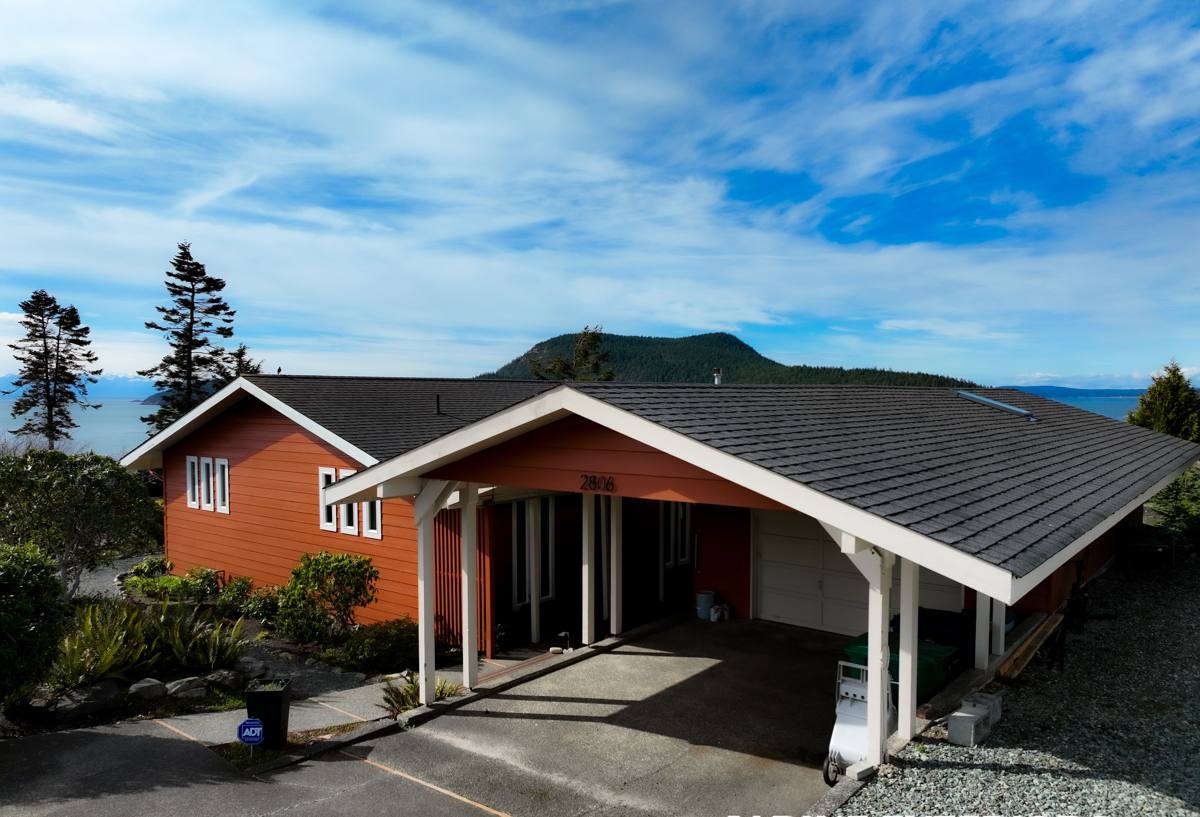
What This Climate Does to a House Over Time
Moisture Is the Constant Threat
Whatcom County doesn't get flash floods so much as it gets duration — weeks of low-intensity rain that finds every gap, every failed caulk line, and every spot where water can sit instead of shed. Wood-based siding products swell, and even when they don't visibly warp, the repeated wet-dry cycling breaks down paint film and opens seams that let water behind the cladding.
Moss and Algae Get a Long Runway
A long moss season means north-facing walls, shaded rooflines, and anything under tree cover stay damp for extended stretches. That's an ideal environment for moss, algae, and mildew to take hold on porous or textured surfaces. Once it's established, it holds even more moisture against the substrate underneath — a slow feedback loop that shortens the life of siding, roofing, and even deck boards.
Salt Air Adds a Corrosion Factor
Proximity to Puget Sound and Bellingham Bay means homes in this area get some level of salt-laden air, especially with onshore wind patterns. That accelerates corrosion on fasteners, flashing, and any metal components on a roof or exterior wall system. It also degrades certain paint and coating systems faster than manufacturers' national averages would suggest.
Siding: Why We Only Install James Hardie
We install James Hardie fiber cement siding exclusively. We don't install vinyl, LP SmartSide, Cemplank, Allura, or primed wood products like spruce or cedar. That's a deliberate standard, not a lack of options, and it comes directly from what we see happen to exteriors in this climate over a 10-, 15-, and 20-year horizon.
Vinyl siding is affordable and low-maintenance in the sense that it doesn't need painting, but it's a thin material that can warp in temperature swings and doesn't offer much of a moisture-management advantage in a climate that's wet as often as this one is. Wood-based products — whether engineered like LP SmartSide or traditional like primed cedar or spruce — depend heavily on an intact paint or finish layer to keep moisture out. In a region with this much sustained rain and humidity, that finish layer is under constant stress, and once it's compromised, the substrate underneath is organic material that can swell, rot, or delaminate.
James Hardie fiber cement is non-combustible and dimensionally stable — it doesn't expand and contract with moisture the way wood-based products do, and it doesn't require an intact paint film to resist water intrusion the same way. The ColorPlus factory finish is baked on under controlled conditions rather than field-applied, which matters in a place where you can't count on a dry week for a proper site paint job. Hardie's HZ5 product line in particular is engineered for regions with significant moisture exposure, which fits Whatcom County's profile well.
We back this up with a strong transferable warranty, but the bigger point is longevity when the product is installed to spec — correct clearances, proper flashing, factory-recommended fastening. That installation discipline matters as much as the material choice itself, and it's the other reason we standardized on one product line instead of offering several.
Siding Comparison for This Climate
| Material | Moisture Behavior | Maintenance Burden Here |
|---|---|---|
| James Hardie Fiber Cement | Dimensionally stable, doesn't swell or rot | Low; factory finish holds up under sustained wet weather |
| Vinyl | Sheds water but can warp with temperature swings | Low upfront, but limited lifespan advantage in this climate |
| LP SmartSide / Engineered Wood | Depends on intact coating to resist moisture | Moderate; coating needs monitoring in high-humidity zones |
| Primed Cedar / Spruce | Absorbs moisture if finish fails | High; repainting and moisture inspection on a regular cycle |
Roofing: Built to Shed Water and Resist Moss
A roof in this area does two jobs at once: it sheds a large volume of water reliably, and it resists the moss and algae growth that thrives under the long damp season. Underlayment quality and flashing detail matter more here than in drier climates, because a marginal installation that would go unnoticed elsewhere gets tested by this region's rainfall almost immediately.
We pay particular attention to valleys, penetrations, and any area where two roof planes or a roof and wall intersect — these are the spots where moss buildup traps moisture longest and where most leaks actually originate. Proper ventilation also plays a role in reducing the temperature and humidity swings inside the attic space that can accelerate material breakdown from underneath.
Windows: Sealing Out Driving Rain
Wind-driven rain doesn't just test a window's glass — it tests the flashing and sealant details around the rough opening. A window that's a good product but poorly flashed will leak in this climate eventually; it's a matter of when, not if. We install windows with attention to proper flashing integration with the surrounding wall assembly, not just to the window unit itself, because that's where failures actually start.
For older Burlington-area homes, window replacement is also an opportunity to correct decades-old flashing details that were never adequate to begin with, even if the original windows lasted a long time on borrowed time.
Decks: Standing Up to Wet-Dry Cycling
Decks take a unique beating in this climate because they're horizontal — they collect standing water, leaf litter, and moss in ways vertical siding doesn't. Board spacing, proper drainage slope, and ledger flashing are the details that determine whether a deck lasts or starts showing rot at the connections within a handful of years. We build and repair decks with those specifics in mind, not just for appearance but for structural longevity in a place where wood stays wet longer than it does in most of the country.
Why a Local Crew Matters in Burlington
A contractor who works across many different climates tends to default to generic specs — whatever's standard in a catalog. A crew that works Whatcom County exteriors regularly knows which details actually matter here: where moss takes hold first, which wall orientations get hit hardest by wind-driven rain, and which installation shortcuts show up as callbacks two winters later. That local pattern recognition is worth more than any brochure claim, and it's the reason we treat every job in this area the same way regardless of size — with the same product standards and the same installation discipline.
What to Expect From an Exterior Project Here
- An honest assessment of what's actually failing versus what's just cosmetic wear
- A recommendation grounded in Whatcom County's climate, not a generic national average
- Clear explanation of why we use James Hardie siding specifically, if siding is part of the scope
- Attention to flashing, drainage, and moisture details at every transition point
- A realistic timeline that accounts for our rain patterns rather than ignoring them
- A transferable warranty on materials and a clear scope of workmanship coverage
Planning an Exterior Project in Burlington
Whether you're dealing with siding that's showing its age, a roof that's started collecting moss faster than it used to, windows that leak during the wet months, or a deck that needs rebuilding rather than patching, the starting point is the same: an honest look at the house and a plan that fits this specific climate. We're happy to walk a property, point out what we see, and lay out options without any pressure to act immediately.
If you'd like an outside opinion on your home's exterior or a straightforward estimate for siding, roofing, windows, or deck work, reach out for a free, no-pressure estimate using the form below.