 Chuckanut Exterior
 Board & Batten in Burlington: A Style That Has to Earn Its Keep
Board and batten has become one of the most requested looks for homes in the Burlington area, and it's easy to see why. The vertical lines read as clean and modern on newer builds, but the same profile also suits the farmhouse and craftsman homes scattered throughout this part of Whatcom County. It's a distinctive alternative to the horizontal lap siding on most of the block, and it holds up visually at a distance and up close.
The problem is that board and batten is also one of the easier siding styles to get wrong. The vertical seams, the batten strips, and the wider panel spans all create more opportunities for water to find a way in than a standard lapped siding job does. In a climate like ours — with salt-laden air moving in off the water, driving rain that hits walls sideways instead of falling straight down, and a moss season that seems to stretch longer every year — a board and batten job that isn't detailed correctly will show problems faster than almost any other siding style we install.
This page is about what a board and batten installation actually needs to hold up on a Burlington home, not just what it needs to look good on installation day.
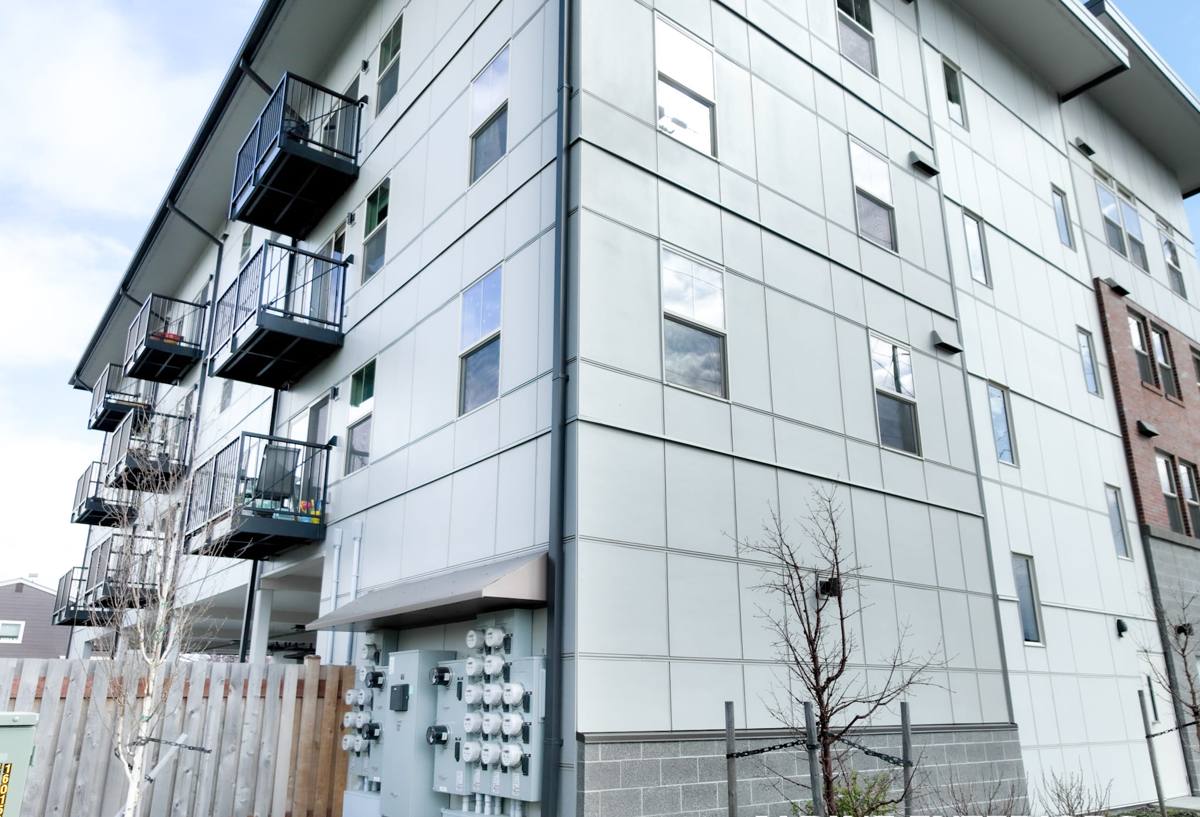
What Burlington's Climate Actually Does to Vertical Siding
Three conditions define siding performance in this corner of Washington, and all three hit vertical siding harder than horizontal.
Salt Air
Proximity to Puget Sound and the surrounding waterways means airborne salt is a constant, low-grade factor in how exterior materials age here. Salt accelerates corrosion in fasteners and metal flashing, and it degrades cheap paint finishes faster than inland weathering alone would. On a board and batten wall, every batten strip is fastened independently, which means more exposed fastener points than a standard lap profile — and every one of those points is a place where corrosion can start if the wrong hardware was used.
Driving Rain
Wind-driven rain off the water doesn't just run down a wall, it gets pushed sideways and upward into laps, seams, and butt joints. Board and batten relies on the batten strip to shed water off the vertical seam beneath it — if that batten isn't installed with the right reveal, the right fastening pattern, and a drainage gap behind it, wind-driven rain will push moisture behind the panel instead of over it.
Moss Season
Shaded, north-facing walls and anything tucked under overhangs or tree canopy in this region stay damp for months at a stretch. Moss and algae don't just look bad on siding — sustained moisture retention against a wall accelerates rot in wood-based products and breaks down paint film faster than dry-climate weathering. Vertical battens create more horizontal ledges (the top edge of every batten) where moisture, debris, and moss spores can sit.
None of this means board and batten is a bad choice for a Burlington home. It means the material and the installation details matter more here than they would in a drier climate.
Why We Only Install James Hardie for Board & Batten
We install James Hardie fiber cement exclusively — we don't offer LP SmartSide, vinyl, Cemplank, Allura, primed spruce, or cedar board and batten, and that's a deliberate standard, not a limitation of what we're able to install.
Board and batten is exactly the style where material choice matters most, because the vertical seams and batten strips put more stress on the material's ability to resist moisture and hold paint over time:
- Wood and primed spruce board and batten looks excellent when new, but it needs regular repainting and is vulnerable to swelling, cupping, and rot at the seams — the exact areas driving rain targets hardest.
- Vinyl board and batten is low-maintenance but flexes and gaps at the battens over time, and it can't match the crisp, flat panel look that makes board and batten attractive in the first place.
- LP SmartSide and other engineered wood products use a wood-strand core that is more moisture-sensitive at cut edges and seams than fiber cement — a real concern on a profile with this many seams.
James Hardie fiber cement is non-combustible, dimensionally stable in wet climates, and its ColorPlus factory finish is baked on rather than field-applied, which matters enormously on a batten strip — a component that's difficult to fully back-prime and seal in the field no matter who installs it. Hardie's climate-engineered HZ product lines are built specifically for wet Pacific climates like ours, and the product carries a strong transferable warranty when installed to Hardie's published specifications. For a style that depends this much on getting the details right, we don't think it makes sense to build it out of anything else.
What a Correct Board & Batten Job Actually Involves
Board and batten with Hardie products is typically built using HardiePanel vertical siding as the base plane, with HardieTrim boards installed as the battens over the seams — or in some cases a reveal panel system, depending on the look the homeowner wants. Either way, the installation quality lives or dies on details most homeowners never see once the job is finished.
The details that matter most in this climate
- Weather-resistive barrier and drainage plane installed continuously behind the panel, with proper laps, before a single piece of siding goes up
- Rain screen gap or furring behind the panel so wind-driven rain and incidental moisture can drain and the wall can dry, rather than trapping water against the sheathing
- Correct panel-to-panel seam treatment — sealed and flashed per Hardie's specification, not just butted and caulked
- Batten fastening pattern and spacing that follows manufacturer engineering, not just "what looks even"
- Z-flashing above every horizontal trim break — window heads, belly bands, water tables — so driving rain is directed out and away from the wall assembly
- Corrosion-resistant fasteners rated for coastal/salt-air exposure, not standard interior-grade hardware
- Field-cut edges primed and sealed before installation, since cut ends are the most vulnerable point on any fiber cement panel
- Bottom clearance from grade, decks, and patios maintained per code and manufacturer spec, so splashback and standing water don't sit against the panel base
Skip any one of these and the siding can still look right for a season or two. In a climate that stays wet as long as ours does, the shortcuts show up as staining, soft spots, or paint failure well before the material itself is at fault.
How Our Process Works
| Step | What Happens |
|---|---|
| 1. On-site assessment | We walk the home, check existing wall condition, current siding and sheathing, drainage patterns, and sun/shade exposure on each elevation |
| 2. Design and material plan | Panel and batten layout, reveal spacing, trim details, and HardiePanel/HardieTrim selection matched to the home's style and your color choice |
| 3. Written estimate | Itemized scope covering removal (if applicable), weather barrier, rain screen, siding, trim, flashing, and fasteners — no vague allowances |
| 4. Prep and weather barrier | Old siding removed or evaluated, sheathing repaired as needed, continuous weather-resistive barrier and rain screen installed |
| 5. Installation | HardiePanel and battens installed to manufacturer spec, with flashing at every horizontal transition |
| 6. Final walkthrough | We review the finished work with you on site before calling the job complete |
Board & Batten Material Comparison
| Material | Moisture Resistance in Wet Climate | Maintenance | Typical Lifespan |
|---|---|---|---|
| James Hardie fiber cement | Engineered for wet Pacific climates (HZ line) | Occasional wash; factory finish resists fading | Manufacturer-rated for decades with proper install |
| Primed spruce / cedar | Vulnerable at seams and cut ends; prone to swelling | Repainting on a regular cycle; seam caulking upkeep | Shorter without consistent maintenance |
| Vinyl | Doesn't rot, but battens can gap and warp with temperature swings | Low, but panels are hard to repair invisibly | Variable; UV and impact damage common |
| LP SmartSide / engineered wood | Wood-strand core more sensitive at cut seams than fiber cement | Moderate; edge sealing is critical | Manufacturer-rated, but seam-dependent |
What Affects the Cost of a Board & Batten Job
Board and batten generally costs somewhat more than standard lap siding in the same material, mainly because of the extra labor in the batten strips and seam detailing. A few factors that move the number for a specific Burlington home:
- Whether existing siding needs to be removed and disposed of, or the job is new construction
- Condition of the sheathing underneath — rot repair adds time and material before siding can start
- Number of stories and roof pitches, which affect access and scaffolding needs
- Amount of trim detail around windows, doors, and rooflines
- Batten spacing and reveal choice — tighter spacing means more material and more fastening
- Color selection — standard ColorPlus colors versus premium or custom options
We walk every home in person before giving a number, because the honest range depends entirely on what's actually going on behind the existing wall.
Why Hiring a Crew That Already Works Burlington Matters
Board and batten installed correctly on a home a few miles inland can still fail on a home closer to open water or tucked under heavy tree cover, because the exposure conditions are different. A crew that already works this area understands which elevations of a Burlington home typically take the worst of the driving rain, which walls hold moss the longest, and where salt exposure tends to be worse than homeowners expect. That local pattern recognition shapes real decisions — where we add extra flashing attention, which fastener spec we won't compromise on, and how we sequence a job around this area's wet-season weather windows.
It also means we're not learning the region on your project. We've already worked through how Whatcom County's coastal climate treats vertical siding seams, and we build every board and batten installation around that experience rather than a generic installation manual.
Is Board & Batten Right for Your Home?
Board and batten works well on most home styles common in the Burlington area, but it's worth an honest conversation before committing — some wall configurations, shading conditions, or budgets are better served by a standard Hardie lap profile, and we'll tell you that directly if it applies to your home. The goal is a siding job that still looks and performs right in fifteen years, not just on installation day.
If you're considering board and batten for a home in the Burlington area, we're happy to walk the property, look at your existing siding and sheathing condition, and put together a straightforward, no-pressure estimate using the form below.