 Chuckanut Exterior
 Why Fairhaven Windows Wear Out Faster Than the Manual Says
Every window comes with a manufacturer's expected service life, but that number assumes average conditions. Fairhaven doesn't have average conditions. Sitting close to Bellingham Bay, homes here take on salt-laden air that settles into window hardware, screen frames, and exposed fasteners long before it's visible to the eye. Add in the driving, wind-pushed rain that comes through Whatcom County several months out of the year, and you've got water finding its way into gaps that would stay dry in a drier climate. Then there's the moss and algae season, which here runs long — shaded exposures and persistent dampness let organic growth take hold on sills, tracks, and trim, holding moisture against the frame instead of letting it shed.
None of this means Fairhaven homes need exotic products. It means the replacement has to be specified and installed with this specific climate in mind, not a generic one. That's the difference between a window that looks fine for a few years and one that actually performs for two or three decades.
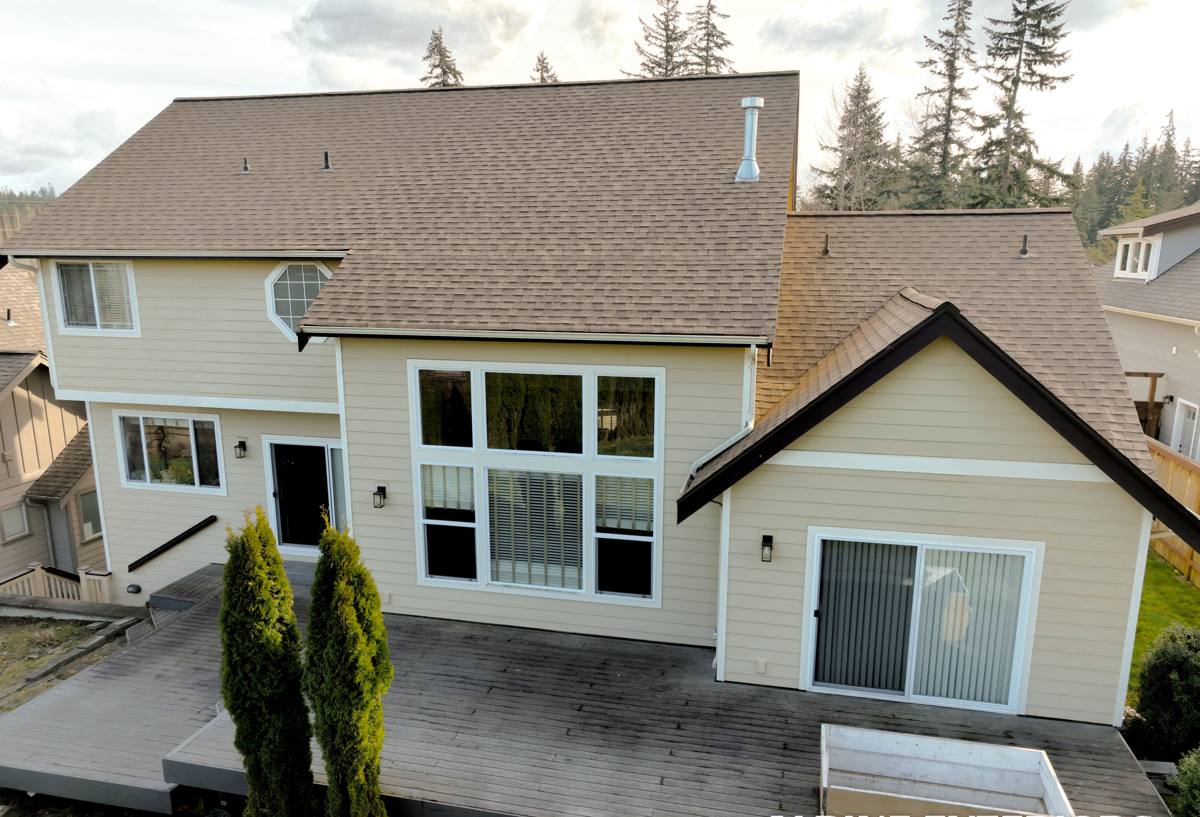
Signs Your Current Windows Are Losing the Fight
Windows rarely fail all at once. They give warning signs first, and in a wet, salty climate those signs show up earlier than most homeowners expect. Walk your exterior and check for these before deciding whether you're looking at a repair or a replacement:
- Hardware (locks, cranks, hinges) that feels gritty, sticky, or corroded rather than smooth
- Green or black growth building up in the bottom track or on the sill, even after cleaning
- Soft or discolored wood trim around the frame, especially on north- or west-facing walls
- Condensation or fogging between panes, which means the seal has failed
- Visible daylight or a draft at the frame edge when the window is latched shut
- Difficulty opening, closing, or latching windows that used to operate smoothly
- Peeling paint or bubbling on interior sills, which usually means moisture is getting past the exterior seal
One or two of these on an otherwise sound window might be a repair. Several of them together, especially paired with an older window, usually mean the frame and seal system have run their course and repair would just be delaying the same failure.
What a Correct Window Replacement Actually Involves
It's Not Just Swapping the Sash
A window replacement done right is as much about what happens around the window as the window unit itself. The opening gets inspected down to the framing before anything new goes in — because if there's hidden rot, a compromised sill pan, or old flashing that's already failed, installing a new window over that problem just seals moisture in behind a nicer face.
Flashing and Water Management Come First
In a climate with driving rain, the flashing detail at the head, jambs, and sill matters more than the brand of window you choose. Water has to be directed out and away from the wall assembly, not just blocked at the surface. That means proper flashing tape or pan flashing at the sill, correctly lapped house wrap, and a drainage path so any water that does get behind the cladding has somewhere to go besides your framing.
Sealing Without Trapping Moisture
Sealant is important, but sealing every gap solid isn't the goal — trapping moisture inside a wall cavity causes rot just as surely as letting rain in does. A correct installation uses backer rod and sealant at the right joints, leaves weep paths clear, and doesn't rely on caulk alone to do a flashing detail's job.
Choosing a Frame Material for Salt Air and Long Wet Seasons
Frame material affects how a window holds up to corrosion, moisture cycling, and UV exposure over time. There's no single "best" material for every home — it depends on your exposure, your home's style, and your budget. Here's how the common options compare for a Whatcom County coastal-adjacent property:
| Frame Material | Salt Air / Moisture Behavior | Maintenance | Best Fit |
|---|---|---|---|
| Vinyl | Won't corrode or rot; performs well in damp, salty air | Low — occasional cleaning | Most homes prioritizing value and low upkeep |
| Fiberglass | Very stable in temperature and moisture swings; resists warping | Low | Homes with strong sun/rain exposure wanting long-term dimensional stability |
| Aluminum-clad wood | Exterior sheds moisture well; interior wood offers a traditional look | Moderate — clad exterior is low-care, interior wood needs occasional attention | Homes wanting a wood interior with better exterior durability than bare wood |
| Bare wood | Attractive but vulnerable to prolonged dampness and requires diligent upkeep | High — regular painting/sealing required | Historic or character homes where the owner is committed to upkeep |
We don't rule out wood-framed windows for homes where the look matters, but we're upfront that bare wood in a long wet, mossy season demands a maintenance schedule most homeowners underestimate. If low upkeep matters more than material tradition, vinyl or fiberglass will simply give you fewer headaches here.
Glass Packages Worth Discussing
Beyond frame material, the glass package affects comfort and condensation resistance. Double-pane with a Low-E coating and an argon gas fill is a reasonable baseline for this climate — it cuts down on heat loss and helps limit interior condensation during cold, damp stretches. Triple-pane is worth a conversation if a room runs consistently cold or faces prevailing wind and rain directly, but it's not automatically necessary on every elevation of every home.
Our Process, Start to Finish
- On-site assessment — we look at each window opening, note existing damage, drainage issues, and framing condition before quoting anything
- Honest recommendation — we tell you which windows genuinely need replacement now versus which can wait, and why
- Written estimate — clear pricing by opening, with material and glass options explained in plain terms
- Removal and inspection — old units come out carefully so we can check the framing and sill for hidden rot or moisture damage before it's covered up again
- Proper flashing and installation — sill pan, flashing, insulation, and sealant done to manage water, not just cover the gap
- Final walkthrough — every window operates, locks, and seals the way it should before we consider the job done
Cost Factors for Fairhaven Window Replacement
We don't publish flat prices because window replacement cost depends on real variables specific to your home. What we can tell you is which factors move the number the most, so you're not guessing in the dark before your estimate:
| Factor | Why It Affects Cost |
|---|---|
| Number and size of openings | More or larger windows mean more material and labor |
| Frame material chosen | Vinyl, fiberglass, and clad-wood carry different material costs |
| Condition of the existing opening | Hidden rot or old flashing failures add repair work before the new window goes in |
| Access and window height | Second-story or hard-to-access openings take more time and equipment |
| Glass package | Standard Low-E double-pane versus upgraded triple-pane or specialty glass |
| Trim and finish work | Matching existing interior/exterior trim adds finishing labor |
An honest estimate walks through these line by line rather than handing you a single number pulled from a generic price list.
Why Hiring a Crew That Already Works in Fairhaven Matters
Window replacement isn't just a product installation — it's a water-management job on a home that's already dealing with a demanding coastal climate. A crew that regularly works homes in this part of Whatcom County has already seen how salt air chews through cheap hardware, how driving rain finds the one gap in a rushed flashing job, and how a long moss season punishes anything installed without proper drainage in mind. That experience shows up in the small decisions made on site — where to run the flashing an extra inch, which sealant actually holds up here, and when a "just caulk it" shortcut will cause a callback in two years.
Keeping New Windows Performing for the Long Haul
A correct installation gets you most of the way there, but a little seasonal attention extends the life of any window in this climate:
- Clear moss and debris from tracks and sills before it holds moisture against the frame
- Rinse salt residue off exterior hardware and glass periodically, especially after storms
- Check exterior caulking annually and touch up any cracked or shrinking beads
- Operate locks and cranks a few times each season so hardware doesn't seize from disuse
- Keep gutters and downspouts clear so roof runoff isn't dumping extra water near window heads
None of this is complicated, but skipping it is exactly how a well-installed window ends up needing early attention in a climate this wet.
Get a Straight Answer on Your Windows
If your windows are showing any of the wear signs above, or you're just planning ahead for a home in Fairhaven, we're glad to take a look and give you a straightforward assessment — no pressure, no inflated scare tactics, just what we actually see and what it would take to fix it right. Use the form below to request a free estimate.