 Chuckanut Exterior
 Why Bellingham Roofs Take a Different Kind of Beating
Bellingham sits right where Puget Sound weather meets the foothills, and that combination is hard on roofs. Homes in and around Bellingham deal with driving rain that comes in sideways off the water, salt-laden air that accelerates corrosion on metal flashing and fasteners, and a moss season that can run eight or nine months out of the year in shaded, north-facing sections of a roof. None of these factors alone is dramatic. Together, over years, they wear down roofing systems faster than a homeowner moving from a drier inland climate would expect.
Storm damage repair here is not just about patching a hole after a windstorm. It's about understanding how wind-driven rain finds its way under shingles that look fine from the ground, how salt air pits and loosens metal components over time, and how moss holds moisture against the roof deck long after a storm has passed. A repair that doesn't account for these local realities tends to fail again within a season or two.
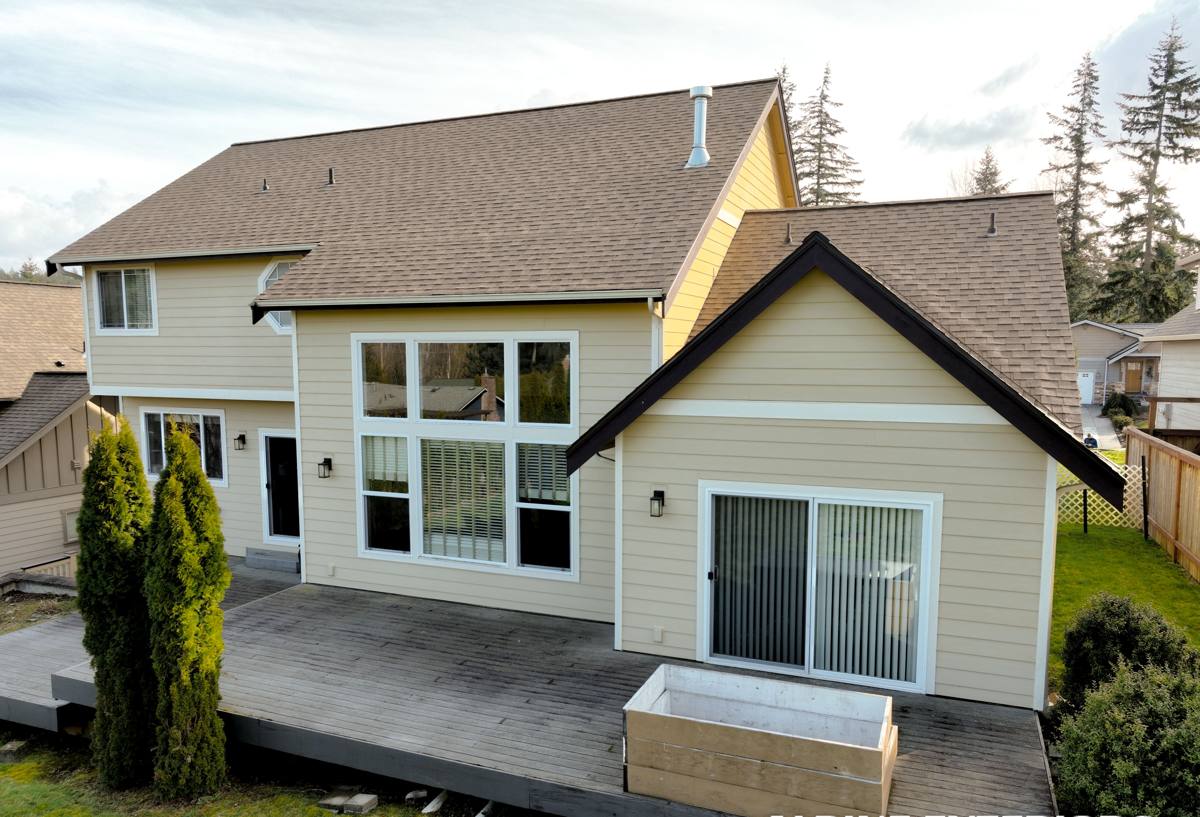
What Counts as Storm Damage in Whatcom County
Wind-Driven Rain Intrusion
Bellingham storms rarely bring the straight-line hail damage you'd see in the Midwest. What we see more often is wind pushing rain up and under shingle edges, ridge caps, and flashing that's already a little loose. The shingles themselves can look intact after the storm, but water has already gotten past them and into the underlayment or decking. This kind of damage is sneaky because it doesn't announce itself with a visible hole — it shows up weeks later as a stain on a ceiling.
Wind Uplift and Lost Shingles
Sustained wind gusts common to fall and winter storms coming off the Strait of Georgia and Puget Sound can lift shingle tabs, crease them, or tear them off entirely, especially on roofs where the sealant strip has already weakened from age or sun exposure. Once a shingle's seal is broken, every subsequent windstorm makes the problem worse, even if no more material is actually torn away.
Falling Debris
Chuckanut's tree cover is part of what makes the area beautiful, but mature conifers and big-leaf maples drop limbs during high winds, and a limb doesn't need to be huge to crack a shingle, dent a gutter, or punch through decking on an older roof. We look for both the obvious impact point and the secondary damage — displaced shingles or bent flashing nearby that the falling limb pushed on its way down.
What a Correct Storm Repair Actually Involves
A rushed storm repair patches what's visible and stops there. A correct one starts with figuring out how far the water actually traveled before anyone touches a shingle.
Assessment Before Repair
We check the decking underneath the damaged area, not just the shingles on top. Wet or soft decking has to be addressed before new roofing goes back on, or you're just sealing moisture in. We also check the attic side when it's accessible, since staining, dark streaks, or a musty smell on the underside of the roof deck often tells us more than what's visible from outside.
Matching Materials Honestly
Shingles fade with UV exposure, so a patch using brand-new material next to a ten-year-old roof will usually look slightly different in color and texture — that's a normal trade-off of spot repair versus full replacement, not a defect in the work. We tell homeowners upfront when a patch will be visible so there are no surprises, and we'll flag it if the damaged area is extensive enough that a full slope replacement makes more sense than a patch that won't blend or hold up as well long-term.
Flashing and Underlayment
Most repeat leaks we get called back for elsewhere started as flashing problems, not shingle problems — around chimneys, skylights, vent pipes, and roof-to-wall transitions. Storm repair that only replaces shingles and ignores compromised flashing is incomplete work. We also replace the underlayment in the repaired section rather than laying new shingles over degraded felt or synthetic underlayment, since that layer is your actual water barrier if a shingle ever fails again.
Our Process, Start to Finish
- Initial call and photos. If you can safely get photos of visible damage, that helps us prioritize and prepare before we arrive.
- On-site inspection. We walk the roof (or use a pole camera and ladder inspection when walking it isn't safe) and check the attic interior where accessible.
- Emergency mitigation if needed. Active leaks or exposed decking get tarped or dried in the same visit to stop further water intrusion while a full repair is scheduled.
- Written scope and honest recommendation. You get a clear explanation of what's damaged, what caused it, and whether a patch, a partial slope replacement, or a full re-roof is the right call — not the most profitable one for us.
- Repair work. Decking replaced where soft or wet, new underlayment in the repaired zone, matched shingles or the closest reasonable match, and flashing rebuilt where it's compromised.
- Cleanup and walkthrough. Debris and old material hauled off, gutters checked for granule buildup or damage from the same storm, and a final walkthrough so you know exactly what was done.
Repair Versus Replacement: What Actually Drives the Decision
Homeowners often ask whether a storm-damaged roof should be patched or replaced. The honest answer depends on a handful of factors, not on the storm alone.
| Factor | Leans Toward Repair | Leans Toward Replacement |
|---|---|---|
| Age of existing roof | Under 10-12 years | Nearing or past expected lifespan |
| Extent of damage | Isolated to one section or slope | Scattered across multiple slopes |
| Decking condition | Dry, solid underneath | Soft, delaminated, or repeatedly wet |
| Shingle match availability | Same product line still available | Discontinued or badly faded |
| History of prior repairs | First repair on this roof | Multiple past patches in different areas |
As a rough guide, a small isolated storm patch on an otherwise sound roof typically runs in the low hundreds to around fifteen hundred dollars depending on access and material, while damage that involves decking replacement or spans a full slope moves into a much wider range. We'll always give you real numbers for your specific situation rather than a generic estimate over the phone.
Insurance and Storm Claims: What Homeowners Should Know
Not every roof problem that shows up after a storm is actually storm damage in the insurance sense, and we won't tell you otherwise just to help a claim along. Wear from age, pre-existing moss damage, or a roof that was already near the end of its service life can look similar to storm impact but isn't typically covered the same way. What we will do is give you a straightforward, documented assessment — photos, a description of what we found, and our honest read on cause — so you have accurate information to bring to your insurer. Keeping your own dated photos of storm damage as soon as you notice it, and getting an assessment promptly rather than waiting through another storm cycle, makes the whole process cleaner regardless of which way the claim goes.
Moss, Algae, and the Long Moss Season
Why It Matters After a Storm
Whatcom County's damp, shaded conditions mean moss isn't a cosmetic issue here — it's a moisture management issue. Moss holds water against the shingle surface and roof deck long after rain has stopped, which softens shingle mat and accelerates granule loss. A roof section already weakened by moss is more vulnerable to storm damage in the first place, and a storm can knock loose moss mats that were partially holding water back, exposing problems that had been building for a while.
What We Check For
- Moss buildup along ridge lines and in shaded valleys, where damage often starts
- Granule loss in gutters and downspouts, a sign the shingle surface is degrading underneath moss
- Soft spots where moss has held moisture against the deck for an extended period
- Metal flashing and fasteners for pitting or corrosion from salt-laden air combined with moisture
- Gutter and downspout function, since clogged gutters send storm runoff back up under the roof edge
Signs Your Bellingham Roof Needs a Storm Inspection
- Ceiling stains or discoloration that appeared after a windstorm or heavy rain event
- Shingles you can see are missing, curled, or cracked from the ground
- Granules collecting in gutters or at downspout outlets after a storm
- A musty smell in the attic that wasn't there before
- Visible daylight through the roof deck from inside the attic
- Fallen limbs or debris that made contact with the roof, even without obvious damage
- Gutters pulling away from the fascia or overflowing during rain
If any of these apply, it's worth having someone look before the next storm system moves through, since problems that sit unaddressed through another wet spell tend to get more expensive rather than staying the same.
Why a Crew That Already Works Bellingham Matters
Storm repair isn't just a technical skill — it's a scheduling and priority problem too. After a significant windstorm, roofing crews across Whatcom County get busy fast, and homeowners who call a contractor with no local presence often wait longer for a response while active leaks keep doing damage. A crew already working in and around Chuckanut and Bellingham knows the housing stock, the typical roof ages in the area, and which storm patterns tend to cause which kind of damage, which makes the initial assessment faster and more accurate. Just as important, a local crew is still around next year and the year after if a repair needs a warranty check or the same storm pattern shows up again. We stand behind the work we do here because we're not going anywhere.
Ready When You Are
If a recent storm has left you with a leak, missing shingles, or just a nagging feeling that something's not right up there, we're happy to take a look and give you a straight answer — no pressure, no upsell. Fill out the form below for a free estimate and we'll get back to you to schedule an inspection.