 Chuckanut Exterior
 Composite Decking Built for York's Weather, Not Just for the Showroom
York sits close enough to the water and the tree line that a deck here deals with a different set of stresses than a deck a few miles inland. Salt-laden air off the bay, long stretches of driving rain through the fall and winter, and a moss season that can run from October well into spring all work on a deck's surface, its fasteners, and everything hidden underneath it. Composite decking handles most of that better than wood if it's specified and installed correctly for this specific environment. If it's installed the way it would be in a dry inland climate, it won't hold up the way the manufacturer's brochure promises.
This page is about composite decking specifically for York homes in Chuckanut, Whatcom County — what the local climate actually does to a deck over time, what a correct installation looks like here, and how we approach the job from first estimate to final walkthrough.
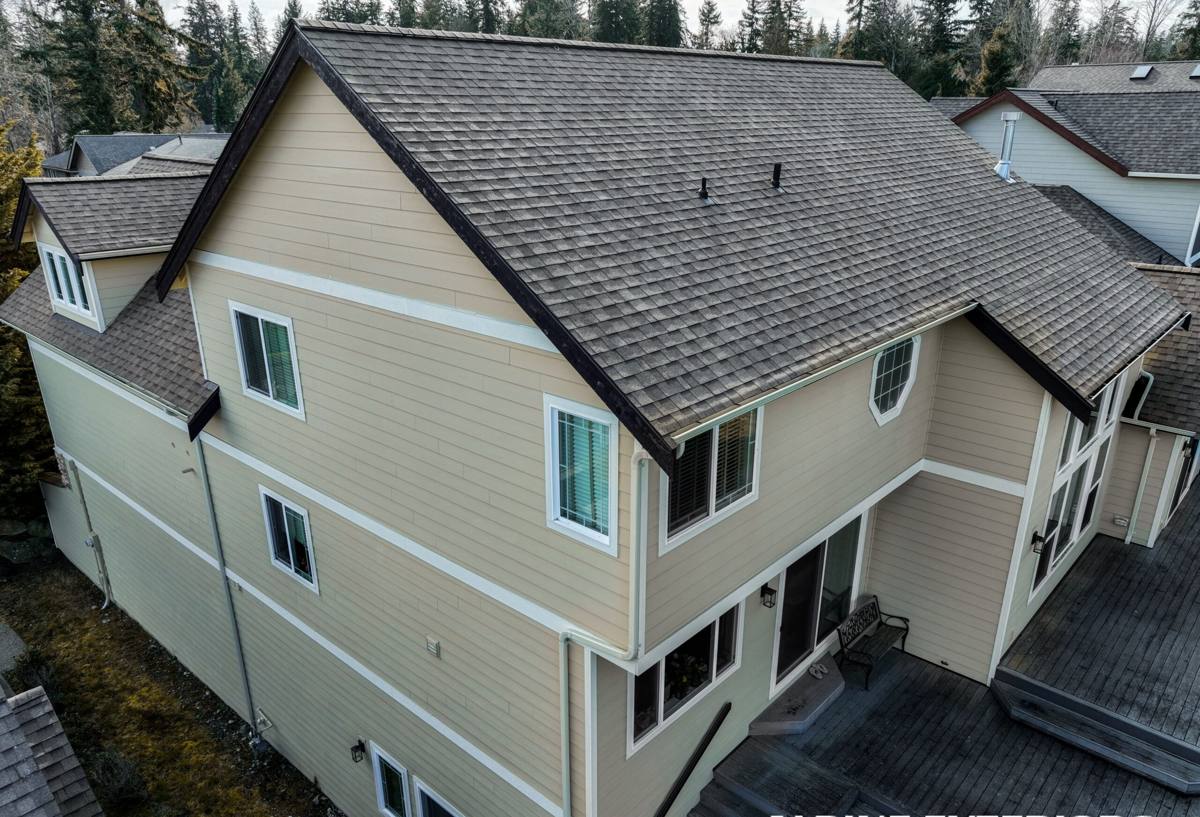
What Salt Air, Rain, and Moss Actually Do to a Deck
Composite boards themselves resist rot, but a deck is a system — boards, fasteners, joists, framing, and the ground or structure underneath. Each of those components reacts differently to Chuckanut's conditions.
Salt Air and Metal Fasteners
Salt air accelerates corrosion on anything metal — screws, joist hangers, structural brackets, and railing hardware. Standard zinc-coated fasteners can start showing rust streaks on composite boards within a few seasons this close to the water. That staining isn't just cosmetic; it's usually a sign the fastener itself is degrading, and a corroding fastener is a weaker fastener.
Driving Rain and Water Management
Whatcom County's rain doesn't just fall straight down — wind-driven rain gets pushed sideways under railings, into ledger board connections, and along the gap between decking and house framing. A deck that isn't detailed with proper flashing and drainage in mind will trap water in exactly those spots, even though the surface boards themselves never rot.
Moss and Shaded, Damp Surfaces
York's tree cover and the region's long wet season create ideal conditions for moss and algae growth on any north-facing or shaded deck surface. Composite decking won't rot from this the way wood does, but moss buildup makes boards slick and, over time, can hold moisture against the board surface longer than an open, sun-exposed deck would ever experience.
What a Correct Composite Deck Installation Involves
Composite decking is often sold as low-maintenance, and the boards themselves are. But "low-maintenance board" doesn't mean "installation doesn't matter" — in a climate like this, installation is most of what determines whether the deck performs for twenty-plus years or starts showing problems in five.
Substructure and Joist Protection
Joists underneath composite decking should be protected with a joist tape or equivalent barrier, not left as bare pressure-treated lumber. This matters more here than in a dry climate — it keeps standing moisture from sitting directly against the wood at every fastener penetration, which is where rot starts even on treated lumber.
Ventilation Underneath the Deck
Composite boards need airflow underneath to shed the moisture that inevitably gets under them during a Whatcom County winter. Decks built low to the ground, or with skirting that blocks airflow, trap humidity underneath — which shows up later as mold on the underside of boards and accelerated wear on the substructure, even though the top surface looks fine.
Fastener Selection
Given the salt air issue above, we use fasteners and hardware rated for coastal or corrosive environments, not the cheapest zinc-coated hardware in the box. It costs more up front and it's the difference between clean board edges in year ten and rust-streaked, loosening connections.
Board Spacing and Expansion Gaps
Composite boards expand and contract with temperature and moisture more than solid wood. Correct gapping at butt joints and picture-frame borders is what keeps the deck surface flat and prevents buckling as the boards absorb the seasonal moisture swings typical here.
Composite vs. Wood vs. PVC Decking: An Honest Comparison for This Climate
Every decking material has real trade-offs. Here's how the three most common options actually perform in York's conditions, based on what we see in the field, not manufacturer marketing.
| Material | Moisture & Rain Performance | Moss/Algae Resistance | Maintenance |
|---|---|---|---|
| Pressure-treated wood | Absorbs water; prone to swelling, splitting, and rot at fasteners over time | Grows moss readily; needs regular cleaning and periodic sealing | Annual cleaning, re-staining or sealing every 1-3 years |
| Composite (capped) | Does not absorb water into the core; performs well with correct substructure detailing | Can still grow surface moss in shaded, damp spots; cleans off easily | Periodic washing; no staining or sealing required |
| PVC | Fully water-resistant; unaffected by moisture absorption | Similar surface moss potential in shade; cleans easily | Periodic washing; higher material cost |
We install capped composite decking as our standard recommendation for most York homes because it strikes the right balance between upfront cost, appearance, and how little it asks of a homeowner over the life of the deck. Uncapped or older-generation composite products don't get the same recommendation from us — without a capped outer layer, the board surface is more exposed to moisture absorption and staining, which matters more here than in a drier climate.
Our Process, Start to Finish
1. On-Site Assessment
We walk the property, look at drainage patterns around where the deck will sit, check existing grade and any moss or moisture problems already visible on siding, fencing, or existing structures nearby. This tells us what the deck will actually be up against.
2. Structural and Ledger Check
If the deck attaches to the house, we inspect the ledger connection point and the house's water management at that wall. A poorly flashed ledger board is one of the most common failure points on any deck in a rainy climate, and it's much cheaper to correct before the deck goes up than after.
3. Substructure Build
Framing, joist protection, and proper slope for drainage get built first — this is the part of the job that's invisible once the deck is finished but determines almost everything about long-term performance.
4. Decking and Railing Installation
Composite boards go down with correct gapping, coastal-rated fasteners, and attention to airflow at the perimeter and skirting. Railing systems get the same fastener treatment given their exposure to weather and handling.
5. Final Walkthrough
We go over the finished deck with the homeowner, including what routine care actually looks like for a composite deck in this climate — which is minimal, but not zero.
Cost Factors for a York Composite Deck
Composite decking costs more per square foot than pressure-treated wood up front, and less over its lifespan once you account for staining, sealing, and repairs that wood eventually needs. Actual project cost depends on a handful of factors specific to each property.
| Factor | Why It Affects Cost |
|---|---|
| Deck size and shape | More linear footage of board and framing; complex shapes increase cutting and waste |
| Height above grade | Taller decks need more substructure, railing, and sometimes stairs |
| Existing structure condition | Rebuilding on a failing substructure costs more than building fresh |
| Railing style | Composite or metal railing systems cost more than basic wood rail |
| Site access | Tight lots or sloped yards in wooded areas can add labor time |
| Board tier | Entry-level capped composite vs. higher-end composite or PVC lines |
We give a firm, itemized quote after the on-site assessment rather than a rough number over the phone — every York property has a slightly different combination of these factors.
Living With a Composite Deck in Chuckanut: What Upkeep Actually Looks Like
Composite decking is genuinely low-maintenance compared to wood, but "low" isn't "none," especially with this area's moss season. A short, honest checklist of what actually keeps a composite deck performing well here:
- Sweep off fallen leaves and debris regularly in fall — trapped organic matter is what feeds moss and algae growth on the board surface
- Wash the deck surface with a soft-bristle brush and a composite-safe cleaner once or twice a year, more often on shaded sections
- Avoid pressure washing at close range or high PSI — it can damage the board's capped surface layer
- Check railing and stair fasteners annually for early signs of corrosion, especially on decks with direct water exposure
- Keep gutters and downspouts near the deck clear so runoff isn't draining directly onto or under the deck surface
- Trim back overhanging branches where practical to reduce shade and debris buildup on moss-prone sections
Why a Crew That Already Works in York Matters
Composite decking manufacturers write their installation guidelines for a generic climate. A crew that only glances at those guidelines, without adjusting for what actually happens near the water in Whatcom County, will build a deck that looks right on installation day and starts showing problems in year three or four — corroding fasteners, moisture trapped under low skirting, moss taking hold in spots that never dry out.
Working regularly in York and the surrounding Chuckanut area means we've already seen which details matter most for this specific stretch of coastline — how much airflow a given lot actually gets, how the local rain pattern hits an exposed deck versus a tree-sheltered one, and which fastener and flashing choices hold up versus which ones don't. That's not something you get from a spec sheet; it's something you build from doing the work in the same conditions your deck will actually live in.
Ready to Talk About Your Deck?
If you're planning a new composite deck or replacing an aging wood deck in York, we're happy to come take a look, walk the site with you, and put together a straightforward, no-pressure estimate. Use the form below to get started.