 Chuckanut Exterior
 Exterior Work in South Hill: What the Climate Demands
South Hill sits close enough to the water and the weather patterns that move through Whatcom County that homes here take a specific kind of beating year-round. It's not one dramatic event that wears down a house in this part of Washington — it's the steady combination of salt-laden air, long stretches of driving rain, and a moss season that can run most of the year on shaded roofs and north-facing walls. Any exterior contractor working in South Hill needs to understand that combination before they ever pick up a nail gun.
We work throughout Chuckanut and the surrounding Whatcom County communities, and South Hill's mix of older housing stock and newer infill means we see the full range of what this climate does to a building over time. Some homes were built to handle it. Others were finished with materials that simply weren't designed for this much sustained moisture exposure, and it shows in the siding, trim, and roofing we get called out to look at.
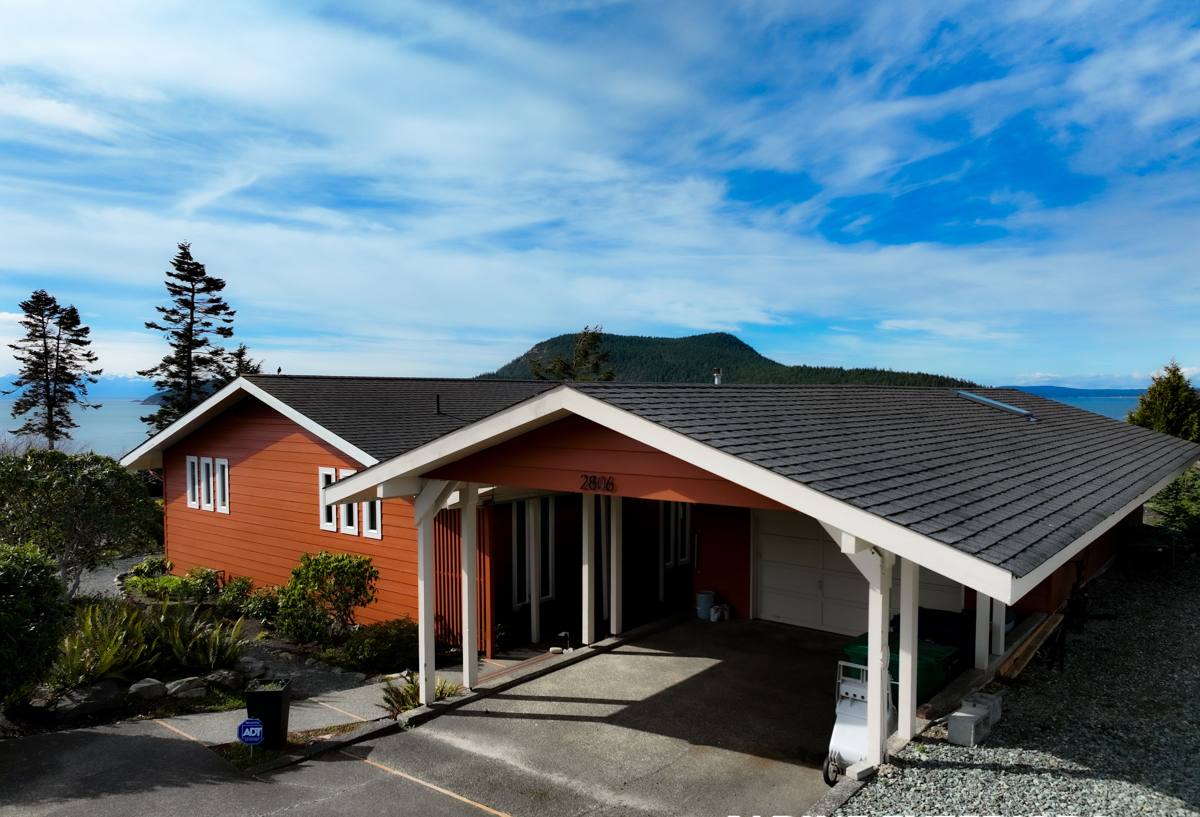
Why Salt Air and Driving Rain Matter More Here
Proximity to saltwater changes how exterior materials age. Salt in the air accelerates corrosion of fasteners, flashing, and any metal component on a home's exterior. It also interacts with certain paints and coatings in ways that shorten their service life compared to the same product used further inland. Combine that with wind-driven rain — rain that doesn't just fall straight down but gets pushed sideways into wall assemblies, window frames, and roof edges — and you get a climate that punishes any weak point in an exterior envelope.
Driving rain is a different problem than steady rain. A wall system can shed water falling straight down and still fail if wind is forcing moisture up under laps, around trim, or into seams that were never designed to be a primary defense. This is why we pay close attention to flashing details, water table design, and lap coverage on every siding and roofing job in this area — the material itself is only half the equation.
The Moss Factor
Whatcom County's moisture and mild temperatures make it excellent growing conditions for moss, and South Hill is no exception. Moss on a roof holds water against shingles or panels far longer than the surrounding air would otherwise allow, which accelerates granule loss on asphalt roofing and can work its way under laps over time. On siding, moss and algae growth on shaded north- and west-facing walls trap moisture against the substrate — and that's exactly where paint failure, swelling, and rot tend to start on materials that aren't built to handle it.
Siding: Why We Only Install James Hardie
Siding is the single biggest factor in how well a home in South Hill holds up over a 20- or 30-year span, and it's also where we've made the strongest commitment as a company. We install James Hardie fiber cement siding exclusively. We don't install vinyl, LP SmartSide, or other wood-based composite products, and we don't install unfinished cedar or primed spruce siding. That's a deliberate standard, not a limitation of what we're capable of installing.
Fiber cement is non-combustible and dimensionally stable in a way that wood-based and vinyl products aren't. In a climate defined by constant moisture cycling — wet, dry, wet again — that stability matters. Hardie's ColorPlus factory-applied finish is baked on under controlled conditions rather than field-applied, which gives it more consistent coverage and better long-term color retention than site-painted alternatives, especially on a home exposed to salt air and UV.
Hardie also engineers specific product lines (their HZ5 line, for example) for regions with more moisture exposure, which lines up well with what South Hill homes actually face. We size and detail every siding job to the specific exposure of that wall — full weather side facing prevailing wind and rain gets treated differently in terms of flashing and lap detail than a sheltered wall under an eave.
What Correct Installation Actually Involves
- Proper rain-screen or drainage plane behind the siding so any moisture that gets past the cladding has somewhere to go
- Correct nailing pattern and fastener spacing per Hardie's published specs — not shortcuts that void the warranty
- Flashing integrated at every window, door, and penetration before siding goes on, not caulked over afterward
- Proper clearance at the base of the wall and at any horizontal trim to keep splash-back and standing water away from the material
- Factory-finished ColorPlus panels installed with touch-up rather than field painting, preserving the warranty and finish consistency
Roofing for South Hill's Rain and Moss Cycle
Roofing in this part of Whatcom County has to handle sustained wet weather, wind-driven rain at eaves and valleys, and moss growth on shaded slopes. We look closely at underlayment quality, valley and flashing details, and ventilation when we assess a roof here — a roof that's shedding water fine on the surface can still be failing underneath if ventilation is inadequate and moisture is condensing in the attic space. Moss removal and treatment is also a regular part of maintaining a roof's lifespan in South Hill rather than a one-time fix, since regrowth is common in shaded, north-facing sections.
Windows: The Weak Point in Wind-Driven Rain
Windows are one of the most common failure points we find on homes exposed to driving rain, because a window opening is a break in the wall assembly that depends entirely on correct flashing to stay watertight. Older windows with degraded seals or poorly integrated flashing let water track down into the wall cavity long before anyone notices a stain indoors. When we replace windows, we treat the flashing and integration with the surrounding siding as seriously as the window unit itself — a good window installed with poor flashing will still leak.
Decks: Built for Wet Ground and Salt Exposure
Decks in South Hill deal with a different set of pressures — ground moisture, standing water if drainage isn't graded correctly, and the same salt air that affects siding fasteners and hardware. We use fasteners and hardware rated for the exposure, pay attention to ledger board flashing (a common source of hidden rot), and make sure decking has enough airflow underneath to dry out between rain events rather than sitting wet for days at a time.
Why a Local Crew Matters Here
A crew that works Chuckanut and South Hill regularly knows which walls on a typical lot face the weather side, how much moss pressure to expect on a shaded roof, and which older installation practices in this area tend to fail first. That local knowledge changes real decisions — where we add extra flashing detail, which walls get prioritized for drainage planes, and how we sequence a job around the rain patterns this area actually gets, rather than a generic install schedule. It also means we're not driving in from out of the area for warranty callbacks or follow-up work.
What to Expect When You Call Us
We start with a walk-around assessment of the home's exterior — siding condition, roof condition, window seals, and any deck or trim issues — and we're upfront about what's actually needed versus what can wait. For siding, that means an honest look at whether repair, partial replacement, or a full re-side makes sense given the home's age and condition. We don't push a full-scale project when a targeted repair will hold for years.
| Exterior Element | Main South Hill Climate Risk | What We Prioritize |
|---|---|---|
| Siding | Salt air corrosion, wind-driven rain intrusion, moisture cycling | James Hardie fiber cement, proper flashing and drainage plane |
| Roofing | Sustained rain, moss growth on shaded slopes | Underlayment quality, valley flashing, ventilation, moss management |
| Windows | Wind-driven rain at seals and frames | Correct flashing integration with wall assembly |
| Decks | Ground moisture, salt exposure on hardware | Rated fasteners, ledger flashing, airflow underneath |
A Practical Maintenance Checklist for South Hill Homeowners
- Check shaded roof slopes and north-facing siding for moss buildup at least once a year
- Inspect caulking and flashing around windows and doors for cracking or gaps before the wet season
- Look at deck ledger boards and fastener hardware for early rust or staining
- Keep gutters clear so water isn't overflowing onto siding or pooling near the foundation
- Watch for paint or finish failure on siding, especially on the weather-exposed side of the house — it's often the first visible sign of a moisture problem underneath
Getting Started
If you're dealing with aging siding, a roof that's holding onto moss longer each year, windows that feel drafty during a storm, or a deck that's starting to show its age, we're happy to take a look and give you a straightforward assessment. We'll tell you what's actually going on with your home's exterior and what we'd recommend given South Hill's specific exposure — no pressure, no upsell. Reach out for a free estimate using the form below.