 Chuckanut Exterior
 Why South Hill Roofs Wear Differently
South Hill sits close enough to the water and the tree cover of Chuckanut that its roofs face a combination most inland Whatcom County homes don't deal with: salt-laden air moving in off the bay, long stretches of driving rain through fall and winter, and a moss season that can run eight months or more under shaded, north-facing slopes. None of these alone is unusual for Western Washington. Together, on the same roof, they shorten the useful life of materials that aren't matched to the conditions and accelerate problems that start small — a lifted shingle tab, a clogged valley, a soft spot of trapped moisture under moss — into full deck replacement territory.
A new roof installation done right for this neighborhood isn't a generic re-roof. It's a roof specified and installed with salt exposure, sustained wind-driven rain, and moss growth built into every decision, from underlayment to fastener choice to how the ventilation is laid out.
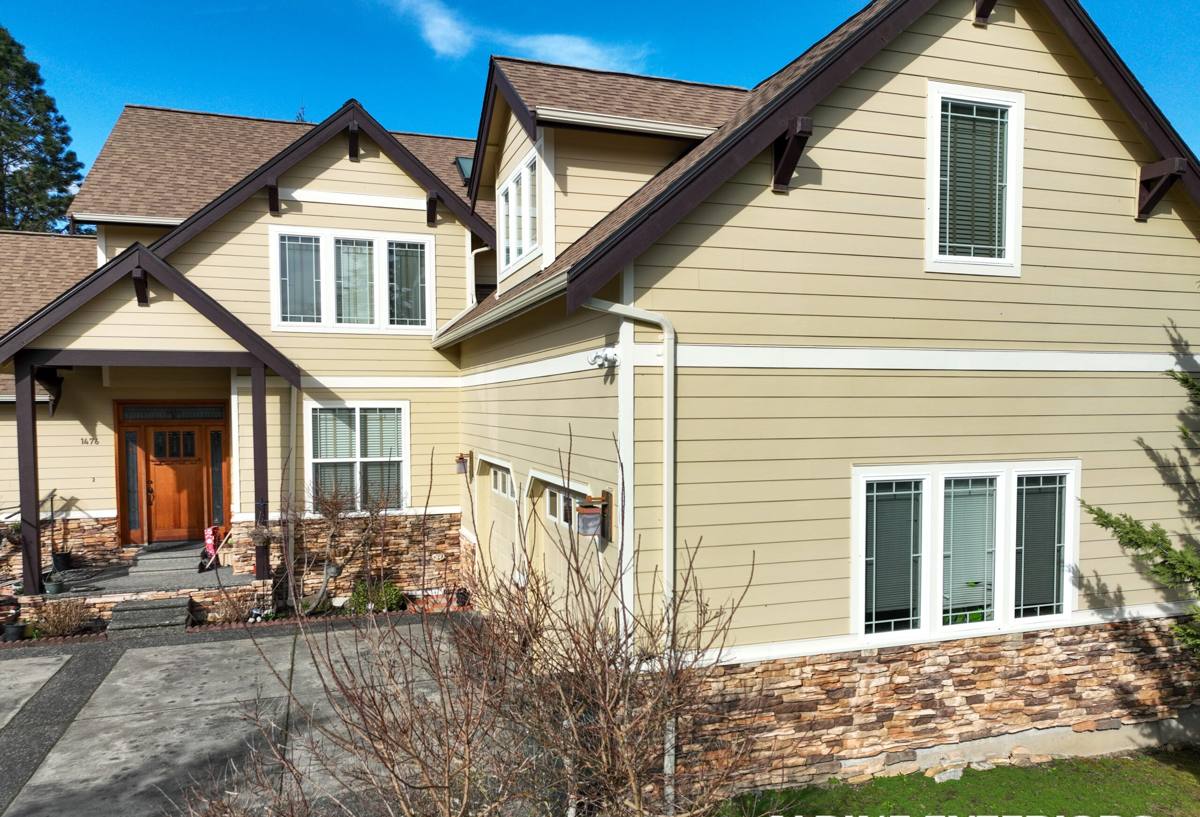
What "Correct" Actually Means for a South Hill Roof
A lot of roofs fail early not because the shingles were bad, but because the system underneath them wasn't built for the site. For South Hill homes, that means:
- Corrosion-resistant fasteners and flashing — standard galvanized components can pit and rust faster this close to salt air; stainless or heavier-coated hardware holds up.
- Full synthetic or self-adhered underlayment, not just felt, especially in valleys and along eaves where wind-driven rain gets pushed uphill under the shingle line.
- Wider, better-sealed valley and flashing details around chimneys, skylights, and roof-to-wall transitions — these are the leak points on almost every failed roof we open up.
- Balanced intake and exhaust ventilation, sized to the actual attic, not a default vent count. Poor ventilation traps moisture that feeds moss and rot from underneath, even on a new roof.
- Ice-and-water shield at eaves and valleys, which matters here less for ice dams and more for the sheer volume of rain that backs up during a heavy Pacific storm.
Skip any one of these and the roof may look fine for a year or two before the shortcuts show up as stains, soft decking, or premature granule loss.
Choosing a Roofing Material That Fits This Climate
There's no single "best" roofing material — there's the right material for your home's exposure, roof pitch, budget, and how much maintenance you're willing to do. Here's how the common options actually perform under South Hill conditions:
| Material | How it handles salt air & rain | Moss resistance | Typical lifespan here |
|---|---|---|---|
| Architectural asphalt shingle | Good, with corrosion-resistant fasteners and proper flashing | Moderate — benefits from algae-resistant granules | 20-30 years |
| Standing seam metal | Excellent when using marine-grade or coated panels and stainless fasteners | High — moss struggles to gain a foothold on smooth metal | 40-50+ years |
| Cedar shake | Traditional look but needs regular treatment; salt air and constant damp accelerate decay | Low without diligent upkeep | 20-25 years with maintenance |
| Synthetic composite shingle/shake | Very good — engineered to resist moisture absorption | Moderate to high depending on product | 30-50 years |
We install architectural asphalt and metal most often on South Hill homes, because both give strong salt and rain performance without the ongoing upkeep cedar demands. Cedar can still be the right call for homeowners who want the look and are committed to maintenance — we'll walk through the trade-offs honestly rather than steer you toward the highest-margin option.
A Note on Moss-Resistant Shingles
Algae- and moss-resistant shingles use copper or zinc granules blended into the surface. They don't make moss impossible, but they meaningfully slow regrowth on shaded slopes — worth the modest upgrade cost on any roof with tree cover, which describes a lot of South Hill.
Our Installation Process
1. On-Site Assessment
We inspect the existing roof, decking, flashing, and attic ventilation before quoting anything. If there's hidden rot or moisture damage from years of moss and trapped rain, we flag it and price it separately so there are no surprises mid-project.
2. Tear-Off and Deck Inspection
Full tear-off to the deck, every time — we don't install new roofing over old layers. Once the deck is exposed, we replace any soft or delaminated sheathing before anything else goes down.
3. Underlayment and Flashing
Synthetic or self-adhered underlayment across the field, ice-and-water shield at eaves and valleys, and new flashing at every penetration and wall transition — this is where most future leaks are prevented or guaranteed.
4. Roofing Material Installation
Installed to manufacturer spec with corrosion-resistant fasteners, correct nailing patterns for our wind exposure, and attention to starter courses and ridge caps — the details that separate a roof that lasts thirty years from one that needs attention in ten.
5. Ventilation Check and Final Walkthrough
We confirm intake and exhaust venting is balanced for the attic, clean up the site, and walk the finished roof with you before calling the job done.
Ventilation and Moisture: The Part Homeowners Don't See
Most moss and premature-aging complaints trace back to two things: shaded exposure and poor attic airflow. A roof that can't breathe holds warm, moist air against the underside of the decking, which keeps the roof surface damp longer after every rain — exactly what moss needs to establish. Getting the intake-to-exhaust ratio right, and making sure insulation isn't blocking soffit vents, does more for long-term roof health than almost any product upgrade. We check this on every South Hill installation, not just when there's already a visible problem.
Signs Your Roof Needs Replacement, Not Another Repair
Repairs make sense for isolated, recent damage. A full new roof installation is usually the smarter call when you're seeing:
- Granules collecting in gutters in noticeable amounts, or shingles that look bald in patches
- Curling, cupping, or cracked shingles across multiple slopes, not just one spot
- Persistent moss growth that returns within a season or two of cleaning
- Soft or spongy decking felt underfoot in the attic, or daylight visible through the roof boards
- Staining on interior ceilings or attic framing that shows up during or after heavy rain
- A roof already past 20-25 years old, regardless of how it looks from the ground
- Multiple past repairs to different areas within just a few years
If you're only seeing one or two isolated issues, a repair may still be the right call — we'll tell you that if it's true.
What Drives the Cost
Every roof is priced on its own specifics, but the biggest cost factors on South Hill jobs are consistent:
Roof Size and Complexity
Square footage sets the baseline, but pitch, number of valleys, dormers, skylights, and chimneys add labor and material — steep or cut-up roofs cost more per square than a simple gable.
Material Choice
Architectural asphalt sits at the lower end, metal and synthetic composites in the middle-to-upper range, and cedar shake typically the highest once you factor ongoing maintenance.
Deck Condition
Hidden rot from years of trapped moisture under moss is the most common source of change orders — we try to catch as much as possible during the initial assessment so it's priced up front, not discovered mid-tear-off.
Access and Site Conditions
Steep driveways, limited staging area, and mature tree cover common on South Hill lots can affect equipment access and cleanup time.
Why a Local South Hill Crew Matters
A crew that already works this neighborhood knows which slopes hold moss the longest, how much wind-driven rain a given exposure actually sees, and which flashing details tend to fail on the housing stock common to the area. That's not something a national franchise or a crew driving in from outside Whatcom County picks up on the first job. It shows up in the small decisions — where extra ice-and-water shield goes, how ventilation gets balanced, which fasteners get specified — that a generic install skips.
It also matters after the job is done. A roof is a long-term investment, and having a contractor nearby who knows your home's history if a question comes up in year five or fifteen is worth more than a marginally lower bid from a crew you can't easily reach again.
Warranty and Ongoing Care
Manufacturer warranties cover material defects; workmanship warranties cover our installation. We'll walk through both in plain terms before you sign anything, so you know exactly what's covered and for how long. Beyond warranty paperwork, a roof in this climate benefits from an occasional gutter clean and a visual check for moss regrowth — small maintenance that keeps a well-installed roof performing for its full lifespan.
If your South Hill roof is showing its age or you're planning ahead rather than reacting to a leak, we're happy to take a look and give you a straight assessment. Use the form below to request a free, no-pressure estimate.