 Chuckanut Exterior
 Two Very Different Products, One Big Decision
If you're re-siding a home in Chuckanut, you've probably narrowed it down to two realistic options: vinyl siding or James Hardie fiber cement. Both are common in Whatcom County. Both have been installed on thousands of homes up and down the Pacific Northwest coast. But they behave completely differently once they're actually on a house facing salt air, driving rain, and months of shaded moss growth every year. This page lays out the real differences — not the marketing versions — so you can make the call with your eyes open.
We'll say upfront: our company installs only James Hardie fiber cement. That's a business decision we made after years of seeing how each product performs over time in this specific climate. But we're not going to pretend vinyl doesn't have real advantages, because it does. Here's the honest comparison.
What Each Product Actually Is
Vinyl Siding
Vinyl siding is an extruded PVC plastic panel, usually installed over a house wrap and sometimes a foam backer board. It's manufactured in long interlocking panels that snap together and hang loosely on nail slots, which lets the material expand and contract with temperature swings. Color is baked into the plastic itself rather than painted on.
James Hardie Fiber Cement
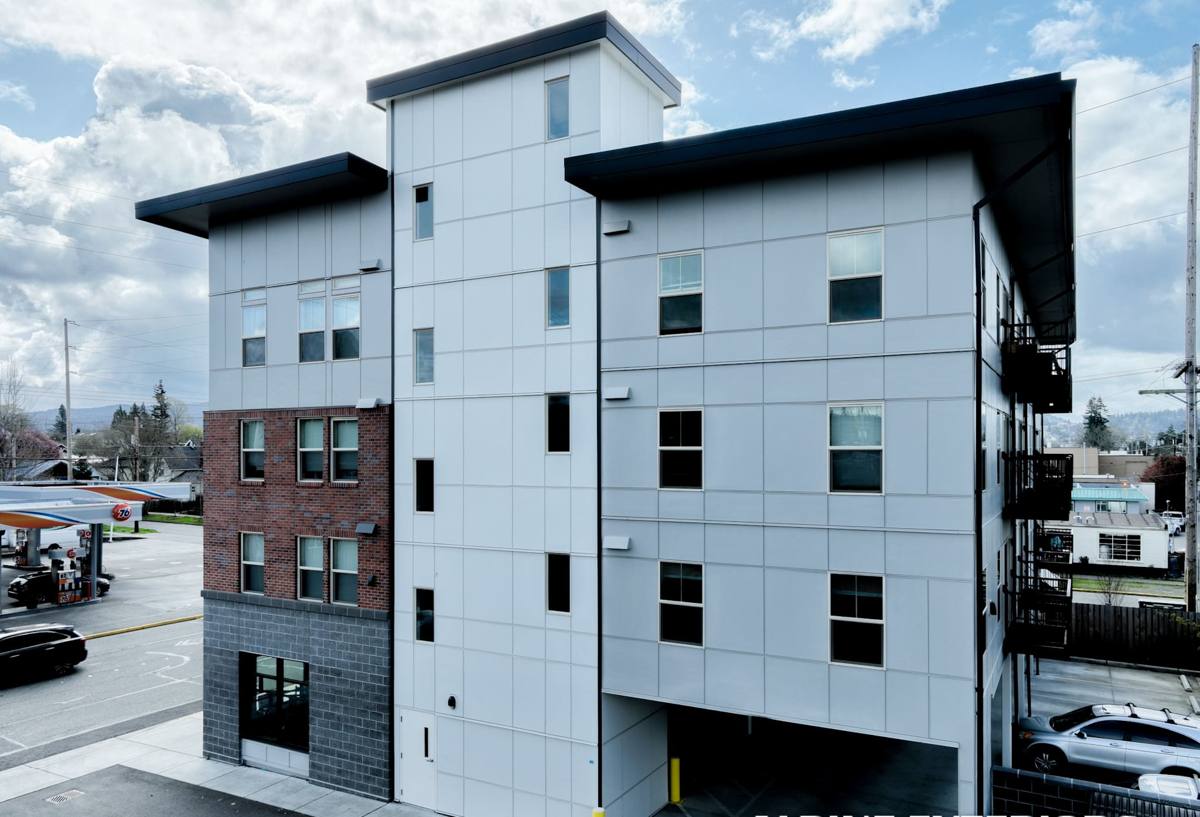
Hardie board is a mix of cement, sand, and cellulose fiber, cured into rigid planks or panels. It's fastened directly and rigidly to the wall structure, unlike vinyl's floating installation. Hardie's ColorPlus finish is a factory-applied, baked-on coating rather than a painted-on afterthought, and the company engineers different formulations (their "HZ5" line, for example) for specific climate zones, including wet coastal regions like ours.
Head-to-Head: The Core Differences
| Factor | Vinyl Siding | James Hardie Fiber Cement |
|---|---|---|
| Material | PVC plastic | Cement, sand, cellulose fiber |
| Combustibility | Melts and can burn | Non-combustible |
| Moisture behavior | Doesn't rot, but traps moisture behind it if installed poorly | Engineered to manage moisture; won't rot, warp, or delaminate when installed to spec |
| Impact resistance | Cracks and denies fairly easily, especially in cold weather | Resists impact well; can chip if struck hard |
| Color life | Fades over time, especially darker colors; cannot be spot-repaired to match | ColorPlus finish holds color long-term; repaint is an option, not a requirement |
| Upfront cost | Lower | Moderate to higher |
| Typical lifespan installed correctly | 20-30 years | 30-50+ years, per manufacturer warranty terms |
| Warranty structure | Varies widely by manufacturer, often prorated | Manufacturer warranty on the product, transferable in most cases |
Where Vinyl Genuinely Wins
We're not going to spend this whole page tearing vinyl down. It earns its market share honestly:
- Lower material and install cost — vinyl is almost always the cheaper option upfront, sometimes by a wide margin.
- Low maintenance in mild climates — it never needs painting, and a garden hose handles most cleaning in drier regions.
- Fast installation — panels go up quickly, which keeps labor costs down.
- Doesn't rot — being plastic, it's immune to the wood-rot issues that plague cedar and some composite products.
In a dry climate with mild winters, vinyl can be a perfectly reasonable choice for a budget-conscious homeowner. Whatcom County is not that climate, and that's where the calculation changes.
Why Vinyl Struggles Specifically in Chuckanut's Climate
Driving Rain and Wind-Driven Moisture
Vinyl siding is a rain-screen product by design — it's meant to shed water, not seal it out completely, and it relies on a drainage plane behind it to manage whatever gets through the seams. In a climate with steady drizzle, that's usually fine. But Chuckanut sees driving rain off the water, often pushed sideways by wind, and that kind of moisture finds its way behind loose-hanging panels more readily than a light rain would. If the house wrap or flashing behind it isn't perfect — and after 20+ years, caulking and seals rarely are — trapped moisture behind vinyl can sit against the sheathing far longer than homeowners realize, since the vinyl itself hides the problem from view.
Salt Air and UV Combined
Vinyl's plastic composition means it expands and contracts more than fiber cement across temperature swings, and coastal salt exposure accelerates the chalking and fading that UV already causes. Once a vinyl panel fades or chalks, there's no repainting your way out of it — the color is the plastic, and a patched or replaced panel from a different production run rarely matches the surrounding panels exactly.
Moss and Organic Growth
Whatcom County's long moss season isn't kind to any siding, but vinyl's slightly textured, plastic surface and the shaded, damp channels behind window trim and under eaves give moss and algae a foothold. It's not a structural problem for vinyl the way trapped moisture against wood sheathing can be, but it does mean more frequent washing to keep a home looking presentable through our gray months.
Cold-Weather Brittleness
Vinyl gets noticeably more brittle in cold temperatures. A wind-thrown branch or an errant baseball that would leave a scuff on fiber cement can crack or shatter a vinyl panel outright in freezing weather, and matching an aged panel's color for a repair gets harder every year.
Why We Standardized on James Hardie Instead
After years of tear-off jobs and service calls across Whatcom County, the pattern was consistent: fiber cement holds up to this specific combination of salt air, driving rain, and moss better than any siding material we've worked with, provided it's installed correctly. A few specifics:
- Non-combustible — a real consideration during dry summer wildfire smoke seasons, even here on the wet side of the state.
- Rigid, fastened installation — Hardie is nailed directly to the structure rather than hung loose, which means less flex, less gap for wind-driven rain to exploit, and a tighter fit at trim and corners.
- Climate-engineered product lines — Hardie's HZ5 formulation is specifically built for wetter, colder climate zones like ours, rather than being a one-size-fits-all product.
- ColorPlus factory finish — baked on in a controlled facility rather than field-painted, which gives more consistent, longer-lasting color than site-applied paint and holds up better to UV and salt exposure than vinyl's pigmented plastic.
- Strong, transferable warranty — that matters to future buyers, not just the person who orders the job.
None of that means vinyl is a bad product in the abstract. It means that for the specific conditions Chuckanut homes face — salty coastal air, sideways rain, and shaded moss growth for a good chunk of the year — we've seen fiber cement outperform it consistently enough that we stopped installing anything else.
What Correct Hardie Installation Actually Requires
Fiber cement's reputation depends heavily on installation quality, more so than vinyl's does. A rushed or careless Hardie job can fail in ways that make it look worse than vinyl, which is why we're specific about how it goes on:
- Proper weather-resistive barrier and flashing details at every window, door, and penetration
- Correct fastener type, spacing, and depth per Hardie's published installation specs
- Minimum clearance from the siding bottom edge to grade, decks, and roof lines to keep splash-back moisture off the board
- Factory-cut or properly sealed field cuts, since raw cut edges are the most common point of moisture intake if left unsealed
- Correct joint and butt-seam treatment so panels don't trap water at the seams
Skip any of these steps and even the best siding material on the market will underperform. This is as much about the installer as it is about the product.
Cost Over Time, Not Just Day One
Vinyl's lower purchase price is real, and we won't pretend otherwise. But the honest comparison has to account for what happens over 20-30 years, not just the invoice on install day. Vinyl that fades or cracks generally gets replaced wholesale, since patch repairs rarely match. Hardie's baked-on color and rigid installation tend to push maintenance and replacement further down the road, and the manufacturer's warranty is transferable if you sell the home before the coverage period ends. Whether that trade-off makes sense for your budget and your timeline is a fair question — one we're glad to walk through honestly rather than push a single answer on everyone who calls.
Questions Worth Asking Before You Decide
- How long do you plan to stay in the home?
- Is your home exposed to direct wind off the water, or more sheltered?
- How much shade and moss buildup does your current siding get?
- Do you want the option to repaint down the road, or set-it-and-forget-it color?
- What's your realistic budget range for this project, and does financing change the calculation?
If you're weighing fiber cement against vinyl for a home in Chuckanut, we're happy to walk your specific house with you, point out what your exposure and site conditions actually call for, and give you a straight answer — even if that means telling you what we'd do differently than what you had in mind. Reach out for a free, no-pressure estimate and we'll take a look.