 Chuckanut Exterior
 Exterior Work Built for Life Around Lake Samish
Homes around Lake Samish sit in a different microclimate than a lot of the rest of Whatcom County. You've got the lake itself holding onto moisture, dense conifer cover that keeps roofs and siding shaded for long stretches of the day, and a straight shot for wind and rain coming off the water. Add in Chuckanut's proximity to Puget Sound and Chuckanut Bay, and you get a mix of driving rain, salt-tinged air, and a moss season that can run most of the year if a house isn't built and maintained to handle it. We work on exteriors throughout this area regularly, and the patterns repeat house after house: north-facing walls that never fully dry out, gutters and roof valleys packed with needle litter, and trim that starts failing years before it should because it was never sealed or installed with drainage in mind.
This page walks through what we actually see on Lake Samish homes, how we approach siding, roofing, windows, and decks for this specific environment, and why a crew that knows this area's quirks matters more here than in a drier, more open part of the county.
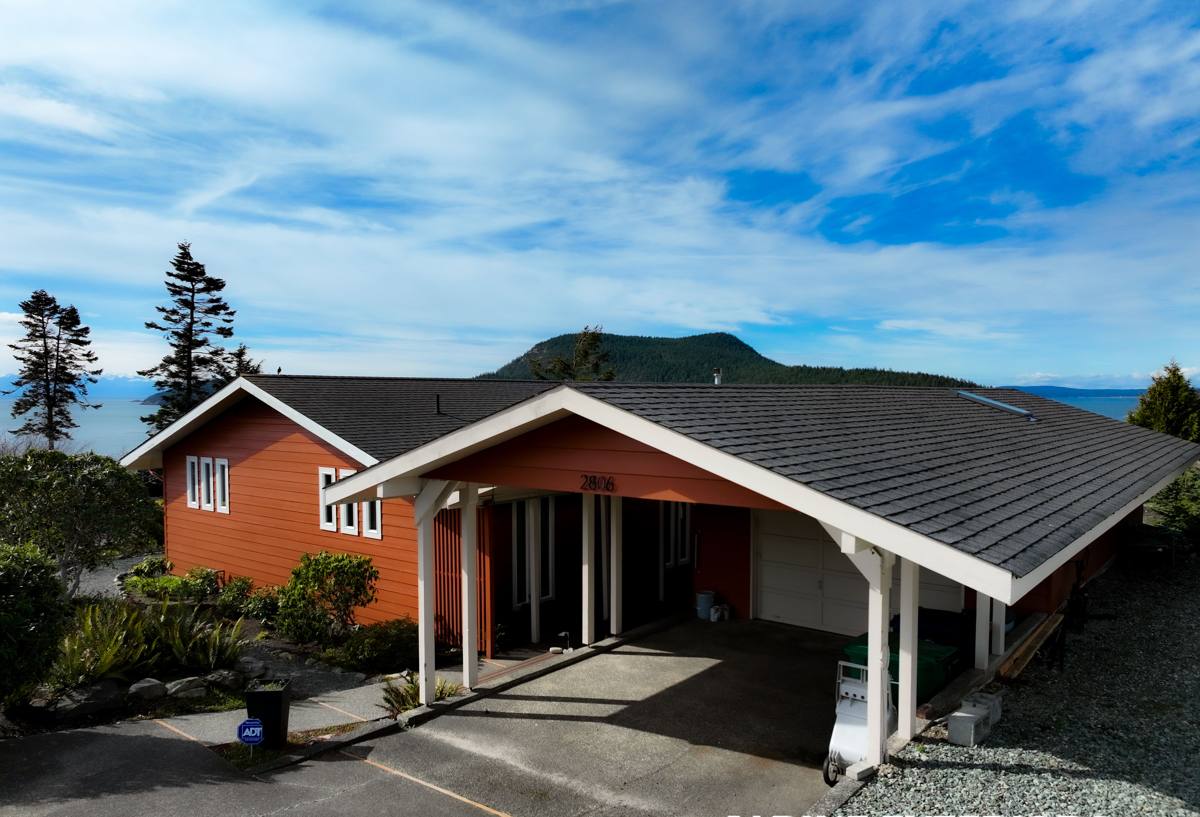
What the Lake Samish Climate Does to a House
Moisture That Doesn't Leave
A lake surrounded by tree cover creates a lot of standing humidity, especially in shaded lots and on the north and east sides of a home. Wood-based siding products hold onto that moisture longer than they should, which is exactly the environment where paint fails early, seams swell, and rot gets started behind trim before anyone notices from the ground.
Moss, Algae, and Organic Growth
Moss doesn't just grow on roofs here — it colonizes siding, deck boards, and window sills too, especially on shaded elevations. Once moss and algae take hold, they hold moisture against the surface underneath them, which accelerates whatever problem is already brewing. A long moss season means more time for that damage to compound if surfaces aren't cleaned and maintained.
Wind-Driven Rain and Salt-Tinged Air
Storms moving through this corridor bring rain that doesn't just fall straight down — it gets pushed sideways into wall assemblies, window flashing, and door thresholds. Combine that with the salt content in air moving up from the Sound, and you've got conditions that are hard on fasteners, flashing metal, and any exterior material that isn't rated for a marine-influenced climate.
Siding: Why We Only Install James Hardie
Siding takes the brunt of everything described above, which is why it's the product decision we're most particular about. We install James Hardie fiber cement siding exclusively — we don't offer vinyl, LP SmartSide, Cemplank, Allura, primed spruce, or cedar. That's not a marketing position, it's a standard we hold because of what we've seen these materials do in exactly this kind of climate.
Wood and wood-composite sidings need consistent maintenance to keep moisture out, and in a moss-heavy, shaded, high-humidity area like Lake Samish, that maintenance window shrinks fast. Vinyl handles moisture fine on its own but moves with temperature swings, can warp, and doesn't hold paint if a homeowner ever wants a different look down the road. Hardie's fiber cement is non-combustible, dimensionally stable, and its ColorPlus factory finish is baked on to resist the fading and moisture intrusion that plagues field-painted products in wet climates.
What We Install and Why It Fits This Area
- HZ5 products, climate-engineered for wet, moderate climates — built for exactly the freeze-thaw and moisture cycling the Pacific Northwest sees
- ColorPlus factory finish — the color and moisture-resistant coating are applied and cured under controlled conditions, not on-site where wet weather affects cure quality
- Proper rainscreen and flashing details — the siding is only as good as the water management behind it, which matters more here than almost anywhere else in the county
- Transferable manufacturer warranty — backed by the product's track record, not a patchwork of touch-up promises
Correct installation matters as much as product choice. Fiber cement installed without proper gaps, flashing, and fastening will fail regardless of the material's quality — so the install process is where we spend the most attention.
Roofing for a Shaded, Moss-Prone Property
Roofs around Lake Samish deal with more organic debris and shade-driven moisture than roofs on open, sun-exposed lots elsewhere in the county. Needle litter collects in valleys, moss establishes on north-facing slopes, and gutters clog faster than a homeowner might expect if they haven't lived somewhere this heavily treed before.
What We Look At
- Valley and flashing condition — where most leaks actually start, not mid-field of the roof
- Moss and algae growth patterns, and whether they indicate a shade or ventilation problem underneath
- Attic ventilation — poor airflow traps moisture from below, which speeds up moss growth from above
- Gutter and downspout capacity for the debris load this property type generates
We repair what can be repaired and replace what's past the point of a patch — the decision comes down to how much of the underlayment and decking is still sound, not just what the shingles look like from the driveway.
Windows: Sealing Out Wind-Driven Rain
Window failures in this area are rarely about the glass — they're about flashing and sealant that couldn't keep up with wind-driven rain hitting the wall assembly at an angle. Old flashing details, gaps around the frame, or sealant that's degraded from years of moisture exposure let water in behind the trim, where it can sit against wall framing for a long time before anyone sees a stain inside.
When we replace windows, the flashing and integration with the surrounding siding gets as much attention as the window unit itself. A quality window installed with poor flashing will leak just as fast as a cheap one — the install method is what actually keeps water out in a climate like this.
Decks: Built to Handle Shade and Standing Moisture
Decks near the lake face the same shade and moisture issues as siding and roofing, but with the added stress of foot traffic and direct water exposure. Moss and algae make deck boards slick as well as unattractive, and trapped moisture between boards or at ledger connections is where structural problems start.
We look at ledger board attachment and flashing, joist spacing and drainage, and board material and spacing that lets water move through rather than pool. A deck that's designed to shed water and dry out between rain events will outlast one that traps moisture against the framing, regardless of what species or product the boards are made from.
Comparing Exterior Priorities Around Lake Samish
| Exterior Component | Main Local Stressor | What We Prioritize |
|---|---|---|
| Siding | Shade-driven humidity, wind-driven rain | James Hardie HZ5 fiber cement, proper rainscreen and flashing |
| Roofing | Needle debris, moss, poor attic ventilation | Valley/flashing integrity, gutter capacity, ventilation checks |
| Windows | Wind-driven rain at wall penetrations | Flashing integration with siding, sealant condition |
| Decks | Standing moisture, slick moss growth | Ledger flashing, drainage-first board layout |
Why a Local Crew Matters Here
Lake Samish isn't a generic Whatcom County lot — it's shadier, damper, and closer to the moss-and-moisture conditions that come with lake proximity and tree cover than most of the surrounding area. A crew that mostly works drier, more open properties can miss the details that matter here: where ventilation gaps need to go, how much rainscreen clearance a north-facing wall actually needs, or which roof valleys are going to be problem spots five years down the road. We work in this climate regularly enough to know what actually holds up here versus what looks fine on installation day and fails on a schedule.
Questions Worth Asking Before You Hire Anyone
- Do they have experience specifically with shaded, moisture-heavy properties, not just general exterior work?
- Can they explain their flashing and drainage approach in plain language, not just brand names?
- Are they licensed and insured for work in Washington, and can they provide proof without hesitation?
- Do they stand behind their installation with a workmanship warranty separate from the manufacturer's product warranty?
- Will they walk your specific property and point out real issues, rather than quoting a generic package sight unseen?
Maintenance That Actually Matters in This Area
Regardless of which contractor a homeowner uses, a few habits make a real difference for properties in this kind of environment: keeping gutters clear of needle debris through fall and winter, addressing moss growth on roofs and siding before it spreads rather than after, and checking window and door flashing periodically for gaps that develop as sealant ages. None of this replaces good installation, but it extends the life of whatever exterior work is already in place.
If you're weighing a repair, a full replacement, or just want an honest read on what your home's siding, roof, windows, or deck actually need, we're happy to come take a look. We offer free, no-pressure estimates for homes in the Lake Samish area and throughout Chuckanut — use the form below to get started.