 Chuckanut Exterior
 Building New Near Lake Samish? Get the Window Install Right the First Time
New construction is the one point in a home's life where windows can be installed exactly to spec, with full access to the rough opening, the sheathing, and the weather-resistive barrier before anything is closed in. Around Lake Samish, that first install matters more than in a lot of places. The lake sits in a heavily wooded pocket of Whatcom County between Chuckanut Drive and the I-5 corridor, and homes here deal with a specific combination of conditions: salt-laden air drifting up from Samish Bay and the Chuckanut shoreline, driving rain off Puget Sound weather systems, deep shade from surrounding fir and cedar cover, and a moss and algae season that can run most of the year on north-facing walls. Windows installed without that combination in mind tend to show problems within a few years — not from bad glass, but from flashing, sealant, and drainage details that weren't matched to the site.
We install new-construction windows on homes in and around Lake Samish and the broader Chuckanut area regularly enough to know which details actually matter here versus which ones are boilerplate. This page covers what a correct new-construction window install looks like for this specific area, and what to check for if you're comparing bids.
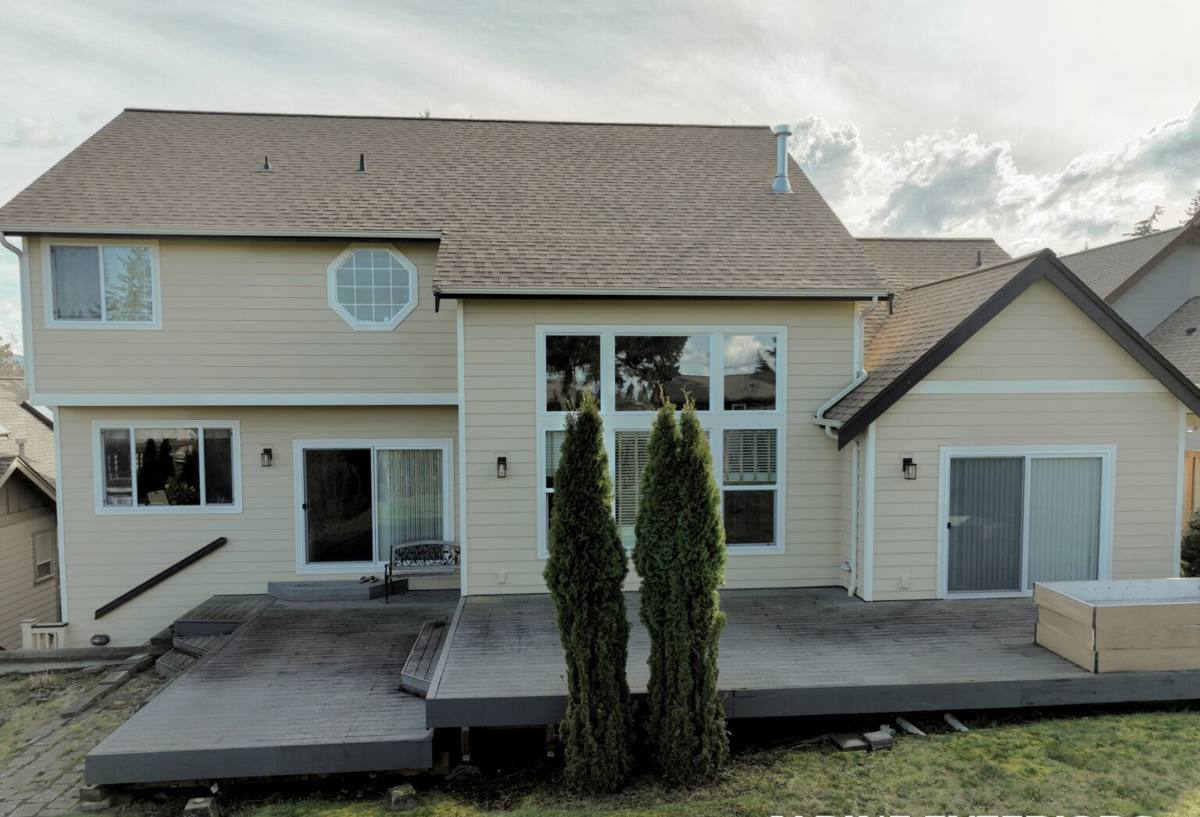
What Lake Samish's Climate Does to Windows Over Time
Salt Air and Damp Shade
Homes closer to Chuckanut Drive and the Samish Bay side get direct salt exposure carried inland on wind off the water. Even a mile or two inland at the lake itself, that salt-laden moisture combines with heavy tree cover to keep exterior surfaces damp far longer than in open, sunny sites. Damp-for-days conditions accelerate corrosion on unprotected fasteners and hardware, and they keep wood trim and cladding wet enough, long enough, for rot to start if flashing details are wrong.
Driving Rain
Whatcom County storms regularly bring rain sideways, not straight down. A window that's watertight in a light vertical rain can still leak under wind-driven rain if the flashing sequence, sill pan, and sealant joints aren't built to shed water actively rather than just block it. This is the single most common source of new-construction window callbacks in this region — not defective windows, but installs that weren't detailed for wind-driven exposure.
Moss and Algae Season
The tree canopy around Lake Samish means long stretches of shade, slow-drying surfaces, and organic debris (needles, cones, pollen) collecting in window tracks and sills. Moss and algae growth on and around window frames isn't just cosmetic — trapped organic matter holds moisture against the frame and finish, which shortens the life of both the window and the surrounding trim if it's never cleared.
What a Correct New-Construction Install Involves
New construction gives us the advantage of building the water management system in from scratch, in the right order, rather than working around an existing wall. The sequence matters as much as the window itself:
- Rough opening prep — squared, correctly sized, and inspected before anything is installed.
- Sill pan flashing — a sloped, sealed pan at the base of the opening so any water that gets past the window drains back out, not into the wall.
- Window-to-WRB integration — the window's flange is integrated with the weather-resistive barrier using a shingle-lap sequence (side flashing under the head flashing, head flashing under the upper WRB) so water always sheds downward and outward.
- Sealant at the right joints only — sealing every seam sounds thorough but actually traps water in some assemblies; the right joints are sealed, the right ones are left to drain.
- Fastening and shimming — proper shim placement at the corners and mid-span so the frame doesn't bow, which affects both the seal and how smoothly the window operates for years afterward.
- Insulation and air sealing at the perimeter gap — low-expansion foam or backer rod and sealant, not just stuffed fiberglass, so the gap doesn't become a condensation or draft path.
Skipping or rushing any one of these steps is invisible at final walkthrough. It shows up two, three, or five winters later as a stain on interior drywall below a window, or rot in the trim that nobody notices until it's soft.
Product Choices That Make Sense for This Site
We don't push one brand as the answer for every job, but there are material and design choices that hold up better than others in a salt-air, high-moisture, low-sun environment like Lake Samish:
- Frame material: vinyl and fiberglass both resist corrosion better than bare aluminum in salt-influenced air; if aluminum-clad wood is preferred for appearance, the cladding needs to be fully sealed at every joint with no exposed wood.
- Hardware and fasteners: corrosion-resistant hardware matters more here than in a dry inland site — standard steel fasteners can start showing rust streaks faster than homeowners expect.
- Glazing package: low-E, argon-filled dual or triple pane glass helps with condensation control given the shaded, cooler microclimate around the lake, not just energy performance.
- Finish and color: darker finishes on the shaded, north-facing elevations show moss and algae growth faster than lighter tones — worth factoring into design if low-maintenance appearance matters to you.
- Weep and drainage design: confirm the window's sill design has functional weep paths that won't clog easily with needle litter, since debris buildup is a real factor under tree cover.
Cost Factors for New-Construction Window Packages
Every new build is different, so we won't quote a number without seeing the plans, but here's what actually moves the price on a Lake Samish job:
| Factor | Why It Affects Cost |
|---|---|
| Number and size of openings | More and larger windows mean more material, flashing work, and labor hours |
| Frame material (vinyl vs. fiberglass vs. clad wood) | Material cost and long-term maintenance trade off against each other |
| Glazing package | Triple pane and specialty low-E coatings cost more than standard dual pane |
| Wall height and access | Two-story and vaulted openings need staging or lift equipment |
| Site exposure | Openings facing the bay-driven weather or heavy shade may warrant upgraded flashing details |
| Custom shapes or sizes | Non-standard geometry (arched, oversized, corner units) adds fabrication lead time and cost |
As a rough planning range, expect standard vinyl new-construction windows to run less per unit than fiberglass or clad-wood options, with the total project cost driven mostly by how many openings the plan calls for and how much of the home's exposure faces the weather side.
Our Process on a New-Construction Job
We coordinate directly with your builder or general contractor rather than working in isolation, since window installation touches framing, the WRB, and siding trades in sequence.
- Review the plans and rough opening schedule before delivery to confirm sizes and swing/slide configurations
- Walk the site with the framer or GC to confirm rough openings are square and correctly sized before install day
- Install sill pan flashing and integrate with the WRB in the correct shingle-lap sequence
- Set, shim, and fasten each window to manufacturer spec
- Seal and insulate the perimeter gap correctly for the assembly
- Document flashing details with photos at each stage for your records and any future warranty needs
- Final walkthrough with the homeowner or builder before the crew leaves
Why Hire a Crew That Already Works Lake Samish
A window installer who mainly works dry, open, inland sites can do competent work and still get the flashing sequence wrong for a shaded, salt-influenced, wind-driven-rain site like Lake Samish — not because the work is bad, but because the conditions are different enough to change what "correct" looks like. We work this stretch of Whatcom County regularly, from Chuckanut Drive down toward the lake, and we've seen what fails here versus what holds up over a decade or more. That means we're not guessing at flashing details, weep placement, or hardware specs — we're applying what's already proven out on homes with the same salt exposure, the same rain pattern, and the same tree cover.
We also know the local building department's inspection expectations for new-construction window rough-ins and can coordinate install timing around your framing and siding schedule so nothing gets held up waiting on us.
Get a Free Estimate for Your Lake Samish Build
If you're framing a new home near Lake Samish or Chuckanut and want window installation done right from the rough opening forward, we'll walk your plans with you and give you a straightforward, no-pressure estimate. Use the form below to get started.