 Chuckanut Exterior
 Happy Valley sits close enough to the water and the trees that its homes take a particular kind of beating year after year. Salt-laden air drifts in off the Salish Sea, driving rain arrives sideways more often than straight down, and the shade from surrounding evergreens keeps roofs, siding, and decks damp long after a storm has passed. If you own a home here, you already know the pattern: paint that fails early, moss that colonizes anything with texture, and trim that seems to rot faster than it should. None of that is bad luck. It's the predictable result of a specific microclimate meeting the wrong materials or the wrong installation.
We work on homes throughout Chuckanut and greater Whatcom County, and Happy Valley is one of the areas where we spend the most time explaining why a house is failing before we talk about fixing it. The exterior of a home here isn't decoration — it's the only thing standing between constant moisture and the structure underneath. Get the details right and a house shrugs off decades of this weather. Get them wrong and you're repainting, patching, or replacing long before you should have to.
What Happy Valley's Climate Actually Does to a House
Salt Air and Slow Corrosion
Proximity to salt water doesn't just mean occasional salt spray on windows. It means metal fasteners, flashing, and hardware corrode faster, painted surfaces chalk and fade sooner, and any material with poor moisture resistance gets a head start on failing. Salt air is relentless in a way that's easy to underestimate until you see two identical products age at very different rates depending on whether they're a mile from the water or fifteen.
Driving Rain, Not Just Rain
Whatcom County gets plenty of straightforward rainfall, but Happy Valley's exposure means wind-driven rain is a regular event — the kind that pushes water sideways into wall assemblies, under lap joints, and behind poorly sealed trim. A siding or window system that performs fine in calmer conditions can still let water in when it's coming at the wall horizontally instead of falling straight down.
The Long Moss Season
Shade, moisture, and moderate temperatures are exactly what moss and algae need, and Happy Valley has all three for most of the year. Moss doesn't just look bad — it holds water against roofing and siding surfaces, keeps them from drying out between rain events, and accelerates whatever decay process is already underway. A roof or wall section that stays damp because of moss cover ages faster than one that gets a chance to dry.
Siding: Why We Only Install James Hardie Here
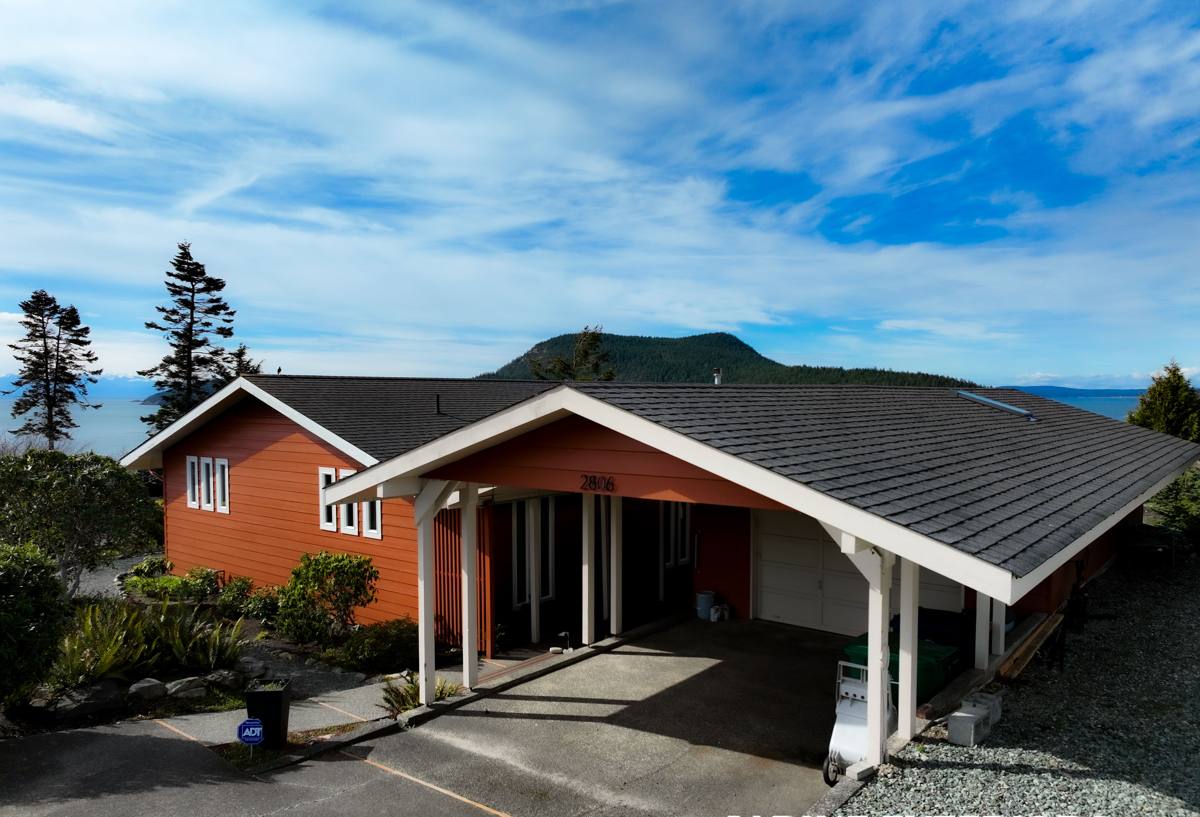
Siding takes the brunt of this climate more than any other exterior component, which is why we standardized on James Hardie fiber cement and don't install vinyl, LP SmartSide, primed spruce, cedar, or other fiber cement brands. That's not a marketing position — it's the product line we've found actually holds up to salt air, driving rain, and a moss season that never really ends.
What Matters for This Specific Climate
- Fiber cement doesn't absorb and swell with moisture the way wood-based products can, which matters when a wall assembly stays damp for days at a time.
- It's non-combustible, which is a real consideration anywhere in Western Washington with wildfire risk creeping closer each summer.
- Hardie's ColorPlus factory finish is baked on under controlled conditions, so it resists the fading and chalking that salt air accelerates in field-applied paint.
- The HZ5 product line is engineered specifically for climates with significant moisture exposure — which describes Happy Valley about as well as anywhere in the county.
We won't install the alternatives, and we're upfront about why: vinyl can warp and doesn't hold paint if a homeowner ever wants to change color; LP SmartSide and other engineered wood products are more sensitive to sustained moisture exposure if any part of the installation isn't perfect; and bare cedar or primed spruce need a maintenance commitment — regular refinishing — that most homeowners underestimate until the wood is already showing damage. In a climate this wet, those trade-offs show up faster than they would somewhere drier.
Roofing in a Moss-Heavy Environment
Roofing in Happy Valley is less about surviving a single storm and more about surviving the cumulative effect of shade and moisture over years. Moss growth on a roof isn't just cosmetic — it lifts shingle edges, traps moisture against the roofing material, and shortens the useful life of whatever's up there. Proper attic ventilation, correctly installed flashing at every valley and penetration, and material choices suited to a shaded, wet roof plane all matter more here than they would in a drier part of the state.
We also pay close attention to the roof-to-wall transitions, since that's where driving rain most often finds a way in if flashing details were rushed or skipped during a prior installation.
Windows: Sealing Out Sideways Rain
Wind-driven rain exposes weak window installations in a way calmer climates don't. A window unit itself can be well-built and still leak if the flashing, sill pan, and sealant details around it weren't done correctly. We treat window replacement as an installation problem first and a product selection second — the right unit installed with the wrong flashing sequence will leak in this climate, full stop.
For homes in Happy Valley, we look closely at orientation. Walls facing the prevailing weather typically need more attention to flashing and sealant detail than more sheltered elevations, and we plan the work accordingly rather than treating every wall the same.
Decks: Built for Constant Damp
Decks in this area rarely get a chance to dry out completely between uses, especially if they're shaded by trees or sit close to grade. That changes what matters in deck construction: drainage under and around the structure, ledger board flashing that actually sheds water instead of trapping it against the house, and hardware rated for the corrosion this air causes over time. A deck built without those details in mind will develop soft spots and rust streaks well before it should.
Why a Local Crew Matters Here
Exterior work in Happy Valley isn't generic exterior work. A crew that mostly installs siding and roofing in drier inland climates will make different assumptions than a crew that works this stretch of Whatcom County regularly. We know which elevations in this area tend to take the worst of the weather, how much moss pressure to expect on a north-facing roof plane under tree cover, and which flashing details actually matter here versus in a less exposed location. That local knowledge changes decisions on the job, not just talking points in a sales pitch.
Cost Factors to Expect
Every home is different, but these are the variables that most affect cost for exterior projects in Happy Valley specifically:
| Factor | Why It Matters Here |
|---|---|
| Salt-air exposure level | Homes closer to the water often need corrosion-resistant fasteners and hardware, which affects material selection |
| Tree cover and shade | Heavier moss pressure may call for additional roof or wall detailing and more frequent maintenance |
| Wall orientation | Elevations facing prevailing wind and rain typically need more careful flashing and sealant work |
| Existing damage | Moisture intrusion already underway (rot, soft sheathing) adds repair scope before new material goes on |
| Access and site conditions | Sloped lots, mature landscaping, or limited access can affect labor and staging |
A Homeowner's Maintenance Checklist for This Climate
- Check roof and siding for moss buildup at least once a year, ideally before the wet season sets in
- Keep gutters clear so water isn't backing up against fascia and siding
- Trim back tree limbs that keep roof or wall sections in constant shade
- Inspect deck ledger boards and hardware for rust or softening annually
- Watch for paint chalking or fading on siding, which can signal it's time for a closer look
- Have caulking and sealant around windows and doors checked every few years, since salt air breaks it down faster
How We Approach a Happy Valley Project
We start by walking the exterior and identifying which elevations and components are under the most stress from this specific climate — not a generic checklist, but an honest look at where salt air, driving rain, and moss have already done damage or are likely to. From there we talk through material and scope options plainly, including where James Hardie siding fits and why we don't offer alternatives we don't think hold up here. The goal is a home that's genuinely lower-maintenance for the next several decades, not just freshly finished for the next couple of years.
If you're dealing with moss-covered roofing, siding that's failing early, leaky windows, or a deck that never quite dries out, we're happy to take a look and talk through what's actually going on. Reach out for a free, no-pressure estimate using the form below.