 Chuckanut Exterior
 Decks in Happy Valley Take a Different Kind of Beating
Happy Valley sits close enough to the water and the tree line that decks here age differently than decks twenty miles inland. Salt-laden air off the bay works into fasteners and connectors year-round, driving rain gets pushed sideways into ledger boards and rim joists during winter storms, and the shaded, damp pockets around mature trees keep moss and algae growing on deck boards for months at a stretch. None of that is unusual for Whatcom County, but it means a deck that would hold up fine in a drier climate can develop hidden problems here well before it looks bad from a distance.
Most of the repair calls we get in this neighborhood aren't about a deck that's obviously falling apart. They're about a deck that looks okay from the yard but has soft spots near the house, rust streaks below the railing posts, or boards that stay slick with moss no matter how often they're hosed off. Those are early warning signs, not cosmetic issues, and catching them early is usually the difference between a repair job and a full rebuild.
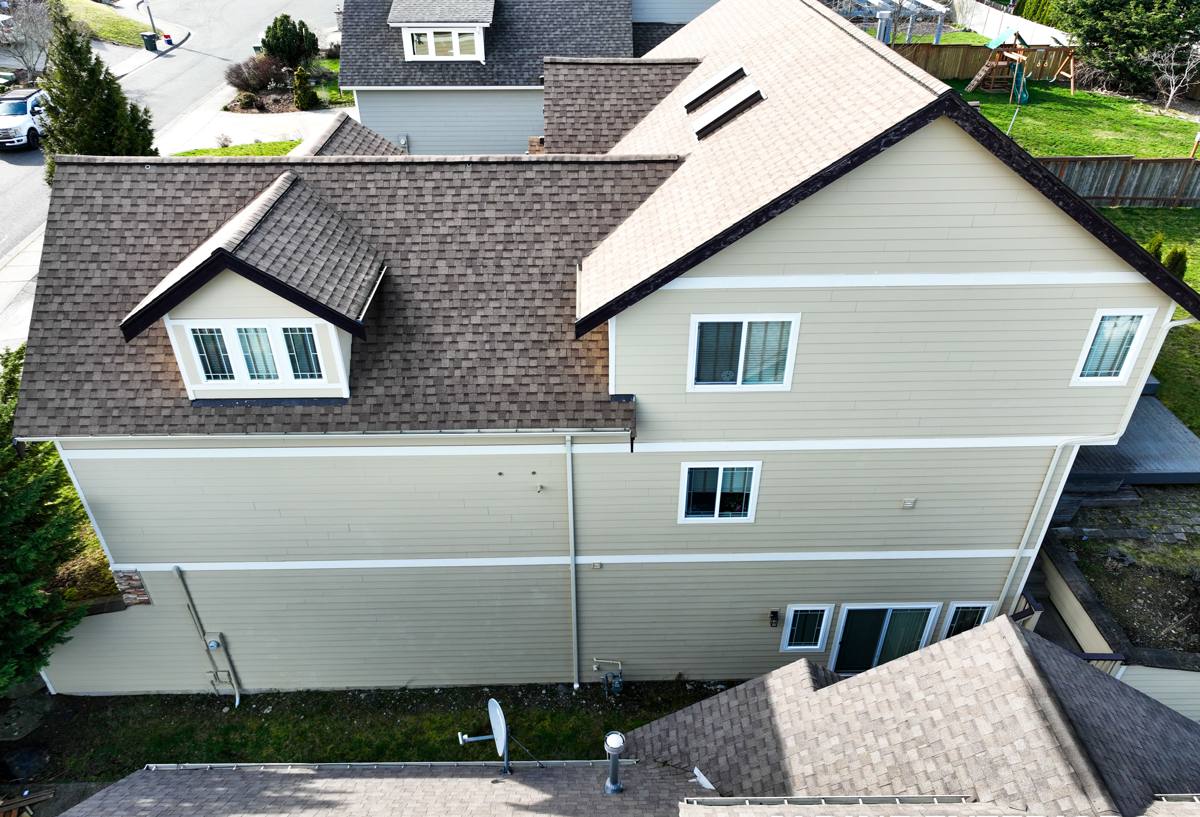
What Happy Valley's Climate Actually Does to a Deck
Salt Air and Metal Fatigue
Salt-laden moisture accelerates corrosion on anything metal — joist hangers, structural screws, bolts, and railing hardware. Corrosion doesn't always show on the surface first; it often starts inside a joist hanger or around a bolt shank where you can't see it until the connection has already weakened. On older decks, this is frequently the actual cause of a "wobbly railing" complaint that homeowners assume is just loose screws.
Driving Rain and Ledger Board Problems
Wind-driven rain pushes water into places a calm rain never reaches — behind ledger boards, under flashing, into end grain at board joints. The ledger board (where the deck attaches to the house) is the single most safety-critical component on most decks, and it's also the part most exposed to wind-driven moisture intrusion if the original flashing detail wasn't done correctly. Water trapped behind a ledger board can rot both the ledger and the rim joist behind it without any visible sign from the deck surface.
Moss, Shade, and Surface Decay
Chuckanut's tree cover and marine-layer humidity mean deck surfaces in shaded yards can stay damp for days after a rain. That moisture supports moss and algae growth, and moss holds water against the wood surface, which accelerates surface rot and makes boards dangerously slick. A deck that gets heavy moss every year is also a deck that's absorbing more cumulative moisture than one in full sun, even if the framing underneath is otherwise sound.
Signs a Happy Valley Deck Needs Repair, Not Just Cleaning
- Boards that feel spongy or flex noticeably underfoot, especially near the house or around post locations
- Railings or posts that move when pushed, even slightly
- Rust streaking below screws, hangers, or hardware
- Gaps opening up where the ledger board meets the house siding
- Persistent moss or dark staining that comes back within weeks of cleaning
- Stair stringers that feel different underfoot than they used to — bouncy, uneven, or creaking
- Visible daylight or soft wood where support posts meet footings
- A "green" or slick texture that never fully dries out, even during stretches of clear weather
Any one of these on its own might be minor. Several together, or any structural symptom near the ledger board or posts, is worth a professional look before the deck sees another wet season.
What a Correct Deck Repair Actually Involves
A lot of deck "repairs" amount to swapping a few obviously rotten boards and calling it done. That approach treats the symptom, not the cause, and on a Happy Valley property it usually means the same repair gets redone in two or three years. Our process starts underneath the deck, not on top of it.
1. Structural Inspection First
Before replacing anything cosmetic, we check the ledger board connection and flashing, joist hangers and fasteners for corrosion, post-to-footing connections, and the condition of the framing itself — not just the decking boards. This tells us whether we're looking at a board-replacement job or a framing issue that needs to be addressed first.
2. Address the Moisture Path, Not Just the Rot
If boards rotted because water was getting trapped somewhere — bad flashing, missing gaps between boards, a low spot holding water — replacing the wood without fixing that path just restarts the clock. Part of a correct repair is figuring out why that spot failed and adjusting the detail so it doesn't happen again in the same place.
3. Match Materials and Fasteners to the Exposure
Given the salt air common to this part of Whatcom County, hardware matters as much as lumber choice. We use fasteners and connectors rated for corrosive, coastal-influenced environments rather than standard interior-grade hardware, particularly for anything structural like hangers, ledger bolts, and post bases.
4. Rebuild or Replace Only What Needs It
Sound framing doesn't need to be torn out to fix bad boards, and bad framing shouldn't be patched over with new decking on top. Part of an honest repair estimate is telling you clearly which category each part of your deck falls into.
Repair vs. Replacement: How We Help You Decide
| Factor | Points Toward Repair | Points Toward Replacement |
|---|---|---|
| Framing condition | Joists, posts, and ledger are structurally sound | Rot or corrosion found in multiple structural members |
| Age of deck | Under 15-20 years, built to a reasonable standard | Older deck nearing the end of typical service life |
| Extent of damage | Isolated to a few boards or one area | Spread across multiple sections or hidden in framing |
| Ledger board / house connection | Flashing and connection intact | Water intrusion at the house connection |
| Code and safety | Railings, spacing, and footings meet current standards | Older construction that predates current safety requirements |
We'll walk the deck with you and point out exactly which column each finding falls into, so the decision is based on what we actually found, not a guess.
What Repairs Typically Run
Costs vary a lot depending on how much framing is involved versus surface boards, but as a general range: isolated board and railing repairs tend to be a modest, targeted expense, while repairs that involve ledger board or joist replacement cost more because they require opening up the deck structure. Full deck replacement is its own project scope and price range entirely. We give a firm, itemized number after inspection — not a phone estimate — because the difference between "replace six boards" and "replace six boards and rebuild the ledger connection" is significant.
Why Local Experience with Happy Valley Homes Matters
A deck repair crew that mostly works drier, inland areas can miss things that are routine to us here. Knowing that a particular style of older ledger flashing common in this area tends to trap water, or that a deck facing a certain direction in Happy Valley holds moss longer because of tree cover and marine air, isn't something you learn from a general contracting background — it comes from doing this work on homes in this specific area, in this specific climate, season after season.
We also know what "normal" looks like for a deck of a given age around Chuckanut, which helps us tell you honestly whether what we're seeing is expected wear or an early sign of a bigger problem. That local calibration is part of what you're paying for when you hire a crew that already works this neighborhood, not just a crew that's willing to drive out.
Our Process for Happy Valley Deck Repairs
- On-site inspection — we check the deck from the framing up, not just the visible surface, including a check underneath where accessible
- Written findings and options — a clear explanation of what's wrong, why, and what repair scope actually addresses it
- Firm, itemized estimate — no vague ranges once we've seen the deck in person
- Repair work — structural fixes first, then surface and cosmetic work, using fasteners and materials suited to this area's exposure
- Final walkthrough — we point out what was fixed and give you honest maintenance guidance so you know what to watch for going forward
Simple Maintenance That Extends the Life of the Repair
- Sweep debris and standing leaves off the deck regularly, especially in shaded corners where moisture collects
- Address moss growth early with a gentle cleaning rather than letting it establish and hold moisture against the wood
- Keep gutters and downspouts near the deck clear so runoff isn't dumping extra water onto or near the structure
- Check railings and stair connections for movement once or twice a year, particularly after a hard winter storm season
- Don't cover the entire deck surface with heavy planters or rugs for months at a time — trapped moisture underneath accelerates rot
If your deck has any of the warning signs above, or it's just been a few years since anyone looked at it closely, we're happy to come out and take an honest look. Fill out the form below for a free, no-pressure estimate on deck repair for your Happy Valley home.