 Chuckanut Exterior
 Why Sehome Decks Wear Out Faster Than You'd Expect
A deck in Sehome doesn't fail because the wood was bad or the crew that built it cut corners. It fails because Whatcom County weather is relentless on horizontal wood surfaces. Between the salt-laden air moving in off the water, months of driving rain, and a moss season that can run from fall through spring, a deck here is under near-constant moisture pressure for most of the year. Add in freeze-thaw cycles during cold snaps and UV exposure during the drier summer stretch, and you've got a structure that's working hard just to stay dry and stable.
Most decks aren't built wrong — they're built for average conditions, and then asked to perform in a climate that's anything but average. Repair work in this neighborhood isn't about chasing cosmetic wear. It's about catching the moisture intrusion and structural fatigue before they turn a repair job into a full rebuild.
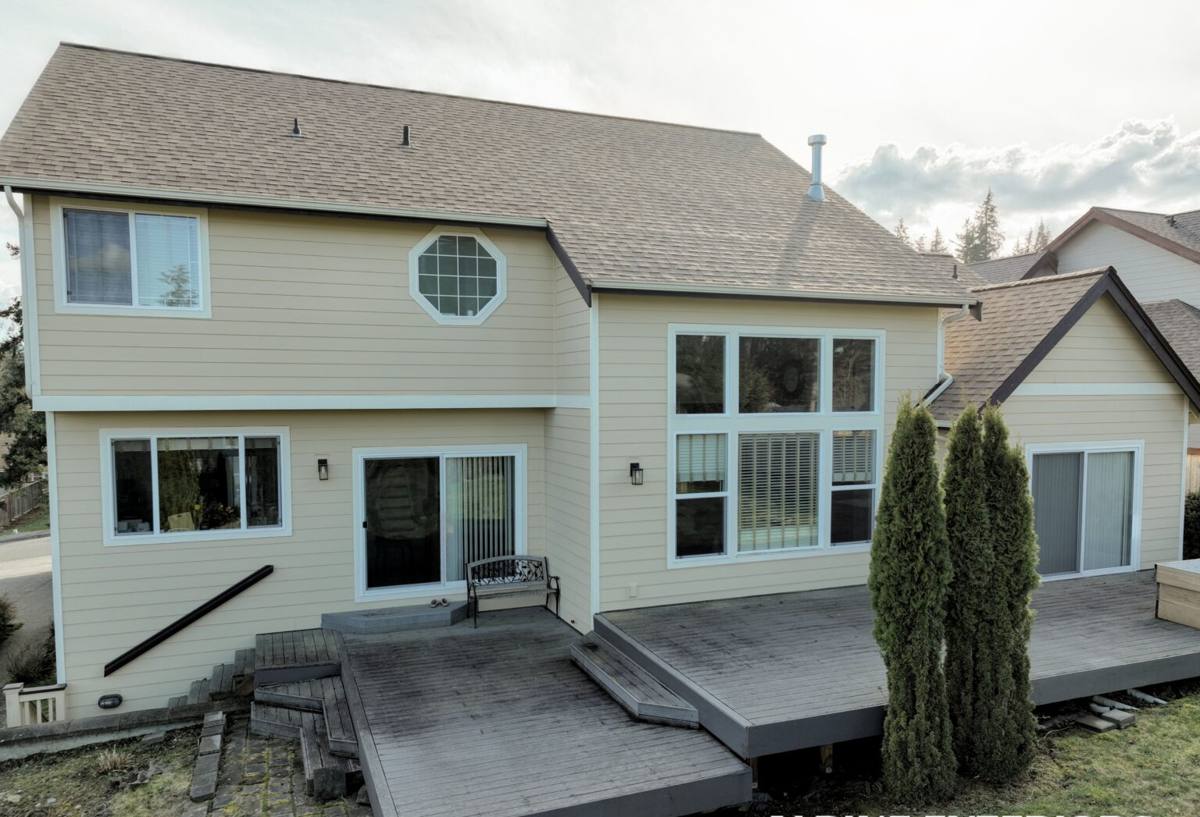
What This Climate Actually Does to a Deck
Moss and Organic Growth
Moss doesn't just look bad — it holds moisture directly against decking boards and framing, which keeps wood wet long after a storm has passed. On shaded decks, or ones tucked under overhangs and tree cover common in this area, moss can establish itself within a season and quietly accelerate rot underneath boards that look fine from a few feet away.
Driving Rain and Water Intrusion
Wind-driven rain doesn't fall straight down — it gets pushed sideways into gaps, under flashing, and behind ledger boards where the deck attaches to the house. That's the single most common point of hidden damage we find: water working its way into the ledger connection, the framing member that carries a huge share of the deck's structural load.
Salt Air and Fastener Corrosion
Proximity to salt air speeds up corrosion on fasteners, joist hangers, and any hardware that isn't rated for coastal exposure. A galvanized nail or screw that would last decades inland can start rusting and weakening years earlier here. Corroded fasteners are a quiet failure point — they don't announce themselves until a board is loose or a railing wobbles.
Signs Your Sehome Deck Needs Repair Now, Not Later
Some deck damage is obvious. A lot of it isn't, especially on the underside and at connection points you don't look at during normal use. Here's what we tell homeowners to check for, or to have a professional check for them:
- Soft, spongy, or springy spots when you walk across the deck
- Visible moss, algae, or dark staining on boards, especially in shaded areas
- Gaps, rust streaks, or movement where the deck meets the house (the ledger board)
- Loose, wobbly, or leaning railings and posts
- Nails backing out or screw heads that are rusted, stripped, or missing
- Cracked, splintering, or cupped boards, particularly ones that hold standing water
- Gaps opening up between boards or around stair stringers
- Visible daylight or gaps where flashing should be sealing the house-to-deck connection
If you're seeing two or more of these, it's worth having someone look at the structure, not just the surface. Surface wear is cosmetic; connection and framing issues are structural, and those are the ones that matter for safety.
Repair or Replace? How We Make That Call
Not every deck problem means starting over, and not every deck is worth patching. The honest answer depends on where the damage is and how much of the structure it's touching. Here's the general framework we use when we're out looking at a deck in this neighborhood:
| Factor | Usually Repairable | Usually Needs Replacement |
|---|---|---|
| Location of damage | Isolated boards, railings, or stairs | Ledger board, main support beams, multiple joists |
| Extent of rot | Surface-level, contained to a few members | Widespread soft wood throughout the frame |
| Age of structure | Under 15 years, otherwise sound | 20+ years with cumulative moisture damage |
| Fastener condition | Localized corrosion, easily replaced | Systemic rust across hardware and hangers |
| Code compliance | Meets current attachment and railing standards | Built to outdated ledger or guardrail codes |
We'll always tell you straight if a repair is a temporary patch on a deck that's on borrowed time versus a genuinely sound long-term fix. Nobody benefits from us replacing boards on a frame that's failing underneath.
What a Correct Deck Repair Actually Involves
Diagnosing Below the Surface
A real repair starts by getting under the deck, not just looking at the top. We check the ledger board connection, joist hangers, support posts, and any spots where water has clearly been pooling or running. Probing suspect wood with a screwdriver or awl tells us whether we're dealing with surface softness or deep rot — that difference changes the whole scope of the job.
Fixing the Ledger and Flashing First
If the ledger board or its flashing is compromised, that gets addressed before anything else. It's the connection point carrying the most load and the most exposure to wind-driven rain, and it's the one homeowners are least likely to inspect themselves since it's hidden behind the decking.
Replacing Framing and Fasteners, Not Just Boards
Swapping out a cracked deck board is the easy, visible part. The part that actually protects your investment is replacing any joists, hangers, or fasteners underneath that are compromised — and using hardware rated for our climate's moisture and salt exposure, not just whatever matches on the shelf.
Addressing Drainage and Airflow
A repair that ignores why the damage happened in the first place just buys you a few more years before the same problem returns. Where we can, we improve drainage under the deck, clear or add gaps for airflow, and reduce the conditions that let moss and standing water take hold.
Our Repair Process
- Full inspection — top, underside, ledger, framing, stairs, and railings, with photos of anything hidden from normal view
- Honest scope and estimate — what's cosmetic, what's structural, and what your real options are, with pricing explained plainly
- Repair or replace the affected components — framing and fasteners first, decking and railings second
- Correct flashing and drainage details — so the same failure doesn't just come back in two years
- Final walkthrough — we show you what was done and what to watch going forward
We don't sell a bigger job than a deck needs, and we don't sell a smaller one than it needs either. If a full section has to come out to get at rotted framing, we'll show you why before we start.
Materials: What We Use and Why
Wood decking still has a place, especially on older decks where matching the existing structure matters, but it demands more upkeep in this climate — regular sealing, cleaning, and moss control to keep moisture out of the grain. Composite and PVC decking cost more up front but shed moisture differently and resist the rot cycle that wood is prone to here, which is why we bring it up as an option on repairs where boards need full replacement anyway.
For fasteners and hardware, we don't use standard-grade materials on a coastal-influenced job. Stainless steel or coastal-rated galvanized hardware costs more per piece, but replacing rusted-out fasteners twice in ten years costs more than doing it right once. That's a maintenance trade-off we'll walk you through rather than just default to the cheapest option.
Why It Matters to Hire a Crew That Already Works in Sehome
Deck repair isn't identical everywhere. A crew that mostly works dry-climate jobs will diagnose a Sehome deck differently than one that sees this specific combination of salt air, moss, and driving rain every week. We know which connection points fail first around here, which fastener grades actually hold up, and which repairs are worth doing versus which ones are a Band-Aid on a deck that needs to come down.
That local pattern recognition is the difference between a repair that lasts and one you're calling someone back out for in eighteen months. We're not guessing at what Chuckanut and Whatcom County weather does to a deck — we're dealing with it on jobs across this area on a regular basis.
Maintaining Your Deck Between Repairs
A repair holds up longer if it's paired with basic seasonal upkeep. None of this requires a contractor — it's just worth doing consistently:
- Clear moss and debris from boards and gaps before it has a chance to establish, especially heading into fall
- Keep gutters and downspouts clear so runoff isn't dumping directly onto or under the deck
- Reseal or restain wood decking on the manufacturer's recommended schedule, not just when it looks faded
- Check railings and stair connections for movement once or twice a year
- Trim back vegetation that's shading the deck and keeping it damp longer than it needs to be
If you're not sure whether what you're looking at is normal wear or something that needs attention, we're glad to take a look and give you a straight answer — no pressure either way. Reach out for a free estimate on your Sehome deck repair, and we'll walk the structure with you and explain exactly what we find.