 Chuckanut Exterior
 Exterior Work in Larrabee: A Different Kind of Climate Test
Larrabee sits in one of the more demanding pockets of Whatcom County for a home's exterior. Between the proximity to the water along Chuckanut Drive, the steep, tree-covered terrain, and the long stretch of wet months that define the Pacific Northwest, homes here are asked to do more than homes just a few miles inland. Salt-tinged air off the bay, wind-driven rain that doesn't just fall but blows sideways into walls and trim, and deep shade from Douglas fir and big-leaf maple canopy all combine to create conditions that wear down the wrong materials fast and reward the right ones for decades.
We work throughout the greater Chuckanut area, and Larrabee's homes come up often in our conversations with homeowners because the exterior problems we see there tend to be specific and recurring: siding that's failed at the bottom courses near grade, roofs with moss creeping up from the north slope, window frames that have gone soft at the sill, and decks that never quite dry out between rains. None of that is unusual for the area — it's just what happens when a house sits in a marine, shaded, high-moisture environment for years without exterior materials and detailing built for it.
Salt Air and Coastal Exposure
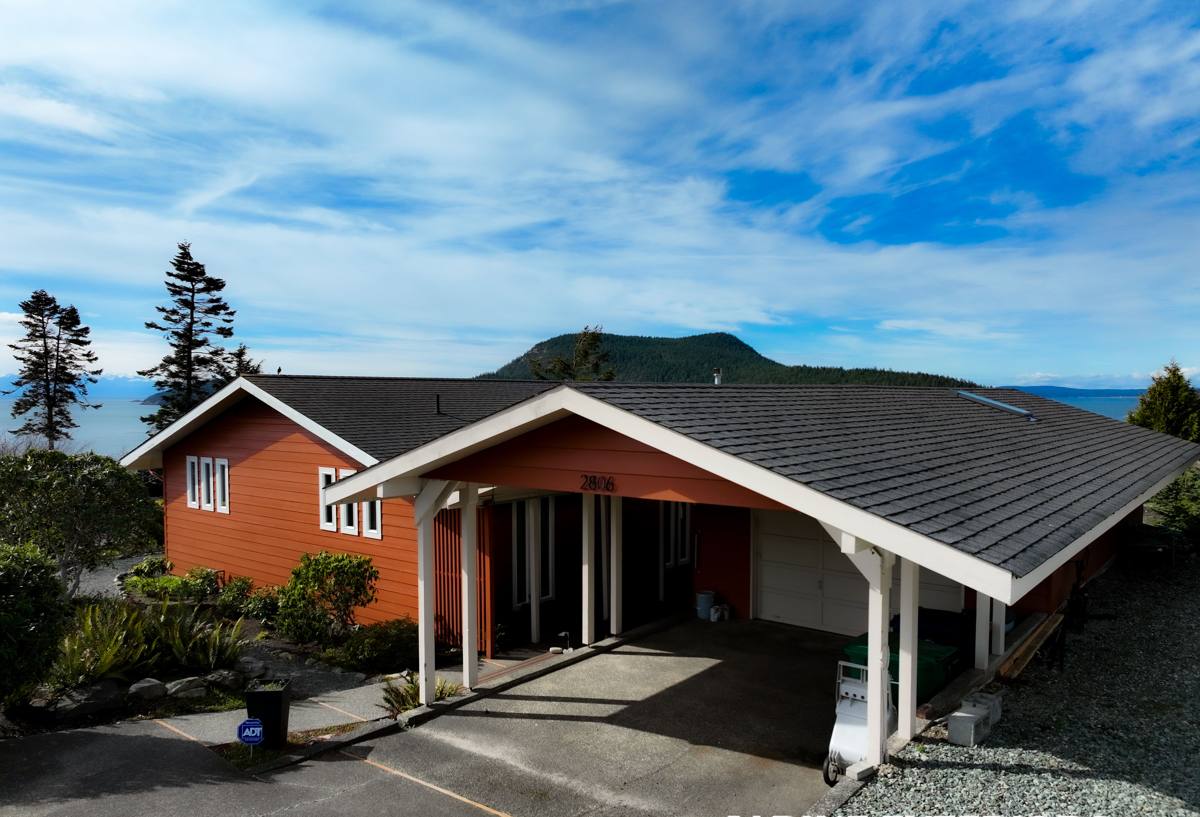
Homes closer to Chuckanut Bay and the broader Samish Bay shoreline deal with a slow, steady form of wear that inland Whatcom County homes mostly avoid: airborne salt. It doesn't take a beachfront lot to feel it — salt-laden air carries inland on wind and settles on siding, trim, fasteners, and metal roofing components. Over years, that exposure accelerates corrosion on unprotected metal, degrades cheap paint finishes faster than the manufacturer's warranty accounts for, and contributes to the general chalking and fading you see on lower-grade siding products up and down this stretch of coastline.
This is one of the reasons material choice matters more here than in a drier, inland subdivision. Products that perform fine in Spokane or even in parts of Seattle's urban core can underperform noticeably faster in a coastal-adjacent, salt-exposed environment like Larrabee.
What Salt Exposure Actually Damages
- Factory paint finishes on lower-cost siding, which chalk and fade faster under salt and UV combined
- Exposed fasteners and flashing that aren't rated for coastal-adjacent corrosion
- Caulking and sealant joints, which dry out and crack sooner under salt-air cycling
- Untreated or under-primed wood trim, which can absorb moisture-carrying salt into the grain
Driving Rain and Water Management
Whatcom County gets plenty of straight-down rain, but the Chuckanut corridor also catches a lot of wind-driven rain funneling off the water and through the gaps in the terrain. That distinction matters for exterior work. Wind-driven rain doesn't just sheet off a wall the way vertical rain does — it gets pushed sideways and upward, finding its way into laps, seams, and any gap in the water-resistive barrier behind the siding. A home can look fine on the surface for years while water is quietly working its way behind an improperly lapped or caulked exterior.
This is why we pay close attention to flashing details, kick-out flashing at roof-to-wall intersections, and proper lap and fastening patterns on every siding job in this area — not just the visible finish. A beautiful siding job with sloppy water management underneath will fail from the inside out, and by the time it shows on the surface, there's often already sheathing or framing damage behind it.
Where Water Problems Typically Start
| Location | Common Issue in Larrabee Homes | Why It Happens |
|---|---|---|
| Bottom siding courses near grade | Soft, swelling, or discolored material | Splashback and poor ground clearance hold moisture against the wall |
| Roof-to-wall intersections | Hidden leaks behind siding | Missing or undersized kick-out flashing lets runoff behind the cladding |
| Window and door trim | Rot at sills and corners | Wind-driven rain pushes past inadequate flashing tape and caulk joints |
| Deck ledger boards | Hidden rot where deck meets house | Poor flashing where framing intersects with cladding traps moisture |
Moss, Algae, and a Long Shade Season
The tree cover that makes Larrabee a beautiful place to live also means a lot of homes here sit in partial or full shade for large portions of the day, especially on north- and east-facing elevations. Combine that shade with the region's long wet season and you get ideal conditions for moss, algae, and mildew growth on roofing, siding, and decking. This isn't a cosmetic issue only — moss holds moisture directly against roofing material and siding surfaces, which shortens the useful life of both if it isn't managed.
Roofs in shaded parts of Larrabee often need moss treatment or removal more frequently than roofs in open, sunny parts of the county. On siding, the same shaded, damp conditions favor mildew growth, which is one more reason we steer homeowners away from wood-based and wood-composite products that are more vulnerable to sustained moisture and biological growth than fiber cement.
Siding: Why We Install Only James Hardie
We are a James Hardie–exclusive siding contractor. We don't install LP SmartSide, vinyl, Cemplank, Allura, primed spruce, or cedar, and in an area like Larrabee — with salt air, driving rain, and heavy moss and shade exposure all in play — that standard isn't a marketing position, it's a practical one.
The Trade-Offs We See in Other Products
Vinyl siding is inexpensive and low-maintenance in mild conditions, but it can warp or crack under the temperature swings and wind loads seen along the water, and it's a poor match for the more traditional architectural look many homes in this area carry. LP SmartSide and other wood-strand composite products perform reasonably well when installation and caulking are perfect and maintained every year, but they're an engineered wood product at their core — meaning sustained moisture exposure, the kind Larrabee's shade and rain deliver for months at a time, is exactly the condition that shortens their lifespan if maintenance ever slips. Primed spruce and cedar are honest, traditional materials, but they demand a repainting and caulking schedule that most homeowners underestimate, and in a high-moisture, moss-prone environment that maintenance burden only grows.
Why Hardie Fits This Climate
James Hardie fiber cement is non-combustible, doesn't absorb water the way wood-based products do, and holds its factory-applied ColorPlus finish far longer under UV and salt exposure than field-painted alternatives. Hardie's HZ5 product line is engineered specifically for wetter, more freeze-cycle-prone climates, which fits the Pacific Northwest's marine environment. It also carries a strong, transferable manufacturer warranty when installed to spec — which matters in an area where installation quality is the difference between siding that lasts decades and siding that fails at the first hard winter.
Roofing for the Larrabee Microclimate
Roofing decisions in this part of Whatcom County have to account for moss and algae resistance, wind exposure from the water, and the reality that a shaded roof simply dries out slower than one in full sun. We look at ventilation, underlayment quality, and flashing details as closely as we look at the shingle or panel product itself, because a roof that traps moisture underneath the surface will underperform no matter how good the top layer looks. For homes tucked under heavy tree cover, we also talk with homeowners about realistic moss-maintenance intervals rather than pretending any roof up here is maintenance-free.
Windows That Hold Up to Wind-Driven Rain
Older or lower-quality windows are one of the most common weak points we find on Larrabee homes. Wind-driven rain off the bay finds its way past worn weatherstripping and undersized flashing at a rate that surprises a lot of homeowners who assumed their windows were simply "getting old." When we replace windows here, proper flashing integration with the surrounding siding is just as important as the window unit itself — a great window installed with poor flashing will leak eventually, and a modest window installed correctly will often outperform it.
Decks in a Damp, Shaded Environment
Decks in Larrabee's shadier lots rarely get the drying time that decks in open, sunny yards do. That means ledger flashing, proper board spacing for drainage, and material choice all matter more here than in drier parts of the county. We build and repair decks with an eye toward keeping water moving off and away from the structure rather than letting it pool or sit trapped against the house.
Signs Your Home's Exterior Needs a Closer Look
- Moss or dark streaking building up on the north or east side of the roof or siding
- Soft, swollen, or discolored siding near the bottom courses or around windows
- Paint or caulk that's cracking or peeling faster than expected for its age
- Drafts, fogging, or visible gaps around window frames during wind and rain
- Deck boards that stay damp or spongy well after the rain has stopped
- Any staining on interior walls or ceilings near exterior corners after a heavy storm
Why a Local Crew Matters in This Area
Exterior work in Larrabee isn't the same job as exterior work twenty miles inland, and a crew that doesn't work this stretch of Whatcom County regularly can miss the details that matter most — the flashing at a roof-to-wall intersection facing the prevailing wind, the ground clearance needed near a shaded, damp foundation line, the fastener and finish choices that actually hold up to salt air over ten or twenty years. A local crew that has worked on homes along Chuckanut Drive and in Larrabee specifically knows what tends to fail first here and builds accordingly, rather than applying a generic approach and hoping it holds.
We also think it matters that the same standard applies to every job: proper flashing and water management first, then a cladding system — James Hardie fiber cement — that's actually built for what this climate delivers, installed by people who do this work day in and day out in this specific area rather than as a one-off.
Get a Straightforward Look at Your Home's Exterior
If you're in Larrabee or anywhere along the Chuckanut corridor and you're noticing moss buildup, soft siding, drafty windows, or a deck that never seems to fully dry out, we're happy to take a look and give you an honest read on what's going on and what your options are. We offer free, no-pressure estimates — use the form below to get started.