 Chuckanut Exterior
 Why Larrabee Roofs Wear Out Faster Than the National Average
Larrabee sits along Chuckanut Bay at the edge of Whatcom County, tucked between the water and steep, heavily wooded slopes near Larrabee State Park. That location is beautiful, but it's hard on a roof. Homes here deal with three things at once that most roofing guides never address together: salt-laden air off the bay, long stretches of driving, wind-pushed rain, and a moss season that can run eight months or more thanks to the shade from surrounding fir and cedar canopy.
Any one of those factors shortens roof life on its own. Together, they mean a roof spec'd for an inland, sunnier part of Washington often underperforms here. Fasteners corrode faster in salt air. Wind-driven rain finds gaps that would never leak in a calm rain event. And moss doesn't just look bad — it holds moisture against the roof surface and lifts shingle edges over time. A correct installation in Larrabee accounts for all three from day one, not as an afterthought.
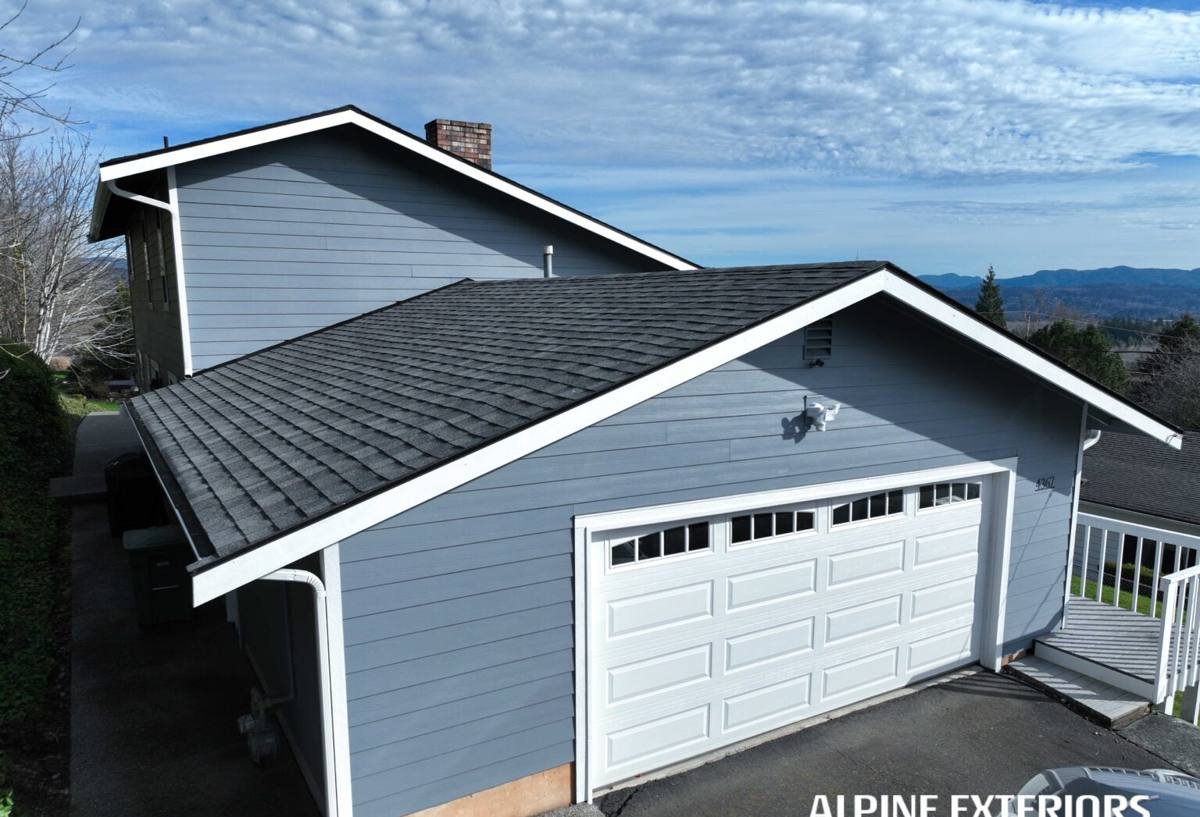
What a Correct New Roof Installation Actually Involves
"New roof" sounds simple, but the difference between a roof that lasts and one that fails early almost always comes down to what happens underneath the visible surface. A proper installation includes:
Full Tear-Off, Not Overlay
We remove the old roofing down to the deck rather than layering new material over old. Overlaying traps moisture, hides deck damage, and voids most manufacturer warranties. It's also the only way to actually inspect the sheathing underneath — which matters a lot in a damp coastal environment like this one.
Deck Inspection and Repair
Once the old roofing is off, we check the plywood or plank decking for soft spots, delamination, and rot, especially around old flashing points and valleys where water tends to concentrate. Any compromised decking gets replaced before anything new goes down. Skipping this step is one of the most common shortcuts in the industry, and it's the one that causes the most expensive problems later.
Underlayment Built for Wind-Driven Rain
Because Larrabee gets rain that comes in sideways off the water during winter storms, we use synthetic underlayment with self-adhering, waterproof membrane at eaves, valleys, and around every penetration — not just the minimum code coverage. This is the layer that saves a roof when wind pushes water up and under the shingle edge.
Flashing at Every Transition
Chimneys, skylights, dormers, and roof-to-wall transitions are where the overwhelming majority of roof leaks start — not the open field of shingles. Flashing gets formed and installed fresh, not reused, and step-flashed properly at walls rather than caulked and hoped for.
Ventilation That Matches the Home
Balanced intake and exhaust ventilation keeps the attic temperature and moisture in check, which matters for both shingle life and moss growth (more on that below).
Material Options for a Salt-Air, Moss-Prone Climate
There's no single "best" roofing material for every Larrabee home — it depends on the house, the roof pitch, the budget, and how much shade the roof sits under. Here's how the common options actually perform in this specific climate:
| Material | Salt Air / Moisture Performance | Moss Resistance | Typical Lifespan Here |
|---|---|---|---|
| Architectural asphalt shingle | Good, with corrosion-resistant fasteners and flashing | Moderate — benefits from zinc/copper strips | 20-30 years |
| Standing seam metal | Excellent when properly coated and fastened | Very good — sheds debris, little for moss to grip | 40-50+ years |
| Synthetic/composite shake | Good — doesn't absorb moisture like real wood | Good | 30-40 years |
| Cedar shake (natural) | Requires diligent maintenance in this climate | Poor without regular treatment and cleaning | Highly maintenance-dependent |
We're straightforward with homeowners about cedar shake specifically: it can look great, but in a shaded, damp, salt-air environment like Larrabee it demands a maintenance schedule most homeowners don't keep up with — regular cleaning, moss treatment, and periodic sealing. That's not a knock on the material itself, it's an honest read of the upkeep it needs in this exact setting. For most Larrabee homes, we steer conversations toward architectural shingle or standing seam metal, both of which hold up with far less babysitting.
Fasteners and Flashing Metal: The Detail Most Quotes Skip
Salt air accelerates corrosion on standard fasteners and flashing over time, which shows up years later as rust streaking, weakened nail heads, and premature flashing failure. On homes within reach of the bay air, we spec corrosion-resistant fasteners and flashing metals as standard, not as an upsell. It's a small cost difference at installation and a significant difference in how the roof looks and performs a decade in.
Moss: Managing It From the Start, Not After It's a Problem
Moss is close to unavoidable on a shaded roof anywhere near Chuckanut Bay, but a new installation can be built to slow it down considerably:
- Zinc or copper control strips installed near the ridge, which release trace metals with every rain and inhibit moss growth over the whole roof plane
- Proper attic ventilation to reduce the temperature differential that encourages moss and algae growth on the underside conditions of the roof surface
- Keeping roof valleys and low-slope sections clear of the organic debris that gives moss somewhere to take hold
- Choosing a roofing profile without deep grooves or high-friction texture in heavily shaded sections, where practical
- Setting a realistic annual or twice-yearly inspection and gentle-cleaning schedule with the homeowner before we ever leave the job
None of this makes a roof moss-proof — nothing does in this climate — but it's the difference between moss becoming a cosmetic nuisance you manage on a schedule versus a hidden cause of shingle lift and deck rot five years down the road.
Our Installation Process
- On-site assessment — we walk the roof (or use appropriate access for steep or difficult pitches), check the attic, and evaluate existing ventilation, flashing points, and any visible damage or moss buildup.
- Written estimate — material options, scope, and a clear price, explained in person, not buried in fine print.
- Scheduling around weather windows — we plan installs during realistic dry stretches for this stretch of Whatcom County and stage materials so a partially opened roof is never left exposed overnight.
- Tear-off and deck inspection — full removal of old material, deck repair as needed, all debris hauled off site.
- Underlayment, flashing, and ventilation installation — the layers that actually determine whether the roof leaks or breathes correctly.
- Roofing material installation — installed to manufacturer specification, which is also what keeps material warranties valid.
- Final walkthrough — we go over the finished roof and the maintenance schedule with the homeowner directly.
Permitting and Timeline in Whatcom County
Most full roof replacements require a permit through Whatcom County, and we handle that process as part of the job rather than leaving it to the homeowner. Timeline depends on roof size and complexity, but homeowners should expect the physical installation itself to take a few days once materials are on site — the bigger variable in this area is weather scheduling, since we won't start a tear-off without a realistic dry window given how quickly driving rain can move in off the water.
Why Hiring a Crew That Already Works in Larrabee Matters
A roofing crew that mostly works inland or in drier parts of the state doesn't always think about salt-air fastener corrosion, wind-driven rain at eaves, or moss control strips as standard practice — because they don't need to where they usually work. A crew that regularly works Larrabee, Chuckanut, and the surrounding Chuckanut Drive corridor already knows which flashing details fail here, which materials hold up under this specific combination of salt, rain, and shade, and how to schedule around this area's weather rather than fighting it. That local pattern recognition is worth more than it sounds like on paper — it's the difference between a roof that's engineered for this coastline and one that's just engineered for "Washington" in general.
Signs Your Larrabee Roof May Need Replacement, Not Repair
Not every roofing problem calls for a full replacement. Here's a quick way to think about it:
- Granule loss heavy enough that shingles look bald or patchy across large sections, not just one spot
- Shingles that are curling, cupping, or lifting at multiple points on the roof, not just one damaged area
- Soft or spongy decking felt from inside the attic, or daylight visible through the roof boards
- Repeated leaks in different locations after past patch repairs
- A roof at or past the upper end of its expected lifespan combined with visible moss intrusion under the shingle line, not just on the surface
If it's one isolated issue on an otherwise sound, reasonably young roof, a repair is usually the honest answer. We'll tell you that directly rather than pushing a full replacement that isn't needed yet.
Ready for a Straight Answer on Your Roof
If you're weighing a new roof for your Larrabee home, we're glad to come take a look, walk the roof and attic, and give you a clear, no-pressure estimate along with an honest read on materials and timing for your specific property. There's a form below — reach out and we'll get you scheduled.