 Chuckanut Exterior
 Decks in Burlington Face a Different Kind of Wear
A deck in Burlington doesn't fail the way a deck in a dry inland climate fails. It doesn't crack from sun exposure first — it goes soft from the inside out. Whatcom County's combination of salt-laden air moving in off the water, long stretches of driving rain, and a moss season that can run eight months or more means the enemy of a Burlington deck is moisture that never fully dries out between storms. That's a different problem than the one most decking marketing is written for, and it changes what "correct" actually means when you're building or replacing one here.
We build and repair decks around Burlington and the surrounding Chuckanut area often enough to see the same failure patterns over and over: ledger boards that rot from behind before the surface boards show any damage, joist hangers that rust and lose grip years before the wood around them gives out, and moss that establishes itself in shaded, low-airflow spots and quietly holds water against the structure for months at a time. None of that is exotic. It's just what happens when a deck is built to a generic spec instead of to this climate.
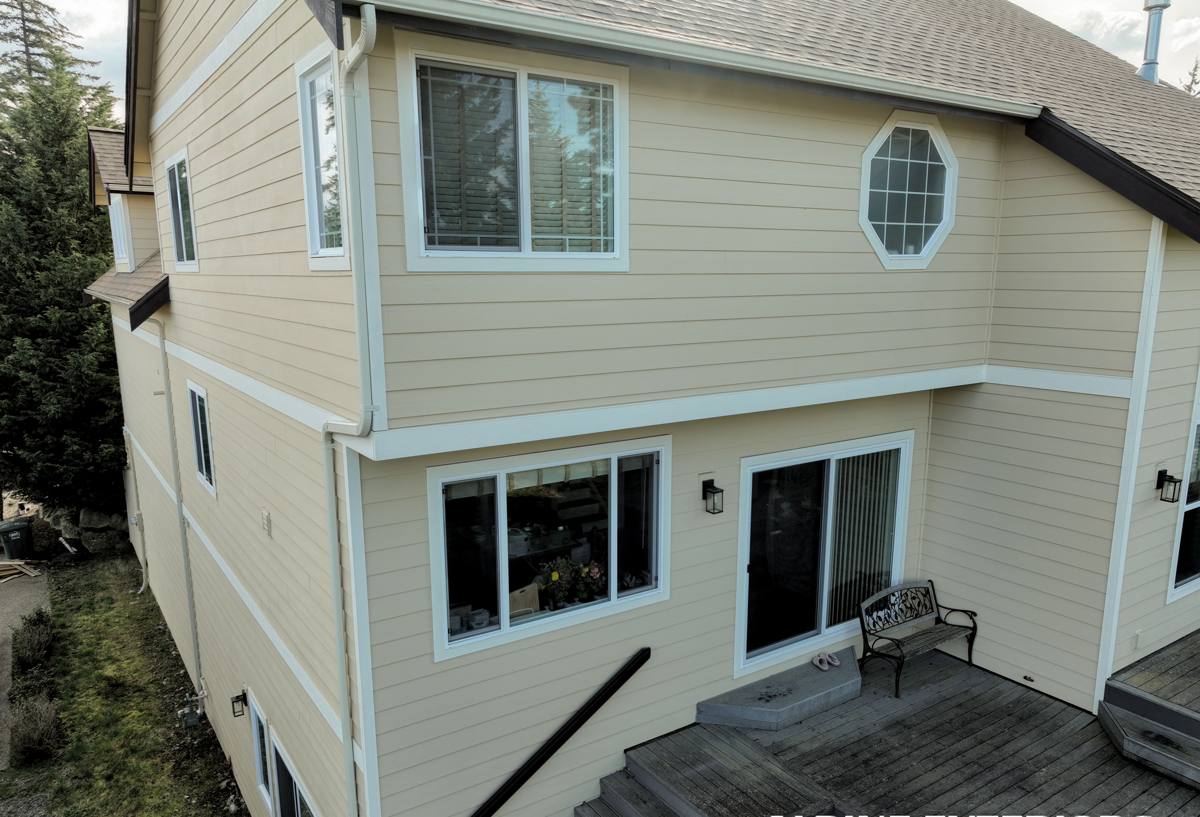
What This Climate Actually Demands From a Deck
Moisture management, not just moisture resistance
Every decking material sold today claims some form of weather resistance. The bigger issue in Burlington isn't the decking surface — it's what happens underneath and behind it. Rain here doesn't fall and stop; it falls in long, low-intensity soaks that give water time to find every gap in flashing, every under-sized fastener, and every spot where a ledger board meets the house without a proper drainage path. A deck built for this area needs flashing details, fastener choices, and framing gaps that assume water will get in contact with the structure repeatedly, and give it somewhere to go besides trapped against the wood.
Corrosion resistance for hardware
Salt air doesn't need to come from directly on the water to matter — it travels inland on wind and settles on exposed metal. Standard galvanized fasteners and hangers can start showing surface corrosion years before the wood they're holding together shows any sign of trouble. Once hardware corrosion advances far enough, connections that are supposed to be structural become the weak point in the whole deck, and it's not something you can see just by looking at the decking surface.
Airflow and moss control by design
Moss doesn't attack wood directly, but it holds moisture against a surface far longer than open air would, and that constant dampness is what accelerates rot, both in decking boards and in the framing below. A deck designed with this in mind pays attention to gaps between boards, ventilation underneath the structure, and how much shade and airflow a given spot actually gets before finalizing the layout — not just after moss shows up.
How We Approach a Burlington Deck Build
The process itself isn't unusual — it's the details inside each step that change based on the climate and the site.
1. Site and exposure assessment
Before we talk materials, we look at where the deck actually sits: how much sun and airflow it gets through the year, how close it is to prevailing wind and moisture off the water, and what the drainage looks like around the foundation and yard. A deck tucked against a shaded, damp corner of a house needs different detailing than one that gets full sun and open air most of the day.
2. Ledger and flashing detail
This is the single most common failure point we find on older decks in this area. The ledger board — where the deck attaches to the house — needs proper flashing that sheds water away from the house framing, not just a bead of caulk and a hope. We treat this connection as the most important joint on the whole project, because when it fails, the damage happens hidden behind the decking where nobody sees it until the deck is already unsafe.
3. Footings and framing
Footings need to be set to the depth and bearing required by local code, and framing lumber needs to be rated for ground contact or full weather exposure depending on where it sits relative to grade and drainage. We use fasteners and connectors rated for the corrosion exposure this area sees, not the minimum spec that would pass in a drier climate.
4. Decking, spacing, and airflow
Board spacing, direction, and the gap left underneath the deck all affect how quickly water drains and how much airflow reaches the underside of the structure. We set these based on the specific site conditions, not a one-size layout.
5. Railing and finish work
Railing systems, fastener caps, and any finish coatings are chosen with the same salt-air and moisture exposure in mind — a railing post that traps water at its base will start failing from the bottom up long before the visible wood looks worn.
Choosing the Right Decking Material for This Climate
There's no single "best" decking material — there's a right trade-off for your budget, your maintenance appetite, and how exposed your specific deck location is. Here's how the common options actually compare for a Burlington-area deck:
| Material | Moisture & Salt Air Resistance | Moss/Algae Resistance | Maintenance | Typical Lifespan |
|---|---|---|---|---|
| Pressure-Treated Lumber | Fair — treatment protects wood fibers but hardware and cut ends are vulnerable | Low — needs regular cleaning to avoid buildup | Annual cleaning and periodic sealing | 10-15 years with upkeep |
| Cedar | Good natural resistance, but performance drops fast without maintenance | Fair — natural oils help but fade over time | Regular sealing and cleaning | 15-20 years with consistent care |
| Capped Composite | Very good — sealed cap resists moisture intrusion into the core | Good — smoother surface sheds moss more easily | Occasional washing, no sealing needed | 25-30 years |
| PVC Decking | Excellent — contains no wood fiber to absorb moisture | Good, though surface texture affects how easily moss grips | Low — periodic washing | 25-30+ years |
Our professional standard is to steer clients away from uncapped composite and lower-grade cedar in spots that get heavy shade or sit close to the water side of a property, not because the material is bad everywhere, but because in a high-moisture, low-airflow location it tends to hold water longer than it's rated to handle, which shortens its real-world life well below the manufacturer's stated lifespan. We'll always tell you honestly which option fits your specific site instead of defaulting to whatever has the best margin.
What Drives the Cost of a Deck Build Here
Two decks of the same size can cost noticeably different amounts once you factor in the details that actually matter in this climate.
| Cost Factor | Why It Matters Here |
|---|---|
| Framing material and hardware grade | Corrosion-resistant fasteners and connectors cost more up front but avoid hidden structural failure later |
| Ledger and flashing detail | Proper flashing takes more labor time than a minimal approach, but it's the most common point of failure if skipped |
| Decking material choice | Composite and PVC cost more per board than treated lumber but need far less upkeep against moss and moisture |
| Site grade and drainage work | Sloped or poorly draining yards may need extra grading or footing work to keep water moving away from the structure |
| Footing depth and access | Local frost depth and soil conditions determine footing requirements, and tight-access sites take longer to excavate |
| Railing style and code requirements | Height and baluster spacing requirements affect both material choice and labor |
Signs an Existing Deck Is Already in Trouble
If you're not building new but wondering whether your current deck needs attention, a handful of warning signs show up consistently on decks in this climate before they become a safety issue:
- Soft or spongy spots in the decking, especially near the house or in shaded corners
- Rust streaks running down from screws, hangers, or railing posts
- Moss or dark green buildup that returns within weeks of cleaning
- Gaps or separation where the ledger board meets the house siding
- Railing posts that feel loose or flex more than they used to
- A persistent musty smell coming from underneath the deck
- Visible daylight or water staining on the framing when viewed from underneath
Any one of these on its own might just mean routine maintenance. Several at once usually means water has been getting into the structure for a while, and it's worth having someone look at the framing, not just the surface boards.
Permits, Footings, and Local Code Considerations
Deck permitting and footing requirements are set locally, and they exist for real structural reasons — footing depth and bearing requirements protect against frost movement and unstable soil, and railing and stair code requirements exist because deck falls are a genuinely common source of injury. We handle the permitting and inspection process as part of the build rather than treating it as an afterthought, because a deck built without the right footings or attachment details might look fine for a few years and still be a real liability by the time problems show up.
Maintaining a Deck Through a Long Moss Season
Even a well-built deck needs some seasonal attention in this climate. A realistic maintenance rhythm looks like: clearing debris and standing moisture from the surface and gaps between boards heading into fall, a moss treatment and cleaning pass before the wettest months set in, and a spring check of hardware, railing connections, and any sealant or finish that composite or wood decking calls for. None of this needs to be elaborate, but skipping it is exactly how a deck that should last 25 years starts showing structural problems at year 10.
Why It Matters to Hire a Crew That Already Works in Burlington
A deck built to a generic national spec can look identical to one built for this climate — until a few winters of driving rain and salt air pass. The difference shows up in the ledger flashing you never see, the hardware grade behind the decking, and the layout decisions that account for how much shade and airflow a specific spot on your property actually gets. A crew that works Burlington and the surrounding Chuckanut area regularly has already seen which details matter here and which corners get cut on decks that fail early — and builds accordingly from the start, rather than learning it from a callback.
If you're weighing a new deck build, a rebuild, or just want an honest read on whether your current deck is holding up the way it should, we're glad to come take a look and talk through the options — no pressure, no obligation. Reach out using the form below for a free estimate.