 Chuckanut Exterior
 Exterior Contracting for Bellingham and the Chuckanut Corridor
The stretch of Whatcom County running from Bellingham down through Chuckanut sits in a genuinely tough spot for exterior materials. You've got Bellingham Bay and the saltwater shoreline along Chuckanut Drive pushing salt-laden air into siding, trim, and metal fasteners. You've got the marine layer and long, low-intensity rain events that don't just wet a wall once and dry out — they keep it damp for days. And you've got tree cover, shaded north faces, and enough humidity to grow a healthy crop of moss and algae on anything that doesn't shed water well. Homes here don't fail because owners neglect them. They fail because the exterior wasn't built, or maintained, for this specific combination of conditions.
We work on homes throughout Bellingham and the Chuckanut area — from newer builds near the city out to older places tucked into the trees along the water — and we see the same patterns over and over. This page covers what that climate actually does to siding, roofing, windows, and decks, and how we approach exterior work differently because of it.
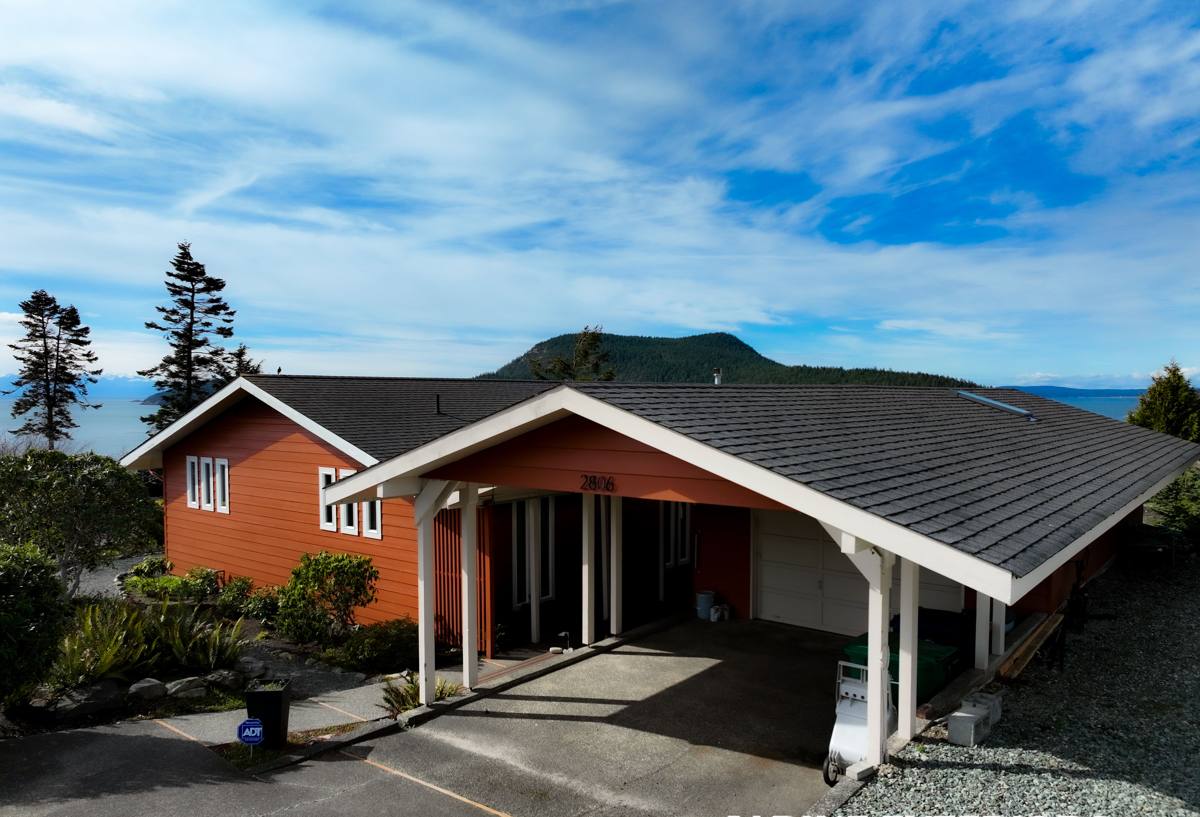
What Salt Air and Driving Rain Do to a Home's Exterior
Salt air is corrosive in ways that aren't always obvious until years in. It accelerates rust on exposed fasteners, degrades lower-quality metal flashing, and can pit or dull unprotected finishes faster than a homeowner further inland would ever see. Combine that with driving rain — rain that comes in sideways off the water during a windy front, not just straight down — and you get moisture pushed into places a standard installation assumes will stay dry: butt joints, window returns, deck ledger connections, and roof-to-wall transitions.
The practical effect is that materials and installation details that work fine in a drier, calmer inland town don't always hold up the same way here. Caulk joints open faster under repeated wet-dry cycling near the water. Housewrap seams matter more. Flashing details at windows and decks matter more. None of this is exotic — it's just that Chuckanut and Bellingham properties get more real-world testing of every weak point, every year, than most.
The Moss Season Problem
Whatcom County's moss season isn't a two-week nuisance — it's most of the fall, winter, and spring. Shaded roof slopes, north-facing siding, and anything under tree canopy stays damp long enough for moss and algae to take hold and spread. Left alone, moss on a roof holds water against shingles and underlayment, works into laps and fastener lines, and shortens the life of a roof system that might otherwise have years left. On siding, sustained moisture and organic growth is exactly the environment that rots wood-based products and degrades paint film on lower-grade materials.
Siding: Why We Standardize on One Product
We install James Hardie fiber cement siding exclusively. We don't install vinyl, LP SmartSide, Cemplank, Allura, primed spruce, or cedar. That's a deliberate standard, not a limitation on what we're capable of installing — and it's especially relevant in a climate like Bellingham's.
Wood-based siding products, even engineered ones, rely on a protective coating and consistent maintenance to keep moisture out of the substrate. In a marine climate with a long wet season and heavy moss pressure, any gap in that maintenance — a scratch, a failed caulk joint, a shaded spot that never fully dries — becomes an entry point for rot. Vinyl siding handles moisture differently: it doesn't rot, but it isn't rigid, it can warp or fade under sun and temperature swings, and its seams and channels give algae and grime somewhere to sit in a damp climate. None of these products are "bad" — they're just built around trade-offs we don't think make sense for homes that sit in salt air, shade, and driving rain for months at a stretch.
James Hardie fiber cement is cement, sand, and cellulose fiber — it does not rot, and it is non-combustible. It comes with a factory-applied ColorPlus finish baked on and warrantied against peeling and cracking, which matters a lot here because it removes the field-paint variable that's often where coastal-climate siding problems start. Hardie's HZ5 product line is engineered specifically for regions with more moisture exposure, which fits this stretch of coastline better than a generic national product spec.
Siding Product Comparison
| Material | Moisture Behavior in This Climate | Maintenance Burden | Longevity Factor |
|---|---|---|---|
| James Hardie fiber cement | Does not rot; engineered HZ5 line for wetter regions | Low — factory finish, no repainting cycle needed | Long service life when installed to spec |
| Vinyl | Won't rot but can warp/gap; seams collect grime in damp air | Low but limited repair options if damaged | Moderate; fades and becomes brittle over time |
| Wood / LP SmartSide / primed spruce / cedar | Vulnerable at any coating failure, especially in shaded/damp zones | High — regular inspection, caulking, repainting | Shorter if maintenance lapses even briefly |
Roofing for a Long Wet Season
Roofing in Bellingham and Chuckanut has to account for sustained moisture exposure and moss, not just occasional heavy rain. That means underlayment and flashing details at valleys, penetrations, and roof-to-wall intersections deserve real attention, since those are the spots where a slow, chronic leak usually starts rather than a dramatic one. Shaded north slopes and anything near overhanging trees are the areas we look at hardest, because that's where moss establishes first and does the most quiet damage over a few seasons.
We also think about ventilation. A roof that can't breathe traps moisture underneath the deck, which compounds everything else this climate already throws at a home.
Windows in a Marine Climate
Window failures in this area are rarely about the glass — they're about the flashing and sealant details around the frame. Driving rain off the bay tests every window installation on the wall's weather side, and a marginal flashing job that would go unnoticed in a drier climate will eventually show up as staining, soft trim, or drafts here. When we replace windows, the flashing integration with the siding and housewrap is treated as part of the job, not an afterthought — because in Bellingham, that detail is doing real work most of the year.
Decks: Built for Wet-Dry Cycling
Decks in Chuckanut and Bellingham deal with the same driving rain and prolonged dampness as the rest of the exterior, plus direct foot traffic and, often, less sun exposure to dry things out between storms. Ledger board connections and any spot where the deck meets the house need careful flashing, since that's the single most common source of hidden rot on older decks we've opened up. Fastener choice matters too — in salt air, standard hardware corrodes faster, so using fasteners rated for coastal or treated-lumber exposure isn't optional, it's basic longevity.
Why a Local Crew Matters Here
A crew that mostly works drier, inland jobs doesn't build the same instincts as one that works this coastline regularly. Knowing which walls take the worst of the driving rain, which roof slopes need extra moss attention, and which flashing details actually get tested by this climate isn't something you get from a spec sheet — it comes from doing the work here, season after season, and seeing what holds up and what doesn't. That's the difference a local crew brings to a Bellingham or Chuckanut exterior project.
Signs Your Exterior Needs Attention
- Moss or algae buildup on roof slopes, especially shaded or north-facing areas
- Soft or discolored siding, particularly near ground level or under overhangs
- Peeling or bubbling paint on wood-based siding or trim
- Staining or soft spots in trim around window frames
- Rust streaking from fasteners or metal flashing
- Soft decking boards or discoloration where the deck meets the house
- Gaps or cracking in old caulk joints at siding seams and window returns
What to Expect When You Call Us
We start with a straightforward walk-around of the exterior — siding, roof, windows, and any deck or attached structures — and point out what we actually see, including areas that are fine and don't need work. If siding replacement makes sense, we'll explain why James Hardie is what we install and how it fits your home's exposure, but we're not going to oversell a full exterior overhaul if targeted repairs and better maintenance solve the problem. Every home on this stretch of coastline has its own exposure pattern based on tree cover, sun, and which direction the weather usually comes from, and that's what shapes our recommendation.
If you're in Bellingham, Chuckanut, or elsewhere in Whatcom County and want an honest look at your home's siding, roofing, windows, or deck, we're happy to come take a look. The estimate is free, there's no pressure, and you'll get a clear answer about what your home actually needs.