 Chuckanut Exterior
 Bellingham Decks Face a Different Set of Problems
A deck built the same way in Spokane or Sacramento will not hold up the same way in Bellingham. Whatcom County sits close enough to the water and the mountains that homes deal with a specific combination of stresses most of the country never sees at the same time: salt-laden air off the Sound, long stretches of driving rain, and a moss and mildew season that can run most of the year in shaded yards. None of these alone is unusual. Together, on the same structure, they punish shortcuts fast.
We build decks for Bellingham homes with that combination in mind from the first framing decision to the last screw. This page walks through what that actually means in practice — not marketing language, just what a deck needs to hold up here and what we do differently because of it.
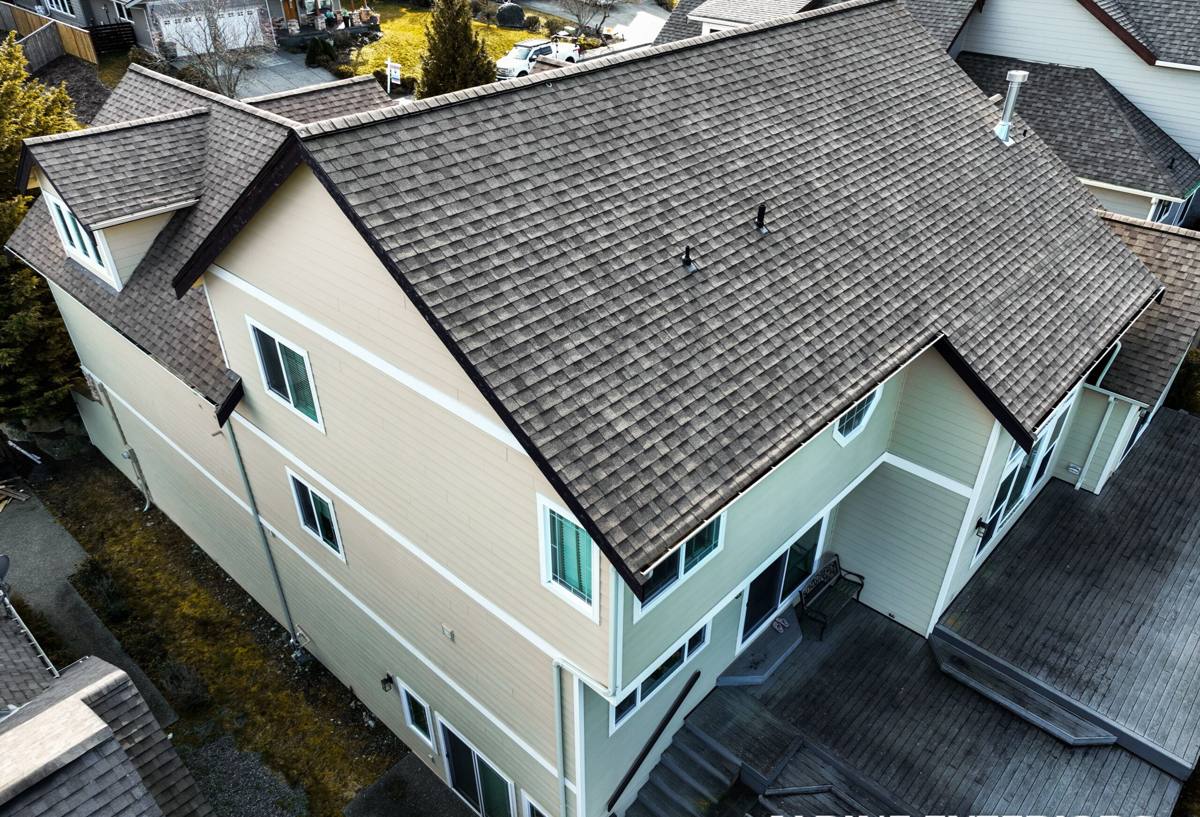
What Salt Air, Rain, and Moss Actually Do to a Deck
Salt air and corrosion
Homes closer to the water deal with airborne salt that accelerates corrosion on any metal component — fasteners, brackets, railing hardware, even some finishes. A deck can look fine on the surface for a few years while the hardware holding it together is quietly rusting from the inside. By the time you see rust stains bleeding through the decking, the fastener underneath has usually been degrading for a while.
Driving rain and water intrusion
Whatcom County rain isn't always gentle vertical rain — wind-driven rain gets pushed sideways into ledger connections, under railing posts, and into any gap that wasn't properly flashed or sealed. Water that gets behind a ledger board or into an unsealed post base doesn't dry out quickly in our climate, and that's where rot starts, usually out of sight until it's a structural problem.
Moss, algae, and shade
Bellingham's tree cover and long damp season mean moss and algae growth on horizontal surfaces is close to unavoidable without some planning. Beyond looking bad, moss holds moisture against decking material and can make surfaces genuinely slippery — a real safety issue on stairs and low-light areas of a deck.
What a Correctly Built Deck Involves Here
A deck that's going to hold up under these conditions isn't built differently in some exotic way — it's built with more attention to the details that get skipped when a crew is moving fast or unfamiliar with the region. That includes:
- Proper ledger board flashing and sealing where the deck attaches to the house, so wind-driven rain can't track behind it
- Footings sized and set below frost depth and rated for the soil conditions on your lot
- Joist tape or equivalent protection on top of framing lumber to slow moisture absorption at the most vulnerable point of the structure
- Corrosion-resistant fasteners and structural hardware rated for the exposure your site actually has
- Consistent gapping between decking boards for drainage and airflow, not just appearance
- Adequate under-deck ventilation so trapped moisture has somewhere to go
Skipping any one of these doesn't usually cause an immediate problem. It shows up two, five, or eight years later as soft framing, rust streaks, or a deck that needs to be rebuilt well before it should.
Choosing Decking Material for This Climate
There's no single "best" decking material — there's a best fit for your budget, how much upkeep you want to do, and how exposed your deck is to sun, shade, and moisture. Here's how the common options actually compare for a Bellingham home:
| Material | Moisture Behavior | Maintenance | Typical Lifespan Here |
|---|---|---|---|
| Pressure-treated wood | Absorbs and releases moisture; prone to warping/checking if not maintained | Annual cleaning, periodic staining/sealing | 10–15 years with upkeep |
| Cedar | Naturally moisture and insect resistant, but still needs sealing | Regular cleaning and refinishing to hold color and resist moss | 15–20 years with upkeep |
| Composite decking | Doesn't absorb water like wood; some early-generation products had moisture issues at cut edges | Periodic washing to slow moss/algae growth; no staining or sealing | 25+ years, varies by product line |
| PVC/capped polymer | Fully moisture resistant surface | Lowest upkeep; occasional washing | 25–30+ years |
We don't push one product line over another as a blanket rule — we walk through the trade-offs with you. Composite and PVC decking cost more upfront but cut down dramatically on the sanding, staining, and moss battles that come with wood in this climate. Wood costs less at install but asks for consistent yearly maintenance to actually hit its expected lifespan here. Either can be the right call depending on your budget and how much deck upkeep you actually want to do.
A note on installation sensitivity
Composite and PVC boards vary by manufacturer in how they handle gapping, fastening, and expansion — install them the way a wood deck gets installed and you can end up with buckling, gapping, or trapped moisture at the substructure. We follow manufacturer specs for whatever product you choose rather than treating every material as interchangeable.
Railings, Stairs, and Hardware
Railings and stairs take more direct weather exposure than the deck surface itself and are also where corrosion shows up first, since that's where a lot of exposed metal hardware lives. We use fasteners and structural connectors rated for coastal/high-moisture exposure rather than standard interior-grade hardware, and we pay attention to how railing posts are sealed at their base — an unsealed post base sitting in standing water is one of the more common failure points we see on older decks in this area.
Stair treads and any shaded walking surface also get extra attention for slip resistance, since moss and algae growth on stairs is a genuine safety issue, not just a cosmetic one.
How Our Deck Building Process Works
- On-site consultation. We look at your yard's sun/shade exposure, drainage, soil, and how the deck will attach to your home before recommending materials or layout.
- Design and material selection. We walk through the honest trade-offs between materials, styles, and budget — no pressure toward the most expensive option.
- Permitting. We handle the permit and inspection process for your jurisdiction so the structure is signed off and your homeowner's insurance and future resale aren't put at risk by unpermitted work.
- Construction. Framing, flashing, and fastening done to hold up to Whatcom County weather, not just to pass a quick visual inspection.
- Final walkthrough. We go over the finished deck with you, including basic care for whatever material you chose.
Living With a Deck in Whatcom County: Maintenance That Actually Matters
Every deck material needs some upkeep here — the amount just varies. A short seasonal checklist that applies to most Bellingham decks:
- Clear leaves and debris out of gaps between boards so water and moss have less to hold onto
- Rinse or wash surfaces at least once or twice a year to slow moss and algae buildup, more often in shaded areas
- Check railing post bases and stair connections for signs of rust bleed or loose hardware
- Reseal or restain wood decking on the schedule the product actually needs — not just when it looks faded
- Keep gutters and downspouts near the deck clear so runoff isn't dumping extra water onto or under the structure
- Trim back vegetation that's keeping sections of the deck shaded and damp longer than necessary
Why a Crew That Already Works in Bellingham Makes a Difference
Deck building itself isn't unique to this region, but building one that lasts here takes familiarity with things that don't show up in a generic spec sheet: how local soil handles footings, which exposures on a given lot actually get hit hardest by wind-driven rain, what permitting and inspection actually looks like for Whatcom County and the City of Bellingham, and which details matter most given how long moss season really runs here. A crew that's done this work locally isn't guessing at any of that — they've already seen what happens when it's skipped.
That local experience is also why we're straightforward about material trade-offs instead of steering every homeowner to the same product. What holds up on an open, sunny lot and what holds up on a shaded, damp one aren't always the same answer, and we'd rather tell you that upfront than sell you a deck that needs to be rebuilt in a decade.
Get a Straightforward Estimate
If you're planning a new deck or replacing one that's showing its age, we're happy to come take a look, talk through what your specific lot and exposure actually call for, and give you a clear, no-pressure estimate. There's no obligation — just an honest read on what your Bellingham home needs. Use the form below to get started.