 Chuckanut Exterior
 Why Bellingham Homes Wear Out Siding Faster Than the Brochure Says
Bellingham sits in a spot where three separate weather stresses stack on top of each other: salt-laden air moving in off Bellingham Bay and the Salish Sea, long stretches of driving rain that come sideways off the water during fall and winter storms, and a mossy, shaded growing season that can run most of the year on north- and west-facing walls. Individually, any one of those is manageable. Together, they shorten the working life of a lot of siding products faster than most homeowners expect when they're comparing options.
Salt air is corrosive to fasteners and hardware, and it accelerates the breakdown of paint films and caulking. Driving rain doesn't just wet the surface of a wall — wind-driven moisture finds every gap in flashing, trim, and seams, and pushes water where gravity alone wouldn't take it. And moss doesn't just look bad; it holds moisture against the wall surface for weeks at a time, which is exactly the condition that rots wood-based products and degrades lesser cladding systems from the back side, where nobody's looking.
A siding replacement done right in Chuckanut and Bellingham has to be engineered around all three of these conditions at once, not just picked because it looks good in a showroom.
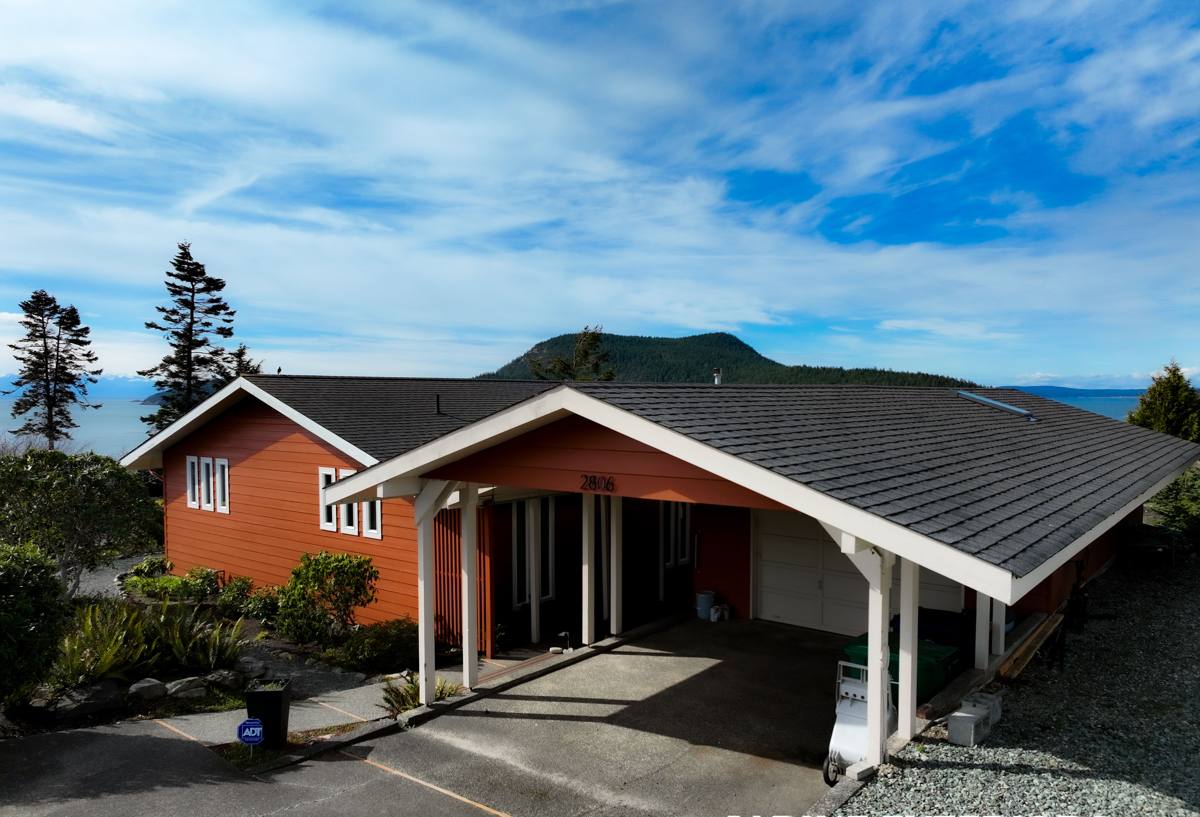
What "Correct" Actually Means for a Bellingham Siding Job
A siding replacement isn't just swapping old boards for new ones. The siding itself is only one layer of a system that has to work together: the water-resistive barrier underneath, the flashing at every window, door, and roof intersection, the fastening pattern, and the finish on the exterior face. Get any one of those wrong and the new siding will fail years before it should — regardless of how good the product is.
The Layers Behind the Siding
- Water-resistive barrier (house wrap): Correctly lapped, taped, and integrated with window and door flashing so bulk water is directed out, not trapped in.
- Flashing details: Head flashing above windows and doors, kick-out flashing where roof lines meet walls, and proper step flashing — these are the spots that fail first in driving rain if they're rushed.
- Fastening: Corrosion-resistant fasteners driven to the manufacturer's spec, not just "close enough," especially important given the salt content in coastal air.
- Rainscreen or drainage gap: A small air gap behind the siding lets any moisture that does get past the outer layer drain and dry out instead of sitting against the sheathing.
- Finish and caulking: The paint or factory finish and the sealant at joints and penetrations are the first line of defense against both rain and salt exposure.
When we quote a siding replacement, we're pricing all of this — not just the visible boards on the wall.
Why We Install James Hardie Fiber Cement — and Only That
We made a decision a while back to standardize on James Hardie fiber cement siding for every job we do, including here in Bellingham, and to stop installing vinyl, LP SmartSide, primed spruce, cedar, or other fiber cement brands. That's not a marketing position — it's a maintenance and durability call based on what actually holds up against this specific climate.
Fiber cement as a material category is non-combustible, dimensionally stable, and doesn't absorb and swell with moisture the way wood-based siding does. James Hardie in particular manufactures HZ5 and similar climate-engineered product lines specifically formulated for wetter, harsher coastal and northern climates like ours in Whatcom County — the formulation resists moisture-related damage better than a general-purpose version of the same material.
The other piece is the factory finish. James Hardie's ColorPlus finish is baked on at the factory under controlled conditions, rather than field-painted on site. That matters directly for salt air exposure: factory-applied finishes generally hold color and resist fading, chipping, and streaking longer than a field-applied paint job, because the application process and cure conditions are far more consistent than anything achievable outdoors. Hardie backs the product with a strong transferable limited warranty, which also gives homeowners a real fallback if something does go wrong with the material itself.
None of this means other products are junk — it means that after weighing moisture behavior, maintenance burden, and installation sensitivity against what this region actually does to a wall, Hardie fiber cement is what we're willing to put our name on.
How Hardie Compares to What We Don't Install
| Factor | James Hardie Fiber Cement | Vinyl / Wood-Based Alternatives |
|---|---|---|
| Moisture response | Engineered HZ5 formulation resists moisture damage; doesn't rot | Wood-based products can swell, delaminate, or rot if moisture gets behind them |
| Salt air / coastal exposure | Non-combustible cement composite, stable in salt-laden air | Vinyl can become brittle and discolor; wood is vulnerable to rot near salt spray |
| Finish durability | Factory-baked ColorPlus finish, consistent cure | Field-applied paint wears faster; vinyl color can fade unevenly |
| Fire resistance | Non-combustible material | Vinyl melts/deforms in heat; wood is combustible |
| Installation sensitivity | Requires trained crew, correct fastening and clearances | Varies; some products more forgiving, others (wood) very sensitive to detailing |
| Warranty structure | Strong transferable limited warranty from manufacturer | Varies widely by product and brand |
Signs a Bellingham Home Needs Siding Replacement, Not Just Repair
Not every siding problem calls for a full replacement, but in this climate, a few warning signs usually mean the underlying water-resistive barrier or sheathing is already compromised, not just the surface.
- Soft or spongy spots when you press on the siding, especially near the bottom of walls or below windows
- Persistent moss or algae growth that comes back within weeks of cleaning, particularly on north- and west-facing walls
- Visible gaps, cracking, or separation at seams and corners
- Paint that's bubbling, peeling, or failing faster than a normal repaint cycle would suggest
- Staining or discoloration that tracks with where flashing meets windows, doors, or the roofline
- A musty smell or visible moisture inside near exterior walls
If you're seeing more than one of these at once, it's worth having someone look at the wall assembly itself, not just the outer surface, before deciding between a repair and a full replacement.
How Our Siding Replacement Process Works
1. On-Site Assessment
We start by walking the exterior with you, looking at the current siding, the condition of trim and flashing, and any problem areas you've already noticed. This is also where we check for moisture intrusion signs that aren't visible from the ground.
2. Tear-Off and Sheathing Check
Once the old siding comes off, we inspect the sheathing and framing underneath. This is the point where hidden moisture damage from years of driving rain or trapped condensation shows up — and it needs to be addressed before anything new goes back on the wall.
3. Water-Resistive Barrier and Flashing
New house wrap goes on with correct lapping and taping, and flashing is installed or corrected at every window, door, and roof intersection. This step is where most long-term siding failures actually start if it's rushed, so we don't rush it.
4. Hardie Installation to Spec
James Hardie siding is installed following the manufacturer's fastening, clearance, and joint-treatment specifications — the details that keep the transferable warranty valid and keep the product performing the way it's designed to.
5. Trim, Caulking, and Final Detailing
Trim work, caulking at penetrations, and final touch-ups finish the job. We walk the finished exterior with you before we consider the project done.
What Drives the Cost of a Siding Replacement
Every home is different, but a few factors consistently move the price on a Bellingham-area siding replacement more than others.
| Cost Factor | Why It Matters |
|---|---|
| Extent of hidden moisture damage | Rotted sheathing or framing found during tear-off has to be repaired before new siding goes on |
| Home size and wall complexity | More corners, dormers, and roof intersections mean more flashing detail work |
| Siding profile and trim choices | Lap width, trim style, and color selections affect material cost |
| Existing siding removal | Multiple layers of old siding or difficult tear-off adds labor time |
| Access and site conditions | Steep lots, limited access, or heavy landscaping near walls can affect scheduling and labor |
We give straightforward, itemized estimates so you can see where the cost is actually going, rather than a single lump number.
Why Hiring a Crew That Already Works Bellingham Matters
Siding installation standards are the same on paper everywhere, but the judgment calls that keep a wall dry over 20+ years are shaped by what a crew has actually seen fail in this specific climate. A crew that regularly works Chuckanut and Bellingham has already seen where moss builds up fastest, which wall orientations take the worst of the driving rain off the bay, and how salt air affects fastener choices and finish longevity over time. That local pattern recognition shows up in small decisions — an extra flashing detail here, a different fastener spec there — that don't show up on a spec sheet but matter a great deal a decade down the road.
It also means we're not guessing at permitting norms, typical framing conditions in this area's housing stock, or how local weather patterns actually hit a given lot. That's the kind of thing you only pick up by doing the work here repeatedly, not by reading a manufacturer's install manual once.
Maintaining Hardie Siding in a Coastal, Mossy Climate
One of the practical advantages of fiber cement in this region is how little ongoing maintenance it needs compared to wood-based alternatives — but "little" isn't "none." A periodic rinse to clear moss and organic buildup, especially on shaded walls, keeps growth from establishing a foothold. Checking caulking at joints and penetrations every year or two catches small gaps before they become water paths. And keeping vegetation trimmed back from exterior walls helps airflow and cuts down on the shaded, damp conditions moss needs to take hold in the first place.
None of this is heavy lifting, and it's a fraction of what wood siding demands in the same conditions — but a few minutes of attention a couple of times a year goes a long way toward getting the full lifespan out of the material.
If you're weighing a siding replacement for a Bellingham home, we're happy to walk the exterior with you, point out what we see, and put together a straightforward, no-pressure estimate — just fill out the form below.