 Chuckanut Exterior
 Why Siding in Bow Has to Work Harder Than Siding Inland
Homes along the Chuckanut corridor sit in one of the more demanding exposure zones in Whatcom County. Bow's proximity to the water means siding here isn't just dealing with rain — it's dealing with salt-laden air that drifts in off the bay, wind-driven rain that hits walls sideways instead of falling straight down, and a moss and algae season that can run eight or nine months out of the year in shaded, north-facing exposures. Any siding material installed in Bow needs to shed water fast, resist the slow corrosive effect of salt air on fasteners and trim, and hold a clean surface without constant pressure washing or chemical treatment.
That combination is exactly why we've standardized on James Hardie fiber cement siding for every installation we do in this area, including Bow. It's not the only siding product on the market, but after years of working on homes exposed to this specific climate, it's the one we're willing to put our name behind.
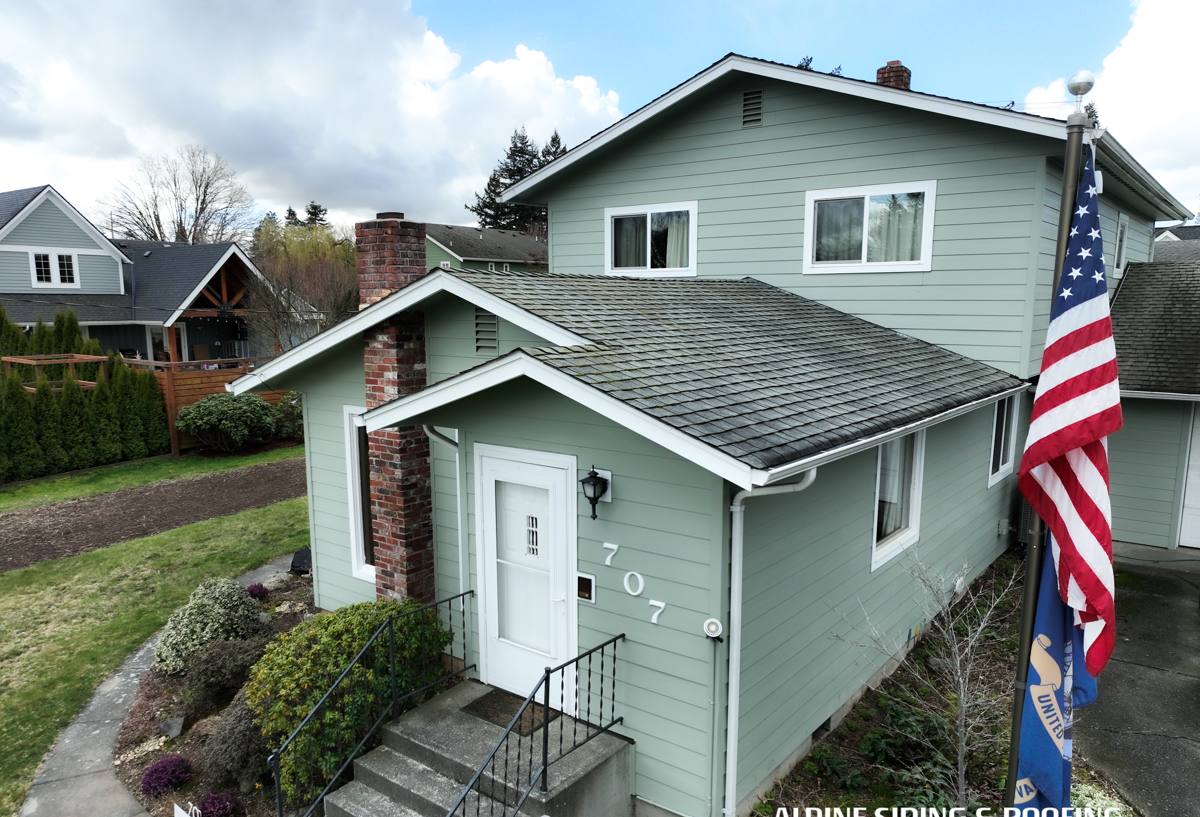
What Salt Air, Driving Rain, and Moss Actually Do to a Wall
Salt Air
Airborne salt is hygroscopic — it pulls moisture out of the air and holds it against whatever surface it lands on. On siding, that means fastener heads, trim joints, and any exposed edge stay damp longer than they would inland. Over years, that slow, repeated dampness is what drives rot in wood-based products and corrosion in lower-grade fasteners and trim hardware.
Driving Rain
Wind off the water doesn't let rain run straight down a wall — it pushes it sideways and up under laps, seams, and trim. A siding system's water management (how it's flashed, how the laps are set, how the weather-resistive barrier behind it is detailed) matters more here than in a sheltered inland lot. A siding product that looks fine on a calm-weather install can fail in exactly this kind of exposure if the details underneath aren't right.
Moss and Algae
Bow's tree cover and marine humidity create long stretches of shaded, damp wall surface — ideal conditions for moss and algae growth, especially on north and east-facing elevations. Porous or textured siding surfaces give moss more to grip onto. A factory-cured, dense-surfaced product resists that growth longer and cleans up easier when it does appear.
Why We Install Only James Hardie Fiber Cement
We don't install vinyl, LP SmartSide, primed wood, cedar, or other fiber cement brands. That's a deliberate standard, not a lack of options. Here's the reasoning specific to a climate like Bow's:
- Non-combustible core — fiber cement doesn't feed a fire the way wood-based products can, which matters as wildfire smoke and dry summer stretches become more common even in the Pacific Northwest.
- Engineered for moisture, not just painted over it — Hardie's HZ product lines are formulated by climate zone specifically to resist moisture-related failure, which is the dominant failure mode we see in coastal Whatcom exposures.
- ColorPlus factory finish — baked-on color resists fading and chalking better than field-applied paint, and it doesn't need repainting on the same cycle wood siding does.
- Dense, low-porosity surface — resists moss and algae anchoring better than rougher or more porous materials, reducing how often a homeowner needs to clean the exterior.
- Long, transferable warranty backed by a large manufacturer — meaningful if the home changes hands, which matters in a market where coastal properties turn over regularly.
None of this means other products are without merit — vinyl is inexpensive, LP SmartSide is workable, cedar has real curb appeal. But for the specific combination of salt exposure, wind-driven rain, and moss pressure that Bow homes deal with, we've found the trade-offs on those products aren't ones we're willing to install and then stand behind.
What a Correct Installation Actually Involves
Fiber cement siding is only as good as the installation underneath it. A rushed or corner-cut install can undermine even the best material — this is where most siding failures we get called to inspect actually originate.
Tear-Off and Substrate Inspection
We remove the existing siding down to the sheathing and inspect for rot, soft spots, or prior water intrusion — common on homes that have been through a few decades of coastal weather. Any damaged sheathing gets replaced before anything new goes up; siding installed over compromised substrate just repeats the same failure a few years later.
Weather-Resistive Barrier and Flashing
A correctly lapped weather-resistive barrier, properly integrated window and door flashing, and correctly flashed penetrations (vents, hose bibs, electrical) are what actually keep driving rain out of the wall assembly. This layer does more of the water-management work than the siding itself, and it's the layer most likely to be shortcut on a fast job.
Fastening and Fastener Selection
In a salt-air environment, fastener corrosion resistance matters. We use fasteners rated for the exposure and follow Hardie's fastening specifications for pattern and depth — over-driven or under-driven fasteners are a common, avoidable cause of premature siding failure.
Proper Clearances
Hardie siding needs specific clearances from grade, roofing, and decking to avoid trapping moisture against the bottom edge. This is a detail that's easy to shortcut and hard to spot after the fact — until it causes damage.
Caulking and Joint Treatment
Manufacturer-specified caulking at joints and trim transitions, done correctly the first time, is part of what keeps wind-driven rain from finding its way behind the siding plane.
Choosing the Right Hardie Product Line for This Exposure
James Hardie makes climate-zone-engineered product lines, and picking the right one for a Bow property is part of getting the installation right — not just a color and profile decision.
| Consideration | Why It Matters in Bow |
|---|---|
| HZ5 formulation | Engineered for wetter, harsher climates — a better baseline match for marine exposure and driving rain than a warmer-zone formulation |
| Lap siding vs. panel | Lap profiles shed water predictably down a wall face; panel systems need extra attention to joint detailing in high-wind, high-rain exposure |
| ColorPlus vs. field paint | ColorPlus holds color and resists moss/algae staining longer without repainting — a real maintenance-time savings on a coastal property |
| Trim material match | Pairing Hardie trim with Hardie siding avoids mismatched expansion/moisture behavior at joints, a common source of caulk failure |
Signs an Older Bow Home Needs Siding Replacement, Not Just Repair
- Soft or spongy spots when you press on the siding, especially near the bottom courses or under windows
- Persistent moss or algae staining that returns within weeks of cleaning
- Visible gaps, warping, or buckling at seams and corners
- Peeling or bubbling paint that keeps recurring in the same spots year after year
- Rising heating bills with no other obvious cause, which can point to a compromised weather barrier behind the siding
- Fastener heads showing rust streaks running down the siding face
If you're seeing more than one of these, it's usually worth a full inspection rather than a patch — patched siding on a wall that's already failing tends to fail again in the same spot.
Cost Factors for a Bow Siding Project
| Factor | How It Affects the Project |
|---|---|
| Home size and wall complexity | More corners, dormers, and trim details mean more labor and material waste |
| Substrate condition | Rot or water damage found during tear-off adds repair scope before new siding goes up |
| Product line and profile | HZ5 formulations and certain lap widths or panel styles vary in material cost |
| Trim and accessory scope | Full trim replacement to match new siding costs more than reusing sound existing trim |
| Access and site conditions | Steep lots, limited driveway access, or dense landscaping near the home affect labor time |
We don't quote a job without walking the property — every Bow home carries a different mix of these factors, and an honest estimate has to account for what's actually there, not a generic square-footage number.
Why a Crew That Already Works Bow Matters
Coastal siding work isn't the same trade skill as siding an inland subdivision home. A crew that's done multiple projects along the Chuckanut corridor already knows how the local wind and rain patterns move across a wall, which elevations tend to hold moisture longest, and where moss pressure is worst on a given lot orientation. That local pattern recognition shows up in small decisions — where to add extra flashing attention, which fastener spacing to tighten up, which trim details need extra sealant — that a crew unfamiliar with the area might not think twice about.
It also means faster, more accurate estimates. We're not guessing at what Whatcom County's coastal exposure does to a wall over time — we've seen it, repaired it, and built our installation standards around avoiding it.
Get a Straight Answer on Your Siding
If your Bow home's siding is showing its age, or you're planning ahead before the next wet season sets in, we're happy to take a look and give you an honest read on what it needs. Use the form below to request a free, no-pressure estimate — no obligation, just a clear assessment of where things stand.