 Chuckanut Exterior
 Why Siding Installation in Bellingham Isn't a Generic Job
Bellingham sits close enough to the water that homes here take on a specific combination of punishment: salt-laden air rolling off Bellingham Bay, wind-driven rain that hits walls sideways instead of falling straight down, and a wet season that stretches long enough to give moss and algae months to establish themselves on anything that stays damp. A siding installation that would hold up fine in a drier inland climate can start showing problems within a few years out here if it wasn't built for these specific conditions.
This isn't about scare tactics. It's about the fact that siding is a system, not just a material choice, and the parts of that system that matter most in Bellingham — the water management layer behind the cladding, the flashing details, the fastener choices, the ventilation gap — are exactly the parts that get skipped or rushed on lower-quality jobs. A house can look identical from the curb with a correct installation or a corner-cut one. The difference shows up five to ten years later, in the form of rot, staining, or siding that's failing from the back side out.
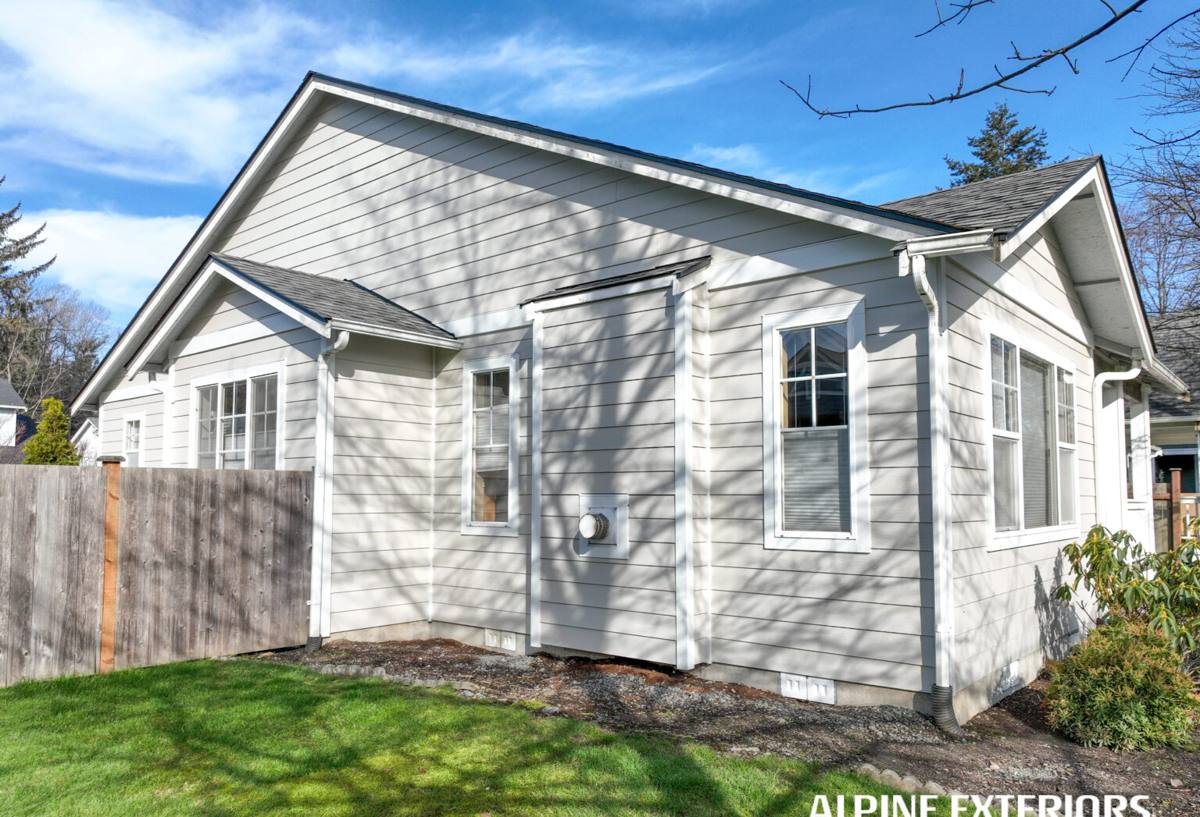
What Bellingham's Climate Actually Does to Siding
Salt Air and Corrosion
Proximity to salt water accelerates corrosion of fasteners, flashing, and any metal trim that isn't rated for a marine-influenced environment. Over time, salt-laden air also degrades lower-quality paint finishes and can contribute to premature fading or chalking on siding that wasn't engineered with a durable factory finish.
Driving Rain
Whatcom County's storms often come with real wind behind them, which pushes rain up and under laps and trim rather than letting it simply run down the face of the wall. This is why lap coverage, caulk joints, and flashing at every penetration (windows, doors, hose bibs, light fixtures) matter more here than in calmer climates. A siding system that relies heavily on caulk as its primary water barrier is a system that will eventually leak in this kind of weather.
Moss and Algae Season
Persistent moisture and filtered daylight under tree cover — common in and around Bellingham — create ideal conditions for moss and algae growth on north-facing and shaded walls. Porous or absorbent siding materials hold moisture longer and give organic growth more to root into. Siding that resists moisture absorption and has a factory-applied finish gives moss and algae far less to grab onto.
What a Correct Siding Installation Involves
Long before the finish siding goes up, the work that actually determines how the wall performs in Bellingham's weather has already happened. A correct installation includes:
- A continuous, properly lapped weather-resistive barrier (house wrap) installed shingle-style so every seam sheds water downward
- Flashing at every window, door, and penetration, integrated with the house wrap in the correct order — not just caulked over afterward
- A drainage gap or rainscreen strategy so any moisture that does get behind the siding has somewhere to go and dry out, instead of sitting against the sheathing
- Correct fastener type, length, and placement for the specific siding product, driven to the manufacturer's spec (not overdriven, not underdriven)
- Proper clearance at grade, decks, and roof lines so siding never sits in standing water or gets buried in soil or mulch
- Factory-finished or field-finished coatings applied and cured according to manufacturer specification
Skip any one of these and the wall may look fine for a while, but you've built in a failure point. This is the part of siding installation that's invisible once the job is done — which is exactly why it's the part most worth asking a contractor about before you hire them.
Why We Install James Hardie and Nothing Else
We standardized on James Hardie fiber cement siding for every home we work on, including here in Bellingham, and we don't install vinyl, LP SmartSide, primed spruce, cedar, or other fiber cement brands. That's a deliberate professional standard, not a sales pitch, and it comes down to how these products actually perform in a coastal, wet-climate environment over decades rather than years.
Hardie fiber cement is non-combustible, dimensionally stable in swings between wet and dry, and doesn't feed moss and algae the way wood-based or wood-fiber products can when they stay damp. James Hardie's HZ5 product line is engineered specifically for climates like ours — freeze-thaw cycles, sustained moisture exposure, and coastal air — and the ColorPlus factory finish is baked on under controlled conditions, which holds color and resists the fading and chalking that field-applied paint struggles with in this kind of weather. It also comes with a genuine, transferable warranty backed by the manufacturer, not just the installer.
None of this means other products are without merit — vinyl is inexpensive and low-maintenance in mild climates, cedar has real aesthetic appeal, and other fiber cement brands have loyal customers. But when we weigh long-term performance against Bellingham's specific mix of salt air, driving rain, and moss pressure, Hardie is what we're willing to put our name behind and warranty.
How Our Bellingham Siding Installation Process Works
1. On-Site Assessment
We walk the exterior, check the current siding and sheathing condition, note drainage patterns, shaded/damp zones prone to moss, and identify any existing moisture damage that needs to be addressed before new siding goes on — new siding over a hidden rot problem just hides the problem longer.
2. Tear-Off and Sheathing Check
Old siding comes off and we inspect the sheathing underneath. Any soft, rotted, or water-damaged sheathing gets replaced before anything else happens. This is a step that's easy to skip and impossible to verify after the fact, which is part of why it matters who's doing the work.
3. Water Management Layer
House wrap goes on correctly lapped, flashing is integrated at every opening and penetration, and we establish the drainage gap that lets the wall dry properly — this is the layer that actually keeps Bellingham's rain out, not the siding itself.
4. Hardie Installation
Panels, planks, or shingles go up per James Hardie's installation specification: correct fastener schedule, correct clearances at grade and roof lines, correct joint treatment. This is also where product choice comes in — HardiePlank lap siding, HardiePanel vertical siding, and HardieShingle each suit different home styles and exposure conditions.
5. Trim, Caulk, and Finish Detail
Corner boards, trim, and caulk joints are finished to shed water rather than trap it, and any field-cut edges are treated per manufacturer spec so the factory finish's protection isn't compromised.
6. Final Walkthrough
We walk the finished job with the homeowner, point out anything worth knowing for long-term care, and make sure everything meets our standard before we call it done.
Comparing Siding Options for a Bellingham Home
| Factor | Vinyl | Cedar / Primed Spruce | James Hardie Fiber Cement |
|---|---|---|---|
| Moisture absorption | Low, but can warp/buckle in heat or impact | High — prone to swelling, rot if finish fails | Very low, engineered for wet climates |
| Moss/algae resistance | Moderate | Low — organic material, feeds growth | High, especially with ColorPlus finish |
| Salt air durability | Moderate, can chalk/fade | Low without diligent recoating | High, factory finish holds up well |
| Fire resistance | Low, melts/deforms under heat | Low, combustible | Non-combustible |
| Maintenance | Low, but limited repair options | High — regular painting/staining required | Low, periodic cleaning and caulk checks |
| Typical lifespan when correctly installed | 20-30 years | 10-20 years without diligent upkeep | 30-50+ years |
These are general performance tendencies, not guarantees — installation quality affects every material in this table. But the underlying material properties are why we've settled on one product for every home we side.
What to Ask Any Contractor Before Hiring Them
- Do you replace damaged sheathing before installing new siding, or install over it?
- What's your flashing detail at windows, doors, and penetrations — walk me through it
- Are you a certified installer for the product you're proposing, and what does that certification actually cover?
- What warranty is backed by the manufacturer versus just your own labor warranty?
- Have you worked in Bellingham or similar coastal Whatcom County conditions before, and can you speak to how you adjust the install for it?
- What's your plan for existing moss, algae, or moisture damage found during tear-off?
A contractor who can answer these in specific, concrete terms — not just "yeah, we handle that" — is one worth trusting with a job that's supposed to last decades.
Ongoing Care After Installation
Correctly installed Hardie siding is genuinely low-maintenance, but "low" isn't "none," especially in this climate. A yearly rinse-down on shaded or north-facing walls helps prevent moss and algae from getting a foothold, and it's worth a periodic look at caulk joints around windows and trim, since caulk is the one component in the system that does wear out and need occasional refreshing over the years. Keeping gutters clear and grade/mulch away from the bottom edge of the siding also goes a long way toward protecting the investment.
Why Local Experience in Bellingham Matters
A crew that already works this specific stretch of Whatcom County knows which walls in a given neighborhood tend to face the worst wind-driven rain, which yards stay shaded and damp long enough to grow moss fast, and how salt air behaves differently a half-mile from the water versus further inland. That's not something you can fully substitute with a generic install checklist — it shapes real decisions on the job, from where extra flashing attention goes to which product line makes sense for a particular exposure.
If you're planning a siding replacement or new installation in Bellingham, we're happy to take a look at your home, talk through what your specific exposure calls for, and give you a straightforward, no-pressure estimate. There's no obligation — just an honest read on what your house needs.