 Chuckanut Exterior
 A new roof in Bellingham has to do more than keep rain out. Between the salt-laden air drifting in off Bellingham Bay, the long wet season that runs from fall through spring, and the moss that takes hold on every north-facing slope and shaded valley in Whatcom County, a roof here is under a different kind of stress than one built on a dry-climate spec sheet. If you're planning a new roof installation for a Bellingham home, the materials, ventilation, and detailing matter more than they would somewhere with a milder, drier climate.
What Bellingham's Climate Actually Does to a Roof
Most roof failures we see in this area aren't dramatic blow-offs from a windstorm — they're slow, cumulative damage from moisture that never fully dries out. Bellingham sits close enough to the water that salt-bearing air reaches roofs year-round, accelerating corrosion on exposed fasteners, flashing, and any metal component that isn't rated for a marine-influenced environment. Combine that with months of low-intensity rain and short winter days with limited sun exposure, and you get roofs that stay damp longer than the material was ever designed to tolerate.
Moss is the most visible symptom of that dampness, but it's not just a cosmetic problem. Moss holds moisture against the roofing surface, works its way under shingle edges and tabs, and over time lifts material enough to let water past the weather layer. On roofs with poor airflow, that trapped moisture also condenses in the attic space, which can lead to sheathing rot that isn't visible from the ground or even from a quick walk of the attic floor.
Why "It Looks Fine From the Street" Isn't Enough
A roof can look intact from curbside while the underlying decking is already softening from years of trapped moisture. This is why a proper new roof installation starts with an honest look at the deck, the ventilation path, and the flashing details — not just a decision about shingle color.
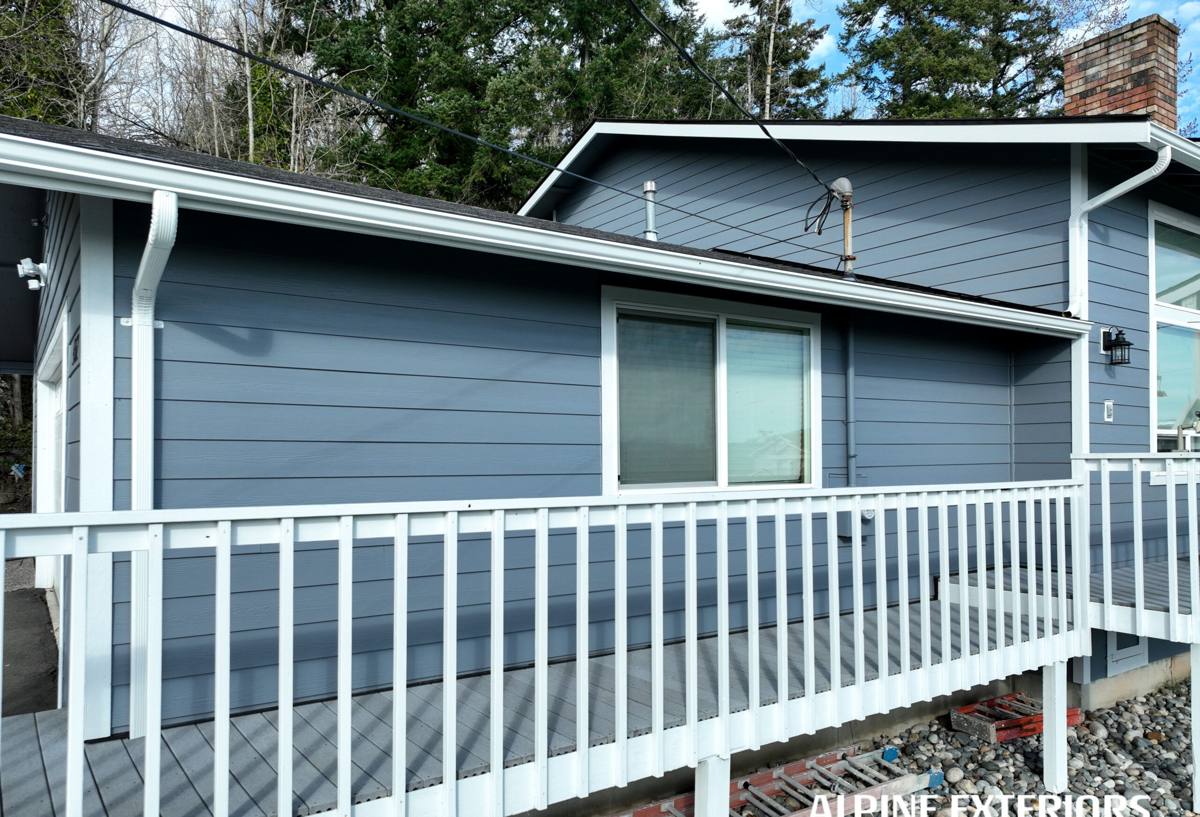
What a Correct New Roof Installation Involves Here
A roof that's actually built for this region isn't just "shingles nailed over the old ones." Here's what we consider non-negotiable on a Bellingham re-roof:
- Full tear-off, not overlay. Roofing over an existing layer traps moisture between layers and hides deck damage. In a climate this wet, that's a problem waiting to surface.
- Deck inspection and repair. Every section of sheathing gets checked once the old roofing is off. Soft or delaminated plywood gets replaced before anything new goes down.
- Ice-and-water shield at vulnerable transitions. Valleys, eaves, and roof-to-wall intersections get a self-adhering waterproof membrane, not just felt paper, because these are the spots where driving rain finds its way in.
- Corrosion-resistant flashing and fasteners. Given the salt exposure this close to the water, we specify metal and fastener grades that hold up to that environment rather than the cheapest option that meets code on paper.
- Balanced intake and exhaust ventilation. Ridge vents alone don't help if there's no matching intake at the eaves. Balanced airflow is what actually dries the attic space between rain events and discourages moss regrowth from the underside.
- Proper underlayment coverage. A synthetic underlayment across the full roof, not just the code-minimum areas, gives you a backup layer while the region's rain works against the primary roofing material.
Choosing Roofing Material for a Bellingham Home
There's no single "best" roofing material for every house — it depends on your roof's pitch, sun and shade exposure, budget, and how long you plan to stay in the home. Here's how the common options actually perform under Whatcom County conditions:
| Material | Moss Resistance | Salt-Air Durability | Typical Lifespan Here | Maintenance Burden |
|---|---|---|---|---|
| Asphalt composition shingle | Moderate — algae-resistant granules help but shaded slopes still need periodic cleaning | Good with corrosion-resistant flashing/fasteners | 20-30 years | Low to moderate |
| Standing seam metal | High — steep, smooth surface sheds moisture and resists moss anchoring | Very good with marine-grade coatings and fasteners | 40-60 years | Low |
| Cedar shake | Low — porous wood surface is a moss magnet in shaded, damp spots | Fair — requires ongoing treatment | 20-30 years with upkeep | High |
| Synthetic composite shingle | Moderate to high depending on product | Good | 30-50 years | Low |
We install a range of these depending on the home, but we're candid about trade-offs. Cedar shake, for example, has real visual appeal, but in a climate with this much sustained moisture and shade, it demands a maintenance schedule most homeowners underestimate — and we'd rather tell you that up front than sell you a roof you'll be babying every year.
Our Process for a Bellingham Re-Roof
1. On-Site Assessment
We walk the roof, check the attic for existing moisture or ventilation problems, and look at how the sun and shade pattern on your specific lot affects moss growth and drying time. A roof tucked under mature trees on a north slope needs different detailing than one that gets full afternoon sun.
2. Material and Scope Recommendation
Based on that assessment, we walk you through material options suited to your roof's pitch, exposure, and your budget — including honest pros and cons, not just the option with the best margin for us.
3. Tear-Off and Deck Repair
Old roofing comes off completely, the deck is inspected board by board, and any damaged sheathing is replaced before anything new is installed.
4. Waterproofing and Ventilation Install
Ice-and-water membrane goes down at valleys and eaves, synthetic underlayment covers the field, and intake/exhaust ventilation is balanced to actually move air through the attic space.
5. Roofing Installation and Flashing Detail
The chosen roofing material is installed to manufacturer spec, with particular attention to flashing at chimneys, skylights, and wall intersections — the places where most leaks originate.
6. Final Walkthrough
We walk the finished roof and attic with you, explain what was done and why, and cover any care or moss-prevention steps specific to your roof's exposure.
Signs Your Bellingham Roof May Need Replacing, Not Just Repair
- Granule loss heavy enough that you're finding shingle granules in gutters or downspouts regularly
- Moss established across multiple sections, not just an isolated patch
- Soft spots when walking the roof, or sagging visible from the ground
- Daylight visible through the roof deck from inside the attic
- Repeated leaks in different spots after previous patch repairs
- Shingles curling, cupping, or losing their seal along the tab edges
- The roof is at or past the manufacturer's rated lifespan for its material
One or two of these on their own might mean a targeted repair is enough. Several together, especially on a roof already past the 20-year mark, usually means repair costs start approaching replacement cost without buying you much extra life.
Cost Factors for a New Roof in This Area
Every roof is priced on its own specifics, but the main variables that move the number are consistent:
| Factor | Why It Matters Here |
|---|---|
| Roof size and pitch | Steeper roofs take longer to work safely and use more material per square foot of coverage |
| Number of valleys, penetrations, and transitions | Each one needs waterproofing detail — more complexity means more labor and material |
| Deck condition | Rot from long-term moisture exposure means replacement sheathing, which isn't known until tear-off |
| Material choice | Ranges widely — asphalt composition shingle is the most budget-friendly, metal and premium composites cost more upfront but often less over the life of the roof |
| Ventilation upgrades needed | Homes with inadequate existing intake/exhaust may need vent additions, which affects scope |
| Access and site conditions | Tree cover, steep lots, and limited staging space (common on wooded Whatcom County properties) can affect labor time |
Why Local Experience with Bellingham Roofs Matters
A roofing crew that only occasionally works this far north can miss things that are obvious to someone who deals with Whatcom County roofs regularly — how much shade a given lot actually gets through the winter, which flashing details fail first under sustained coastal rain, or how aggressively moss comes back on a shaded valley if the ventilation isn't corrected during the re-roof. We work on homes throughout Chuckanut and greater Bellingham, and the patterns repeat: the roofs that last are the ones where tear-off, deck repair, waterproofing, and ventilation were all treated as part of one job, not four separate afterthoughts.
We also know which manufacturer warranties actually hold up to inspection here and which have installation requirements that are easy to get wrong in this climate — a shortcut on nailing pattern or underlayment coverage can void a warranty long before the material itself would have failed.
What to Expect During the Project
A full tear-off and re-roof on an average residential roof typically takes one to a few days depending on size, complexity, and weather windows. Given how much rain this region sees, we plan around forecasts and won't leave a roof exposed if conditions look unstable. We keep the site clean as we go — magnetic sweeps for stray fasteners, tarping of landscaping near the work area, and daily cleanup rather than leaving debris to accumulate over a multi-day job.
If your roof is showing its age, growing moss it didn't used to have, or you're just planning ahead before a small leak becomes a bigger repair, we're happy to take a look. We offer free, no-pressure estimates for Bellingham and greater Chuckanut homeowners — use the form below to get a time on the schedule.