 Chuckanut Exterior
 Asphalt Shingle Roofing for Bellingham's Coastal Climate
Bellingham sits in a tough spot for a roof. You've got salt-laden air rolling in off Bellingham Bay, wind-driven rain that doesn't just fall straight down but gets pushed sideways under loose flashing and lifted shingle tabs, and a long, damp shoulder season every fall and winter where roofs barely get a chance to dry out between storms. Add the shade from mature evergreens common on Whatcom County lots, and you have ideal conditions for moss, algae staining, and slow moisture intrusion that homeowners often don't notice until there's a stain on a ceiling.
Asphalt shingle roofing remains the most practical choice for the vast majority of Bellingham homes — it's cost-effective, proven, and available in styles that suit everything from a modest rambler to a larger craftsman-style home. But "asphalt shingles" installed generically, without attention to this specific climate, is how you end up replacing a roof at year twelve instead of year twenty-five. The material matters less than the details underneath it.
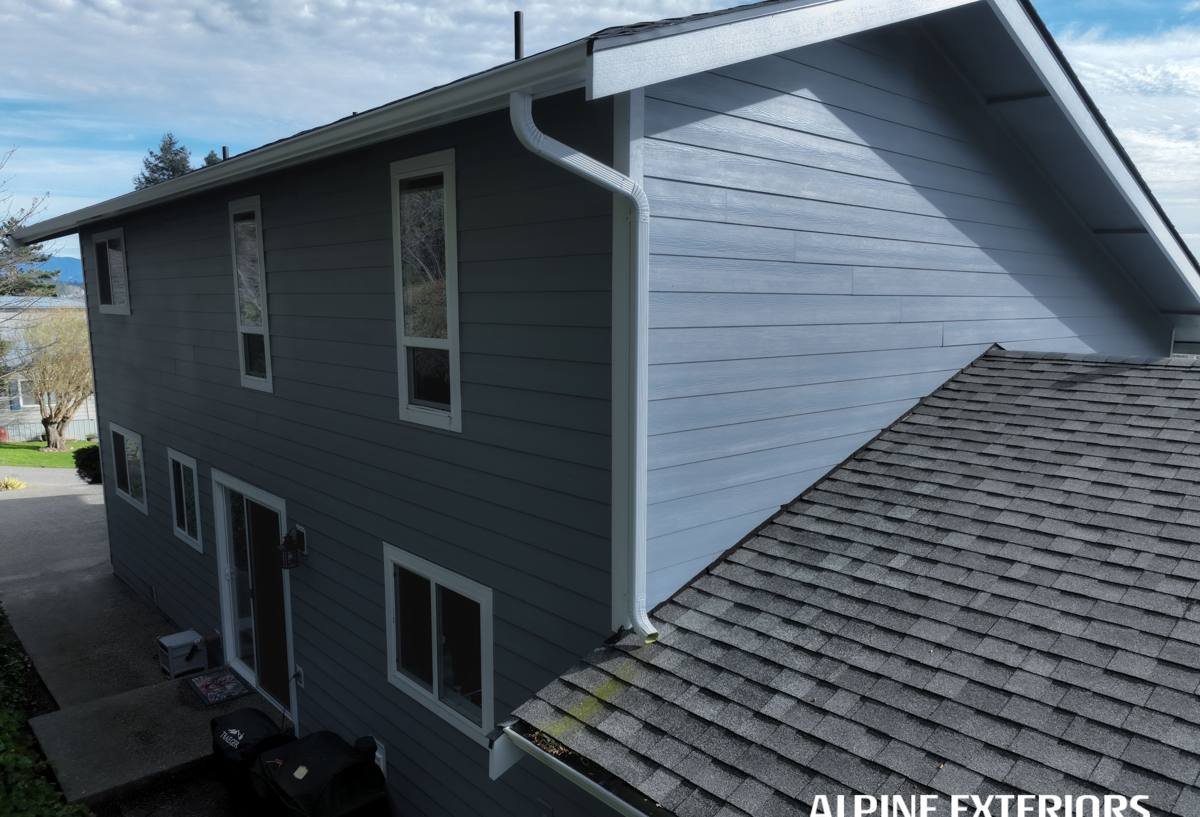
What a Correct Roof Needs to Handle Local Conditions
A shingle roof that's going to hold up here needs to do more than shed water off the field of the roof. It needs a full moisture management system working together — underlayment, flashing, ventilation, and shingle selection — because the failure points in this climate are almost never the shingles themselves. They're the transitions: valleys, chimney flashing, skylight curbs, and eaves where wind-driven rain and ice-damming moisture try to work their way underneath.
Ice and Water Barrier at Vulnerable Points
Bellingham doesn't get extreme winters, but it gets enough freeze-thaw cycles and enough wind-driven rain that self-adhering ice and water membrane belongs at eaves, valleys, and around every roof penetration — not just in colder inland climates. This membrane seals around nail penetrations and stops water that gets pushed backward under a shingle tab from ever reaching the roof deck.
Flashing That Won't Corrode
Because Bellingham is close enough to saltwater to get salt-air exposure, we pay attention to fastener and flashing material. Cheap electroplated fasteners and thin aluminum flashing corrode faster here than they would inland. We favor hot-dip galvanized or stainless fasteners and properly sized step flashing and counter-flashing at chimneys and walls, since a corroded flashing seam is one of the most common sources of a slow, hard-to-diagnose leak.
Ventilation That Actually Balances
A shingle roof is part of a system that includes the attic underneath it. Without balanced intake (soffit) and exhaust (ridge or box vents) ventilation, moist interior air condenses on the underside of the roof deck, which rots sheathing from the inside and shortens shingle life from below — a problem that has nothing to do with the weather outside and everything to do with airflow inside.
Moss, Algae, and Why Bellingham Roofs Need Both Addressed
Two separate organisms cause two separate problems on Bellingham roofs, and it's worth knowing the difference because they're treated differently.
Algae shows up as dark streaking, usually starting near the ridge and running down the roof. It's cosmetic — it doesn't lift shingles or hold water against the deck — but it does make a roof look prematurely worn, and once established it's difficult to fully remove without professional cleaning. Algae-resistant shingles, which have copper- or zinc-infused granules, are worth the modest upcharge on almost any Whatcom County roof with tree cover or northern exposure.
Moss is the bigger structural concern. It roots into the granule surface, holds moisture directly against the shingle mat, and physically lifts shingle edges as it grows, creating entry points for water. On shaded, north-facing slopes — common throughout the Bellingham area under fir and cedar cover — moss can establish within a few years on a roof that isn't getting regular attention. Left unaddressed, it shortens shingle life significantly and can contribute to deck rot underneath.
Signs a Bellingham Roof Needs Attention
- Moss visible on north-facing slopes or in shaded valleys, even in small patches
- Dark streaking running down from the ridge (algae staining)
- Granules collecting in gutters or downspout splash areas
- Shingle tabs that look curled, cupped, or lifted at the edges
- Soft spots or sagging visible from the ground or attic
- Daylight visible through the roof deck from inside the attic
- Water stains on interior ceilings, especially near chimneys, skylights, or valleys
- Rusted or visibly corroded flashing around penetrations
None of these on their own means an immediate full replacement is needed — several are simple maintenance items if caught early. That's the point of catching them early.
Choosing the Right Shingle for a Marine Climate
Not every shingle product is a good match for salt air and heavy moss pressure. Here's how the common tiers compare for a Bellingham home specifically:
| Shingle Type | Typical Lifespan | Best Fit for Bellingham | Trade-Offs |
|---|---|---|---|
| 3-Tab Asphalt | 15–20 years | Budget-conscious re-roofs, secondary structures | Lower wind rating, less algae resistance available, shows moss growth faster |
| Architectural (Laminate) Asphalt | 25–30 years | Most Bellingham homes | Higher upfront cost, but far better wind and moisture performance for the climate |
| Algae-Resistant Architectural | 25–30 years | Shaded lots, north-facing roofs, homes with tree cover | Modest cost premium; resists streaking but does not stop moss growth on its own |
| Premium/Designer Asphalt | 30+ years | Homes prioritizing appearance and longer warranty coverage | Highest material cost; benefits depend on correct installation, not just the product |
We steer most Bellingham homeowners toward architectural shingles with algae-resistant granules as the practical sweet spot — the cost difference over standard 3-tab is modest, and the added wind rating and streak resistance directly address the two things this climate is hardest on.
Our Installation Process
The process matters as much as the product. On every asphalt shingle roof we install in the Bellingham area, we follow the same sequence:
- Full tear-off and deck inspection. We don't install over existing layers. Removing the old roof lets us actually see the sheathing and catch soft or rotted spots before they're covered up again.
- Deck repair as needed. Any damaged sheathing gets replaced before anything else goes down — a new roof over a compromised deck fails early regardless of the shingle quality.
- Ice and water membrane at critical zones. Eaves, valleys, and penetrations get self-adhering membrane, not just felt.
- Synthetic underlayment across the field. A durable, water-resistant layer that also protects the deck during the install itself, which matters when weather windows are short.
- Flashing at every transition. New step flashing, counter-flashing, and drip edge sized and fastened correctly — not reused from the old roof.
- Balanced ventilation check. We confirm intake and exhaust venting are adequate and add or correct it where the existing setup falls short.
- Shingle installation to manufacturer spec. Correct nail count and placement, proper exposure, and starter strips at eaves and rakes — the details that determine wind resistance.
- Site cleanup and magnetic sweep for stray nails, plus a final walk-through with the homeowner.
Timing Around Bellingham Weather
We schedule tear-offs around dry weather windows and never leave a deck exposed overnight without protection. In a climate that can turn wet with little warning, having a crew that plans around actual local forecasts — not a generic install calendar — is part of doing the job right.
Maintenance That Extends Roof Life
A correctly installed asphalt shingle roof in Bellingham still needs periodic attention because of the moss and moisture pressure specific to this area. A simple annual routine goes a long way:
- Clear gutters and downspouts each fall before the heavy rain sets in
- Trim back tree limbs overhanging the roof to reduce shade and debris buildup
- Remove moss gently — soft washing or manual removal, never pressure washing directly on shingles
- Check attic ventilation isn't blocked by insulation at the soffits
- Have flashing and penetrations inspected every few years, especially around chimneys and skylights
- Address small leaks or lifted shingles promptly rather than waiting for a full section to fail
Why Hire a Crew That Already Works in Bellingham
A roofing crew with real, current experience in Whatcom County knows things a generic installer doesn't: which neighborhoods sit exposed to bay winds and need extra attention to starter courses and fastening patterns, which lots have enough shade cover that algae-resistant shingles aren't optional, and how to plan a tear-off around a forecast that can change fast. That local familiarity shows up in fewer callbacks and a roof that's actually built for the conditions it will face, not just built to code minimums.
It also matters for accountability. A contractor working steadily in your area has a reputation to protect with your neighbors, is easy to reach if a question comes up after the job, and isn't guessing at permitting or inspection expectations for the jurisdiction. When you're vetting any roofing contractor here, ask directly about their experience with coastal exposure, moss-prone roofs, and how they handle ventilation — the answers tell you a lot about how the rest of the job will go.
What Affects the Cost of a Bellingham Re-Roof
Every roof is different, but the main cost drivers on an asphalt shingle re-roof in this area are consistent:
| Factor | Why It Matters Here |
|---|---|
| Roof size and pitch | Steeper roofs take longer and require more safety setup, affecting labor cost |
| Number of layers to remove | Older homes with multiple layers add tear-off time and disposal cost |
| Deck condition | Rot from past moss or moisture issues means sheathing replacement before shingles go down |
| Shingle tier selected | Standard vs. algae-resistant vs. premium architectural shingles carry different material costs |
| Flashing and penetration count | Chimneys, skylights, and multiple valleys add labor and material for proper flashing |
| Ventilation upgrades | Adding or correcting intake/exhaust venting is a smaller cost now versus deck damage later |
We give straightforward, itemized pricing rather than a single lump number, so you can see exactly what you're paying for and where — including any deck repair, which we always price separately and only after we've actually seen the condition of the wood.
Get a Straight Answer About Your Roof
If your roof is showing moss, staining, granule loss, or you just want an honest read on how much life it has left, we're happy to take a look. We'll give you a clear, no-pressure estimate and tell you plainly whether you need a full replacement, a repair, or just some maintenance to get more years out of what you have. Use the form below to request a free estimate for your Bellingham home.