 Chuckanut Exterior
 Why Board & Batten Works So Well on Bellingham Homes
Board and batten has become one of the most requested siding profiles in Bellingham, and it's not just a style trend. The strong vertical lines read well against the craftsman, farmhouse, and modern builds common throughout Whatcom County neighborhoods, and the deep shadow lines the battens create give a home real dimension instead of a flat, uniform wall. It also pairs cleanly with board-and-batten accent gables, entry surrounds, and mixed-material exteriors that a lot of homeowners in this area are drawn to when they're redoing a tired exterior.
But the look is only half the story. A board and batten wall has more vertical seams and more fastening points than a standard lap profile, which means the water-management details behind the boards matter more here than they do almost anywhere else. Get those details right and you get a siding system that looks sharp for decades. Get them wrong, and the same style that made the house stand out becomes the reason moisture finds its way in.
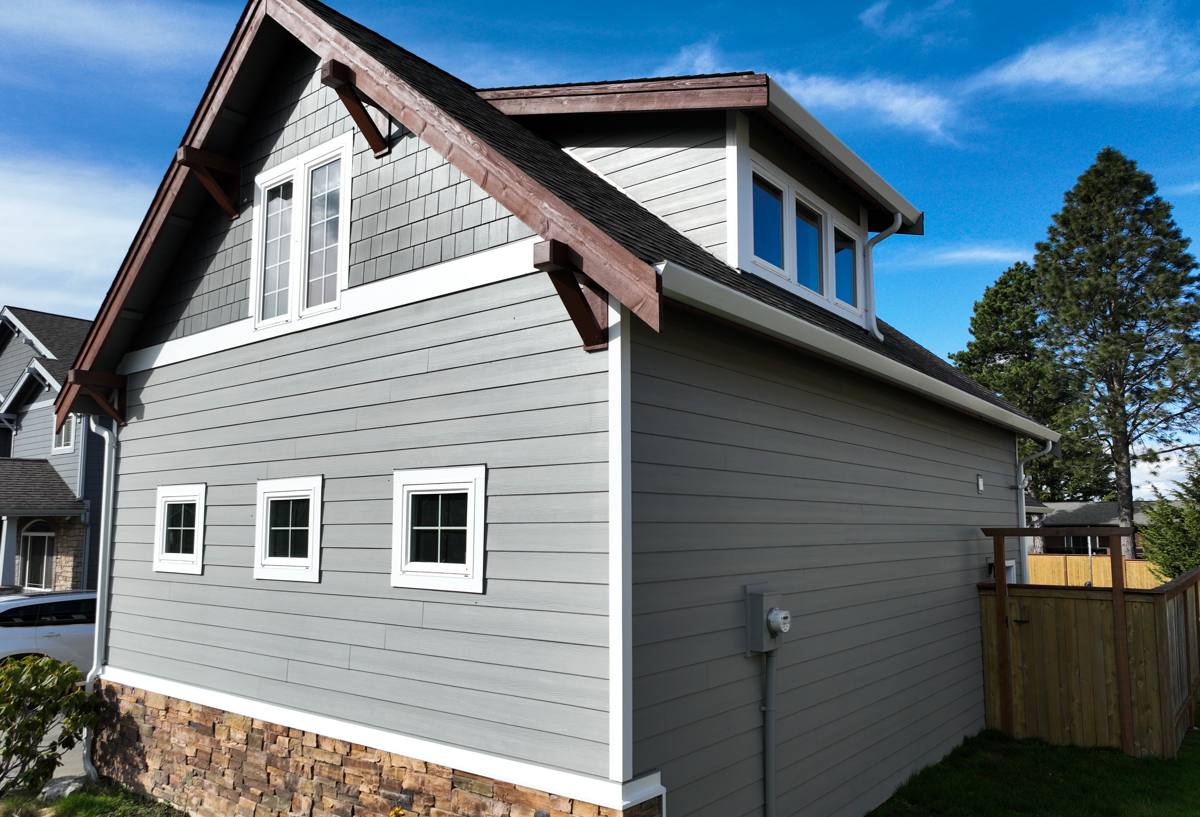
What Bellingham's Climate Actually Does to Vertical Siding
Homes near Bellingham deal with a specific combination of conditions that's harder on siding than people expect. Proximity to Bellingham Bay means salt-laden marine air is a constant, and that air accelerates corrosion on fasteners, hinges, and any metal trim that isn't rated for it. Add in the region's driving, wind-pushed rain — often coming in sideways off Puget Sound rather than straight down — and you have water actively working its way into any gap, lap, or seam that wasn't sealed and flashed correctly.
Then there's moss. Whatcom County's long, mild, damp season gives moss, algae, and lichen months at a time to establish themselves on any siding surface that stays shaded or slow-drying, especially on north-facing walls or under mature tree cover common around Chuckanut and Bellingham properties. Moss holds moisture against the surface far longer than open air would, which is exactly the kind of sustained dampness that breaks down absorbent or poorly sealed siding materials from the back side, often before a homeowner sees any problem from the street.
None of this is unique to board and batten, but the profile's extra seams and horizontal batten faces give moisture and moss more places to sit if the installation wasn't planned around this specific climate.
Where Problems Actually Start
In our experience, failures on vertical siding almost never start in the middle of a flat panel. They start at the transitions: where boards meet trim, where battens cross a window or door head, where the wall meets a deck ledger or roofline, and at the bottom termination near grade. Those are the spots that need the most attention, and they're also the spots that get rushed on a job that's priced or scheduled too tight.
What a Correct Board & Batten Installation Actually Involves
Weather-Resistive Barrier and Drainage Plane
Everything starts underneath the siding. A properly lapped weather-resistive barrier, correctly integrated with window and door flashing, is what keeps any water that gets past the panels from reaching the sheathing. On a marine-climate home, we treat this layer as non-negotiable, not an afterthought.
Rainscreen Gap
A furring strip or drainage-mat rainscreen behind the siding creates an air gap that lets any incidental moisture drain and dry out instead of sitting against the back of the panel. In a region with as much sustained damp weather as Bellingham sees, this gap is one of the single biggest factors in how long vertical siding lasts.
Panel Layout, Fastening, and Batten Spacing
Panel and batten placement needs to follow the manufacturer's fastening schedule — correct nail size, spacing, and penetration depth — not just "what looks even." Batten spacing and reveal width also affect how the wall sheds water, so layout gets planned before the first panel goes up, not adjusted on the fly.
Flashing and Trim Details
Every horizontal batten crossing above a window, every outside corner, and every point where siding meets a roof, deck, or foundation needs proper flashing, not just caulk. Caulk is a finish detail; flashing is the actual water-management system.
Sealants and Touch-Up
Factory-finished panels still need field-caulked joints at cuts, corners, and penetrations, done with a sealant rated for the substrate and for the marine, wide-humidity-swing conditions found here.
Material Options for Board & Batten — and Why We Only Install James Hardie
Board and batten can be built out of several materials, and each one behaves differently once it's living through a Whatcom County winter. We standardized on James Hardie fiber cement because, installed to spec, it holds up to this specific combination of salt air, driving rain, and moss exposure better than the alternatives.
| Material | Moisture & Moss Resistance | Ongoing Maintenance | Our Take |
|---|---|---|---|
| James Hardie fiber cement | Non-combustible, engineered for wet climates, resists moisture-driven damage when installed with proper drainage | Periodic washing and repainting/recaulking over time | What we install — best long-term fit for this climate |
| Cedar | Attractive but absorbent; prone to moss growth, cupping, and rot without diligent upkeep | Frequent refinishing, sealing, and moss treatment | High-maintenance choice in a damp marine climate |
| Vinyl | Won't rot, but seams and fastening are less forgiving of driving rain; can warp or fade | Low, but repairs are visible and color can't be renewed | We don't install it — trade-offs don't fit our standard |
| LP SmartSide / engineered wood | Wood-based core is sensitive to sustained moisture exposure at cut edges and seams | Moderate, with attention needed at joints | We don't install it — installation sensitivity is a real risk here |
Hardie's HZ5 product line is engineered specifically for climates like ours, with a factory-applied ColorPlus finish that resists fading and doesn't need repainting on the same schedule as field-painted wood. It's also non-combustible, which matters to a growing number of homeowners and insurers. That combination of climate-specific engineering, a durable factory finish, and a strong transferable warranty is why we don't offer alternatives — we'd rather install one product correctly than several products with compromises we'd have to explain later.
Our Process for a Bellingham Board & Batten Project
- On-site assessment — we look at existing siding, sheathing condition, sun/shade exposure, and drainage around the foundation before quoting anything.
- Tear-off and substrate check — old siding comes off and we inspect sheathing for hidden moisture damage, which is common on homes that have had years of moss cover.
- Weather barrier and rainscreen installation — the drainage plane goes in first, lapped and flashed at every window and door.
- Hardie panel and batten installation — installed to the manufacturer's fastening schedule, with layout planned for even reveals and clean corners.
- Flashing and trim — all horizontal transitions, penetrations, and terminations get proper flashing before any caulk or paint touches them.
- Final finish and walkthrough — caulking, touch-up, and a walk of the full exterior with the homeowner before we call the job done.
What Board & Batten Siding Costs — and What Actually Drives the Price
Every board and batten job is priced around the home's specific conditions, not a flat rate. The factors below move the number more than anything else.
| Cost Factor | Why It Matters |
|---|---|
| Sheathing/substrate condition | Moisture-damaged sheathing found during tear-off has to be replaced before new siding goes on |
| Rainscreen vs. direct-applied | A drainage gap adds labor and material but is the right call in this climate |
| Batten spacing and reveal width | Tighter spacing or custom reveals mean more battens, more cuts, and more fastening |
| Trim and detail complexity | Multiple gables, dormers, and window trim add flashing and cutting time |
| Home height and access | Multi-story walls or difficult access require more scaffolding/staging time |
| Color and finish | Standard ColorPlus colors vs. custom field-painted finishes affect material and labor cost |
We walk every Bellingham estimate through these factors specifically so homeowners understand what they're paying for, not just a total number.
Living With Board & Batten in a Marine, Moss-Prone Climate
Correctly installed Hardie board and batten needs far less upkeep than wood, but "less" isn't "none." A little seasonal attention keeps it performing the way it's designed to.
- Rinse the exterior once or twice a year to clear salt residue, pollen, and early moss growth before it takes hold
- Trim back tree branches and shrubs that keep any wall shaded and slow to dry
- Check caulked joints at trim and penetrations every year or two and recaulk if they've cracked or pulled away
- Look at horizontal batten faces and window sills for early moss or algae, since these hold moisture longest
- Keep gutters and downspouts clear so roof runoff isn't dumping extra water onto siding below
Why Hiring a Crew That Already Works in Bellingham Matters
A lot of siding problems we get called to inspect trace back to installers who did competent work for a drier climate but didn't account for what Whatcom County actually throws at a wall. Knowing which elevations take the worst wind-driven rain, how long moss season really runs here, and how salt air behaves on fasteners and trim isn't generic siding knowledge — it's local knowledge that shows up in the details of the job. A crew that already works in and around Bellingham has made these calls before and builds them into the plan from the start, rather than learning them the hard way on your house.
Is Board & Batten Right for Your Home?
Board and batten fits most home styles well, but it's worth having an honest conversation before committing if you're seeing any of the following:
- Existing siding with visible moss or algae staining that keeps returning after cleaning
- Soft spots, cupping, or gaps in current wood or engineered-wood siding
- Frequent recaulking or repainting just to keep the exterior looking presentable
- Visible rust streaking from fasteners or trim on the current siding
- A desire for the board and batten look without the upkeep wood or engineered wood require
If you're weighing a full re-side or just want a straight answer on whether board and batten makes sense for your home's exposure, we're happy to take a look. Reach out for a free, no-pressure estimate — the form below gets you started.