 Chuckanut Exterior
 Window Replacement in Silver Beach: Built for Life on Lake Whatcom
Silver Beach is one of the older lakeside neighborhoods on Lake Whatcom, with a housing stock that ranges from modest cottages built close to the shoreline decades ago to newer homes set higher on the slope with a view down over the water. That mix matters for windows specifically, because a lot of the older shoreline homes are still carrying original or first-generation replacement units that were never built or installed for the exposure a lake-facing wall actually takes on. Windows tend to show that wear before siding or roofing does, since a window opening has more seams, more moving hardware, and more places for water to find a way in if the flashing wasn't done right the first time.
We work on siding, roofing, windows, and decks throughout Silver Beach and the rest of the Lake Whatcom shoreline, and on window jobs specifically we treat the installation and flashing detail as at least as important as the window unit itself. A well-reviewed window installed with careless flashing will eventually leak in this climate. A solid, ordinary window installed correctly — with flashing that actually ties into the surrounding wall and siding — will generally outlast it.
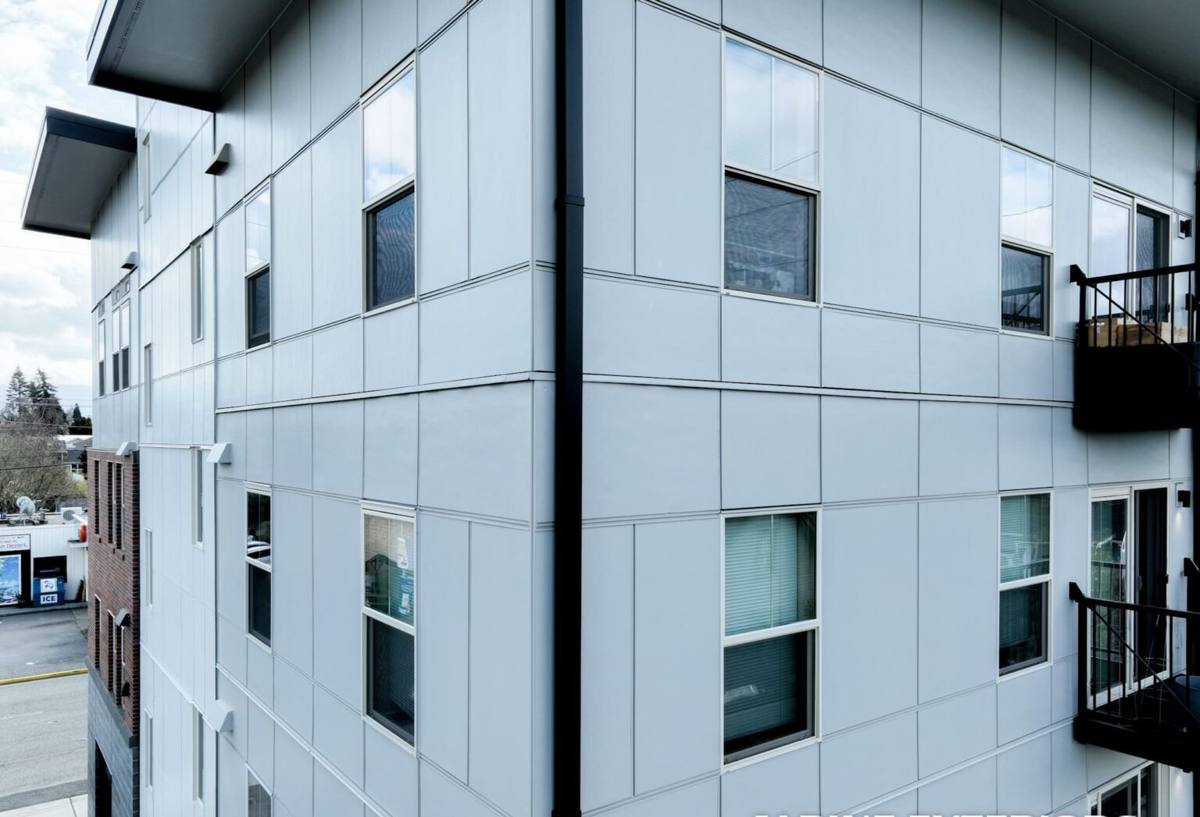
What This Climate Does to Windows in Silver Beach
Wind-Driven Rain Off the Lake
Lake Whatcom generates its own local weather pattern to some degree, and wind moving across open water can drive rain into a lake-facing wall harder than the same storm would hit a sheltered inland lot. That matters for windows because wind-driven rain reaches gaps and seams a calmer climate would never test. The window itself is only half the equation — the flashing has to actually direct that water back out rather than let it collect behind the trim.
Salt-Tinged Marine Air and Hardware Wear
Air moving in off Bellingham Bay and the Strait of Georgia carries a mild salt content that reaches well past the immediate coastline, and combined with the lake's own evaporative humidity, it keeps Silver Beach homes sitting in air that's damp and mineral-laden more of the year than an inland property experiences. Over time that works on window hardware, fasteners, and any lower-grade frame components, showing up as pitted or stiff hardware, corroded screws, and failed seals well before a comparable window would show the same wear somewhere drier.
A Long Moss, Mildew, and Condensation Season
Lake humidity, regular Whatcom County rainfall, and the tree cover common on many Silver Beach lots mean surfaces here rarely get a long, uninterrupted dry stretch. Window sills, trim, and the wood framing around older units are common places moss and mildew take hold, especially on shaded or north-facing walls. The gap between heated interiors and cold, wet lake air also puts real condensation pressure on glass and frames — fogging, moisture trapped between panes, or water pooling on interior sills is usually a sign a seal has already failed, not just a cosmetic nuisance.
Signs a Silver Beach Home Needs Window Attention
- Fogging or visible moisture trapped between the panes of a double-pane window
- Noticeable drafts or cold spots near frames even with the window fully closed and locked
- Sills or trim that feel soft, look discolored, or show visible rot
- Windows that stick, won't stay open, or are harder to lock than they used to be
- Visible daylight or gaps where the frame meets the siding
- Corroded, pitted, or stiff hardware, especially on lake-facing elevations
- Interior water staining or peeling paint below or beside a window after heavy rain
Repair or Replace: How We Make the Call
Not every window on a Silver Beach property needs to come out. A window with a failed seal but a sound frame and functioning hardware is often a reasonable repair or reglaze candidate. A window with rotted framing, a warped sash, or hardware that's been failing for years usually isn't — at that point the labor spent patching it repeatedly ends up costing more than a proper replacement would have from the start.
| Condition | Repair Usually Makes Sense | Replacement Usually Makes Sense |
|---|---|---|
| Fogged glass, sound frame | Yes — reglaze or seal replacement | Only if the frame is also compromised |
| Stiff or corroded hardware | Yes — hardware replacement | Not on its own |
| Soft or rotted wood framing | Rarely a lasting fix | Yes |
| Persistent drafts despite sealing | Sometimes, if flashing is the actual cause | Yes, if the unit itself is the source |
| Original single-pane, no storm window | Possible short-term patch | Yes, for real comfort and efficiency gains |
On older shoreline cottages we're often looking at original wood-frame windows that have taken decades of lake humidity directly. On newer builds up the slope, the more common issue is an early double-pane unit with a failed seal rather than structural rot. The right call depends on the specific window, not the age of the house as a whole — which is why we walk each opening individually rather than recommending a blanket approach.
What a Correct Window Replacement Involves
Assessment and Measurement
We start by checking each window's frame condition, seal integrity, and hardware function, and we field-measure every opening rather than assuming it matches a catalog size — older Silver Beach homes in particular can be out of square after decades of settling near the shoreline. This is also where we note how the current flashing ties into the siding, since that tells us whether past water intrusion is likely and where.
Removal and Opening Prep
Pulling the old unit is where hidden problems usually surface — soft framing, corroded fasteners, or flashing that was never lapped correctly to begin with. We address what's found before the new window goes in rather than covering it over, since a new window installed over a compromised opening will only mask the problem for a while.
Flashing and Weatherproofing
This is the step that matters most given Silver Beach's exposure. Correct flashing laps properly with the weather-resistive barrier and siding around it, directs water out and away from the rough opening instead of trapping it behind the trim, and seals every seam with materials rated for sustained moisture. On a lake-facing wall taking direct wind-driven rain, that's standard practice on every window we install, not an upgrade.
Trim and Finish
The finish work gets matched to the surrounding siding and architecture so the result looks intentional rather than patched in, and on shaded or moss-prone walls we pay particular attention to how trim sheds water rather than holding it against the surface.
Choosing Frame Materials for a Lakeside Climate
Frame material affects how much upkeep a window needs once it's exposed to sustained lake humidity and marine air. We install vinyl and fiberglass window systems suited to the Pacific Northwest's wet, mild conditions and walk homeowners through the honest trade-offs rather than defaulting to one option for every job.
| Frame Material | Moisture Behavior | Upkeep Near the Lake | Typical Fit |
|---|---|---|---|
| Vinyl | Resists rot; performs well in sustained damp conditions | Low; no refinishing needed | Most standard replacements where budget matters |
| Fiberglass | Dimensionally stable through temperature swings; resists rot | Low; can be painted if color flexibility matters later | Larger openings or lake-facing walls with more exposure |
| Wood, uncladded | Absorbs moisture readily without diligent finish upkeep | High; needs regular refinishing, especially facing the lake | Homes prioritizing a specific interior wood appearance |
| Aluminum-clad wood | Exterior resists weather; interior keeps a wood appearance | Moderate; exterior cladding needs correct installation to stay sealed | Homeowners wanting wood interior with lower-maintenance exterior |
Corrosion-resistant hardware matters more here than it would a few miles inland, since salt-tinged marine air and lake humidity work on lower-grade hardware faster. A double or triple-pane glazing package with a low-E coating also helps on both ends of a Whatcom County year — cutting heat loss through the damp winter months while reducing the condensation that shows up on cold glass facing the lake.
Why Window Needs Vary by Elevation in Silver Beach
Two homes close together in Silver Beach can have genuinely different window needs depending on where they sit. A cottage close to the shoreline with a full lake-facing wall takes direct wind-driven rain and more sustained humidity than a home set back and shaded by trees on the slope above. That difference shows up in how much flashing lap a window needs, how corrosion-resistant the hardware should be, and how often trim and sills need to be checked for moisture. A generic, one-size approach applied to every window on a Silver Beach street misses that variation — the lake-facing side of a house and the uphill side of the same house are often dealing with two different moisture loads entirely.
Why a Local Silver Beach Crew Matters
A crew that regularly works this shoreline already understands how exposure changes wall by wall and adjusts flashing, hardware, and frame recommendations accordingly instead of applying one generic spec across the whole house. That local judgment is what separates a window installation that looks fine for a season from one that's still performing decades later.
What to Ask Before Hiring for Window Work in Silver Beach
- Ask specifically how they handle flashing integration with the existing siding, not just which window brand they sell
- Confirm current Washington contractor licensing and active liability insurance
- Ask how they'd approach a lake-facing window differently from one on a shaded, uphill wall
- Get a written scope that separates the product warranty from the installation warranty
- Ask for a repair-or-replace recommendation on each affected window individually, not a blanket answer
Our Process
We start with an on-site look at the existing windows — checking frame condition, seal integrity, hardware function, and how the current flashing ties into the siding around each opening, paying attention to how exposure differs across the house. From there we give a straightforward read on which windows are reasonable repair candidates and which make more sense to replace, along with a written scope before any work begins. Flashing and drainage detailing are standard practice on every job we do here, not an optional upgrade.
If you're dealing with drafty, foggy, or stubborn windows on a Silver Beach property — or you're just not sure whether repair or replacement is the right call — we're happy to take a look and give you an honest, no-pressure read. Reach out below for a free estimate.