 Chuckanut Exterior
 Why Bellingham Homes Need Siding Built for This Specific Coastline
Bellingham sits in a tough spot for exterior materials. You've got Bellingham Bay pushing salt-laden air inland, a wet season that stretches from fall through spring with driving, wind-blown rain, and a shade-and-moisture combination on tree-lined lots that keeps north-facing walls damp for weeks at a time. Add in the long moss season that Whatcom County is known for, and you have a climate that actively works against cheap or poorly-installed siding year-round, not just during a few storm events.
This isn't a generic Pacific Northwest siding page. It's specifically about what James Hardie fiber cement siding needs to do — and what installation has to get right — on a Bellingham home dealing with salt exposure, sustained rain, and moss pressure at the same time.
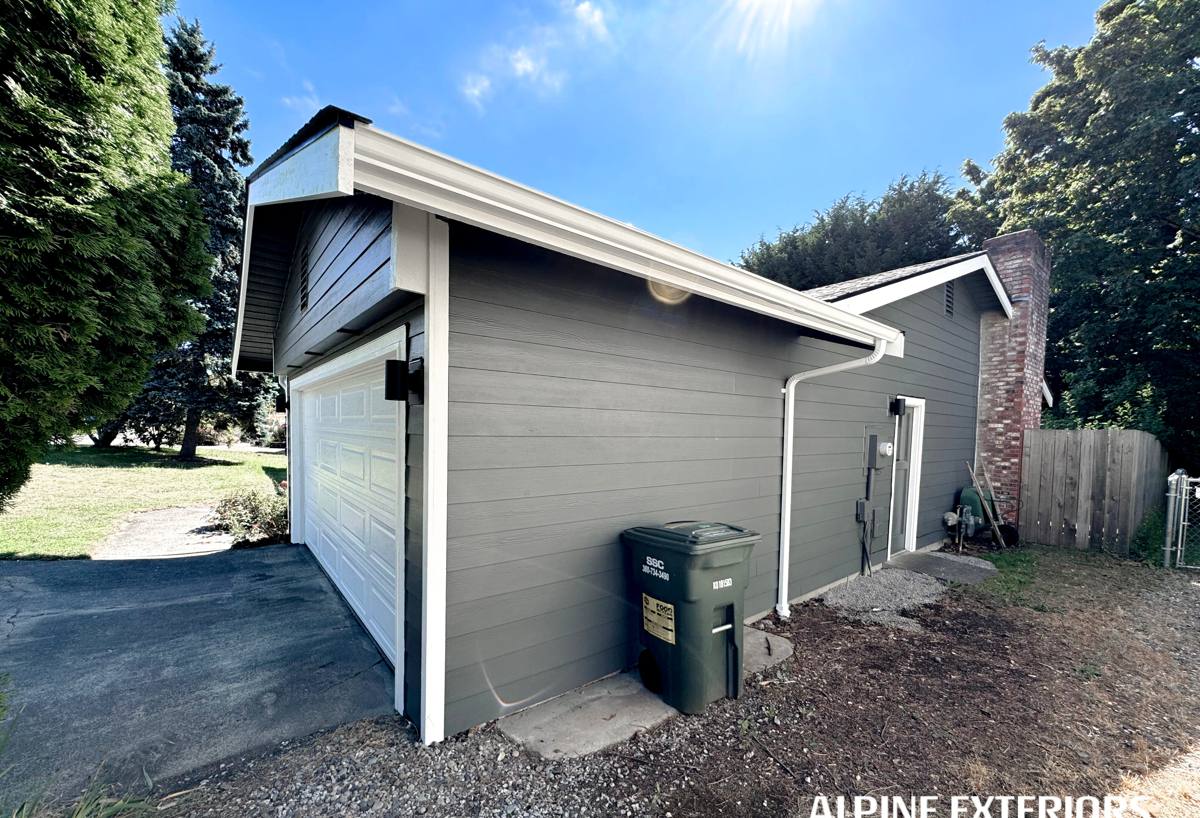
What Salt Air, Rain, and Moss Actually Do to Siding
Salt Air
Homes closer to the bay and shoreline take on airborne salt that settles on exterior surfaces. Over years, that salt film accelerates the breakdown of paint finishes, corrodes exposed fasteners, and creates a rougher surface texture that holds moisture and organic growth longer than a clean, sealed one. Materials that rely on a surface-applied paint job — rather than a factory-baked finish — tend to chalk and fade faster in this kind of exposure.
Driving Rain
Whatcom County rain rarely falls straight down. Wind off the bay and through the valleys pushes it sideways into wall assemblies, which means lap joints, butt seams, and penetrations around windows and trim take on water pressure that a calm-climate installation detail was never designed for. Siding that swells, wicks moisture, or has weak seam protection will show it first at these joints.
Moss and Sustained Dampness
Shaded lots, tree cover, and long stretches of overcast, damp weather give moss and algae exactly what they need to colonize exterior walls — especially on north and east elevations that get little direct sun. Moss holds moisture against the siding surface, which is a problem for any substrate that isn't dimensionally stable or that softens when saturated.
Why We Install Only James Hardie — Not Vinyl, LP SmartSide, or Wood
We made a decision as a company to install one siding system: James Hardie fiber cement. That's not a marketing angle — it's a response to what we see happen to other materials on homes exactly like the ones in Bellingham.
- Vinyl siding expands and contracts significantly with temperature swings, and its seams and J-channels give wind-driven rain more opportunities to find a way behind the cladding. It also can't be painted a dark, richer color without risk of warping in direct sun exposure.
- LP SmartSide and other engineered wood products are wood-strand based. Wood-strand products are more vulnerable to swelling and edge deterioration if water gets past a seam or a fastener point, which is a real risk given how much wind-driven rain this area sees.
- Cedar and primed spruce are appealing for their natural look, but they require an ongoing maintenance commitment — refinishing, sealing, and moss/mildew treatment — that most homeowners underestimate until they're a few years in.
James Hardie fiber cement is non-combustible, dimensionally stable in wet-dry cycling, and comes with a factory-applied ColorPlus finish that's baked on rather than field-painted — which matters enormously in a salt-air, high-moisture environment where surface finish is the first line of defense.
The Right James Hardie System for This Area
Not every Hardie product line is engineered the same way for every climate. Hardie builds its HZ5 formulation specifically for regions with the freeze-thaw and moisture conditions found in the Pacific Northwest, and that's the line we spec for Bellingham homes. It's engineered to resist moisture intrusion and hold up under the wet-cold cycling this region gets each winter.
| Product | Best Use on a Bellingham Home | What It Solves For |
|---|---|---|
| HardiePlank Lap Siding | Primary wall cladding, most common choice | Wind-driven rain shedding, long-term color retention against salt air |
| HardieShingle | Accent gables, dormers | Traditional PNW look without the maintenance burden of real cedar shingle |
| HardieTrim | Corners, window and door surrounds | Consistent, non-rotting trim at the joints most exposed to driving rain |
| HardiePanel | Modern vertical siding sections | Clean lines on contemporary builds, same moisture-resistant core |
What a Correct Installation Looks Like Here
Fiber cement siding is only as good as the installation behind it. On homes taking on salt air and heavy sideways rain, a handful of details separate a siding job that lasts decades from one that fails at the seams within a few years.
Water Management Behind the Siding
Correct installation starts with a properly lapped weather-resistive barrier and rainscreen or drainage gap where conditions call for it, so any moisture that does get past the cladding has somewhere to drain and dry rather than sitting against the sheathing.
Fastening and Fastener Choice
Salt air corrodes the wrong fastener over time. We use fasteners rated for the exposure and follow Hardie's fastening pattern and clearance specs exactly — under- or over-driven nails are one of the most common causes of early siding failure, and they're entirely avoidable.
Joint and Seam Treatment
Butt joints, corners, and penetrations (hose bibs, vents, light fixtures) are where wind-driven rain finds weaknesses. Proper flashing, correct caulking at the right joints (and no caulk where it shouldn't be, since some joints are meant to be a rain-screen gap, not sealed), and correctly lapped trim keep water moving out and away from the wall.
Clearance from Grade and Roof Lines
Hardie specifies minimum clearances from the ground, roofline, and decks/patios. On shaded, damp Bellingham lots, skipping these clearances is exactly how you end up with moss and rot starting at the bottom courses within a few seasons.
Color, Finish, and Fighting Moss Long-Term
ColorPlus factory finish holds color and resists fading better than field-applied paint, which matters in salt air where surface finishes take a beating. It also gives you a smoother, more consistent surface than site-painted siding — and a smoother surface is inherently harder for moss and algae spores to get a foothold on compared to a rougher, more porous material.
That said, no exterior surface in a shaded, damp Whatcom County yard is completely moss-proof. Trimming back vegetation for sun and airflow, keeping gutters clear so water isn't sheeting down the wall, and an occasional gentle wash go a long way toward keeping Hardie siding looking new for its full service life.
Our Process for Bellingham Homeowners
- On-site assessment — we walk the exterior, check current siding condition, identify moisture-prone elevations (usually north/east-facing or heavily shaded walls), and look at drainage, grading, and existing trim condition.
- Product and color selection — we walk through HardiePlank, HardieShingle, and trim options, and help you pick a ColorPlus finish that suits the home and holds up to this exposure.
- Detailed proposal — a written scope covering water management details, fastening approach, and trim/flashing plan specific to your home's exposure, not a generic template.
- Installation to Hardie spec — including the HZ5 product line, correct clearances, and manufacturer-specified fastening and flashing.
- Final walkthrough — we review the finished work with you and go over basic long-term care.
What to Check For — Whoever You Hire
Whether or not you choose us, these are the things worth confirming before any siding crew starts work on a Bellingham home:
- Are they installing to Hardie's published fastening and clearance specifications, not just "close enough"?
- Do they know which HZ product line is engineered for this climate zone, and will they say so specifically?
- Do they have a clear plan for water drainage behind the siding, not just a caulk-everything approach?
- Will trim, flashing, and joint details be addressed as part of the bid, or treated as an afterthought?
- Are they familiar with this specific area's exposure — salt air, driving rain direction, and shaded/moss-prone lots — or applying a one-size-fits-all approach?
Why Local Experience on This Exact Coastline Matters
A siding crew that mostly works drier, inland climates will make different (and sometimes wrong) assumptions about flashing, clearances, and drainage than one that works Bellingham and the surrounding Whatcom County coastline regularly. We see the same failure patterns repeat on this stretch of coast — moss starting at low clearance points, seam failures on the walls that take the worst wind-driven rain, corroded fasteners near the water — and we build our installation approach around avoiding them from the start, rather than fixing them five years later.
If you're planning a siding project in Bellingham or elsewhere around Chuckanut, we're happy to take a look at your home and walk you through what a correctly installed James Hardie system would involve — no pressure, no obligation. Use the form below to request a free estimate.