 Chuckanut Exterior
 Why Decks in Larrabee Take More Punishment Than Most
Larrabee sits close to the water along Chuckanut Drive, and that location cuts both ways. The views are part of why people build outdoor living space here in the first place, but the same exposure that makes a deck worth having is what wears one out faster than it would a few miles inland. Salt-laden air off the bay works on any exposed metal year-round, not just during storms. Driving rain off the Salish Sea doesn't fall straight down here — wind pushes it sideways into board gaps, railing posts, and the ledger connection where the deck meets the house. And because so many Larrabee lots sit under mature fir and cedar canopy, decks stay shaded and damp long after a storm has passed anywhere more open.
That combination — salt, wind-driven rain, and shade — adds up to a moss season that runs longer here than it does in drier parts of Whatcom County. A deck built without that in mind will look fine for a year or two and then start showing problems: green film on the boards, soft spots where water sits, and hardware that's rusting from the inside out. A deck built for the actual conditions handles all of that without drama.
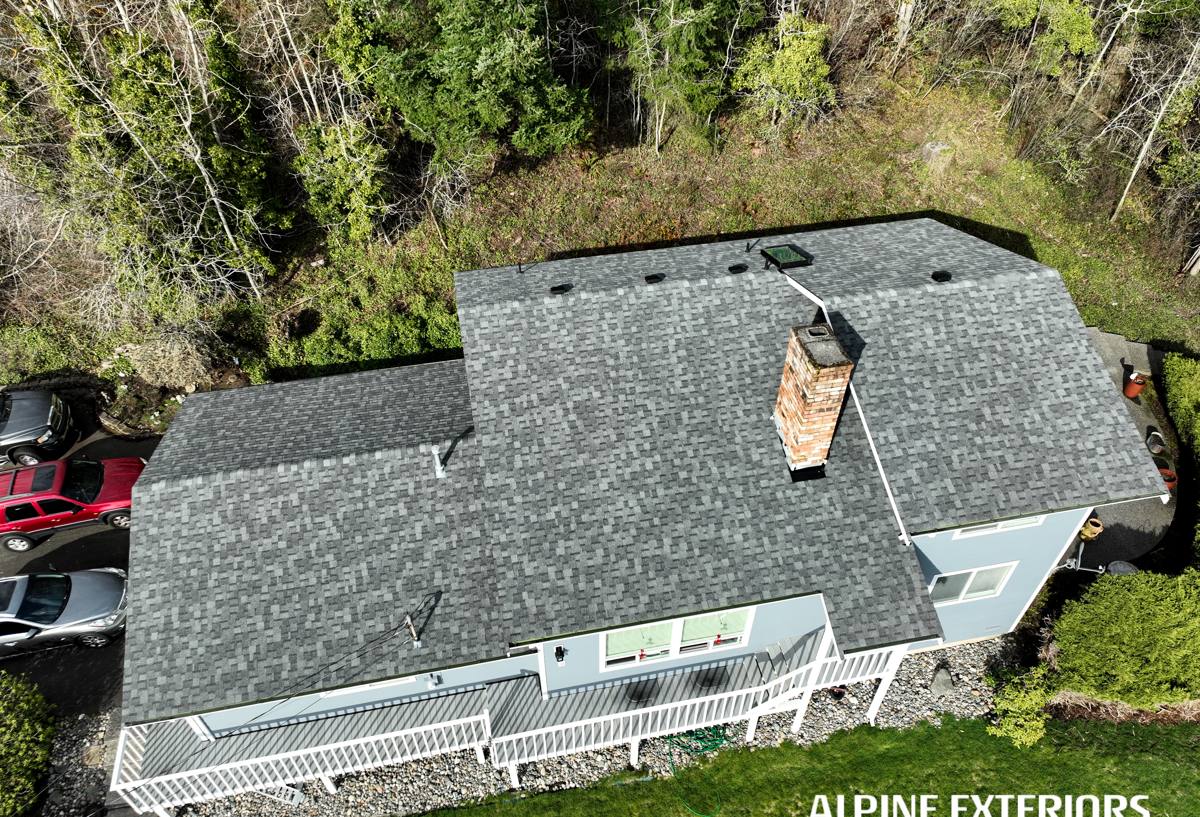
What a Composite Deck Built for This Location Actually Needs
Composite decking is a good fit for Larrabee precisely because it doesn't rot, splinter, or need yearly staining — but "composite" isn't a single product, and installing it correctly here takes more than following the generic instructions in the box. The details that matter are mostly hidden once the deck is finished.
Substructure and Drainage
Every deck needs positive slope away from the house so water doesn't pool against the ledger. In a spot that gets as much wind-driven rain as Larrabee, we also pay close attention to joist spacing — tighter than the bare manufacturer minimum holds boards flatter over time and reduces the flex that eventually opens gaps at fastener points. Where a deck sits low to the ground or over a shaded, damp footprint, we look at drainage options underneath the boards rather than just relying on gravity and hoping the ground dries out between rains, which in this climate it often doesn't.
Fasteners, Flashing, and Hardware
This is where salt air does the most damage, and it's the part homeowners never see once the deck is done. Standard hot-dip galvanized hardware can pit and corrode faster than expected within a few hundred yards of salt water. We spec stainless steel or coastal-rated coated fasteners and connectors for framing hardware, and we flash the ledger board properly where the deck ties into the house wall — that connection is the single most common source of hidden rot on any deck, composite decking included, because the boards on top can look perfect while the framing underneath is failing.
Composite vs. Wood vs. PVC: What Actually Holds Up Here
There's no single "best" decking material for every house — it depends on budget, how much upkeep you want to do, and how close to the water your lot sits. Here's an honest comparison based on how each material actually behaves in a marine, high-moss climate like Larrabee's:
| Material | Salt air & driving rain | Moss and algae resistance | Upkeep |
|---|---|---|---|
| Pressure-treated wood | Needs sealing regularly; fasteners and framing connectors are the weak point | Absorbs moisture, so moss and algae take hold faster on shaded boards | Annual cleaning and re-sealing to avoid graying, splitting, and rot |
| Wood-composite decking | Handles moisture well; capped boards resist staining from salt residue | Textured surfaces can hold moisture in deep shade if not cleaned periodically | Occasional wash-down; no staining or sealing |
| PVC / cellular composite | Fully synthetic, unaffected by salt exposure or moisture absorption | Smoother surface sheds moss and algae more easily than wood-fiber composites | Lowest upkeep of the three; usually just periodic cleaning |
We don't push one product line on every homeowner. What we do is steer people away from decking that will fight this climate for the next fifteen years, and toward a board and cap system that's actually rated for coastal moisture exposure. That's a maintenance and warranty conversation, not a sales pitch — cheaper composite boards without a full cap can absorb water at cut edges and fastener holes, which matters a lot more here than it would in a dry inland climate.
What a Correct Installation Involves
Site Prep and Framing
Before any decking goes down, we check the existing structure if it's a rebuild, or set framing to spec if it's new. That means confirming footings are sized for the soil and slope, joists are crowned and spaced correctly, and the ledger connection is flashed and sealed — not just bolted to the rim joist and covered up. On sloped Chuckanut-area lots, getting the substructure level and properly supported often takes more work than the decking install itself.
Board Installation and Airflow
We install with hidden fastener systems where the product allows it, which keeps the fastener heads out of standing water and off the walking surface entirely. Expansion gaps get set to the manufacturer's spec for our temperature swings, and we make sure skirting and under-deck areas stay vented rather than sealed up tight — a closed-off underside traps the moisture this climate already has plenty of, and that trapped moisture is what accelerates hardware corrosion even when the boards on top are doing their job fine.
Living With Composite Decking Through a Long Moss Season
Composite decking cuts maintenance dramatically compared to wood, but "low maintenance" doesn't mean "no maintenance" in a climate like this one. A little seasonal attention keeps a composite deck looking and draining the way it should for the long haul:
- Sweep off fir needles, leaves, and organic debris regularly — trapped debris holds moisture against the boards and is the number one cause of moss getting a foothold
- Clean with a soft-bristle brush and a manufacturer-approved deck cleaner rather than a high-pressure washer up close, which can strip the cap layer and void a warranty
- Keep gutters and downspouts clear so roof runoff isn't sheeting directly onto the deck surface during heavy rain
- Trim back overhanging branches where practical to let in more sun and airflow, especially on shaded, tree-covered lots
- Check railing posts and stair connections once a year for movement — hardware is the first thing to show wear in salt air, well before the boards do
- Rinse off salt residue after storms with onshore wind, the same way you'd rinse outdoor furniture near the water
What Affects the Cost of a Larrabee Composite Deck
Every deck is priced around the specifics of the house and lot, but a few factors move the number more than homeowners usually expect:
| Factor | Why it matters here |
|---|---|
| Board tier (composite vs. full-cap PVC) | Fully capped, coastal-rated boards cost more up front but hold up better against salt exposure and need far less attention |
| Substructure condition | A tear-off on an older deck often reveals ledger rot or corroded hardware that needs to be addressed before new decking goes down |
| Slope and access | Many Larrabee lots slope toward the water, which changes footing depth, support height, and how equipment and materials get to the build site |
| Railing and guard requirements | Height above grade determines code-required guard rails, which add material and labor beyond the decking itself |
| Drainage under the deck | Low, shaded footprints sometimes need under-deck drainage systems to keep the space usable and the framing dry |
Our Process, Start to Finish
We start with an on-site look at the actual lot — sun exposure, drainage patterns, wind direction, and the condition of anything already there. If it's a rebuild, we check the substructure before quoting anything, because hidden rot or corroded hardware changes the scope and we'd rather tell you that up front than discover it mid-project. From there we walk through board and rail options honestly, including the tradeoffs between price, appearance, and how much upkeep you're willing to do. Once you approve a plan, we handle Whatcom County permitting where it's required, build to the framing standards described above, and finish with a walkthrough so you know what maintenance the specific product you chose actually needs.
Why It Matters to Hire a Crew That Already Works This Area
A lot of deck problems in Larrabee trace back to work that was done by the book for a dry climate rather than for this one — standard fasteners, minimum-spec framing, no thought given to airflow underneath. None of that shows up on day one. It shows up in year three or four, as rust streaks, soft ledger boards, or a deck that's greener than it should be by October. A crew that already builds and repairs decks in this specific stretch of Whatcom County has already seen what standard specs miss here, and builds around it from the start rather than learning it on your project.
If you're planning a new deck or replacing one that's showing its age, we're happy to come take a look and give you a straightforward, no-pressure estimate — just fill out the form below.