 Chuckanut Exterior
 Building New in Larrabee? Windows Are Not the Place to Cut Corners
If you're framing a new home near Larrabee, along the Chuckanut corridor in Whatcom County, your window package is doing more structural and moisture-control work than most homeowners realize. New-construction windows aren't just glass in a hole in the wall — they're a full assembly of window unit, flashing, water-resistive barrier (WRB) integration, and sealant that either works together as a system or fails together as a system. In a stretch of coastline known for salt-laden air, driving rain off the water, and a moss season that can run most of the year, a window package installed correctly the first time saves you years of trim rot, fogged glass, and callback headaches.
New construction is actually the easier scenario for getting this right — compared to a retrofit, we're not fighting existing siding or old flashing. But "easier" only pays off if the crew treats the opening, the flashing sequence, and the window selection as one job, not three separate trades handing off paperwork.
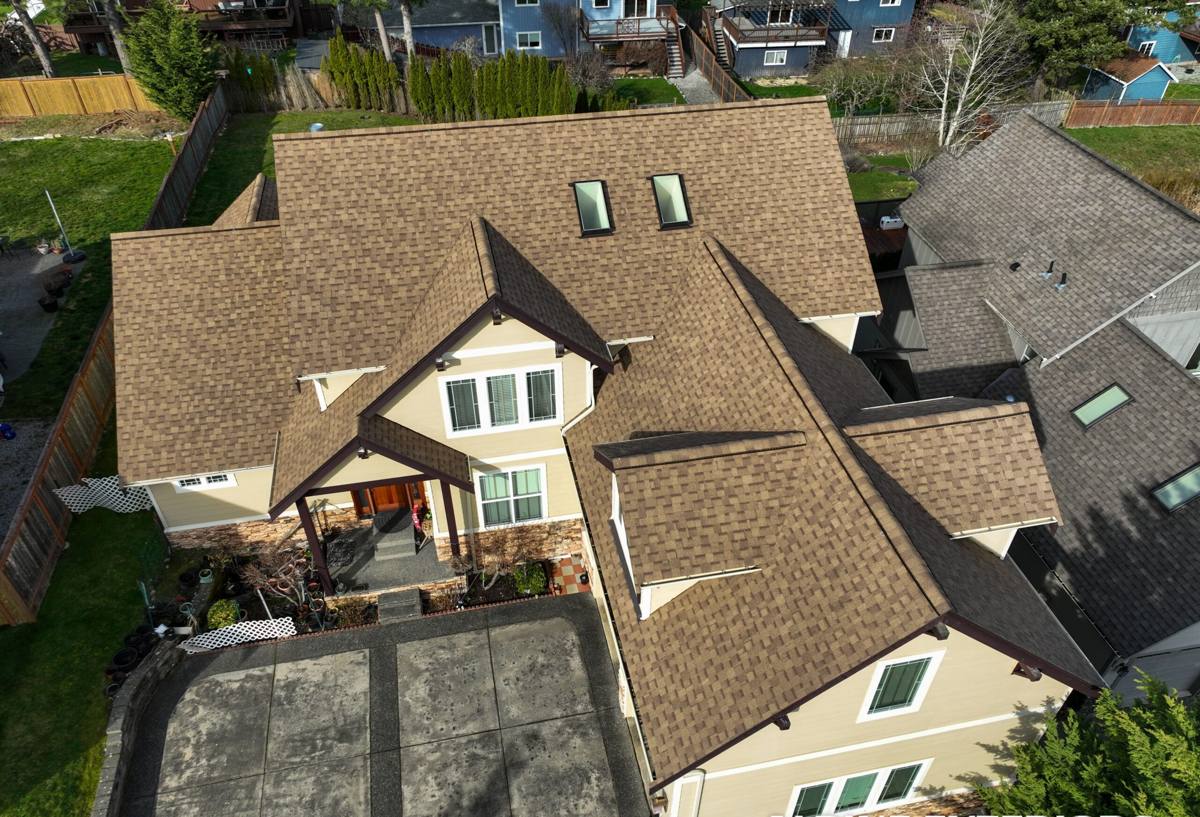
What Larrabee's Climate Actually Demands From a Window Assembly
Salt Air and Corrosion
Properties closer to the water along the Chuckanut shoreline see airborne salt that accelerates corrosion on unprotected fasteners, hardware, and some aluminum components. This doesn't mean you need exotic materials on every build — it means hardware finish, fastener spec, and frame material should be chosen with the site's exposure in mind, not just picked from a generic builder-grade catalog.
Driving Rain
Wind-driven rain off the water pushes water sideways and upward against a wall, not just straight down. That means window flashing has to shed water outward at the sill and head, and the WRB behind the siding has to be lapped correctly so water is directed out and down, never trapped behind the cladding. A window that's watertight in a lab test can still leak on a Chuckanut bluff lot if the flashing integration into the wall assembly is done out of sequence.
Moss Season and Sustained Moisture
Whatcom County's long wet season keeps north-facing walls and shaded elevations damp for extended stretches. Moss and algae growth on nearby roofing and siding is a visible sign of how much ambient moisture the building envelope deals with all year. Window trim, sills, and any exposed wood components need either a durable factory finish or field detailing (backer rod, sealant, drip caps) that keeps standing moisture off end grain and joints.
Quick Reference: Climate Factor vs. What It Means for Your Window Package
| Climate Factor | Risk If Ignored | What a Correct Install Does |
|---|---|---|
| Salt air (near-water lots) | Corroded hardware, pitted frames, premature finish failure | Corrosion-appropriate hardware and frame finish selection |
| Driving rain | Sill leaks, sheathing rot, interior staining | Proper shingle-lap flashing sequence, sloped sills |
| Long wet/moss season | Trapped moisture, wood rot, mold at trim joints | Sealed end grain, back-ventilated or capped trim details |
| Temperature swings | Condensation, seal failure over time | Correct glazing package and proper shimming/insulation at the jamb |
What a Correct New-Construction Window Install Actually Involves
New-construction windows come with a nailing flange designed to be integrated into the wall's water management system before siding goes on. Getting this right is a sequence problem as much as a product problem.
The Flashing Sequence, In Order
- WRB (housewrap or equivalent) installed and lapped correctly below and around the rough opening
- Sill pan flashing installed to catch and direct out any water that gets past the window, with the pan sloped to drain outward, not toward the interior
- Window set into the opening, checked for level, plumb, and square before a single fastener goes in
- Jamb flashing (side flanges) taped or flashed over the sill pan legs — never under them
- Head flashing installed last, lapped over the WRB above the window so water sheds down and over, not behind
- Sealant used only where specified by the window manufacturer's install instructions — not as a substitute for proper flashing lap order
Skipping or reversing any step in that order is the single most common cause of new-construction window leaks — and it's invisible until the drywall or siding is already closed up around it.
Choosing the Right Window for a Larrabee Site
There's no single "best" window brand or material for every lot — the right call depends on the home's exposure, budget, and design. A few honest trade-offs worth weighing before you order:
- Vinyl: Budget-friendly and low maintenance, but frame color and structural performance vary a lot by manufacturer quality tier — worth seeing spec sheets, not just marketing brochures
- Fiberglass: Handles temperature swings and moisture exposure well over time; typically a higher upfront cost
- Wood or wood-clad: Strong appearance option, but requires diligent finish maintenance in a wet climate — we're upfront about this maintenance burden before you commit
- Aluminum: Durable and slim-profile, but needs a corrosion-resistant finish for near-water exposure and conducts heat/cold more than other frame materials
- Glazing package: Double-pane low-E is standard for this climate; specific gas fill and coating choices should match the elevation's sun exposure
We'll walk through these trade-offs against your actual plans and lot orientation rather than pushing one product line across every job.
Our Process on a Larrabee New-Construction Job
We work with builders and owner-builders through the framing and dry-in phase, which means our timing has to sync with the rest of the crew on site.
Step by Step
- Review plans and rough opening schedule before windows are ordered — catching sizing or swing-direction errors on paper is free; catching them after install is not
- Confirm window spec against site exposure (waterfront-adjacent, wooded/shaded, elevation) before finalizing the order
- Verify rough openings are framed correctly and square before we schedule set day
- Install following the manufacturer's documented flashing sequence — every unit, every time
- Photograph flashing and sill pan details before they're covered by siding, so there's a record of what's behind the wall
- Final check of operation, air-seal, and trim before we consider the opening closed out
That documentation step matters more than most homeowners expect. On a new build, the flashing gets covered within days — having a record of what's actually behind your siding is worth having if any question ever comes up down the road.
Why a Local Crew Matters More Than It Sounds
A window installer who's worked new construction elsewhere in the region but not specifically near Larrabee's exposure conditions can still do competent work — but they're guessing at details a local crew already knows from repetition: which elevations on Chuckanut-area lots take the worst wind-driven rain, how much salt exposure actually matters at a given distance from the water, and how long moss and algae growth take to show up on north sides of new construction if trim details were rushed. That local pattern recognition doesn't replace good technique, but it does mean fewer surprises and fewer change orders mid-build.
We also coordinate directly with framers, siding crews, and builders on site rather than working in isolation — new-construction windows are a team-sequenced trade, and miscommunication between the window install and the siding install is where most envelope failures start.
What Homeowners and Builders Should Ask Before Hiring
Before you sign off on a window install for a new build near Larrabee, it's fair to ask your contractor:
- What's your documented flashing sequence, and can you show it in writing or in photos from past jobs?
- Do you photograph flashing details before they're covered by siding?
- How do you decide on frame material and hardware finish for a given lot's exposure?
- What's covered under workmanship warranty versus the manufacturer's product warranty, and for how long?
- Who's your point of contact if a window issue shows up two winters from now?
A contractor who answers these plainly, without dodging into brochure language, is worth more than one who just quotes the lowest number.
Maintenance That Protects the Investment
Even a correctly installed window package benefits from basic upkeep in this climate:
- Rinse accumulated salt residue off frames and hardware near the water a few times a year
- Keep weep holes at the sill clear of debris so water can drain as designed
- Check exterior caulk lines annually and touch up before gaps open up
- Clear moss or organic buildup off adjacent trim and siding promptly rather than letting it sit against wood
None of this is complicated, but skipping it for years at a time is how otherwise well-installed windows develop problems that look like installation defects but are really deferred maintenance.
If you're planning a new build near Larrabee and want a window package spec'd and installed for this specific climate — not a generic checklist — we're happy to walk the plans with you and put together a straightforward, no-pressure estimate. There's a quick form below to get started.