 Chuckanut Exterior
 Asphalt Shingle Roofing Built for Larrabee's Coastal Exposure
Larrabee sits along the wooded bluffs and shoreline south of Bellingham, in a stretch of Whatcom County where salt air off the water, driving rain, and heavy shade from mature evergreens combine into one of the tougher testing grounds for a roof in this part of the state. Asphalt shingle roofing is still the right call for most homes here — it's flexible, well understood by every trade that touches a roof, available in a wide range of price points, and it comes in grades built specifically for wind and moisture exposure. But "asphalt shingles" isn't one product, and the difference between a roof that holds up through fifteen wet seasons and one that needs attention after five almost always comes down to which shingle went down and how carefully it was installed.
This page is about that one job, done right, for homes in Larrabee specifically — not a general rundown of every roofing option on the market, but what this material actually needs to perform against this particular stretch of coastline, year after year.
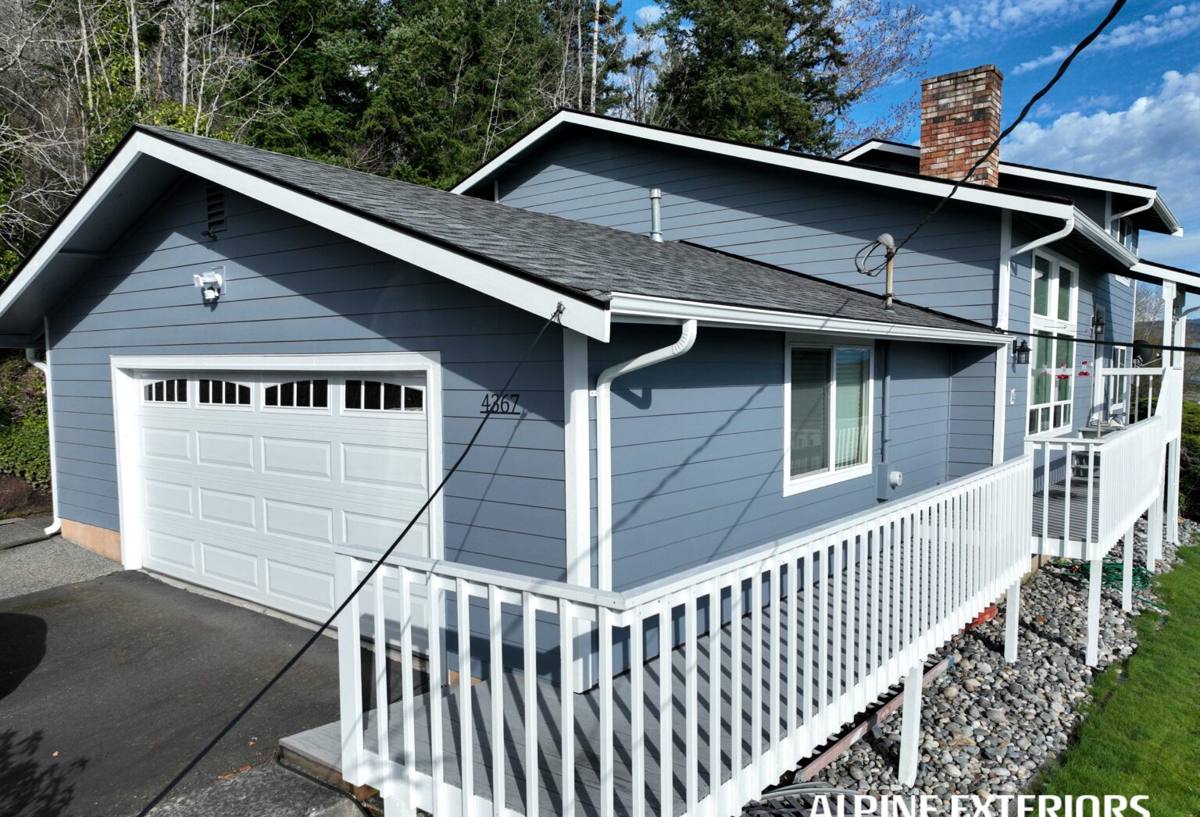
What This Climate Does to an Asphalt Shingle Roof
Three things define roofing conditions in Larrabee, and each one attacks a shingle roof in a different way.
Salt Air and Fastener Corrosion
Homes closer to the water pick up salt-laden air that speeds up corrosion at every exposed metal point on a roof — nail heads, flashing, vent stacks, and gutter hardware. A fastener or flashing piece rated for a drier, inland climate can start showing rust streaks and weakened seals years before it would somewhere less exposed, and a corroded fastener holding a shingle in place is a wind-uplift failure waiting for the next storm off the water.
Wind-Driven Rain and Flashing Points
Storms coming off the water rarely drop rain straight down. Wind pushes it sideways and up under shingle edges, into valleys, and around anywhere two roof planes or a roof and a wall meet. Flashing that's lapped correctly and sealed to spec sheds that water without issue; flashing that was rushed or under-built becomes the first place a Larrabee roof actually leaks, usually well behind the shingle line where a homeowner can't see the problem from the ground.
A Long Moss Season on Shaded Slopes
Larrabee's tree cover is part of what makes the area a nice place to live, and it's also exactly what moss needs to take hold — shade that keeps roof planes damp long after a storm has passed. Moss doesn't just look bad on a shingle roof; it holds water against the granule surface, works its way into shingle tabs, and can lift edges enough to let wind get underneath them. North-facing slopes and anything under mature evergreen cover need to be built and maintained with that reality in mind from day one, not treated as an afterthought once moss shows up.
Choosing the Right Asphalt Shingle for a Larrabee Home
Not every asphalt shingle is built for this environment, and the difference shows up over years, not on install day. Here's how the common grades compare for a home in this specific setting.
| Shingle Type | Salt Air & Moss Resistance | Wind Rating | Realistic Lifespan Here |
|---|---|---|---|
| 3-tab / strip shingles | Lower — thinner mat sheds granules faster in salt air | Lower | 15-20 years |
| Standard architectural/laminate | Good — thicker, layered mat holds up better over time | Moderate to high | 20-25 years |
| Algae-resistant architectural | Best — granules formulated to resist moss and algae growth | Moderate to high | 25-30 years |
| High-wind / impact-rated architectural | Good, with reinforced construction for uplift resistance | High | 25-30 years |
For most Larrabee homes, especially anything with shaded slopes or direct exposure toward the water, we lean toward algae-resistant architectural shingles as the baseline, stepping up to a high-wind rated product on roofs that catch more open exposure off the water. The upfront cost difference over a basic 3-tab shingle is modest set against the extra decade or more of service life a good architectural product delivers in this specific climate.
What a Correct Installation Includes
A shingle roof's real performance comes from what's underneath it as much as from the shingle itself. On every Larrabee roofing job, that means:
- Ice-and-water shield at eaves, valleys, and any low-slope transitions where water and debris collect
- Synthetic or felt underlayment rated for sustained moisture exposure, not a bare minimum-code product
- Drip edge installed at every eave and rake to direct water away from the fascia
- Properly lapped, sealed flashing at every valley, chimney, vent pipe, and roof-to-wall transition
- Balanced attic ventilation — soffit intake and ridge exhaust working together, not just one or the other
- Shingles fastened to the manufacturer's exact nail count and placement spec, adjusted for the roof's wind exposure
- Algae-resistant granule shingles specified on any shaded or north-facing slope
None of this adds much to the cost of a job relative to the shingles themselves. Skipping it is what turns a twenty-five-year roof into a fifteen-year roof — and it's the part of the job a homeowner can't easily inspect once the shingles are down and the job looks finished from the ground.
How We Approach a Larrabee Roofing Job
- On-site inspection of the existing roof, decking, ventilation, and flashing — not just a look from the driveway
- An honest repair-versus-replace assessment, with what we find explained in plain terms before any work starts
- Tear-off, if replacement is the right call, with the deck inspected as we go and any soft or damaged sheathing replaced before anything new goes down
- Ice-and-water shield, underlayment, drip edge, and flashing installed to spec at every vulnerable point on the roof
- Shingles installed to the manufacturer's fastening spec, matched to that specific roof's wind and shade exposure
- Attic ventilation checked and balanced so moisture has a way out instead of getting trapped under the deck
- Final walkthrough and cleanup, including a magnetic sweep of the property for stray fasteners
We explain each step as we go rather than disappearing until the job is done, and we'll show you what we find underneath the old shingles before we cover it back up with new ones.
Signs a Larrabee Roof Needs Attention
- Moss that returns quickly to shaded or north-facing slopes after cleaning
- Granules collecting in gutters or piling up at the base of downspouts
- Curling, cupping, cracking, or missing shingles, especially after a windstorm off the water
- Rust streaking, lifted edges, or missing sealant at flashing points
- Water staining on interior ceilings, especially near chimneys or exterior walls
- Soft spots or noticeable give when the roof deck is walked
Any one of these is worth a professional look before the next wet season sets in. Caught early, most of them are a straightforward repair. Left alone through another winter, several of them turn into a full tear-off that could have been avoided.
Repair or Replace? How We Help You Decide
We don't default to recommending replacement just because we're already up on the roof. What actually drives that decision is the age of the existing shingles, how much of the roof surface is affected, whether the deck underneath shows moisture damage, and how many repairs the roof has already had. A localized leak on a roof that's otherwise sound is usually a straightforward repair. A roof nearing the end of its rated life with moss-related wear spread across multiple slopes, or soft decking from long-term moisture intrusion, is more honestly addressed with a replacement than another round of patchwork. We'll walk you through exactly what we find and why, and let you make the call with real information instead of a sales pitch.
Cost Factors for Asphalt Shingle Roofing in Larrabee
Every roof is different, and we won't put a number on yours without seeing it in person, but these are the factors that actually move the price on a job like this.
| Factor | What Drives the Cost | Why It Matters in Larrabee |
|---|---|---|
| Roof size and pitch | More roof surface and steeper pitches add material and labor time | Bluff-adjacent homes here often carry steeper rooflines by design |
| Existing layers / tear-off | Removing multiple old layers costs more than a single clean tear-off | Older homes in the area sometimes already carry a prior layer underneath |
| Decking condition | Soft or rotted sheathing has to be replaced before new shingles go down | A long moss season makes hidden deck moisture more common here than in drier areas |
| Shingle grade | Algae-resistant and high-wind rated products cost more upfront | Salt air and shade exposure make that upgrade pay off faster on this coastline |
| Ventilation work | Adding or correcting soffit and ridge ventilation adds cost to a job | Trapped moisture shortens shingle life fastest in a shaded, consistently damp climate |
| Roof complexity and access | Multiple valleys, steep pitch, and limited site access add labor hours | A common combination on wooded, bluff-adjacent Larrabee lots |
None of these factors are things we can price accurately without walking the roof, which is exactly why we start every job with an honest, in-person look rather than a number over the phone.
Why a Crew That Already Works Larrabee Matters
A roofing crew that's actually worked this stretch of coastline knows which slopes hold moss the longest, which flashing details are worth the extra time because a callback two winters later isn't worth the shortcut, and how much of a difference algae-resistant granules make on a shaded lot compared to an open one. That knowledge doesn't come from a spec sheet — it comes from seeing how salt air, wind-driven rain, and a long moss season actually play out on real roofs here, year after year. It also means someone who treats Larrabee's coastal exposure as its own set of conditions, rather than copying an approach that works fine on a drier, more sheltered inland roof but leaves gaps here.
If your Larrabee home needs a roof inspection, a repair, or you're weighing a full replacement, we're glad to take a look and give you a straightforward, honest read on what it actually needs. Reach out using the form below to schedule a free, no-pressure estimate.