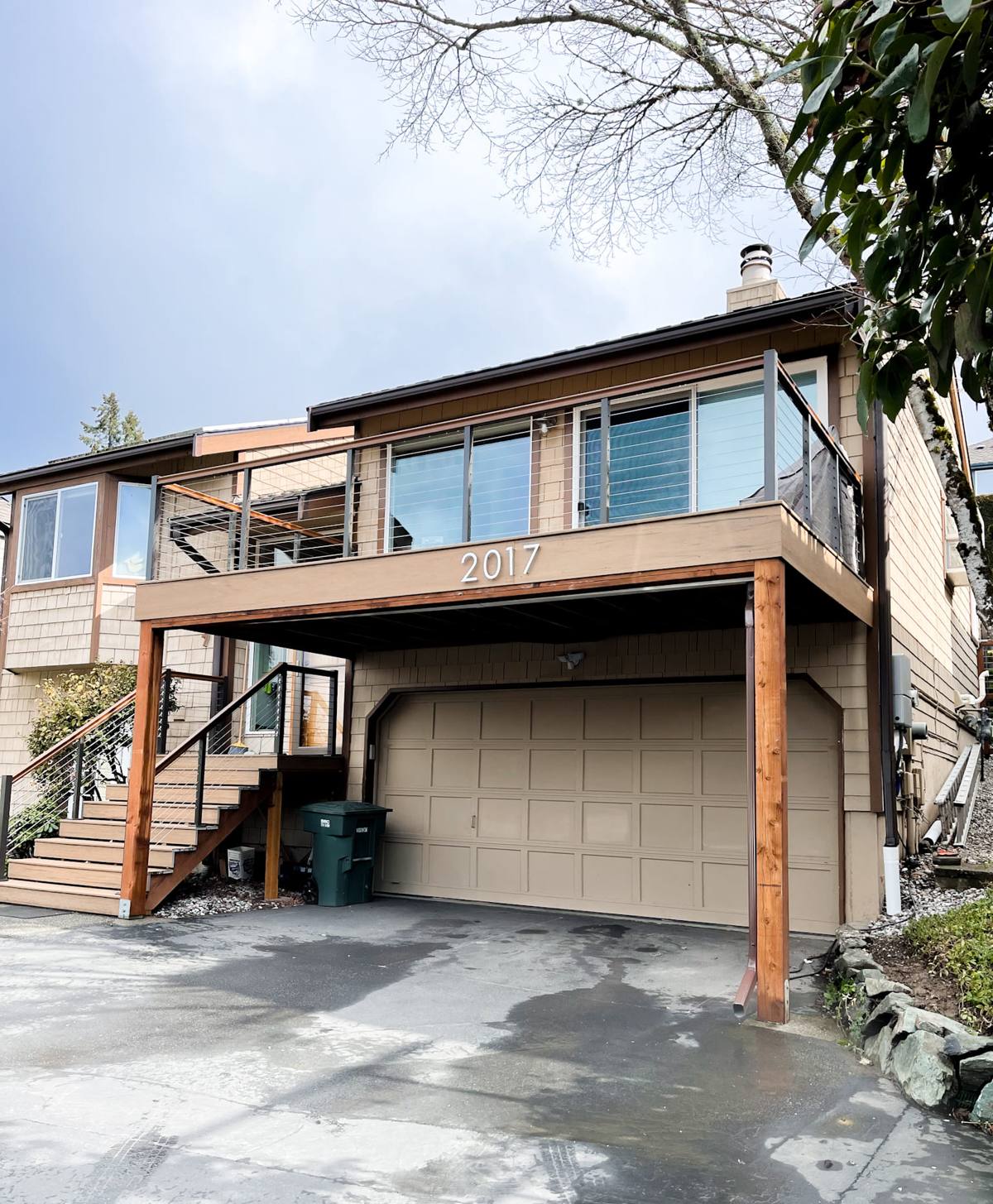
 Chuckanut Exterior
 Why Larrabee Homes Put Windows Through More Than Most
Larrabee sits close enough to the water that salt-laden air is a daily fact of life, not an occasional nuisance. Combine that with the driving, sideways rain that Chuckanut Drive and the surrounding bluffs are known for, plus a moss season that can stretch from October well into spring, and you've got a set of conditions that age windows faster than almost anywhere else in Whatcom County. Vinyl frames chalk and go brittle under salt exposure. Wood sashes hold moisture longer than they should because the air rarely gets dry enough to let them fully release it. And any window with a weak seal or sloppy flashing detail will eventually show it — fogging between panes, soft trim, or a draft you can feel from across the room.
None of this means windows are a lost cause here. It means the product and the installation both have to be matched to the environment, not just picked off a showroom floor because they looked good in a warmer, drier climate zone.
What "Energy-Efficient" Actually Means for This Climate
Energy efficiency gets used as a marketing word a lot, so it's worth being specific about what it actually buys a Larrabee homeowner. It's not just a lower heating bill — though that's real. It's fewer cold spots near exterior walls, less condensation buildup on interior glass during our wet months, and a home that doesn't have to fight its own envelope every time the wind comes off the water.
The Numbers That Actually Matter
Two ratings do most of the work when comparing windows for this area:
- U-Factor — measures how well the window resists heat loss. Lower is better. This is the one that matters most for our cool, wet winters.
- Solar Heat Gain Coefficient (SHGC) — measures how much solar heat passes through. Moderate values tend to work well here since we don't have the intense summer sun that drives cooling costs in other parts of the state.
Air infiltration ratings matter too, but they're only meaningful if the installation actually delivers on them — a window rated for low air leakage in a lab test will leak plenty if it's set into a rough opening with gaps in the flashing.
Signs Your Current Windows Are Working Against You
Most homeowners don't replace windows because they woke up thinking about U-factors. They replace them because something's bothering them day to day. In Larrabee, the common complaints we hear line up pretty closely with what the climate does to a window over time:
- Condensation or fogging between the panes of a double-pane window — the seal has failed and the gas fill (or just dead air space) is gone
- Visible moss or algae staining on the sill or lower sash, a sign moisture is sitting where it shouldn't
- Drafts near the frame even when the window is fully latched
- Wood trim that's gone soft, spongy, or is separating from the wall
- A noticeable temperature difference near the window compared to the rest of the room
- Higher heating bills that don't match a change in usage
Any one of these on its own might just mean a caulking touch-up. Several together usually mean the window and its surrounding flashing are past the point where patching makes sense.
Materials and Glass: What Holds Up in a Marine Environment
There's no single "best" window material — there's a best fit for the exposure a given wall of the house actually gets. A window on the water-facing side of a Larrabee home is dealing with more salt and wind-driven rain than one tucked under an eave on the leeward side, and the right spec can vary accordingly.
| Frame Material | How It Handles This Climate | Trade-Offs to Know |
|---|---|---|
| Vinyl | Good moisture resistance, no repainting; quality varies a lot between manufacturers | Can chalk or discolor over time with heavy UV and salt exposure; limited color/repair options once installed |
| Fiberglass | Very stable in temperature swings and moisture; holds paint well if color changes are wanted later | Higher upfront cost than vinyl |
| Wood (clad exterior) | Classic look, especially on older or character homes; exterior cladding shields the wood from weather | Requires correct flashing detail without exception — any breach lets moisture reach the wood core |
| Aluminum | Strong and slim sightlines | Poor thermal performance unless thermally broken; not our first recommendation for energy-efficiency-focused projects here |
For glass, we typically spec dual-pane units with low-E coatings and argon fill as the baseline for this area, moving to triple-pane only where a homeowner has a specific noise or extreme-exposure concern — the cost jump doesn't always pencil out for the efficiency gain in our climate zone the way it might somewhere with harsher winters.
How We Approach a Window Job in Larrabee
The window unit itself is maybe half the job. The other half — the part that actually determines whether the house stays dry and efficient for the next twenty years — is the installation.
Our Process
- On-site assessment. We look at each opening individually — orientation, exposure to prevailing wind and rain, existing sill and flashing condition, and any signs of past water intrusion.
- Removal and opening inspection. Once the old window is out, we check the rough opening and sheathing for hidden rot or moisture damage before anything new goes in. This is often where problems that weren't visible from inside get caught.
- Flashing and weather barrier integration. The new window is flashed and tied into the existing weather-resistive barrier in the correct shingle-lap sequence — water has to be directed out and down, never trapped behind the new unit.
- Setting and shimming. The window is set level, plumb, and square, and shimmed so the frame isn't under stress that could affect the seal or operation over time.
- Insulating the gap. The space between the frame and rough opening is insulated appropriately — not overpacked, which can bow the frame, and not skipped, which leaves a cold and drafty gap.
- Exterior sealing and trim. Sealant goes only where it should — some edges of a properly flashed window are intentionally left open to let any incidental moisture drain rather than get sealed in.
- Interior finish and walkthrough. Interior trim is finished, the window is tested for smooth operation, and we walk the homeowner through anything they should know about care or warranty coverage.
Where Window Installations Actually Fail Around Here
In our experience, window failures in this part of Whatcom County almost never come down to a bad window. They come down to installation shortcuts that don't show up as a problem for a year or two — long enough for the crew to be gone and the homeowner to have forgotten who did the work.
The most common failure points we see when we're called in to fix someone else's job:
- Flashing tape or building paper lapped backwards, so water gets directed into the wall instead of away from it
- Caulk used as a substitute for proper flashing instead of as a supplement to it
- Rough openings that weren't checked for hidden rot before the new window went in — meaning the new window was installed onto a compromised opening
- Over-sealing the exterior in a way that traps moisture that gets in through other paths, with nowhere to drain back out
This is exactly why moss and prolonged damp matter here — a small flashing error that might dry out quickly in a drier climate can stay wet for weeks at a time in Chuckanut's wet season, which is long enough to start rot.
What Affects the Cost of the Project
Every home and every opening is different, so we don't quote sight-unseen, but the main variables that move the price are consistent from job to job:
| Factor | Why It Matters |
|---|---|
| Number and size of openings | More or larger windows means more material and labor |
| Frame material chosen | Vinyl, fiberglass, and clad wood carry different unit costs |
| Condition of existing rough openings | Hidden rot or water damage found during removal adds repair scope |
| Access and height | Second-story or hard-to-reach openings take more time and equipment |
| Trim and interior finish work | Matching existing trim profiles or repainting adds to the scope |
| Full-frame vs. insert replacement | Full-frame replaces down to the studs; inserts reuse the existing frame where it's still sound |
Generally, straightforward single-window replacements on a home in good condition sit at the lower end of any regional pricing you'll see quoted, while full-frame replacements across multiple openings — especially where rot repair is involved — land higher. We'll always tell you honestly if a lower-cost insert approach is appropriate for your opening, rather than upselling a full-frame job you don't need.
A Quick Checklist Before You Hire Anyone
Whether you go with us or another contractor, these are worth confirming before signing anything for window work in a coastal, high-moisture area like Larrabee:
- Ask specifically how they handle flashing integration with your home's existing weather barrier — a vague answer is a red flag
- Confirm whether they inspect the rough opening for hidden rot before installing, and what happens (in writing) if they find some
- Get the U-Factor and SHGC ratings for the specific product being quoted, not just a brand name
- Ask whether they're doing full-frame replacement or an insert, and why that's the right call for your opening
- Check that warranty coverage includes both the product and the labor, and understand what voids it
- Get references or examples of similar work done in a comparable coastal or high-rainfall setting
Why Local Experience in Larrabee Specifically Matters
A window that's correctly installed in a dry inland climate can still fail here if the crew doesn't understand how wind-driven rain behaves against a wall facing the water, or how long moss and moisture linger through our wet season. Working regularly in Larrabee and the surrounding Chuckanut area means knowing which orientations take the worst weather, what condition older flashing details tend to be in on homes of a certain age, and building in the extra margin that salt air and prolonged dampness demand — rather than applying a one-size-fits-all approach to every job across Whatcom County.
If you're noticing drafts, fogged glass, or rising heating costs, or you're just planning ahead for a window upgrade, we're happy to take a look and walk you through what your home actually needs — no pressure, no upsell. Reach out using the form below for a free estimate.