 Chuckanut Exterior
 Why Larrabee Siding Wears Differently Than Siding Inland
Homes along the Larrabee stretch of Chuckanut sit in one of the more demanding microclimates in Whatcom County. You've got Samish Bay pushing salt-laden air up into the trees, steep wooded lots that hold shade and moisture long after a storm has passed, and driving rain that comes in sideways off the water during winter systems. Add a canopy of Douglas fir and cedar overhead, and you get a growing season for moss and algae that runs most of the year, not just a few soggy months.
Siding on a Larrabee home isn't just cladding — it's the first line of defense against a combination of salt exposure, near-constant dampness, and shade that never fully dries out. Materials that hold up fine in a sunny, open subdivision twenty miles inland can fail early here, and the failure modes are specific: swelling at the bottom courses, moss creeping up from grade, and paint that won't hold because the substrate underneath is staying wet.
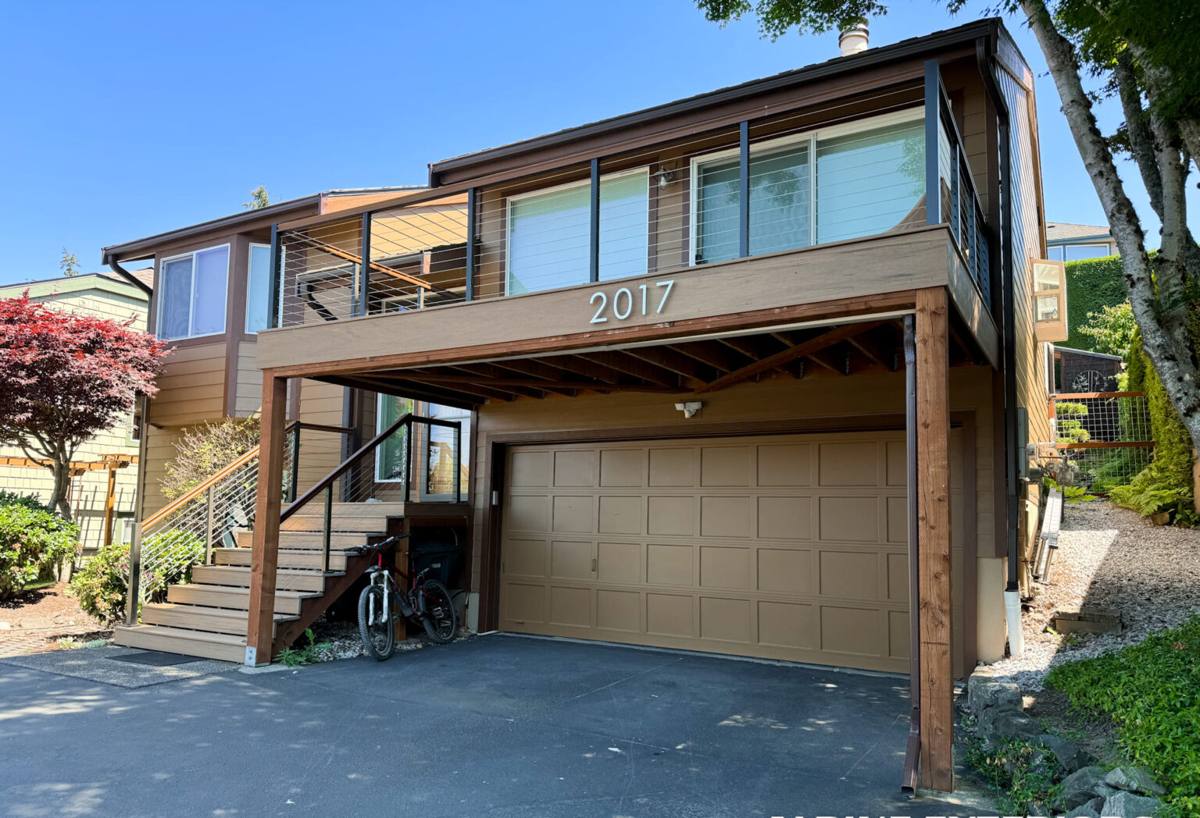
What Siding Failure Actually Looks Like on Chuckanut-Area Homes
Before we talk about replacement, it's worth knowing what to look for. Not every homeowner needs a full re-side — but on wooded, shaded lots near the water, these signs usually mean the siding is past the point where patching or repainting will hold:
- Soft or spongy spots when you press on the siding, especially near the bottom few feet
- Moss or algae that returns within a season of being cleaned off, particularly on the north and west walls
- Paint that's bubbling, peeling, or chalking heavily even though it was applied recently
- Visible swelling, delamination, or a "puffy" look along seams and butt joints
- A musty smell near exterior walls, which often points to moisture already inside the wall assembly
- Nail pops, warping, or boards that have pulled away from the wall plane
If you're seeing two or more of these on a home in the Larrabee area, it's worth having someone look at the wall assembly itself, not just the surface — because on a shaded, salt-exposed lot, surface problems are usually a sign the water-resistive barrier and flashing details underneath have already been compromised.
Why We Only Install James Hardie Fiber Cement
We get asked fairly often why we don't offer vinyl, LP SmartSide, or cedar as options. The honest answer is that in an environment like Larrabee — salt air, heavy rain, extended moss season — those products ask homeowners to accept trade-offs we're not willing to install and then walk away from.
Vinyl is inexpensive and low-maintenance in dry climates, but it expands and contracts more than fiber cement, and its seams and J-channels give moisture more places to work its way behind the cladding on a wet, shaded lot. LP SmartSide is a wood-strand product with a factory coating that performs reasonably well when detailing is followed exactly, but it's still an engineered wood product at its core, and wood-based sidings are the ones most vulnerable to the kind of prolonged dampness this stretch of Chuckanut sees for much of the year. Cedar and primed spruce look great on day one, but they require a maintenance commitment — regular refinishing, careful caulking, vigilant moss control — that most homeowners don't realize they're signing up for until year three or four.
James Hardie fiber cement is not organic material, so it doesn't rot, and it isn't a food source for moss or fungus the way wood-based products can be. It's also non-combustible, which matters on wooded lots where wildfire risk has become a real consideration even on the west side of the state. Hardie's HZ5 product line is engineered specifically for wet, harsh climates like this one, with a moisture barrier and finish designed to hold up to prolonged exposure. The factory-applied ColorPlus finish is baked on under controlled conditions, which gives it better fade and chip resistance than field-applied paint — a real advantage when your siding spends half the year damp and shaded. It's also backed by a strong transferable warranty, which matters if you sell the home down the road.
None of this means other products are junk. It means that for a lot like the ones we see in Larrabee, we're not comfortable putting our name on an installation we know will need more upkeep, or more repair, than it should.
Comparing Siding Materials in a Salt Air, High-Moss Environment
| Material | Moisture & Moss Behavior | Salt Air Exposure | Long-Term Upkeep |
|---|---|---|---|
| Vinyl | Sheds surface water but seams and channels can trap moisture behind panels | Can fade and become brittle over time near the water | Low, but panels can warp or crack and are hard to color-match when replaced |
| LP SmartSide | Engineered wood core is moisture-resistant when detailed correctly, vulnerable if not | Handles salt air reasonably well with intact factory coating | Moderate — coating and caulking need monitoring over time |
| Cedar / primed spruce | Absorbs moisture readily; prime feeding ground for moss and mildew in shade | Salt air accelerates weathering of natural wood | High — regular refinishing and moss treatment needed |
| James Hardie fiber cement | Non-combustible cement composite; doesn't rot or feed moss growth | Engineered HZ5 line built for wet, coastal, marine-influenced climates | Low — periodic washing, factory finish holds up over time |
What a Correct Siding Replacement Involves
Replacing siding on a home in this climate is about more than swapping old boards for new ones. The parts you don't see matter as much as the parts you do. A correct job includes:
The Water-Resistive Barrier
Every wall gets a continuous water-resistive barrier before a single piece of siding goes up. On a lot with heavy rain exposure like Larrabee's, gaps or shortcuts here are exactly where hidden rot starts — often behind siding that looks fine from the driveway.
Flashing at Every Penetration
Windows, doors, deck ledgers, hose bibs, vents — every penetration in the wall needs proper flashing that directs water back out, not into the wall cavity. This is the single most common place we find failures on homes we're asked to re-side, and it's almost always invisible until the old siding comes off.
Rainscreen or Drainage Gap
On shaded, wet lots, giving water somewhere to drain and air somewhere to circulate behind the siding makes a real difference in how long the assembly stays dry. We build this into the installation rather than nailing siding directly against the barrier.
Manufacturer-Spec Fastening and Clearances
James Hardie has specific requirements for fastener type, spacing, and clearance from grade, decks, and roof lines. Following those specs is what keeps the warranty valid and keeps the bottom courses — the part that takes the worst of the splash-back and moss — performing the way they're supposed to.
Our Siding Replacement Process for Larrabee Homeowners
- On-site assessment — we look at the whole wall assembly, not just the siding surface, including grade clearance, roof-to-wall details, and any signs of trapped moisture
- Product and color selection — we walk through Hardie's HZ5 panel, plank, and shingle options and factory colors, factoring in how the home sits relative to sun, shade, and the bay
- Tear-off and inspection — old siding comes off in sections so we can inspect sheathing underneath and address any rot or damage before it's covered back up
- Water-resistive barrier and flashing — installed or repaired at every wall plane, window, door, and penetration
- Hardie installation to spec — correct fastening, clearances, and joint treatment throughout
- Final walkthrough — we go over the finished work with you and flag anything worth watching in year one
Cost Factors for Siding Replacement in This Area
Every home is different, so we don't quote pricing sight unseen — but the factors that move the number up or down are pretty consistent across the Larrabee area:
| Factor | Why It Matters Here |
|---|---|
| Extent of hidden damage | Wet, shaded lots more often turn up sheathing or framing repair once old siding is off |
| Home access and terrain | Steep, wooded lots common along Chuckanut can add setup and staging time |
| Number of penetrations and wall complexity | More windows, dormers, and roof-wall intersections mean more flashing detail work |
| Panel vs. lap vs. shingle profile | Different Hardie profiles carry different material and labor costs |
| Trim and accent scope | Fascia, corner boards, and trim packages add to the total but tie the look together |
As a rough starting point, most full siding replacements run from the mid five figures to well into six figures depending on home size and the scope above — but the only way to get a number that means anything for your home is a walk-around and a real look at the walls.
Why Hiring a Crew That Already Works Larrabee Matters
A crew that's worked this stretch of Chuckanut has already seen how these lots behave — where moss tends to establish first, which wall orientations take the worst of the driving rain, how much clearance a home needs at grade given the drainage on a hillside lot, and how salt-laden air off Samish Bay affects fasteners and trim over time. That's not something you can fully account for from a spec sheet; it comes from having done the work here before.
It also matters for something more practical: knowing the terrain. Steep, wooded, view-oriented lots along Chuckanut Drive often mean tighter staging areas, careful tree protection, and scheduling around wet-season weather windows. A crew unfamiliar with the area learns these lessons on your project. A crew that already works here has learned them on someone else's.
Keeping New Siding Performing Long-Term
Correct installation is most of the battle, but a little homeowner attention keeps a Hardie installation looking and performing its best for decades in this climate:
- Rinse siding annually, focusing on north- and west-facing walls where moss tends to establish first
- Keep gutters clear so water isn't sheeting down the wall face during heavy rain
- Trim back vegetation and tree limbs that keep siding shaded and damp longer than it needs to be
- Watch caulking at trim joints and re-caulk as needed — this is the one maintenance item that's on the homeowner, not the material
- Address any grade or landscaping changes that reduce clearance between soil and the bottom of the siding
None of this is heavy maintenance — it's the kind of upkeep any exterior benefits from — but it's worth doing consistently given how much moisture this area sees.
If your Larrabee-area home has siding that's showing its age, or you're planning ahead rather than waiting for a problem, we're happy to take a look and walk you through honest options. There's no pressure and no obligation — just a straightforward assessment and a real answer about what your home needs. Use the form below to request a free estimate.