 Chuckanut Exterior
 Why Larrabee's Coastal, Wooded Setting Is Hard on Windows
Homes in Larrabee sit in a tough spot for window longevity. You've got salt-laden air coming off the water, driving rain that hits siding and window walls at an angle instead of straight down, and heavy tree cover that keeps north- and west-facing walls damp and shaded for long stretches of the year. Any one of those factors will shorten a window's life. Together, they're why we treat window work in this part of Chuckanut differently than we would a dry inland lot.
Salt Air and Hardware Fatigue
Salt in the air accelerates corrosion on anything metal — window hardware, screen frames, aluminum cladding, and even the fasteners holding trim in place. Locks get stiff, cranks on casement windows seize up, and unprotected aluminum frames can pit and discolor years before they should. It's slow, and it's easy to miss until a window won't latch properly anymore.
Driving Rain and Wind-Driven Water
Rain that comes in sideways off the water doesn't behave like a straight downpour. It gets pushed up under trim, into gaps around poorly sealed frames, and behind siding that isn't lapped correctly. A window that would be fine in a sheltered inland yard can leak here if the flashing and sealant details weren't done right the first time.
Shade, Moss, and Prolonged Moisture
Dense tree cover is part of what makes this area beautiful, but it also means sun and wind rarely get a chance to dry out sills, trim, and siding after a storm. That extended damp period is exactly what moss and algae need to take hold, and it's what lets wood rot start in window sills and jambs that never fully dry between rain events.
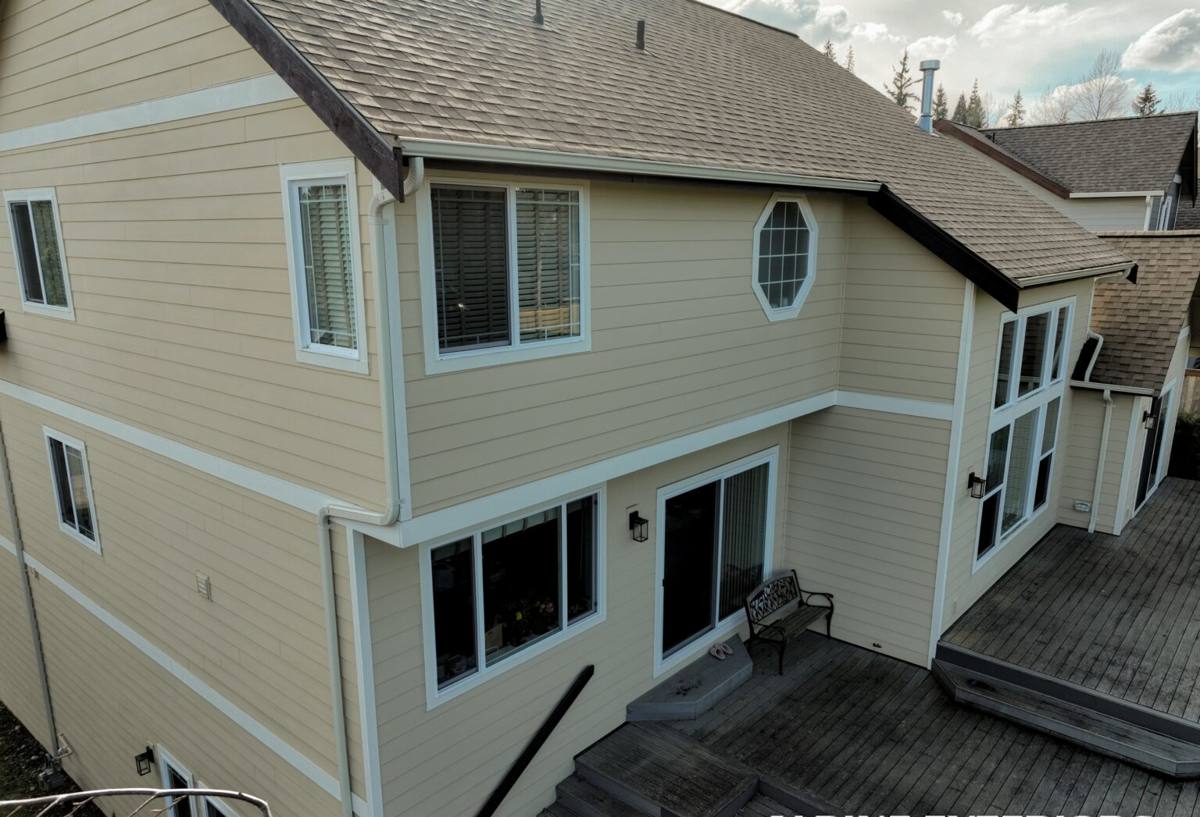
What "Custom" Actually Means for Homes Here
"Custom windows" doesn't just mean an upgraded look — in Larrabee it usually means solving a specific site problem. A lot of the homes in this area have older, non-standard rough openings, architectural details worth preserving, or wall assemblies that were never built to modern flashing standards. Custom work means:
- Matching an opening that isn't a stock size, without cutting corners on the frame or insulation around it
- Replacing windows on shaded, moisture-prone walls with materials chosen for that specific exposure, not a one-size-fits-all spec
- Preserving the sightlines and proportions that make an older home look right, while updating what's actually inside the wall
- Building in extra water management on rain-exposed elevations, even if that means more flashing work than a standard install
None of that is about upselling a fancier window. It's about matching the product and the installation detail to what the site is actually dealing with.
Choosing the Right Frame Material for This Exposure
There's no single "best" window material — every option is a trade-off between upfront cost, maintenance, and how it holds up to salt air and constant moisture. Here's how the common choices stack up for a coastal, shaded lot like the ones around Larrabee:
| Frame Material | Salt Air Resistance | Moisture/Moss Resistance | Maintenance | Typical Lifespan |
|---|---|---|---|---|
| Vinyl | Good — won't corrode | Good, but hardware inside still needs checking | Low | 20–30 years |
| Fiberglass | Very good — dimensionally stable | Very good | Low | 30–40+ years |
| Aluminum-clad wood | Good on the exterior face; cladding protects the wood | Good if flashed correctly; failure point is where cladding meets frame | Moderate | 25–35 years |
| Solid wood | Poor without diligent upkeep — hardware and finish both suffer | Requires regular refinishing to resist rot | High | Varies widely with maintenance |
| Bare aluminum | Poor — pits and corrodes without a protective finish | Fair | Moderate | 15–25 years |
For most Larrabee homes, we steer clients toward fiberglass or vinyl for shaded, rain-exposed walls, and reserve wood or wood-clad options for elevations that get more sun and airflow, or where a homeowner is committed to the upkeep it takes to protect that finish. This isn't a knock on wood windows — they can look great and perform well — it's just an honest read on how much maintenance a given wall can realistically support.
What a Correct Installation Actually Involves
The window itself is only part of the job. Most leaks and premature failures we get called out to fix trace back to installation shortcuts, not a bad product. On a rain- and salt-exposed site like this, a few details aren't optional.
Flashing and Water Management
Every opening gets a sloped sill pan so any water that gets past the window drains back out, not into the wall. Head flashing goes in above the window, lapped correctly with the building's water-resistive barrier so water sheds down and over it, never behind it. On driving-rain elevations, we pay extra attention to how the flashing integrates with the siding above and below the opening.
Sealing Without Trapping Moisture
There's a right way and a wrong way to seal a window. Backer rod and quality sealant go around the exterior perimeter, but the assembly still needs a way for any incidental moisture to escape rather than get trapped in the wall cavity. Sealing every gap solid, inside and out, sounds thorough but can actually cause rot by locking moisture in.
Insulation and Air Sealing at the Frame
Gaps between the window frame and the rough opening get insulated properly — not stuffed tight, which compresses insulation and reduces its value, and not left with big voids that create cold spots and condensation risk. This step also matters for comfort and energy bills, especially on the shaded, wind-exposed sides of a house.
Our Process
- On-site assessment — we look at each opening's exposure, current condition, and any signs of water intrusion or wood damage before recommending anything.
- Measurement and product selection — exact measurements for custom or non-standard openings, and a frame material recommendation based on that specific wall's sun, shade, and rain exposure.
- Written estimate — a clear scope of work, so you know exactly what's being replaced, flashed, and sealed, and why.
- Removal and inspection — once old windows come out, we check the framing underneath for hidden rot or moisture damage before anything new goes in.
- Installation — sill pan flashing, head flashing, proper air sealing, and insulation, done in that order, on every opening.
- Cleanup and walkthrough — job site cleared, and we walk you through operation, care, and warranty coverage before we consider the job done.
Signs Your Windows Need Attention
Given how gradually salt air corrosion and moisture damage set in, a lot of homeowners don't notice a problem until it's significant. Worth checking for:
- Hardware — locks, cranks, or latches — that's become stiff, sticky, or hard to operate
- Soft or discolored wood at the sill, jamb, or trim around any window
- Moss, algae, or persistent green staining on sills or trim that doesn't wash off
- Visible daylight, drafts, or whistling around the frame during windy weather
- Condensation or fogging between panes, which usually means a failed seal
- Paint or finish that's bubbling, peeling, or chalky on window trim specifically, even if the rest of the siding looks fine
- Corrosion or white powdery buildup on aluminum components
Any one of these on its own isn't an emergency, but they're worth addressing before they turn into a framing repair.
Maintenance in This Climate
Even the right window benefits from some upkeep in a salt air, high-moisture environment. A couple times a year, it's worth rinsing accumulated salt residue off frames and hardware with fresh water, clearing debris out of window tracks and weep holes so water can actually drain, and checking exterior sealant for cracking or gaps. On shaded elevations prone to moss, keeping nearby vegetation trimmed back to let in more light and airflow makes a real difference in how fast growth returns.
Why Local Experience in Larrabee Matters
A crew that mostly works dry, inland jobs can install a technically fine window that still leaks here, because the flashing details that matter on a rain- and salt-exposed coastal wall aren't the same ones that matter elsewhere. Working regularly in and around Chuckanut and the rest of Whatcom County means we've seen how these specific conditions — driving rain, salt air, and long shaded moisture seasons — actually play out on real houses over time, and we build the install around that rather than a generic checklist.
If you're dealing with stiff hardware, a drafty frame, or just want an honest read on whether your current windows are holding up, we're happy to take a look. Use the form below to request a free, no-pressure estimate.